Automate AI Second Brain(LLM Wiki Pattern) With Claude Code and Obsidian
TLDR:Build an AI second brain with Claude Code & Obsidian. Automate daily briefings, backups & calendar sync.
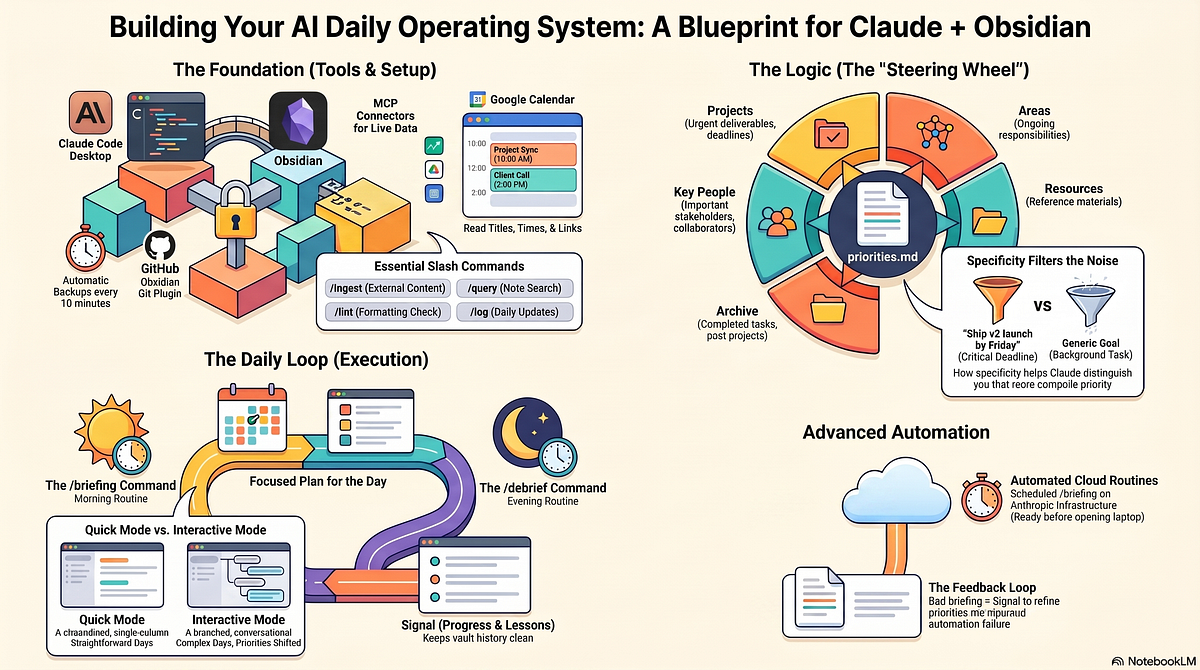
Build an AI Second Brain(LLM Wiki Pattern) With Claude Code and Obsidian
TLDR:Build an AI-powered knowledge base in Obsidian. Use Claude Code slash commands to ingest, link, and query your notes into a smart…
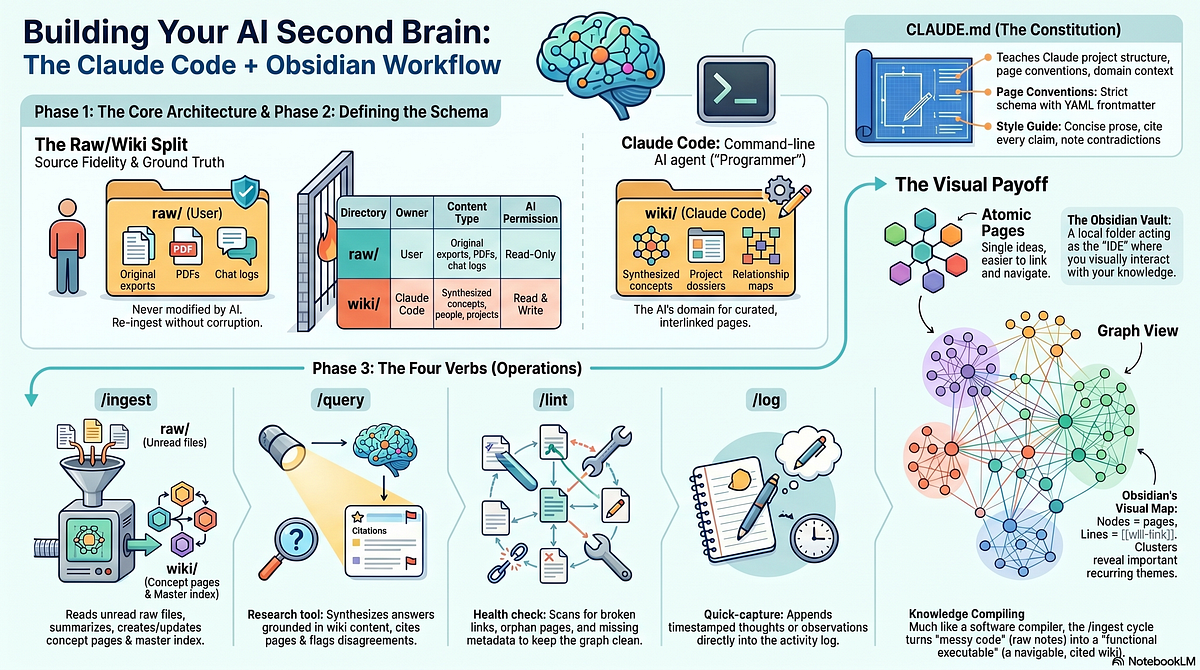
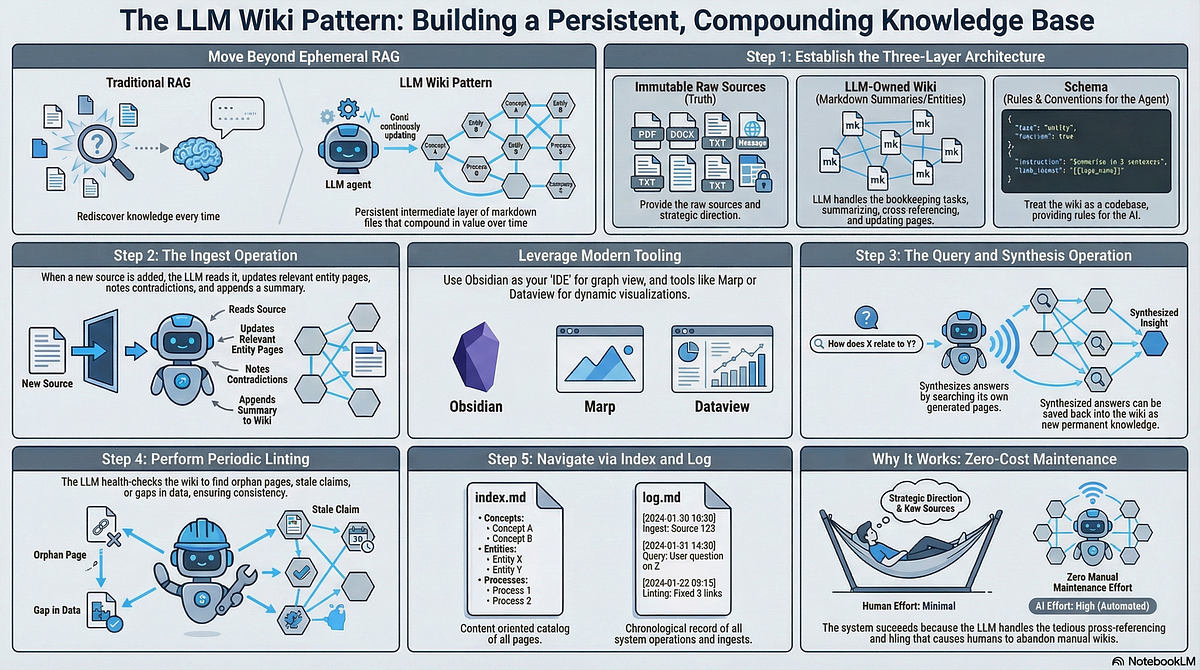
Karpathy's LLM Wiki v2: What to Keep, What to Skip
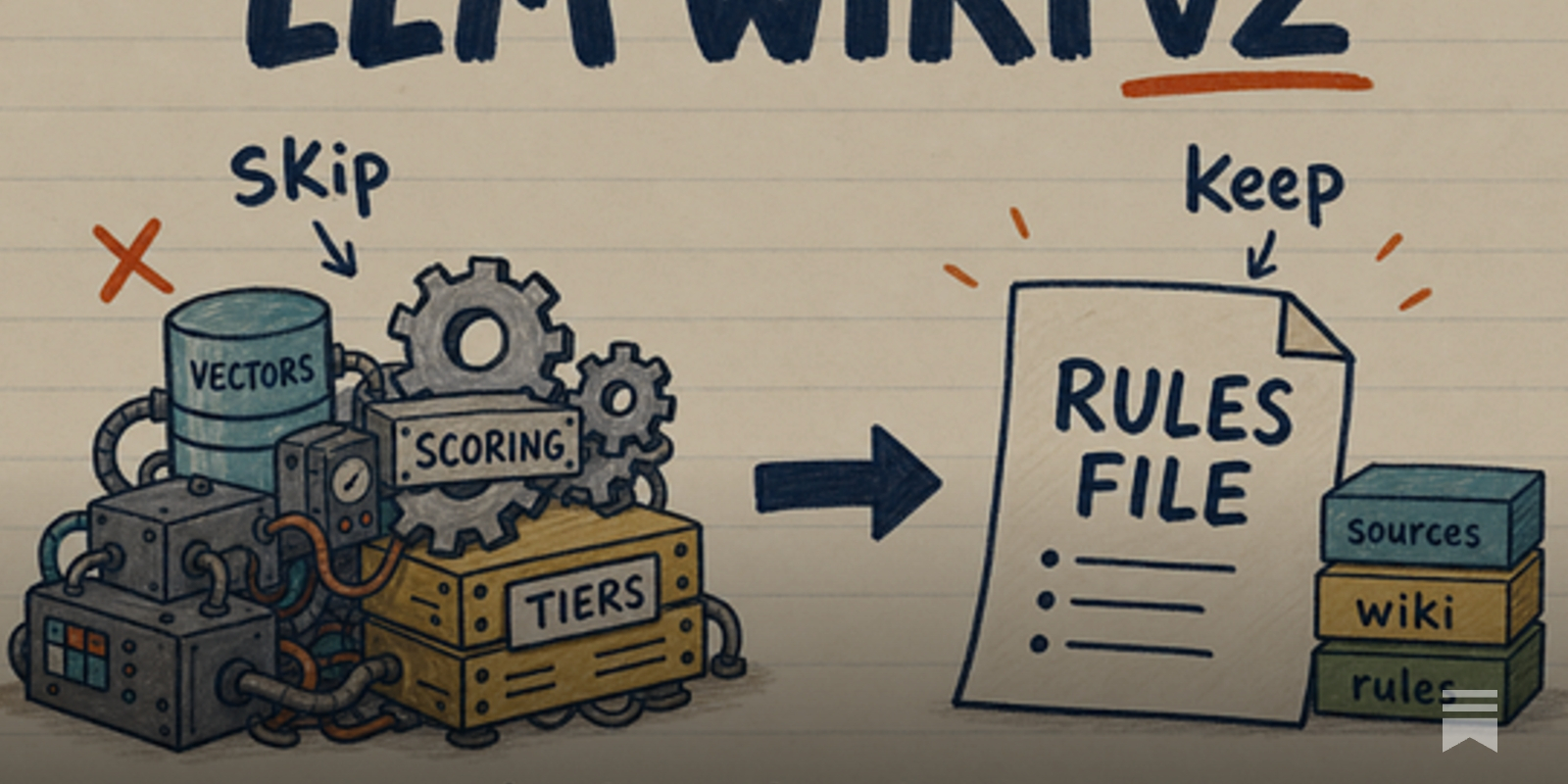
I rebuilt it, ran it daily for months, and most of the v2 hype is overkill.
How the Open Knowledge Format can improve data sharing | Google Cloud Blog
Learn how the Open Knowledge Format helps secure data sharing and improves collaboration across teams with standardized documentation.
Personal Encyclopedias — whoami.wiki
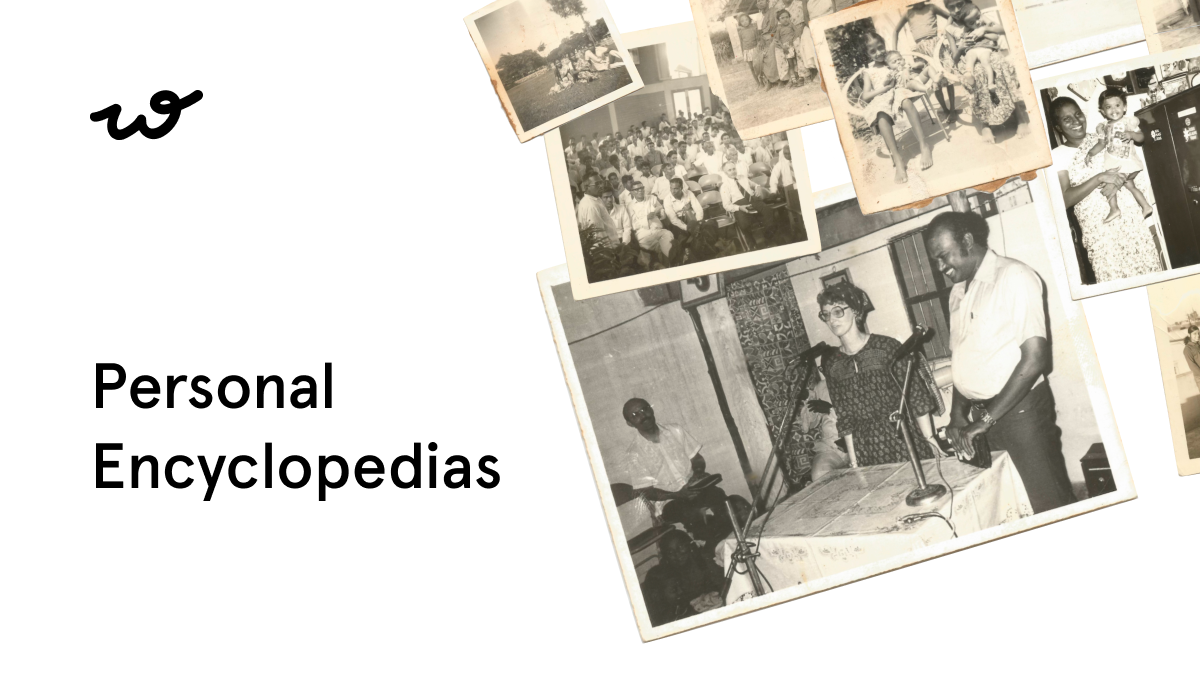
Last year, I visited my grandmother's house for the first time after the pandemic and came across a cupboard full of loose old photos. I counted 1,351 of them spanning all the way from my grandparents in their early 20s, my mom as a baby, to me in middle school, just around the time when we got our first smartphone and all photos since then were backed up online.
DeepRefine: Agent-Compiled Knowledge Refinement via Reinforcement Learning
Agent-compiled knowledge bases provide persistent external knowledge for large language model (LLM) agents in open-ended, knowledge-intensive downstream tasks. Yet their quality is systematically limited by \emph{incompleteness}, \emph{incorrectness}, and \emph{redundancy}, manifested as missing evidence or cross-document links, low-confidence or imprecise claims, and ambiguous or coreference resolution issues. Such defects compound under iterative use, degrading retrieval fidelity and downstream task performance. We present \textbf{DeepRefine}, a general LLM-based reasoning model for \emph{agent-compiled knowledge refinement} that improves the quality of any pre-constructed knowledge bases with user queries to make it more suitable for the downstream tasks. DeepRefine performs multi-turn interactions with the knowledge base and conducts abductive diagnosis over interaction history, localizes likely defects, and executes targeted refinement actions for incremental knowledge base updates. To optimize refinement policies of DeepRefine without gold references, we introduce a Gain-Beyond-Draft (GBD) reward and train the reasoning process end-to-end via reinforcement learning. Extensive experiments demonstrate consistent downstream gains over strong baselines.

The Second Brain That Grows Smarter and Lives on your Computer
How a spark from Andrej Karpathy, app called Obsidian, and “The Curator”, the app I built are changing the way I think.
Karpathy's LLM Knowledge Base Wiki for Enterprise | Vijoy Pandey posted on the topic | LinkedIn
There's a new kind of computer media in the enterprise: Write once, Read never. The docs are perpetually stale, constantly diverging from reality, and scattered across Confluence, SharePoint, GitHub, Webex (or Slack) threads, Notion, Obsidian - and in my personal life, add Apple Notes, Goodnotes, web clippings, and multiple Google Drives worth of docs and slides that nobody is ever going back to. Karpathy tweeted his LLM knowledge base wiki architecture which went viral last weekend and I decided to give it a run yesterday. Verdict: You *have* to try this out. Prediction: You won’t be able to live without it soon. There were a few mods and decisions I made to the base Karpathy provided. First, the vault / folder structure in Obsidian. I already use Obsidian as a human. Instead of creating separate vaults and dealing with the sync nightmare, I just have folders for Human and Agent, and a Raw folder. (1) The Human/ folder is where I write long form articles and notes independent of the knowledge base wiki. No LLM or agent touches this folder. (2) I do have Arnold Layne, my OpenClaw agent, doing background tasks for me. Raw/ is where both Arnold and I, dump raw snippets. Inclusive of diverse kinds of media. (3) The Agent/ folder is where the LLM (Claude in my case) synthesizes the wiki. No human touches this folder. Second, some customizations to CLAUDE.md for enterprise-like usage - (4) Domain extensions - the agent needs to know that quantum computing and agentic AI have different entity types and different provenance thresholds. (5) Primary source protection, when I drop in my own original work, secondary sources can extend it or raise questions against it, but they cannot overwrite it. It sounds like a small thing but its’s not, especially at enterprise scale where provenance actually matters. Karpathy is upfront that what he’s built is working memory for a single agent, and it’s truly remarkable at that. The jump to Shared Context across teams, reconciling conflicting beliefs at org scale, ontologies that don’t collapse under the weight of a hundred contributors - those are much harder problems and what we are exploring with the Internet of Cognition. PS: The screenshot shows my Obsidian vault after just two runs: one with Karpathy’s original tweet and gist file itself (so meta!) and one with our Internet of Cognition paper. Claude (Sonnet) read it, compiled it into structured summaries, entity pages, concept pages, backlinks, merged all the information cohesively, and keeps it all maintained from there. You just read the Wiki. It’s simply magical.

Vector RAG vs LLM-Compiled Wiki: A Preregistered Comparison on a Small Multi-Domain Research
We preregistered a comparison of two ways to help an LLM answer questions over a small research corpus: a single-round Vector RAG system and an LLM-compiled markdown wiki. Both systems answered the same 13 questions over 24 papers using the same answer-generating model, and their answers were scored by blinded LLM judges. The wiki scored much better at connecting findings across papers, but its advantage in answer organization was not strong after judge adjustment. RAG met the preregistered test for single-fact lookup questions. The clean query-side cost result went against the expected wiki advantage: under the tested setup, the wiki used far more query tokens than RAG, so it could not recover any upfront build cost through cheaper queries. Two exploratory analyses changed how we interpret the result. First, claim-level citation checking favored the wiki: its cited pages more often supported the exact claims being made, even though RAG scored better on the overall groundedness rubric. Second, a decomposition-based RAG variant recovered most of the wiki's advantage on cross-paper synthesis at lower LLM-token cost, but it did not recover the wiki advantage in claim-by-claim citation support. The main conclusion is that grounded research synthesis is not a single capability. Systems can differ in how well they organize evidence, how well their citations support each claim, and how much they cost to run. In this study, no architecture was best on all three.
#158: Build your AI Brain
How I built a second brain that gets smarter every day
Build an LLM Wiki for Your AI Agents
Build an LLM Wiki for Your AI Agents with myKG and Obsidian How to turn a folder of mixed format documents into a typed, interlinked knowledge graph your agents can actually read — using myKG and …
Bryan Johnson on Twitter / X
I got C-holed.Suffered sleep consequences. I busted my screens-off rule.Turned down socializing.Fell behind on work.Kate is now upset. AI is preposterous. As close to magic as I’ve experienced (except a seed becoming a tree and a zygote becoming a baby). It started on… pic.twitter.com/niw6uqPtNv— Bryan Johnson (@bryan_johnson) April 19, 2026

I Built a Digital Brain Upload Using Karpathy's LLM Knowledge Base
WiCER: Wiki-memory Compile, Evaluate, Refine Iterative Knowledge Compilation for LLM Wiki Systems
The LLM Wiki pattern, to compile and provide domain knowledge into a persistent artifact and serve it to LLMs via KV cache inference, promises context access at sub-second latency with zero retrieval failure. Realizing this requires solving the compilation gap: LLM compilation distilling raw documents into a wiki without catastrophically discarding critical facts. We characterize this gap across 17 RepLiQA domains (6,800 questions): we observe that full context KV cache inference outperforms RAG on curated knowledge (4.38 vs. 4.08 out of 5, 7.3 faster TTFT) but degrades below RAG at scale due to attention dilution, and blind compilation fails entirely (2.14 to 2.32 vs. 3.46, 53 to 60% catastrophic failure rate). To address the compilation gap, we propose WiCER (Wiki-memory Compile, Evaluate, Refine), an iterative algorithm inspired by counterexample-guided abstraction refinement (CEGAR) that closes this gap. WiCER evaluates compiled wikis against diagnostic probes, identifies dropped facts, and forces their preservation in subsequent compilations. One to two iterations recover 80% of lost quality (mean 3.24 vs. 3.47 for raw full-context across the 15 topics with baselines), reducing catastrophic failures by 55% relative. An ablation across all 17 topics confirms that targeted diagnosis (+0.95), not generic pinning (+0.16), drives the gains. All code and benchmarks are released for reproducible research.
10 Easy Ways to Enhance Your LLM Wiki or Knowledge Base

