


Software development and creative endeavors. Currently working at the crossroads of participatory science, games, and UX @frameshifter.org @eternagame.org luxaritas.com
Software development and creative endeavors. Currently working at the crossroads of participatory science, games, and UX @frameshifter.org @eternagame.org luxaritas.com
Profile: Adrien Treuille
The combined efforts of half a million video gamers could some day help cure a disease.

NOVA | The Wisdom of the Crowds | Season 45 | Episode 6
Crowds hold a predictive power that can have startling accuracy.

Mapping Citizen Science through the Lens of Human-Centered AI
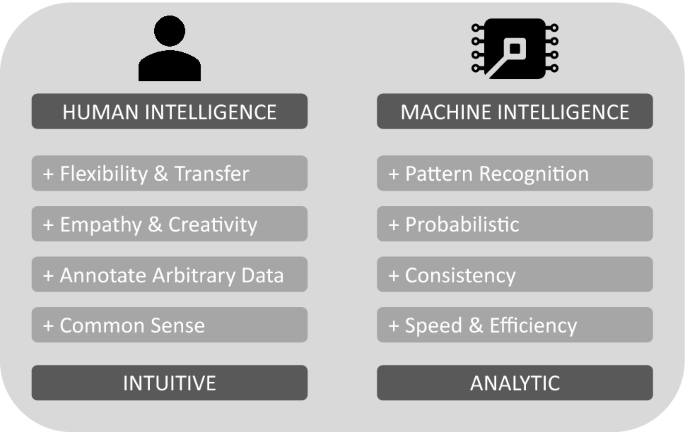
Artificial Intelligence (AI) can augment and sometimes even replace human cognition. Inspired by efforts to value human agency alongside productivity, we discuss and categorize the potential of solving Citizen Science (CS) tasks with Hybrid Intelligence (HI), a synergetic mixture of human and artificial intelligence. Due to the unique participant-centered set of values and the abundance of tasks drawing upon both human common sense and complex 21st century skills, we believe that the field of CS offers an invaluable testbed for the development of human-centered AI including HI, while also benefiting CS. In order to investigate this potential, we first relate CS to adjacent computational disciplines. Then, we demonstrate that CS projects can be grouped according to their potential for HI-enhancement by examining two key dimensions: the level of digitization and the amount of knowledge or experience required for participation. Finally, we propose a framework for types of human-AI interaction in CS based on established criteria of HI. This “HI lens” provides the CS community with an overview of ways to utilize the combination of AI and human intelligence in their projects. For AI researchers, this work highlights the opportunity CS presents to engage with real-world data sets and explore new AI methods and applications.
Peer Production in Citizen Science: A Community-Centered Approach on the Example of Personal Science
Citizen science encompasses a wide range of practices where online collaboration for knowledge production plays a significant role. However, the study of forms of online collaboration other than crowdsourcing in citizen science has remained largely unexplored. This thesis aims to fill this gap by investigating peer production as a form of collaboration in online citizen science communities of practice. First, peer production theory was operationalized as a working model and used to analyze collaboration in citizen science case studies. This was followed by a comprehensive participatory design process for a specific use case involving the personal science community of practice. This process resulted in the creation of the “Personal Science Wiki”, an online space for consolidating community knowledge through peer production. Subsequently, a usability and card sorting study identified and resolved issues with the wiki implementation, and provided insights into mental models and content requirements regarding self-research knowledge. The lessons learned from the participatory design process were generalized as process recommendations for designing peer production solutions and knowledge management systems with communities of practice.
Human-Centered Artificial Intelligence: Three Fresh Ideas
Human-Centered AI (HCAI) is a promising direction for designing AI systems that support human self-efficacy, promote creativity, clarify responsibility, and facilitate social participation. These human aspirations also encourage consideration of privacy, security, environmental protection, social justice, and human rights. This commentary reverses the current emphasis on algorithms and AI methods, by putting humans at the center of systems design thinking, in effect, a second Copernican Revolution. It offers three ideas: (1) a two-dimensional HCAI framework, which shows how it is possible to have both high levels of human control AND high levels of automation, (2) a shift from emulating humans to empowering people with a plea to shift language, imagery, and metaphors away from portrayals of intelligent autonomous teammates towards descriptions of powerful tool-like appliances and tele-operated devices, and (3) a three-level governance structure that describes how software engineering teams can develop more reliable systems, how managers can emphasize a safety culture across an organization, and how industry-wide certification can promote trustworthy HCAI systems. These ideas will be challenged by some, refined by others, extended to accommodate new technologies, and validated with quantitative and qualitative research. They offer a reframe -- a chance to restart design discussions for products and services -- which could bring greater benefits to individuals, families, communities, businesses, and society.
Digital gardening

Digital gardens in theory and practice
Citizen science/sensemaking games
Open discoverability and curation
Content around discoverability and curation in open ecosystems
Networked Research Labs
Collective Intelligence Research

Explorations into the idea that a group of humans is "more intelligent" than the sum of their "IQ" (i.e. "groups of individuals doing things collectively that seem intelligent")
haiku.garden
Tranquil PDS
ezras-thoughts.leaflet.pub
Garden and the Stream - thoughts
semble.so
Digital Gardens (by owais) — Semble
semble.so
digital gardens (by treethought) — Semble

www.uncensoredlibrary.com
The Uncensored Library – Reporters without borders

med.stanford.edu
Journal publishes paper by video-gamers who derived scientific rules from Stanford online RNA game

frameshifter.org
Frameshifter
journals.plos.org
Practical recommendations from a multi-perspective needs and challenges assessment of citizen science games

www.reinvent.science
AI for Science Curation
www.reinvent.science
AI for Science Curation
wesleyfinck.org
modular research multi-agent slack-like environment demo
engineering.block.xyz
Buzz! 🐝
www.genspace.org
Genspace
www.lesswrong.com
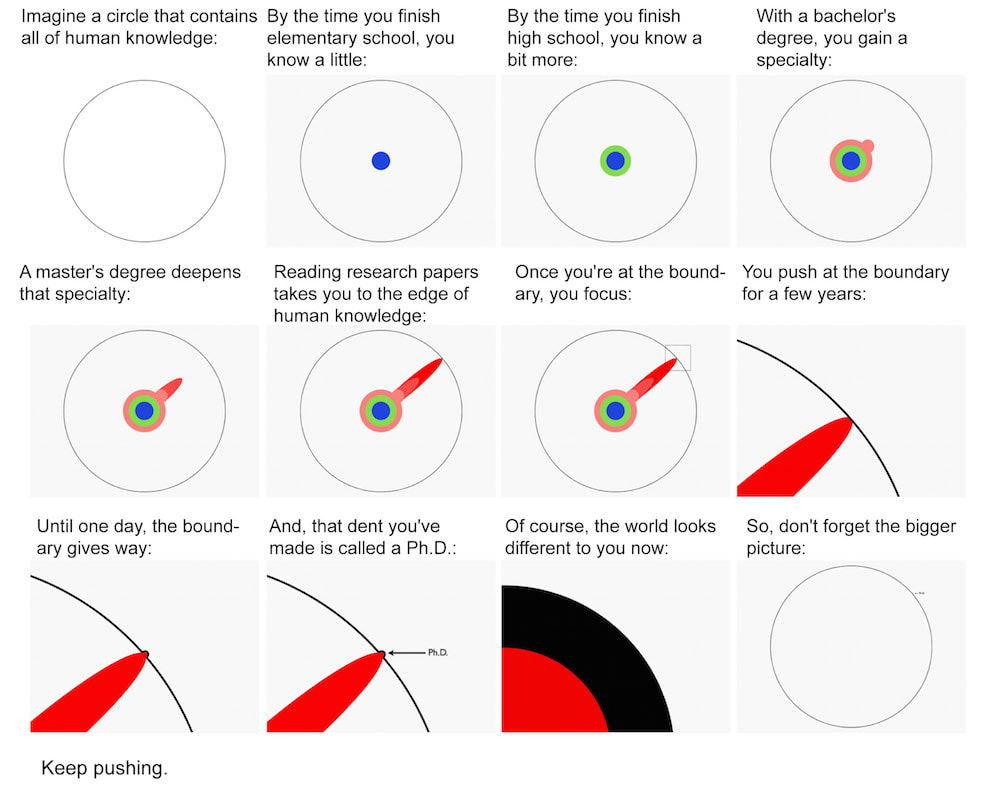
On open-science research labs on discord, and getting more people.

henryjenkins.org
Sharing Notes about Collective Intelligence — Pop Junctions

arxiv.org
Socially Minded Intelligence: How Individuals, Groups, and Artificial Intelligence Can Make Each Other Smarter (or Not)
www.pbssocal.org
Profile: Adrien Treuille
www.pbs.org
NOVA | The Wisdom of the Crowds | Season 45 | Episode 6
hcjournal.org
Mapping Citizen Science through the Lens of Human-Centered AI
hal.science
Peer Production in Citizen Science: A Community-Centered Approach on the Example of Personal Science