


Gingipains from Porphyromonas gingivalis drive Alzheimer’s pathology and can be blocked with small-molecule inhibitors.
Learning What Substance Is Suspected of Causing Alzheimer’s May Throw You Into an Existential Crisis
A surprisingly common substance was found to have a causal relationship with the kind of brain damage associated with Alzheimer's disease.

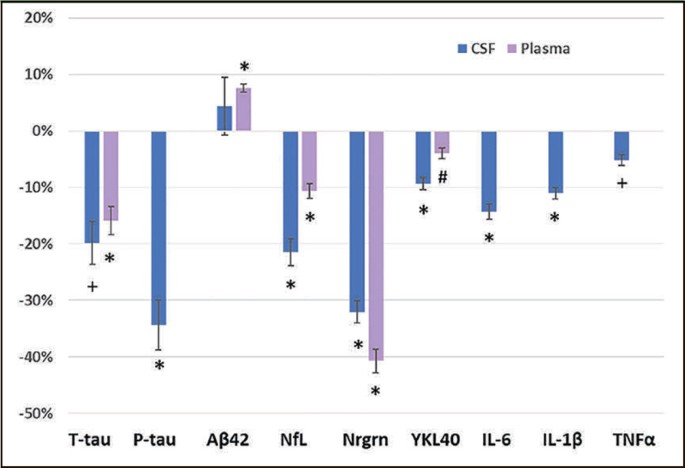
PTI-125 Reduces Biomarkers of Alzheimer’s Disease in Patients
The most common dementia worldwide, Alzheimer’s disease is often diagnosed via biomarkers in cerebrospinal fluid, including reduced levels of Aβ1-42, and increases in total tau and phosphorylated tau-181. Here we describe results of a Phase 2a study of a promising new drug candidate that significantly reversed all measured biomarkers of Alzheimer’s disease, neurodegeneration and neuroinflammation. PTI-125 is an oral small molecule drug candidate that binds and reverses an altered conformation of the scaffolding protein filamin A found in Alzheimer’s disease brain. Altered filamin A links to the α7-nicotinic acetylcholine receptor to allow Aβ42’s toxic signaling through this receptor to hyperphosphorylate tau. Altered filamin A also links to toll-like receptor 4 to enable Aβ-induced persistent activation of this receptor and inflammatory cytokine release. Restoring the native shape of filamin A prevents or reverses filamin A’s linkages to the α7-nicotinic acetylcholine receptor and tolllike receptor 4, thereby blocking Aβ42’s activation of these receptors. The result is reduced tau hyperphosphorylation and neuroinflammation, with multiple functional improvements demonstrated in transgenic mice and postmortem Alzheimer’s disease brain.
Odor biomarker for Alzheimer's disease
A new study from the Monell Center, the U.S. Department of Agriculture (USDA), and collaborating institutions reports a uniquely identifiable odor signature from mouse models of Alzheimer's disease. The ...

Reducing Amyloid-Related Alzheimer's Disease Pathogenesis by a Small Molecule Targeting Filamin A
PTI-125 is a novel compound demonstrating a promising new approach to treating Alzheimer's disease (AD), characterized by neurodegeneration and amyloid plaque and neurofibrillary pathologies. We show that the toxic signaling of amyloid-β42 (Aβ42) by the α7-nicotinic acetylcholine receptor (α7nAChR), which results in tau phosphorylation and formation of neurofibrillary tangles, requires the recruitment of the scaffolding protein filamin A (FLNA). By binding FLNA with high affinity, PTI-125 prevents Aβ42's toxic cascade, decreasing phospho-tau and Aβ aggregates and reducing the dysfunction of α7nAChRs, NMDARs, and insulin receptors. PTI-125 prevents Aβ42 signaling by drastically reducing its affinity for α7nAChRs and can even dissociate existing Aβ42–α7nAChR complexes. Additionally, PTI-125 prevents Aβ-induced inflammatory cytokine release by blocking FLNA recruitment to toll-like receptor 4, illustrating an anti-inflammatory effect. PTI-125's broad spectrum of beneficial effects is demonstrated here in an intracerebroventricular Aβ42 infusion mouse model of AD and in human postmortem AD brain tissue.

The Terrorist in the Brain
What can Robin Williams and Bruce Willis teach us about dementia? This article explores the complex biological realities of brain diseases, controversies in Alzheimer's research, the risks of new drugs, and the multi-billion-dollar industry exploiting our fear of cognitive decline.

Study Reveals a Surprising Cause of Cognitive Decline—and the Key to Reversing It
Researchers pinpoint a lone protein that speeds up the dysfunction of an aging brain. Eliminating it, they claim, can reverse the damage. But there are big hurdles before a treatment is approved.

How Exercise Might "Clean" the Alzheimer's Brain
Hints at potential treatments for age-related dementia and memory loss

Small Trial Reverses a Year of Alzheimer's Cognitive Decline in Just Two Months
The next step is a clinical trial with 150 people.

A cure for Alzheimer’s? Yes, a cure for Alzheimer’s!
This is the most important column I’ve ever written. The message is quite complex--dozens of new health parameters to test for and to optimize, all of them interacting in ways that will require new training for MDs.
Leading Innovation in Psychiatric Treatment | Alto Neuroscience
We leverage brain biology to develop personalized medicines, helping patients get better faster.
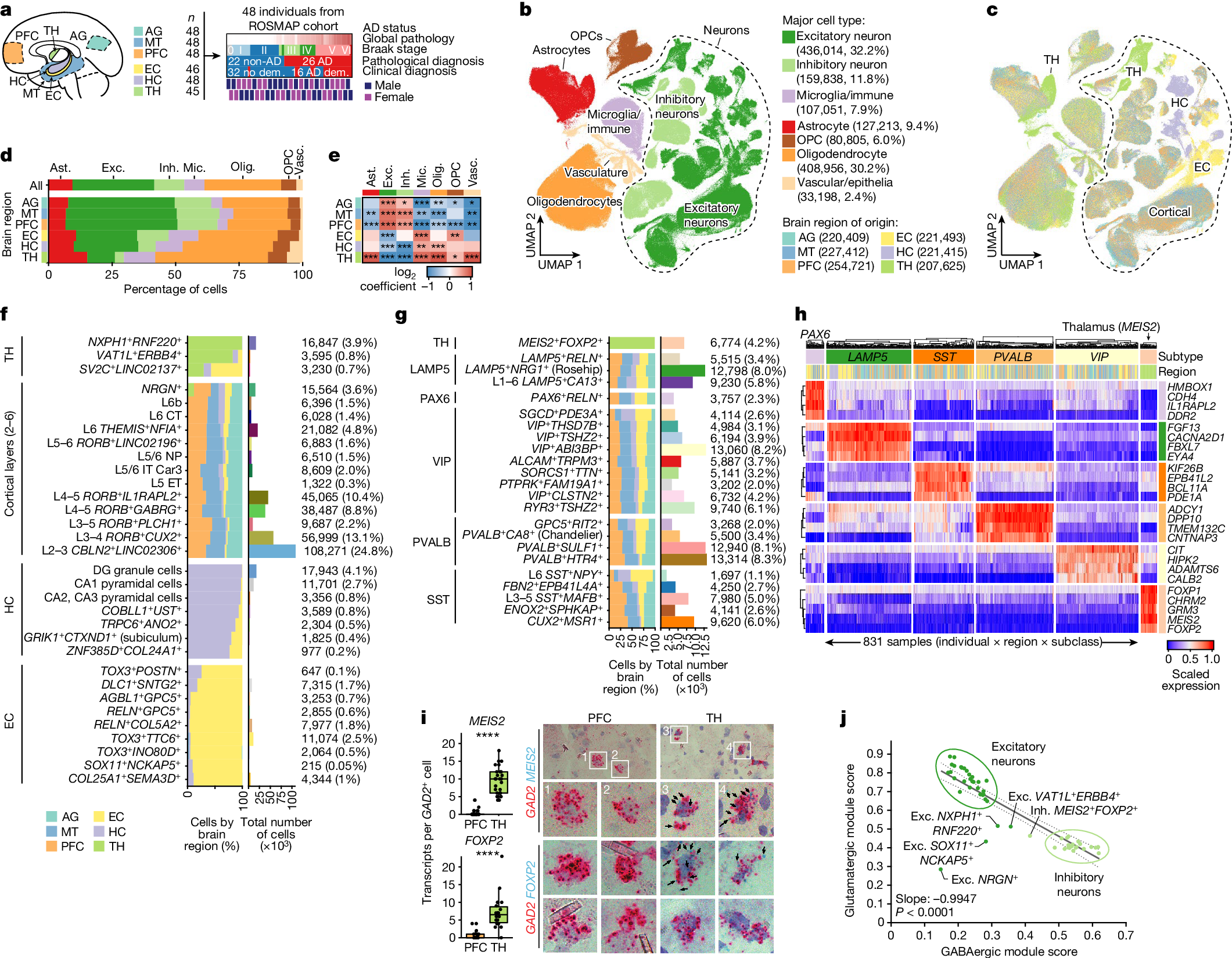
Single-cell multiregion dissection of Alzheimer’s disease
Alzheimer’s disease is the leading cause of dementia worldwide, but the cellular pathways that underlie its pathological progression across brain regions remain poorly understood1–3. Here we report a single-cell transcriptomic atlas of six different brain regions in the aged human brain, covering 1.3 million cells from 283 post-mortem human brain samples across 48 individuals with and without Alzheimer’s disease. We identify 76 cell types, including region-specific subtypes of astrocytes and excitatory neurons and an inhibitory interneuron population unique to the thalamus and distinct from canonical inhibitory subclasses. We identify vulnerable populations of excitatory and inhibitory neurons that are depleted in specific brain regions in Alzheimer’s disease, and provide evidence that the Reelin signalling pathway is involved in modulating the vulnerability of these neurons. We develop a scalable method for discovering gene modules, which we use to identify cell-type-specific and region-specific modules that are altered in Alzheimer’s disease and to annotate transcriptomic differences associated with diverse pathological variables. We identify an astrocyte program that is associated with cognitive resilience to Alzheimer’s disease pathology, tying choline metabolism and polyamine biosynthesis in astrocytes to preserved cognitive function late in life. Together, our study develops a regional atlas of the ageing human brain and provides insights into cellular vulnerability, response and resilience to Alzheimer’s disease pathology.
Cannabinoids promote embryonic and adult hippocampus neurogenesis and produce anxiolytic- and antidepressant-like effects
The hippocampal dentate gyrus in the adult mammalian brain contains neural stem/progenitor cells (NS/PCs) capable of generating new neurons, i.e., neurogenesis. Most drugs of abuse examined to date decrease adult hippocampal neurogenesis, but the effects of cannabis (marijuana or cannabinoids) on hippocampal neurogenesis remain unknown. This study aimed at investigating the potential regulatory capacity of the potent synthetic cannabinoid HU210 on hippocampal neurogenesis and its possible correlation with behavioral change. We show that both embryonic and adult rat hippocampal NS/PCs are immunoreactive for CB1 cannabinoid receptors, indicating that cannabinoids could act on CB1 receptors to regulate neurogenesis. This hypothesis is supported by further findings that HU210 promotes proliferation, but not differentiation, of cultured embryonic hippocampal NS/PCs likely via a sequential activation of CB1 receptors, Gi/o proteins, and ERK signaling. Chronic, but not acute, HU210 treatment promoted neurogenesis in the hippocampal dentate gyrus of adult rats and exerted anxiolytic- and antidepressant-like effects. X-irradiation of the hippocampus blocked both the neurogenic and behavioral effects of chronic HU210 treatment, suggesting that chronic HU210 treatment produces anxiolytic- and antidepressant-like effects likely via promotion of hippocampal neurogenesis.

We Are Entering the Age of Alzheimer's
We will all be touched by the disease. How are we going to get through this?

Growing research finds psychedelics effective in treating disease
Gordon McGlothlin, who took his first puff at age 12 behind his family’s garage, tried to quit smoking for years, but no cessation technique worked until he used a psychedelic drug. Researchers with the Johns Hopkins University…

From treating PTSD to quitting tobacco: researchers say public investment into psychedelic drugs essential | CBC News
Magic mushrooms to treat depression, ecstasy to cure PTSD and LSD to combat alcoholism; just some of the drug-affliction pairings that have been tested in recent years.

Seeing the "shingles vaccine protects from dementia" claim going around again. Unfortunately the main study it's based on is just not convincing. @epiellie.bsky.social has written a great post about why:
Shingles vaccine & dementia prevention: too good to be true?
medium.com