
We tend to think that our memories determine our identity, but it’s moral character that really makes us who we are
Core Concepts in Identity - Identity Woman
One of the reasons that digital identity can be such a challenging topic to address is that we all swim in the sea of identity every day. We don’t think about what is really going in the transactions….and many different aspects of a transaction can all seem do be one thing. The early Identity Gang […]
The two kinds of stories we tell about ourselves
We’ve all created our own personal histories, marked by highs and lows, that we share with the world — and we can shape them to live with more meaning and purpose.

The Inconvenient Truth about Your "Authentic" Self
To actually feel authentic, you might have to betray your true nature

The role of literature as the key to personal freedom | Aeon Essays
Stripped of easy moralising, literature makes us relish the search for truth in an age when many believe truth to be dead

The Self Illusion: How Our Social Brain Constructs Who We Are
Hume was a neuroscientist, or what early aviation has to do with the psychology of identity.
Recognition
Recognition has both a normative and a psychologicaldimension. Arguably, if you recognize another person with regard to acertain feature, as an autonomous agent, for example, you do not onlyadmit that she has this feature but you embrace a positive attitudetowards her for having this feature. Such recognition implies that youbear obligations to treat her in a certain way, that is, you recognizea specific normative status of the other person, e.g., as a free andequal person. But recognition does not only matter normatively. It isalso of psychological importance. Most theories of recognition assumethat in order to develop a practical identity, persons fundamentallydepend on the feedback of other subjects (and of society as awhole). According to this view, those who fail to experience adequaterecognition, i.e., those who are depicted by the surrounding others orthe societal norms and values in a one-sided or negative way, willfind it much harder to embrace themselves and their projects asvaluable. Misrecognition thereby hinders or destroys persons’successful relationship to their selves. It has been poignantlydescribed how the victims of racism and colonialism have sufferedsevere psychological harm by being demeaned as inferior humans (Fanon1952). Thus, recognition constitutes a “vital human need”(Taylor 1992, 26).
Echoes from History II
This article, like “Echoes from History: Designing Self-Sovereign Identity with Care”, is drawn from a book I have in process called FOREMEMBRANCE, whic...
Ephemeral Identities
The Paper Pilot's digital garden of thoughts on philosophy, politics, and sociology. Reading time: ~6 minute read | Published: Sep 16, 2026 | Updated: Oct 7, 2026

The empathy paradox
There’s an image of empathy we all know that is beautiful: the fullness of completely understanding someone else, the symbolic walk in shoes that are not one’s own. The knowledge that someone else can share a pain so acute that would otherwise seem unbearably solitary. It’s an image inherent to empathy’s definition, an image many believe in wholeheartedly. Several studies conducted by Stanford researchers alone suggest people are motivated to feel empathy, that empathy is highly associated with social desirability, that it is as beneficial as it is admired.
People & Technology
To understand AI’s effect on moral character, ethicist Kwame Anthony Appiah goes back to John Stuart Mill, and the idea that people are shaped by their choices.
Empathy, Thick and Thin
When we empathize with someone going through something, we often draw on our past experiences with the someone and the something. These kinds of experiences gro

Human identity: the number one challenge in computer science
If the modern ‘problem of identity’ was how to construct an identity and keep it solid and stable, the postmodern ‘problem of identity’ is primarily how to avoid fixation and keep the options open. (Bauman 2011)
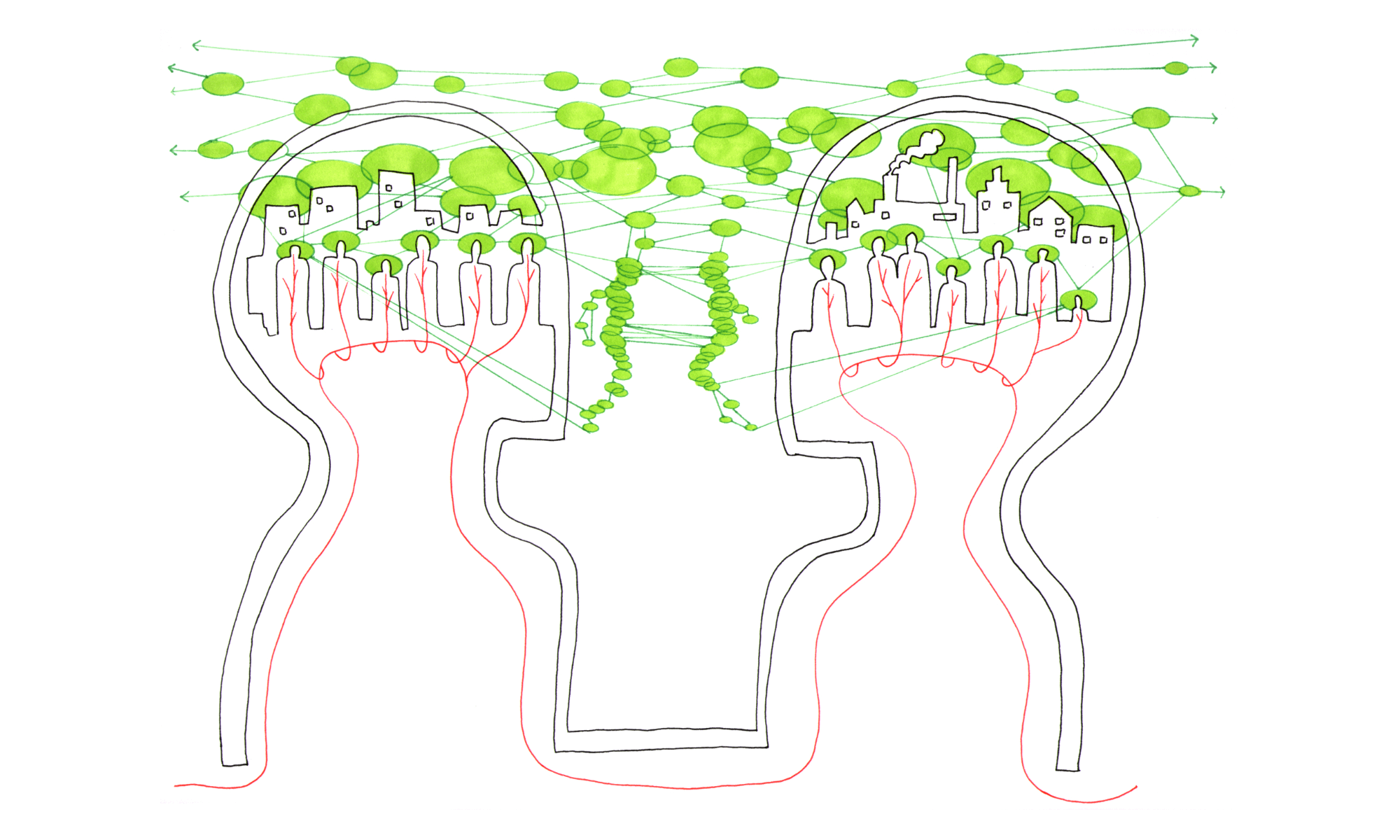
The Online Identity Crisis - Published Drafts
Thoughts on trying to keep one's identity compartmentalized
Musings of a Trust Architect: The Origins of Self-Sovereign Identity
ABSTRACT: The idea of Self-Sovereign Identity emerged in 2016, but it has inspirations dating back centuries. This article explores the historic evoluti...

Designing the Social
This book explores the complex place of social media in young people’s lives and the role it plays in shaping how they understand and present their identity publicly on a wide array of platforms. It proposes a new theoretical framework, Comic Theory, for understanding identity performances.