

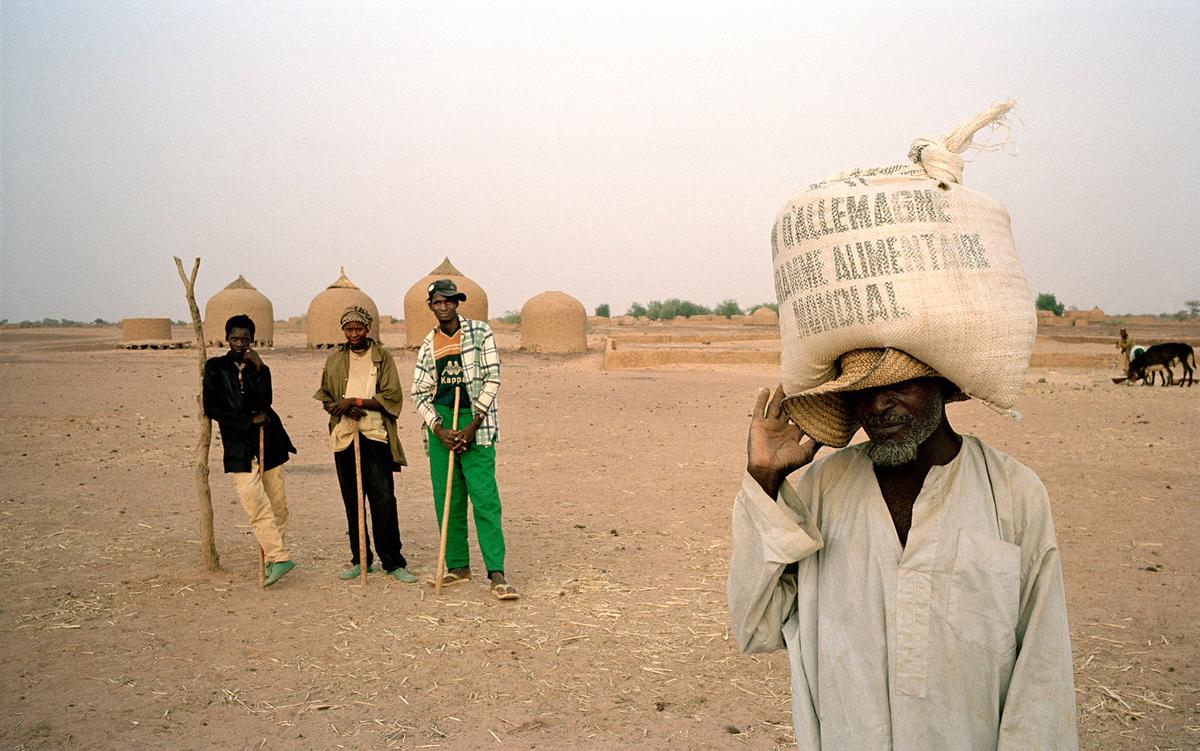
Can humanitarian agencies still fly the flag of high principle, or are they just relics of an imperial model of charity?
Humanitarian Governance
This review examines humanitarian governance, defined as the increasingly organized and internationalized attempt to save the lives, enhance the welfare, and reduce the suffering of the world's most vulnerable populations. Political scientists and international relations scholars are only now beginning to explain this rapidly growing global governance of humanity, which is particularly evident in the developing literatures on humanitarian intervention, emergency relief, peacebuilding, and refugee protection. As they increasingly engage this relatively unexplored area of global life, political scientists are using the familiar analytics of the global governance literature to explain the origins, design, and effectiveness of this collective activity. This essay, though, interjects an alternative perspective, one that draws from critical theory, to widen the research agenda of the study of humanitarian governance. Specifically, the essay raises six central questions: What kind of world is being imagined and produced? What accounts for the tremendous growth of humanitarian governance over the last century? Who governs? How is humanitarian governance organized and accomplished? What are the principal techniques of control? By what authority do humanitarians govern and what do they do with that authority?

A world in turmoil: governing risk, establishing order in humanitarian crises
This special issue of Disasters on humanitarian governance focuses on risk and order. Its contributions show the tensions between humanitarian normative ideals and practical consequences, as many of ...

After aid: Thoughts on a localised humanitarian system (part 1)
You have probably read 100+ articles on this topic — USAID shutdown, funding cuts from several EU governments and the UK. An…

Giving What We Can, 80,000 Hours, and Meta-Charity - Less Wrong
Disclaimer: I’m somewhat nervous about posting this, for fear of down-voting on my first LW post, given that this post explicitly talks in a positive light about organisations that I have helped to set up. But I think that the topic is of interest to LW-ers, and I’m hoping to start a rational discussion. So here it goes…
Organizations Beyond Purpose
Organizations deserve dignity as collective beings In my recent article, “Burned out on goodness,” I mentioned that I no longer believe in organizational purposes, at least not in the way they are often used. I even find that our purpose obsession is a hefty remnant of our mental colonization.

EA is worse than traditional philanthropy in the way it excludes we the poor.
Effective altruism is worse than traditional philanthropy in the way it excludes the extreme poor in the global south. By Anthony Kalulu @KaluluAnthony | December 3, 2022: —- I have spent the vast portion of my life in ultra poverty. My region Busoga, is also Uganda’s most impoverished, yet Uganda itself is among the poorest countries … Continue reading ""

Fanning the Flames
Since the conflict between the Sudanese Armed Forces (SAF) and the Rapid Support Forces (RSF) began in Sudan in April 2023, countless civilians have been killed, millions have been internally displaced, and millions face famine. There is a large and growing body of credible evidence documenting how, during their conduct in the conflict, the warring parties have committed widespread war crimes, crimes against humanity, and serious human rights violations, including in the Darfur region. For example, Human Rights Watch, among others, has documented devastating ethnic cleansing in West Darfur. Given the prevalence of such atrocities in the conflict, Human Rights Watch has called for the renewal and expansion of the existing arms embargo on Darfur to the rest of Sudan to prevent warring parties acquiring weapons or equipment likely to be used to perpetuate serious violations of international human rights and humanitarian law, harming civilians.

Politicized Humanitarianism | willowbl00
This post is a collaboration between Margaret Killjoy and yours truly. If you find yourself in need of a co-author or ghostwriter, or just generally like to be challenged and your hopes dashed and lifted at the same time, please reach out to them.
Building Resilient Organizations - The Forge
Click here to listen to Maurice Mitchell read this article. Haga clic aquí para leer el artículo en Español. Maurice Mitchell talks with Cyndi Suarez of Nonprofit Quarterly about the inspiration behind the article. Executives in professional social justice institutions, grassroots activists in local movements, and fiery young radicals on protest lines are all […]

Effective Altruism: doing transhumanism better
Effective Altruism (EA) is a Trojan horse for transhumanism, through which EA movement leaders and funders aim to naturalize transhumanism as the logical extension of the existing global aid and development sector. This paper traces transhumanism's mainstreaming, first via its rebranding as a humanitarian effort to save lives, protect vulnerable populations, and ensure global flourishing (what I term transhumanitarianism), and later by embedding transhumanitarianism in EA (now under the rubric of longtermism). A key component of this strategy was inverting transhumanism's techno-optimism to instead focus on safety and preventing existential risks ( x-risk ) from emerging technologies like AI and biotechnology, while simultaneously advocating for the creation of these same technologies. The paper focuses on some components of this strategy: the use of inoculation, speculative ethics, anticipatory governance, and the mobilization of apocalyptic discourse as means for producing material outcomes in the form of policy and research agendas.
Philanthropy and the hand-off — what happens if government can’t scale social experiments?
Philanthropy and the hand-off — what happens if government can’t scale social experiments? My friend and (lucky for me) boss Joi Ito has an excellent essay in Wired which considers the challenges …
Mass Killings Reported in Sudan as RSF Seizes El Fasher; 460 Killed at Hospital
Sudan’s military is accusing the paramilitary Rapid Support Forces of killing at least 2,000 people since seizing control of El Fasher in the Darfur region, including some 460 at the Saudi Maternity Hospital. Meanwhile, tens of thousands have fled. “What’s happening is no less than a … campaign of destruction and annihilation,” says Mathilde Vu, Sudan advocacy manager at the Norwegian Refugee Council, speaking to Democracy Now! from Kenya. What’s unfolding in El Fasher is “the sum of all our fears,” adds Nathaniel Raymond, executive director of the Humanitarian Research Lab at the Yale School of Public Health. He urges the United States to put pressure on the United Arab Emirates, which has backed the RSF in the civil war as the group carries out “acts that are tantamount to genocide.”

Human Rights Principles - Amazon Sustainability
Explore how we’re demonstrating support for fundamental human rights and the dignity of workers

Home | 3ie
We are a mission-driven non-profit organization dedicated to using evidence to transform people’s lives. We collaborate with governments, foundations, NGOs, development and research organizations across the globe.
