

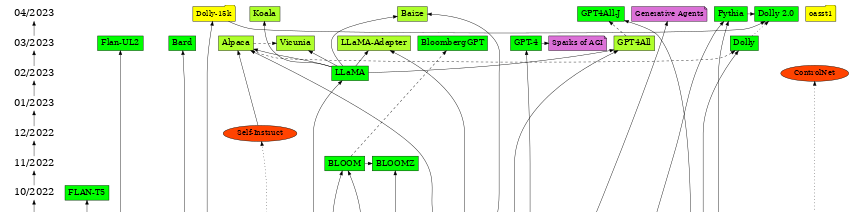
This is a collection of important papers in the area of Large Language Models and Transformer Models. It focuses on recent development and will be updated frequently.
An Observation on Generalization
Things we learned about LLMs in 2024
A lot has happened in the world of Large Language Models over the course of 2024. Here’s a review of things we figured out about the field in the past …
what are large language models actually doing? i read the 2025 textbook "Foundations of Large Language Models" by tong xiao and jingbo zhu and for the first time, i truly understood how they work. here’s everything you need to know about llms in 3 minutes↓
what are large language models actually doing?i read the 2025 textbook "Foundations of Large Language Models" by tong xiao and jingbo zhu and for the first time, i truly understood how they work.here’s everything you need to know about llms in 3 minutes↓ pic.twitter.com/OeYLuU3cWh— Alex Veremeyenko (@alex_verem) July 26, 2025

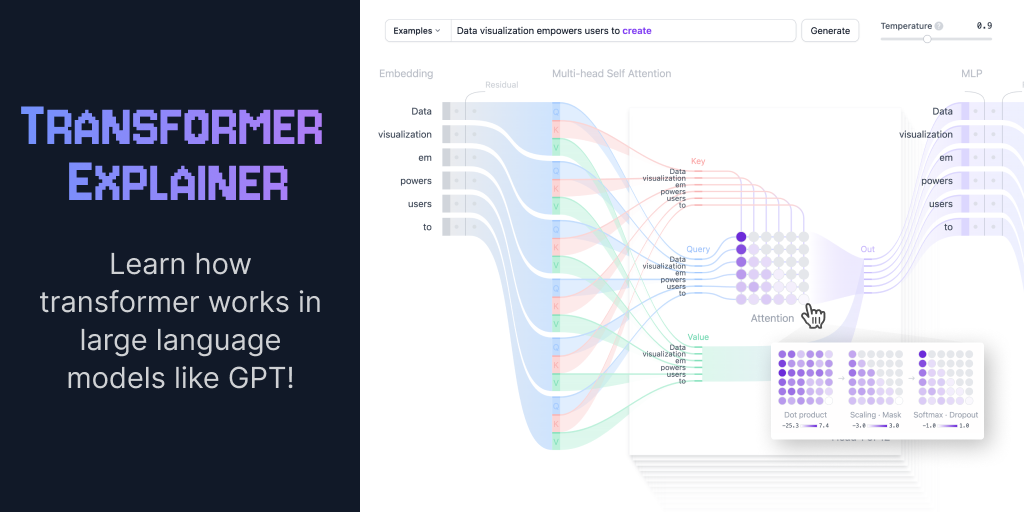
Transformer Explainer: LLM Transformer Model Visually Explained
An interactive visualization tool showing you how transformer models work in large language models (LLM) like GPT.
Alex Veremeyenko on Twitter / X
what are large language models actually doing?i read the 2025 textbook "Foundations of Large Language Models" by tong xiao and jingbo zhu and for the first time, i truly understood how they work.here’s everything you need to know about llms in 3 minutes↓ pic.twitter.com/OeYLuU3cWh— Alex Veremeyenko (@alex_verem) July 26, 2025
The Case Against LLMs as Rerankers
Authors: Apoorva Joshi, Zhenmei Shi, Akshay Goindani, Hong LiuResearch Leads: Zhenmei Shi, Akshay Goindani, Hong Liu Large language models are increasingly being used for a broad range of tasks, in…

What are Large Language Models(LLMs)?
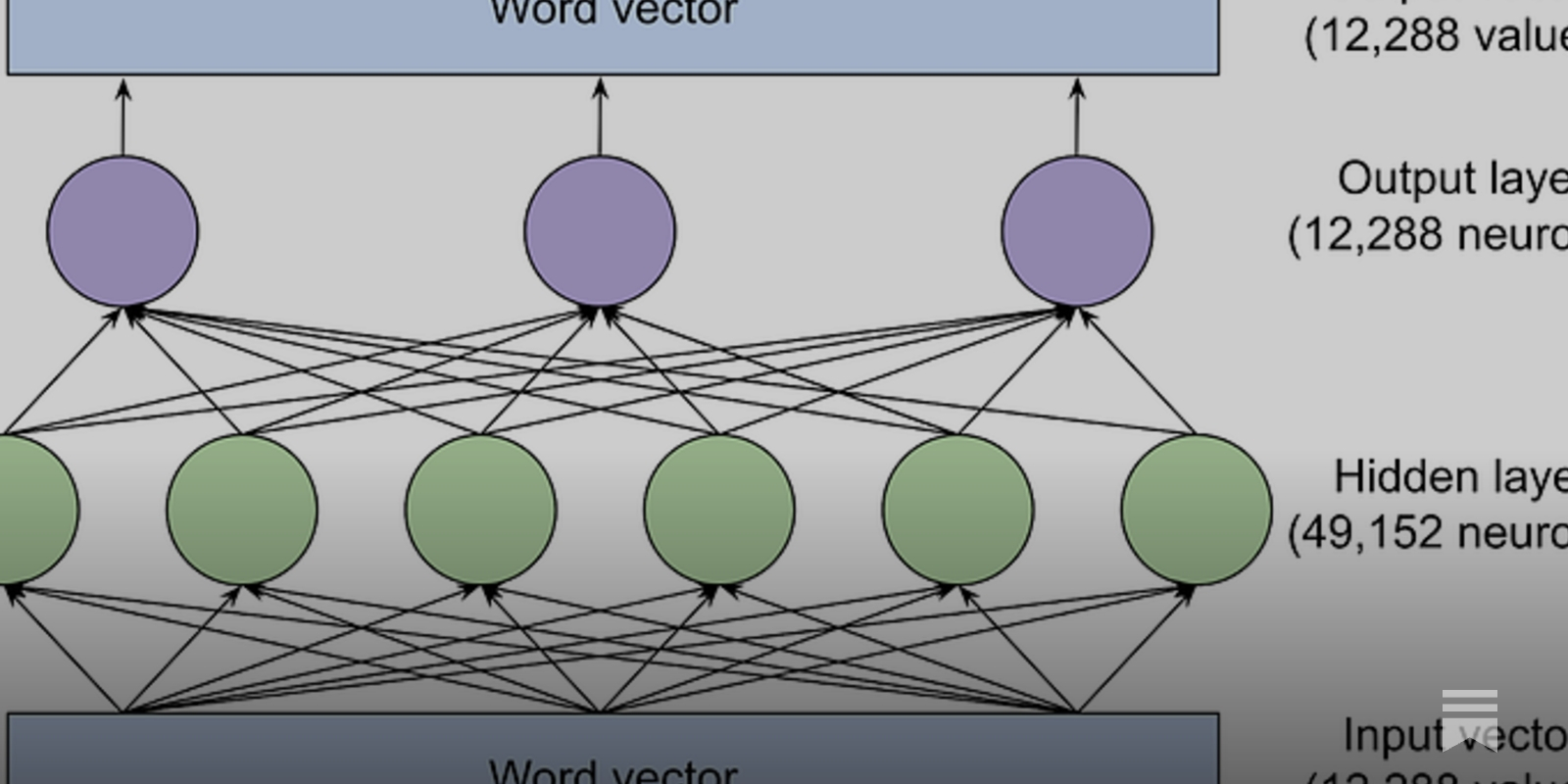
The architecture of Large Language Model primarily consists of multiple layers of neural networks, like recurrent layers, feedforward layers, embedding layers, and attention layers. These layers work together to process the input text and generate output predictions.

Large language models, explained with a minimum of math and jargon
Want to really understand how large language models work? Here’s a gentle primer.
I finally understand how large language models actually work After reading the 2025 textbook “Foundations of LLMs” It blew my mind and cleared up years of confusion Here’s everything i learned (in plain english):
I finally understand how large language models actually workAfter reading the 2025 textbook “Foundations of LLMs”It blew my mind and cleared up years of confusionHere’s everything i learned (in plain english): pic.twitter.com/Db7NHTks55— Louis Gleeson (@aigleeson) July 31, 2025

Large language model
A large language model (LLM) is a neural network trained on a vast amount of text for natural language processing tasks, especially language generation. LLMs can typically generate, summarize, translate, and analyze text in many contexts, and are a foundational technology behind modern chatbots.[1] Biased or inaccurate training data can make an LLM's output less reliable.[2]
How Large Language Models Actually Work
Stuff we figured out about AI in 2023
2023 was the breakthrough year for Large Language Models (LLMs). I think it’s OK to call these AI—they’re the latest and (currently) most interesting development in the academic field of …
Scaling Laws Across Model Architectures: A Comparative Analysis of...
The scaling of large language models (LLMs) is a critical research area for the efficiency and effectiveness of model training and deployment. Our work investigates the transferability and...

Beyond the Rosetta Stone: Unification Forces in Generalization Dynamics
Large language models (LLMs) struggle with cross-lingual knowledge transfer: they sometimes hallucinate when asked in one language about facts expressed in a different language during training. This work introduces a controlled setting to study the causes and training dynamics of this phenomenon by training small Transformer models from scratch on synthetic multilingual datasets. Depending on (1) the correlation between facts and the language they were learned in (informativeness), and (2) the ease of language identification (extractability), models either develop unified representations across languages or separate representations; only when representations are unified do facts transfer across languages. Based on these insights, we propose a unifying perspective which explains a range of prior observations concerning cross-lingual transfer in multilingual LLMs. Our work shows controlled settings can shed light on pre-training dynamics and suggests methods to encourage representational unification as part of training that would improve LLMs’ cross-lingual transfer.
The Illustrated Transformer
Discussions: Hacker News (65 points, 4 comments), Reddit r/MachineLearning (29 points, 3 comments) Translations: Arabic, Chinese (Simplified) 1, Chinese (Simplified) 2, French 1, French 2, Italian, Japanese, Korean, Persian, Russian, Spanish 1, Spanish 2, Vietnamese Watch: MIT’s Deep Learning State of the Art lecture referencing this post Featured in courses at Stanford, Harvard, MIT, Princeton, CMU and others Update: This post has now become a book! Check out LLM-book.com which contains (Chapter 3) an updated and expanded version of this post speaking about the latest Transformer models and how they've evolved in the seven years since the original Transformer (like Multi-Query Attention and RoPE Positional embeddings). In the previous post, we looked at Attention – a ubiquitous method in modern deep learning models. Attention is a concept that helped improve the performance of neural machine translation applications. In this post, we will look at The Transformer – a model that uses attention to boost the speed with which these models can be trained. The Transformer outperforms the Google Neural Machine Translation model in specific tasks. The biggest benefit, however, comes from how The Transformer lends itself to parallelization. It is in fact Google Cloud’s recommendation to use The Transformer as a reference model to use their Cloud TPU offering. So let’s try to break the model apart and look at how it functions. The Transformer was proposed in the paper Attention is All You Need. A TensorFlow implementation of it is available as a part of the Tensor2Tensor package. Harvard’s NLP group created a guide annotating the paper with PyTorch implementation. In this post, we will attempt to oversimplify things a bit and introduce the concepts one by one to hopefully make it easier to understand to people without in-depth knowledge of the subject matter. 2025 Update: We’ve built a free short course that brings the contents of this post up-to-date with animations: A High-Level Look Let’s begin by looking at the model as a single black box. In a machine translation application, it would take a sentence in one language, and output its translation in another.
Qwen: Redefining the Future of Large Language Models (LLMs)
Introduction: A New Challenger in the AI Space A few key players, such as OpenAI, Google, and Meta, have dominated the AI landscape. However, the rise of Qwen, developed by Alibaba, signals a new shift in the competitive dynamics of large language models (LLMs).
