

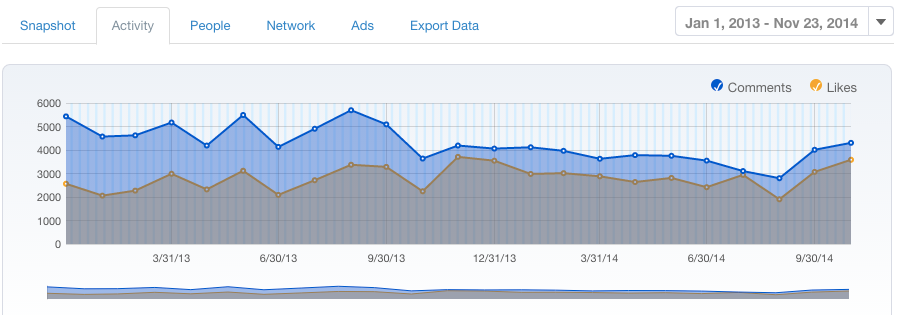
Yet another mainstream media site took down comments this week. In the post explaining the move, Walt Mossberg and Kara Swisher explained that “as social media has continued its robust growth, the bulk of discussion of our stories is increasingly taking place there, making onsite comments less and less used and less and less useful.” […]
A Brief History of the End of the Comments
For years, comment boxes have been a staple of the online experience. Now many media companies are giving up on them.

We Fought the Comment Spam (and the Comment Spam Didn't Win)
When we noticed that comment quality was rapidly declining on the blog, we decided to do something about it. And that something didn't involve closing comments, but improving them.

Mozilla and the Washington Post Are Reinventing Online Comments | The Mozilla Blog
To engage readers, build community, and strengthen journalism, Mozilla’s open-source commenting platform will be integrated across washingtonpost.com
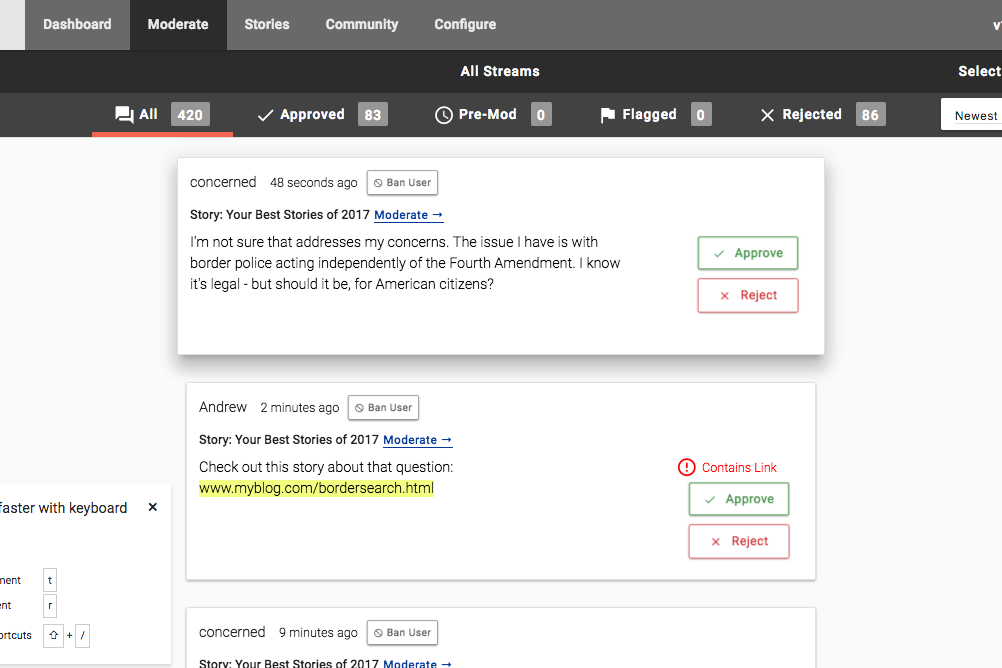
Comment Sections Are Essential for News Sites. We’re Making Changes to Improve Ours.
While many other news organizations have abolished their comment sections, we are taking steps to make ours better.

The Weird, Fragmented World of Social Media After Twitter
The common forum that Elon Musk destroyed will never be replaced—and that’s okay.

ATF public comments analysis 2026-08

Archived Fact-Checked Media — MediaVault
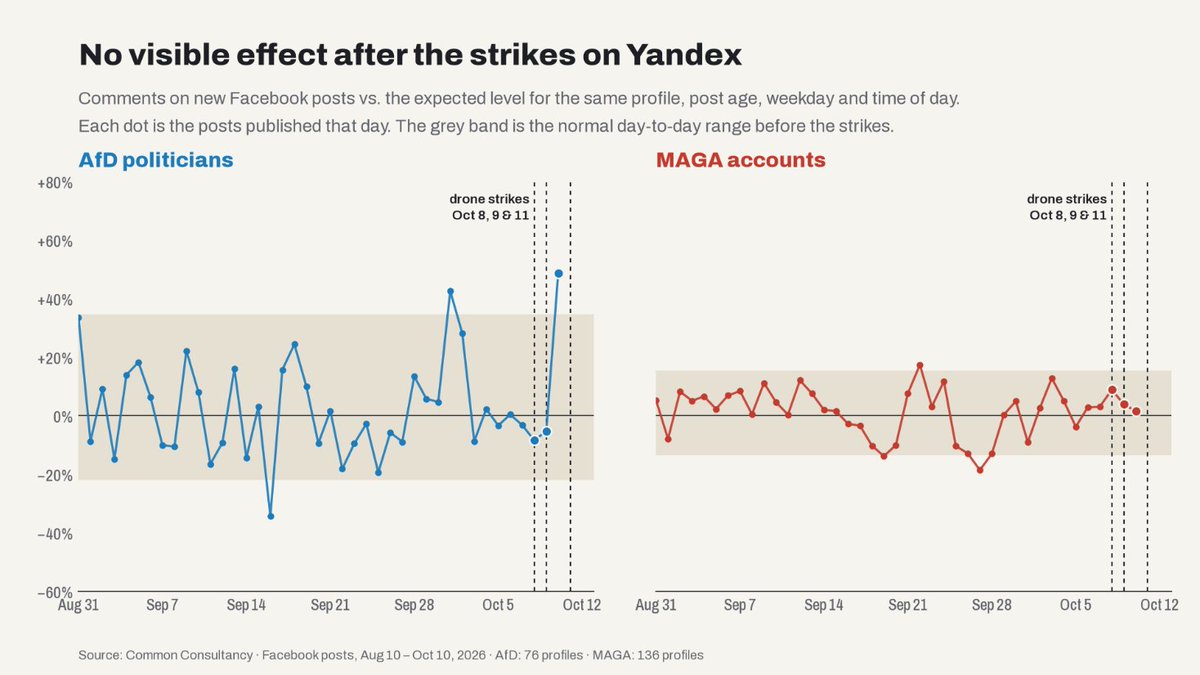
“There's a story going around: after the drone strikes on Yandex data centres, comments on AfD and MAGA accounts collapsed. We monitor 17,000+ politicians, media and civil society accounts in 30+ countries. 50,000+ posts a day. So we checked. We don't see it. 🧵 https://t.co/8quSNosqv0”
Using Bluesky posts as blog comments
As a fast-follow to the blog post from earlier today on the benefits of an open network, here's a concrete example. Your blog's comment section can be pulled directly from Bluesky.
What's with "Discuss on Mastodon"?
Originally I thought about giving this thread a more general title like “indie web comment options,” but then I figured let’s cut to the chase: I want to understand the prevalence of Mastodon links being used at the end of indie web posts in place of a comment section. Here are some posts about using Mastodon as an alternative to a comment section: Murteza Yesil: How do I comment/reply to your posts? Beetle Space: Adding Fediverse Comments to My Static Site Beej’s Bit Bucket: Mastodon Comment...

Comments are a basic web feature. So why aren’t they solved on ATProto yet?
Comments are about as old and basic as the social web gets, so I assumed ATProto would have them figured out. It doesn’t, not yet. Here is my take on why standard.site deferred comments on pu…

Adding Bluesky-powered comments to any website in five minutes
Long live the open web!

Deliberation and Identity Rules: The Effect of Anonymity, Pseudonyms and Real-Name Requirements on the Cognitive Complexity of Online News Comments
How do identity rules influence online deliberation? We address this question by drawing on a data set of 45 million comments on news articles on the Huffington Post from January 2013 to May 2015. At the beginning of this period, the site allowed commenting under what we call non-durable pseudonyms. In December 2013, Huffington Post moved to regulate its forum by requiring users to authenticate their accounts. And in June 2014, Huffington Post outsourced commenting to Facebook altogether, approximating a ‘real-name’ environment. We find a significant increase in the cognitive complexity of comments (a proxy for one aspect of deliberative quality) during the middle phase, followed by a decrease following the shift to real-name commenting through Facebook. Our findings challenge the terms of the apparently simple trade-off between the goods and bads of anonymous and real-name environments and point to the potential value of durable pseudonymity in the context of online discussion.

Deliberation and Identity Rules: The Effect of Anonymity, Pseudonyms and Real-Name Requirements on the Cognitive Complexity of Online News Comments
How do identity rules influence online deliberation? We address this question by drawing on a data set of 45 million comments on news articles on the Huffington Post from January 2013 to May 2015. At the beginning of this period, the site allowed commenting under what we call non-durable pseudonyms. In December 2013, Huffington Post moved to regulate its forum by requiring users to authenticate their accounts. And in June 2014, Huffington Post outsourced commenting to Facebook altogether, approximating a ‘real-name’ environment. We find a significant increase in the cognitive complexity of comments (a proxy for one aspect of deliberative quality) during the middle phase, followed by a decrease following the shift to real-name commenting through Facebook. Our findings challenge the terms of the apparently simple trade-off between the goods and bads of anonymous and real-name environments and point to the potential value of durable pseudonymity in the context of online discussion.
What We Lost When We Quit Using Crappy Old Web Forums
Old web forums were poorly coded and rough around the edges, but maybe we gave up on them too quickly in the social media era.
RIP social media. What comes next is messy.
As social media splinters, how can we keep the new online spaces from devolving into toxic pits of despair?

🐝 Social Media (SB Commentary)

things I said about social media

Bee 🐝 (@sweetbee.vip)
Bee 🐝 (@sweetbee.vip)
Bee 🐝 (@sweetbee.vip)