

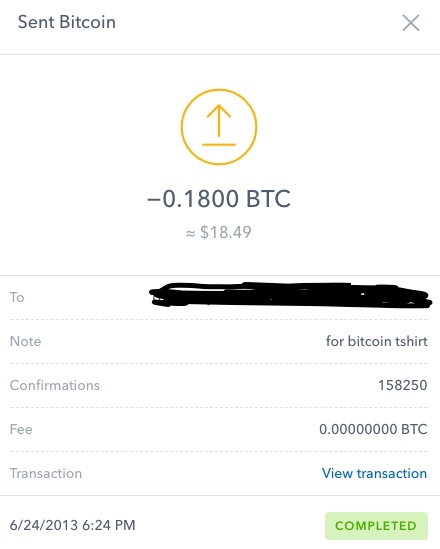
One of the debates that has raged inside and outside of the Bitcoin community since I got involved back in 2012 is whether Bitcoin was a store of value vs a means of payment. When I first started buying and owning Bitcoin, I would use it as a means of payment all the time. I […]
value noun - Definition, pictures, pronunciation and usage notes | Oxford Advanced Learner's Dictionary at OxfordLearnersDictionaries.com
Definition of value noun in Oxford Advanced Learner's Dictionary. Meaning, pronunciation, picture, example sentences, grammar, usage notes, synonyms and more.
Differences in Consumer Purchase Behavior by Credit Card Payment System
Abstract. A conceptualization of the relationships between alternative payment systems and various environmental and behavioral variables, which may serve
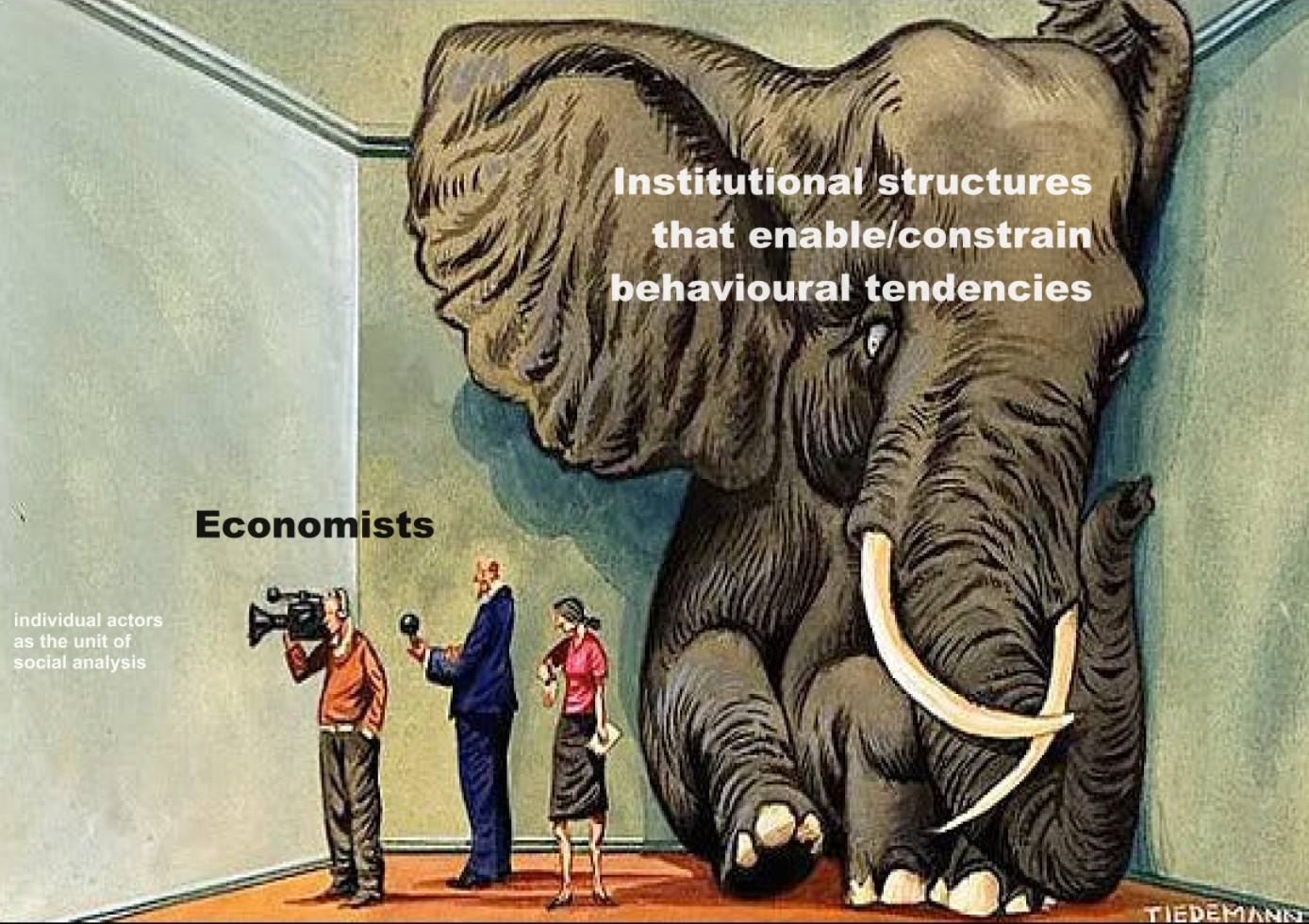
“Objective Economics” Isn’t.
Some time ago, in a Facebook argument, I encountered someone who repeated the old “exchange of unequals” argument (i.e., that people never exchange equivalents because each party values what they got more than what they traded for it). I responded that this argument confuses exchange value with use value and that, regardless of subjective valuation,...
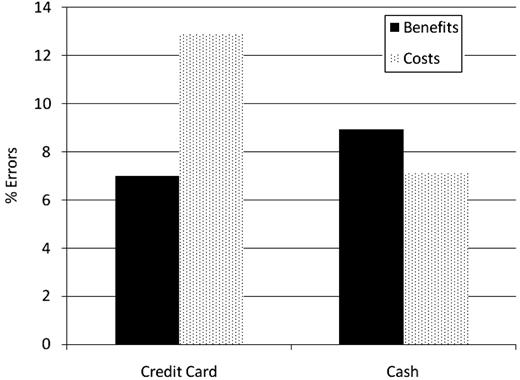
Do Payment Mechanisms Change the Way Consumers Perceive Products?
Abstract. Do payment mechanisms change the way consumers perceive products? We argue that consumers for whom credit cards (cash) have been primed focus mor
Explaining adoption and use of payment instruments by US consumers
Motivated by recent policy intervention into payments markets, we develop and estimate a structural model of adoption and use of payment instruments by U.S. consumers. Our structural model differentiates between the adoption and use of payment instruments. We evaluate substitution among payment instruments and welfare implications. Cash is the most significant substitute to debit cards in retail settings, whereas checks are the most significant in bill‐pay settings. Furthermore, low income consumers lose proportionally more than high income consumers when debit cards become more expensive, whereas the reverse is true when credit cards do.

What is Money, Anyway?
Editor’s Note: This topic is now comprehensively covered in my book, Broken Money. Money is a surprisingly complex subject. People spend their lives seeking money, and in some ways it seems so straightforward, and yet what humanity has defined as money has changed significantly over the centuries. How could something so simple and so universal, […]

Purchase Justifiability Drives Payment Choice: Consumers Pay with Card to Remember and Cash to Forget
AbstractAlthough consumers often have multiple payment methods at their fingertips, such as cash and credit/debit cards, prior research is silent on how consumers choose between them. We home in on a key element of purchase—purchase justifiability—that affects how consumers choose to pay. Analysis of 118,042 real-world purchases and six experiments reveals that when consumers are motivated to forget (vs. remember) a purchase because they see it as difficult (vs. easy) to justify, they have an increased preference to pay with cash (vs. card) because cards create a “paper/electronic trail” that aids memory retrieval. These payment preferences are strongest among consumers most likely to recall/track their card spending, and manifest only when card expenses are trackable. We reconcile our results with the classic effect of payment method on pain of paying and discuss implications for merchants and for financial institutions designing payment methods of the future.

Payment Depreciation: the Behavioral Effects of Temporally Separating Payments From Consumption
Abstract. Research suggests that individuals mentally track the costs and benefits of a consumer transaction for the purpose of reconciling those costs and
Why We're Building Recurring Payments Differently - ATProtoFans Blog
Part 1 of our "Building Recurring Payments in Public" series where we give some context about what we're trying to do and why it matters.
Why Do Shoppers Use Cash? Evidence from Shopping Diary Data
Recent studies find that cash remains the dominant payment choice for small‐value transactions despite the prevalence of alternative payment methods such as debit and credit cards. An important policy question is whether consumers truly prefer using cash or merchants restrict card usage. Using unique shopping diary data, we estimate a payment choice model with individual heterogeneity, controlling for merchants' acceptance of cards. Based on a policy simulation imposing universal card acceptance among merchants, we find that overall cash usage would decrease by only 8.0 percentage points, implying that cash usage in small‐value transactions is driven mainly by consumer preferences.

CMV: The labor theory of value is flawed
72 votes, 407 comments. This might be an obscure topic, however, in some—largely Marxist circles— the approach seems to motivate much of the dialogue…
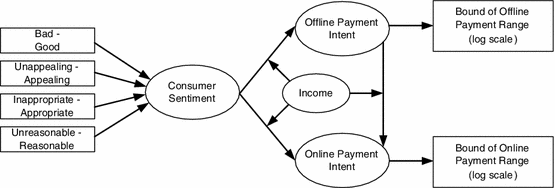
The moderating role of income on consumers’ preferences and usage for online and offline payment methods
In this paper we examine consumer attitudes towards a payment method, which is a key factor affecting the probability of completing a transaction offline and online. More specifically, we constructed a model that surveyed the offline and online usage of prepaid e-cash, debit cards, credit cards and cash. User perceptions of the attractiveness of e-cash and various traditional payment means were also empirically assessed. Consumer attitudes towards a payment technology were found to be influential on users’ perceptions in both online and offline environments. User perceptions of offline purchases with a payment technology had significant and positive effects on the corresponding online usage perceptions. The effects of our research model are contingent on the income level of users. Our findings have significant implications, as they could help shed light on why consumers abandon their shopping carts and do not complete their transactions, which could potentially play a significant role when it comes to designing applications targeting sspecific consumer segments.
Ethereum, a Virtual Currency, Enables Transactions That Rival Bitcoin’s (Published 2016)
In addition to virtual currency, Ethereum also provides a way to create online markets and programmable transactions known as smart contracts.

Pain of Paying? — A Metaphor Gone Literal: Evidence from Neural and Behavioral Science
How do individuals consider the price of a good when making purchase decisions? Standard economic theories assume an analytical process: Individuals consider th

storefront and products are a natural fit and would change the dynamics of ecomm infra hosting for the better! transaction details would be private, permissioned data (or spec-aligned to start) and transaction events would be cryptogtaphically verifiable from both sides github.com/bluesky-social/proposals/blob…
