


Importance Medical reporting guidelines are significant in improving the transparency, quality, and integrity of medical research, particularly in randomized clinical trials; adherence to these guidelines supports research interpretability and has direct implications for downstream applications, such as patient treatment. However, with over 600 distinct reporting guidelines, manual assessments are often time-consuming and labor-intensive. Objective To evaluate an automated reporting checklist generation tool using large language models and retrieval augmentation generation technology, called RAPID. Design, Setting, and Participants This study used large language models to design a retrieval augmentation generation architecture and collected published journal articles as training and validation sets to optimize prompts within the framework and comprehensively evaluate the performance of the framework. Medical reporting experiments were collected from 50 randomized controlled trials without the intervention of AI tools and 41 randomized controlled trials with the intervention of AI tools. Main Outcomes and Measures For effective evaluation of the performance of this tool, a classification accuracy metric (Reported/Not Reported) defined as the number of correct judgments divided by all judgments and a content consistent score metric defined as the number of contents retrieved by the tool that are the same as those retrieved by researchers divided by the total number of judgments were calculated. Results The RAPID tool uses the widely used Word document and Portable Document Format as an input file. Fifty published journal articles without the intervention of AI tools and 41 published journal articles with the intervention of AI tools were collected as CONSORT and CONSORT-AI datasets. All of the CONSORT reporting items (37) were included in the tool. RAPID achieved a high average accuracy rate of 92.11% and a content consistency score of 81.14% on the CONSORT dataset. Of the CONSORT-AI reporting items, 11 items related to the intervention of AI tools were included in the tool. RAPID achieved an average accuracy of 83.81% with a content consistency score of 72.51% on the CONSORT-AI dataset. For these two reporting guidelines, a training set of 5 articles was selected from each dataset to refine the prompts used in the tools for CONSORT and CONSORT-AI reporting checklist. The validation set of the remaining articles was used to assess the performance of the RAPID. The RAPID tool used the Word document and Portable Document Format of the articles as input files. A RAPID graphical user interface was built using JavaScript and Vue. Conclusions and Relevance The RAPID tool is designed to assist in the reporting of various types of trials. RAPID has strong scalability, which can be easily adapted to different medical reporting guidelines without transfer learning on a large dataset. RAPID may effectively save time and improve working efficiency for different user groups, for example, 1) simplifying the submission process and improving report quality by verifying manuscript completeness for medical authors; 2) facilitating evaluation of report quality for medical researchers; 3) expediting manuscript distribution for medical editors; and 4) identifying reporting deficiencies and providing deeper insights for review comments for reviewers. Question Can large language model tools automatically generate medical reporting checklists for manuscripts of different types of clinic trials?Findings An automated reporting checklist generation tool using large language models and retrieval augmentation generation technology, RAPID, was developed. RAPID was fully evaluated on all items across two separate datasets related to the Consolidated Standards of Reporting Trials (CONSORT) and CONSORT-AI reporting guidelines. In the first dataset corresponding to CONSORT, RAPID achieved an average accuracy of 92.11%, while in the second dataset associated with CONSORT - AI, it reached an average accuracy of 83.81%. Additionally, RAPID is highly scalable. It can be easily and smoothly adapted to different medical reporting guidelines without transfer learning on a large dataset.Meaning RAPID can effectively save time and improve working efficiency for different user groups such as medical authors, researchers, editors, and reviewers.
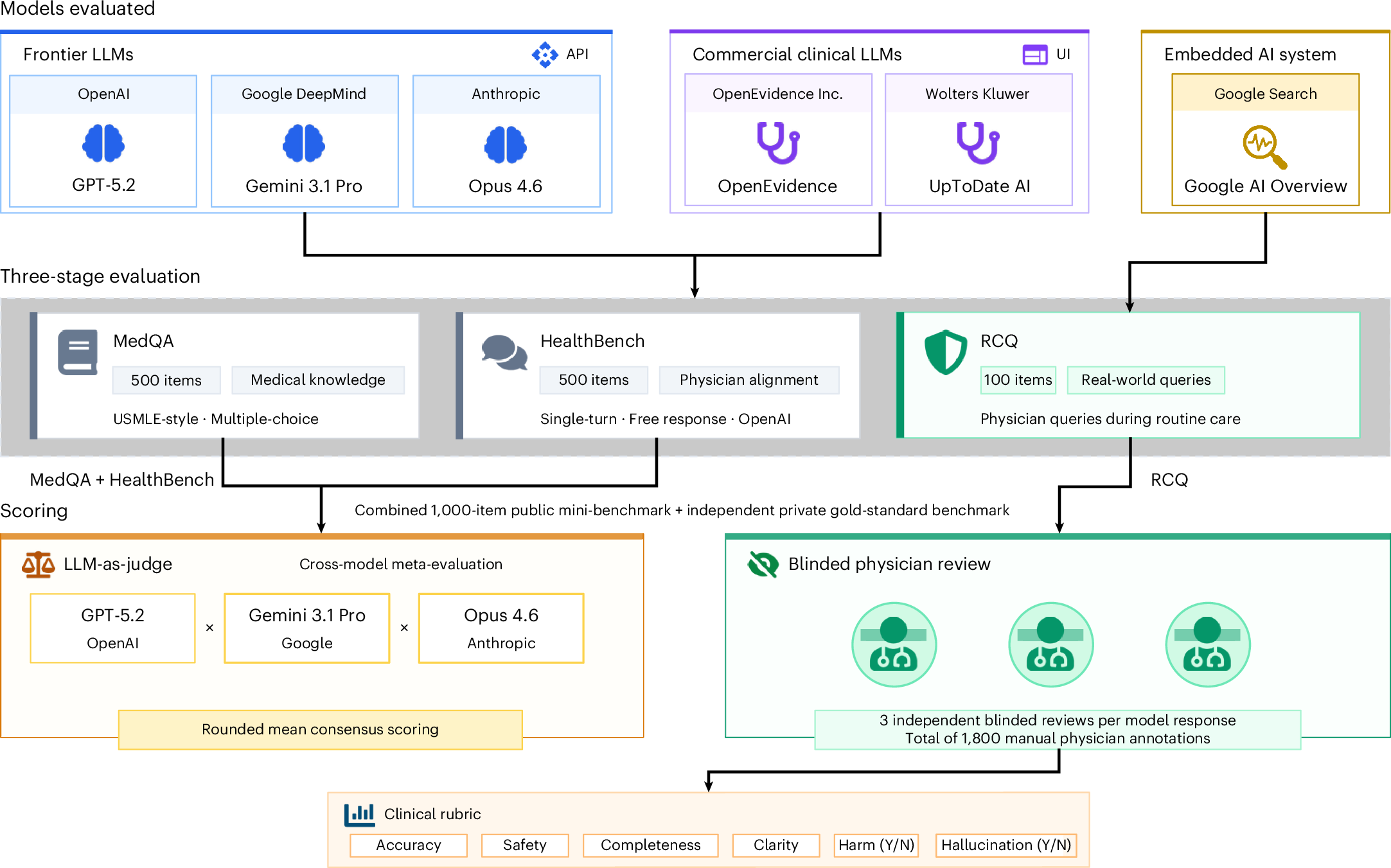
General-purpose large language models outperform specialized clinical AI tools on medical benchmarks
Specialized clinical artificial intelligence (AI) tools are entering medical practice despite scarce independent evaluation. We quantitatively evaluate two clinical AI tools, OpenEvidence and UpToDate Expert AI, built on large language models (LLMs) against three frontier LLMs: GPT-5.2, Gemini 3.1 Pro and Claude Opus 4.6. Our evaluation has three stages: (1) 500 MedQA questions testing medical knowledge, (2) 500 HealthBench items measuring alignment with clinicians and (3) the real clinical queries (RCQ) benchmark, built from 100 de-identified queries from physicians to a general-purpose language model in a live clinical environment. For the RCQ benchmark, 12 US clinicians performed randomized, blinded review of model outputs, producing 1,800 model–question annotations. Frontier LLMs outperformed clinical AI tools in all three evaluations. Clinical AI tools performed comparably to auto-enabled Google Search AI Overview on the RCQ. These findings highlight the need for independent, real-world evaluation of AI tools before they enter clinical settings.
Evaluating the Ability of Large Language Models to Identify Adherence to CONSORT Reporting Guidelines in Randomized Controlled Trials: A Methodological Evaluation Study
The Consolidated Standards of Reporting Trials statement is the global benchmark for transparent and high-quality reporting of randomized controlled trials. Manual verification of CONSORT adherence is a laborious, time-intensive process that constitutes a significant bottleneck in peer review and evidence synthesis. This study aimed to systematically evaluate the accuracy and reliability of contemporary LLMs in identifying the adherence of published RCTs to the CONSORT 2010 statement under a zero-shot setting. We constructed a golden standard dataset of 150 published RCTs spanning diverse medical specialties. The primary outcome was the macro-averaged F1-score for the three-class classification task, supplemented by item-wise performance metrics and qualitative error analysis. Overall model performance was modest. The top-performing models, Gemini-2.5-Flash and DeepSeek-R1, achieved nearly identical macro F1 scores of 0.634 and Cohen's Kappa coefficients of 0.280 and 0.282, respectively, indicating only fair agreement with expert consensus. A striking performance disparity was observed across classes: while most models could identify compliant items with high accuracy (F1 score > 0.850), they struggled profoundly with identifying non-compliant and not applicable items, where F1 scores rarely exceeded 0.400. Notably, some high-profile models like GPT-4o underperformed, achieving a macro F1-score of only 0.521. LLMs show potential as preliminary screening assistants for CONSORT checks, capably identifying well-reported items. However, their current inability to reliably detect reporting omissions or methodological flaws makes them unsuitable for replacing human expertise in the critical appraisal of trial quality.

CONSORT-TM: Text classification models for assessing the completeness of randomized controlled trial publications
ABSTRACT Objective To develop text classification models for determining whether the checklist items in the CONSORT reporting guidelines are reported in randomized controlled trial publications. Materials and Methods Using a corpus annotated at the sentence level with 37 fine-grained CONSORT items, we trained several sentence classification models (PubMedBERT fine-tuning, BioGPT fine-tuning, and in-context learning with GPT-4) and compared their performance. To address the problem of small training dataset, we used several data augmentation methods (EDA, UMLS-EDA, text generation and rephrasing with GPT-4) and assessed their impact on the fine-tuned PubMedBERT model. We also fine-tuned PubMedBERT models limited to checklist items associated with specific sections (e.g., Methods) to evaluate whether such models could improve performance compared to the single full model. We performed 5-fold cross-validation and report precision, recall, F1 score, and area under curve (AUC). Results Fine-tuned PubMedBERT model that takes as input the sentence and the surrounding sentence representations and uses section headers yielded the best overall performance (0.71 micro-F1, 0.64 macro-F1). Data augmentation had limited positive effect, UMLS-EDA yielding slightly better results than data augmentation using GPT-4. BioGPT fine-tuning and GPT-4 in-context learning exhibited suboptimal results. Methods-specific model yielded higher performance for methodology items, other section-specific models did not have significant impact. Conclusion Most CONSORT checklist items can be recognized reasonably well with the fine-tuned PubMedBERT model but there is room for improvement. Improved models can underpin the journal editorial workflows and CONSORT adherence checks and can help authors in improving the reporting quality and completeness of their manuscripts.
An LLM Analysis of Reporting Quality of Randomized Clinical Trial Articles
This study uses a zero-shot large-language model to automatically assess compliance with the Consolidated Standards of Reporting Trials guideline for English-language randomized clinical trials published from 1966 to 2024.

Benchmarking agreement between large language models and published clinical trial conclusions across four artificial intelligence platforms
Advanced large language models (LLMs) such as ChatGPT, Gemini, Grok3, and Claude offer new possibilities for medical research interpretation and clinical decision support. While these models demonstrate remarkable natural language processing capabilities, their ability to independently reason through clinical trial data and produce conclusions consistent with published trial interpretations remains underexplored. The objective was to evaluate the reliability of LLMs in interpreting numerical and statistical healthcare data. For this study, landmark randomized controlled trials (RCTs) were selected as a standardized domain to minimize bias from poor-quality research designs. Twenty landmark RCTs from the New England Journal of Medicine were analyzed in neurosurgical and cardiovascular intervention domains. Four AI platforms were evaluated using a structured prompt covering five domains: evidence interpretation, statistical understanding, clinical relevance, limitation recognition, and practical applicability. Two independent raters scored all AI outputs on a 0–5 scale per domain, and interobserver reliability was assessed. Primary outcomes included concordance with published trial conclusions, accuracy of primary outcome identification, and appropriateness of recommendations. Secondary outcomes included output pattern analysis, recognition of limitations, and handling of confounding factors. ChatGPT demonstrated the highest concordance with published conclusions at 100.0%, followed by Gemini at 84%, Grok3 at 72%, and Claude at 68%. However, these concordance scores should be interpreted cautiously, as the LLMs may have been trained on these published trials, potentially inflating alignment with published conclusions. ChatGPT and Gemini accurately identified limitations and confounding factors, while Grok3 and Claude struggled in these secondary outcomes. Interobserver reliability between raters was good (Cronbach’s α = 0.868), supporting the consistency of scoring. Certain LLMs, particularly ChatGPT and Gemini, can reliably interpret clinical trial data and align closely with human conclusions, suggesting a potential role in data summarization and evidence synthesis. These findings highlight the importance of selecting AI tools carefully and highlight potential applications in research and clinical workflows.

Large language models for automated PRISMA 2020 adherence checking
Evaluating adherence to PRISMA 2020 guideline remains a burden in the peer review process. To address the lack of shareable benchmarks, we constructed a copyright-aware benchmark of 108 Creative Commons-licensed systematic reviews and evaluated ten large language models (LLMs) across five input formats. In a development cohort, supplying structured PRISMA 2020 checklists (Markdown, JSON, XML, or plain text) yielded 78.7-79.7% accuracy versus 45.21% for manuscript-only input (p less than 0.0001), with no differences between structured formats (p>0.9). Across models, accuracy ranged from 70.6-82.8% with distinct sensitivity-specificity trade-offs, replicated in an independent validation cohort. We then selected Qwen3-Max (a high-sensitivity open-weight model) and extended evaluation to the full dataset (n=120), achieving 95.1% sensitivity and 49.3% specificity. Structured checklist provision substantially improves LLM-based PRISMA assessment, though human expert verification remains essential before editorial decisions.
Large Language Models and the Analyses of Adherence to Reporting Guidelines in Systematic Reviews and Overviews of Reviews (PRISMA 2020 and PRIOR)
In the context of Evidence-Based Practice (EBP), Systematic Reviews (SRs), Meta-Analyses (MAs) and overview of reviews have become cornerstones for the synthesis of research findings. The Preferred Reporting Items for Systematic Reviews and Meta-Analyses (PRISMA) 2020 and Preferred Reporting Items for Overviews of Reviews (PRIOR) statements have become major reporting guidelines for SRs/MAs and for overviews of reviews, respectively. In recent years, advances in Generative Artificial Intelligence (genAI) have been proposed as a potential major paradigm shift in scientific research. The main aim of this research was to examine the performance of four LLMs for the analysis of adherence to PRISMA 2020 and PRIOR, in a sample of 20 SRs and 20 overviews of reviews. We tested the free versions of four commonly used LLMs: ChatGPT (GPT-4o), DeepSeek (V3), Gemini (2.0 Flash) and Qwen (2.5 Max). Adherence to PRISMA 2020 and PRIOR was compared with scores defined previously by human experts, using several statistical tests. In our results, all the four LLMs showed a low performance for the analysis of adherence to PRISMA 2020, overestimating the percentage of adherence (from 23 to 30%). For PRIOR, the LLMs presented lower differences in the estimation of adherence (from 6 to 14%) and ChatGPT showed a performance similar to human experts. This is the first report of the performance of four commonly used LLMs for the analysis of adherence to PRISMA 2020 and PRIOR. Future studies of adherence to other reporting guidelines will be helpful in health sciences research.

An automated approach to improve clinical trial registration and to identify outcome changes on ClinicalTrials.gov
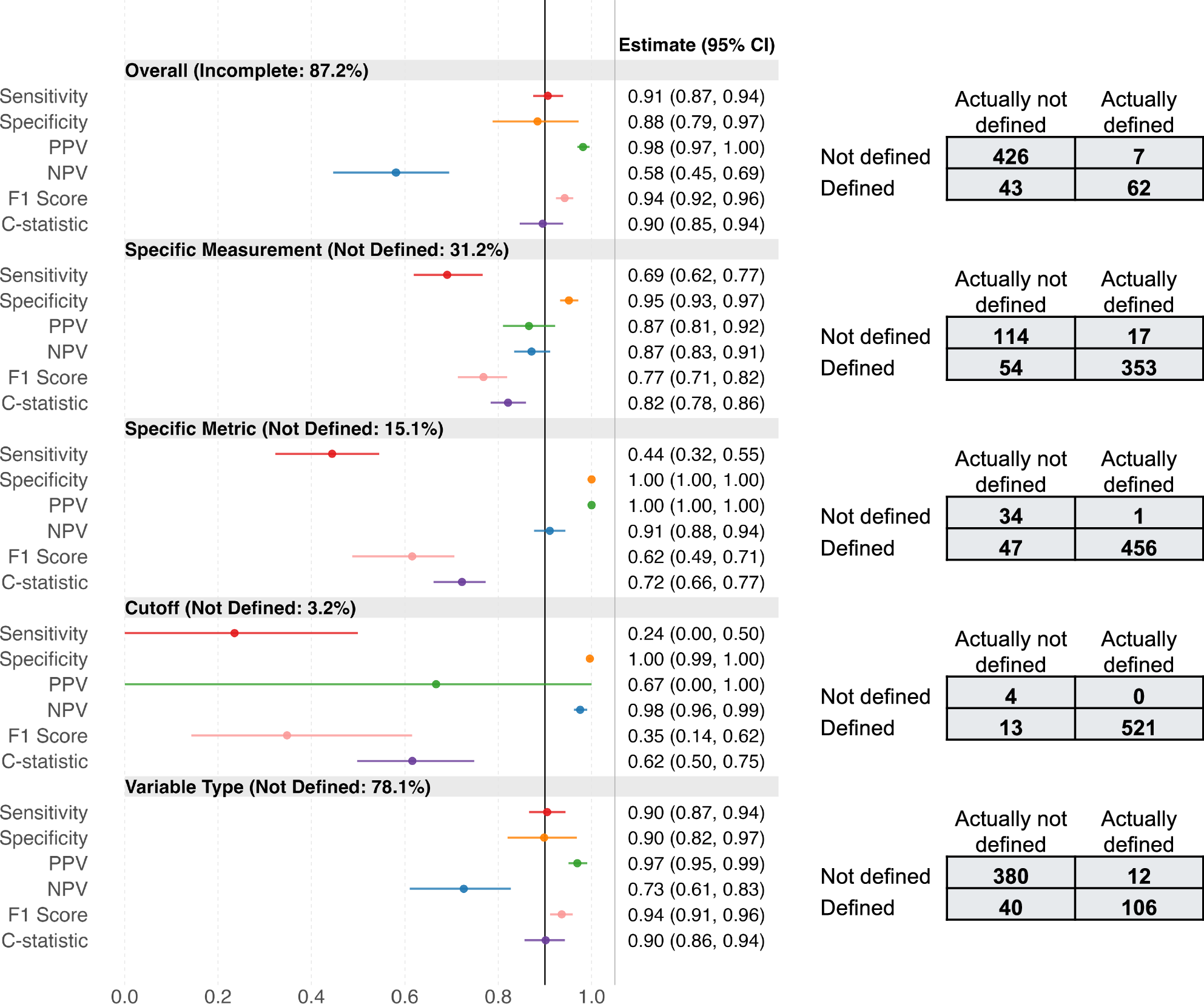
It is difficult to ensure clinical trial outcomes are defined completely in registrations, and to check outcome changes between registration and posting results. We developed a large language model (LLM)-based approach to evaluate outcome definitions and changes on ClinicalTrials.gov. Our LLM-based approach accurately identified incomplete outcomes in prospective trial registrations (sensitivity, 0.91 [95% confidence interval {CI}, 0.87–0.94]; positive predictive value [PPV], 0.98 [95% CI, 0.97–1.00]). Comparing prospective registrations with posted results, it correctly identified 96.1% of missing and 97.9% of added outcomes. It identified all outcomes with a priority change (e.g., from primary to secondary) and 99.2% without one. Sensitivity and PPV for identifying any outcome change were 0.97 (95% CI, 0.95–0.99) and 0.95 (95% CI, 0.89–0.98), respectively. Estimated costs per trial were $0.13 for o3-mini, $0.30 for GPT-4o, and $1.80 for o1. The accuracy of our approach suggests it could be used to improve registration quality and to detect outcome changes at large scale and at low cost.
Rigor and Transparency Index, a new metric of quality for assessing biological and medical science methods
Abstract The reproducibility crisis in science is a multifaceted problem involving practices and incentives, both in the laboratory and in publication. Fortunately, some of the root causes are known and can be addressed by scientists and authors alike. After careful consideration of the available literature, the National Institutes of Health identified several key problems with the way that scientists conduct and report their research and introduced guidelines to improve the rigor and reproducibility of pre-clinical studies. Many journals have implemented policies addressing these same criteria. We currently have, however, no comprehensive data on how these guidelines are impacting the reporting of research. Using SciScore, an automated tool developed to review the methods sections of manuscripts for the presence of criteria associated with the NIH and other reporting guidelines, e.g., ARRIVE, RRIDs, we have analyzed ~1.6 million PubMed Central papers to determine the degree to which articles were addressing these criteria. The tool scores each paper on a ten point scale identifying sentences that are associated with compliance with criteria associated with increased rigor (5 pts) and those associated with key resource identification and authentication (5 pts). From these data, we have built the Rigor and Transparency Index, which is the average score for analyzed papers in a particular journal. Our analyses show that the average score over all journals has increased since 1997, but remains below five, indicating that less than half of the rigor and reproducibility criteria are routinely addressed by authors. To analyze the data further, we examined the prevalence of individual criteria across the literature, e.g., the reporting of a subject’s sex (21-37% of studies between 1997 and 2019), the inclusion of sample size calculations (2-10%), whether the study addressed blinding (3-9%), or the identifiability of key biological resources such as antibodies (11-43%), transgenic organisms (14-22%), and cell lines (33-39%). The greatest increase in prevalence for rigor criteria was seen in the use of randomization of subjects (10-30%), while software tool identifiability improved the most among key resource types (42-87%). We further analyzed individual journals over time that had implemented specific author guidelines covering rigor criteria, and found that in some journals, they had a big impact, whereas in others they did not. We speculate that unless they are enforced, author guidelines alone do little to improve the number of criteria addressed by authors. Our Rigor and Transparency Index did not correlate with the impact factors of journals.
RegCheck: A tool for structured comparisons between study registrations and papers
Across the social and medical sciences, researchers recognize that specifying planned research activities (i.e., 'registration') prior to the commencement of research has benefits for both the transparency and rigour of science. Despite this, evidence suggests that study registrations frequently go unexamined, minimizing their effectiveness. In a way this is no surprise: manually checking registrations against papers is labour- and time-intensive, requiring careful reading across formats and expertise across domains. The advent of AI unlocks new possibilities in facilitating this activity. We present RegCheck, a modular LLM-assisted tool designed to help researchers, reviewers, and editors from across scientific disciplines compare study registrations with their corresponding papers. Importantly, RegCheck keeps human expertise and judgement in the loop by (i) ensuring that users are the ones who determine which features should be compared, and (ii) presenting the most relevant text associated with each feature to the user, facilitating (rather than replacing) human discrepancy judgements. RegCheck also generates shareable reports with unique RegCheck IDs, enabling them to be easily shared and verified by other users. RegCheck is designed to be adaptable across scientific domains, as well as registration and publication formats. In this paper we provide an overview of the motivation, workflow, and design principles of RegCheck, and we discuss its potential as an extensible infrastructure for reproducible science with an example use case.
Usefulness of LLMs as an Author Checklist Assistant for Scientific Papers: NeurIPS'24 Experiment
Large language models (LLMs) represent a promising, but controversial, tool in aiding scientific peer review. This study evaluates the usefulness of LLMs in a conference setting as a tool for vetting paper submissions against submission standards. We conduct an experiment at the 2024 Neural Information Processing Systems (NeurIPS) conference, where 234 papers were voluntarily submitted to an "LLM-based Checklist Assistant." This assistant validates whether papers adhere to the author checklist used by NeurIPS, which includes questions to ensure compliance with research and manuscript preparation standards. Evaluation of the assistant by NeurIPS paper authors suggests that the LLM-based assistant was generally helpful in verifying checklist completion. In post-usage surveys, over 70% of authors found the assistant useful, and 70% indicate that they would revise their papers or checklist responses based on its feedback. While causal attribution to the assistant is not definitive, qualitative evidence suggests that the LLM contributed to improving some submissions. Survey responses and analysis of re-submissions indicate that authors made substantive revisions to their submissions in response to specific feedback from the LLM. The experiment also highlights common issues with LLMs: inaccuracy (20/52) and excessive strictness (14/52) were the most frequent issues flagged by authors. We also conduct experiments to understand potential gaming of the system, which reveal that the assistant could be manipulated to enhance scores through fabricated justifications, highlighting potential vulnerabilities of automated review tools.
The Utility of AI Tools in Auditing Adherence to Pre-Analysis Plans
Pre-analysis plans (PAPs) can improve research reproducibility by reducing researchers’ degrees of freedom, but their value depends on adherence. We argue that large language models (LLMs) can provide an efficient, scalable, and systematic way for authors and reviewers to assess adherence to PAPs. In an application to our own research, an LLM systematically identifies precommitted design choices, evaluates deviations, and diagnoses gaps in pre-specification, substantially reducing the human labor required for these tasks. However, variability in audit output across LLMs underscores the continued importance of human judgment. We discuss implications for best practices in AI-assisted PAP auditing.

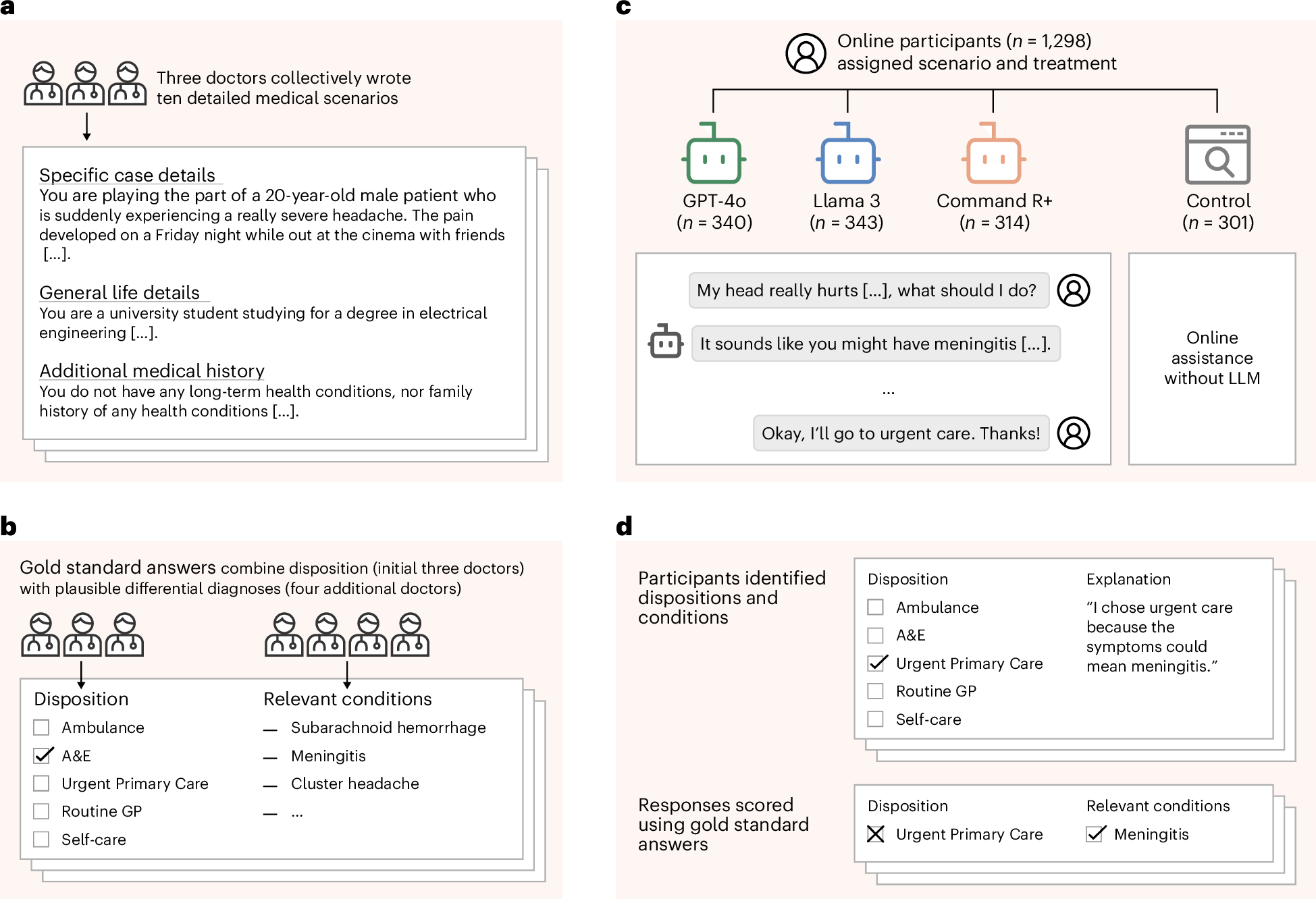
Reliability of LLMs as medical assistants for the general public: a randomized preregistered study
Global healthcare providers are exploring the use of large language models (LLMs) to provide medical advice to the public. LLMs now achieve nearly perfect scores on medical licensing exams, but this does not necessarily translate to accurate performance in real-world settings. We tested whether LLMs can assist members of the public in identifying underlying conditions and choosing a course of action (disposition) in ten medical scenarios in a controlled study with 1,298 participants. Participants were randomly assigned to receive assistance from an LLM (GPT-4o, Llama 3, Command R+) or a source of their choice (control). Tested alone, LLMs complete the scenarios accurately, correctly identifying conditions in 94.9% of cases and disposition in 56.3% on average. However, participants using the same LLMs identified relevant conditions in fewer than 34.5% of cases and disposition in fewer than 44.2%, both no better than the control group. We identify user interactions as a challenge to the deployment of LLMs for medical advice. Standard benchmarks for medical knowledge and simulated patient interactions do not predict the failures we find with human participants. Moving forward, we recommend systematic human user testing to evaluate interactive capabilities before public deployments in healthcare.
Reliability of LLMs as medical assistants for the general public: a randomized preregistered study
Global healthcare providers are exploring the use of large language models (LLMs) to provide medical advice to the public. LLMs now achieve nearly perfect scores on medical licensing exams, but this does not necessarily translate to accurate performance in real-world settings. We tested whether LLMs can assist members of the public in identifying underlying conditions and choosing a course of action (disposition) in ten medical scenarios in a controlled study with 1,298 participants. Participants were randomly assigned to receive assistance from an LLM (GPT-4o, Llama 3, Command R+) or a source of their choice (control). Tested alone, LLMs complete the scenarios accurately, correctly identifying conditions in 94.9% of cases and disposition in 56.3% on average. However, participants using the same LLMs identified relevant conditions in fewer than 34.5% of cases and disposition in fewer than 44.2%, both no better than the control group. We identify user interactions as a challenge to the deployment of LLMs for medical advice. Standard benchmarks for medical knowledge and simulated patient interactions do not predict the failures we find with human participants. Moving forward, we recommend systematic human user testing to evaluate interactive capabilities before public deployments in healthcare.
Agreement in Risk of Bias Assessment Between RobotReviewer and Human Reviewers: An Evaluation Study on Randomised Controlled Trials in Nursing‐Related Cochrane Reviews
Abstract Purpose RobotReviewer is a machine learning system for semi‐automated assistance in risk of bias assessment. The tools’s performance in randomized controlled trials (RCTs) in the field of nursing remains unknown. We aimed therefore to evaluate the agreement in risk of bias assessment between RobotReviewer and human reviewers. Design Evaluation study using a retrospective diagnostic design. Methods We used RobotReviewer as the index test and human reviewers’ risk of bias assessment reported in Cochrane reviews as the reference test. A convenience sample of electronically available English‐language full texts of RCTs included in Cochrane reviews with nurs* in the title were eligible for inclusion. In this context, we assessed random sequence generation, allocation concealment, and blinding (personnel or participants and assessors) corresponding to Cochrane risk of bias version 2011. Two independent research teams performed and double‐checked data extraction and analysis. We calculated sensitivity, specificity, receiver operating characteristic (ROC) curve, the area under the ROC curve, predictive values, observed percentage of agreement, and Cohen’s kappa (including confidence intervals, if applicable). Findings The selection process yielded 190 RCTs published between 1958 and 2016 in 23 Cochrane reviews published between 2000 and 2018. Missing assessments of risk of bias domains in Cochrane reviews or RobotReviewer yielded varying sample sizes per risk of bias domain. Sensitivity ranged from 0.44 to 0.88 and specificity from 0.48 to 0.95. Positive predictive value was highest for allocation concealment (0.79) and lowest for blinding assessors (0.25). Cohen’s kappa was moderate for randomization (0.52), allocation concealment (0.60), and for blinding of personnel/patients (0.43). Blinding of outcome assessors had only slight agreement (0.04). Conclusions This is the first evaluation of risk of bias assessment by RobotReviewer in RCTs included in nursing‐related Cochrane reviews. It yielded a moderate degree of agreement with human reviewers for randomization and allocation concealment, and an adequate sensitivity for detecting low risk of selection bias. Clinical Relevance Based on our results, using the RobotReviewer for risk of bias assessment in RCTs can be supportive in some risk of bias domains. However, human reviewers should supervise the semi‐automated assessment process.

Large Language Model-Based Agents for Automated Research Reproducibility: An Exploratory Study in Alzheimer's Disease
Objective: To demonstrate the capabilities of Large Language Models (LLMs) as autonomous agents to reproduce findings of published research studies using the same or similar dataset. Materials and Methods: We used the "Quick Access" dataset of the National Alzheimer's Coordinating Center (NACC). We identified highly cited published research manuscripts using NACC data and selected five studies that appeared reproducible using this dataset alone. Using GPT-4o, we created a simulated research team of LLM-based autonomous agents tasked with writing and executing code to dynamically reproduce the findings of each study, given only study Abstracts, Methods sections, and data dictionary descriptions of the dataset. Results: We extracted 35 key findings described in the Abstracts across 5 Alzheimer's studies. On average, LLM agents approximately reproduced 53.2% of findings per study. Numeric values and range-based findings often differed between studies and agents. The agents also applied statistical methods or parameters that varied from the originals, though overall trends and significance were sometimes similar. Discussion: In some cases, LLM-based agents replicated research techniques and findings. In others, they failed due to implementation flaws or missing methodological detail. These discrepancies show the current limits of LLMs in fully automating reproducibility assessments. Still, this early investigation highlights the potential of structured agent-based systems to provide scalable evaluation of scientific rigor. Conclusion: This exploratory work illustrates both the promise and limitations of LLMs as autonomous agents for automating reproducibility in biomedical research.