This is an article about my creative process behind Paelodictyon, a site specific installation that I developed in collaboration with Yannick Jacquet and Thomas Vaquié. Since this was our first big project integrating Cinder in production from the early stages, and because I used it to create most of the visual content, this post is going to have a big emphasis on creative coding and software development. I’ll try not to get too technical, but still, you’ve been warned, this is a geeky post!
Controlled Mold
A blog about fermentation, engineering, and cell-ag. We run wild experiments on microbes and try to eat them, all with the help of computers and math.
Biology's Brave New World
All the key barriers to the artificial synthesis of viruses and bacteria have been overcome, spawning a dizzying array of perils and promises. But as the scientific community forges ahead, the biosecurity establishment remains behind the curve.

The Roots of Your Profits - Dr Elaine Ingham, Soil Microbiologist, Founder of Soil Foodweb Inc

Reinventing the wheel: milk, microbes, and the fight for real cheese
"Reinventing the Wheel is equal parts popular science, history, and muckraking. Over the past hundred and fifty years, dairy farming and cheesemaking have been transformed, and this book explores what has been lost along the way. Today, using cutting-edge technologies like high-throughput DNA sequencing, scientists are beginning to understand the techniques of our great-grandparents. The authors describe how geneticists are helping conservationists rescue rare dairy cow breeds on the brink of extinction, microbiologists are teaching cheesemakers to nurture the naturally occurring microbes in their raw milk rather than destroying them, and communities of cheesemakers are producing "real" cheeses that reunite farming and flavor, rewarding diversity and sustainability at every level."--Provided by publisher.
AI creates first synthetic viruses
Genomic language model has huge potential to redesign organisms such as bacteria

Synthetic Biology of Plants and Microbes for Agriculture, Environment, and Future Applications
Agriculture is under pressure to provide food for a growing population and the feedstock required to drive the bioeconomy. Methods to breed and genetically modify plants are inadequate to keep pace. When engineering crops, traits are painstakingly introduced into plants one-at-a-time, combine unpredictably, and are continuously expressed. Synthetic biology is changing these paradigms with new genome construction tools, computer aided design (CAD), and artificial intelligence (AI). “Smart plants” contain circuits that respond to environmental change, alter morphology, or respond to threats. Further, the plant and associated microbes (fungi, bacteria, archaea) are now being viewed by genetic engineers as a holistic system. Historically, plant health has been enhanced by many natural and laboratory-evolved soil microbes marketed to enhance growth or provide nutrients, or pest/stress resistance. Synthetic biology has expanded the number of species that can be engineered, increased the complexity of engineered functions, controlled environmental release, and can assemble stable consortia. New CAD tools will manage genetic engineering projects spanning multiple plant genomes (nucleus, chloroplast, mitochondrion) and the thousands of genomes of associated bacteria/fungi. This review covers advanced genetic engineering techniques to drive the next agricultural revolution, as well as push plant engineering into new realms for manufacturing, infrastructure, sensing, and remediation.

Making ‘Food Out Of Thin Air’
On the outskirts of Helsinki, a pioneering factory is harvesting natural, scalable proteins all from fermented bacteria. Could this be the future of food?

Tending the Body’s Microbial Garden (Published 2012)
As we learn more about the trillions of microbes we carry around, some scientists want to be like wildlife managers — nurturing the good and weeding out the bad.

The Science of Smudging: How Sage Actually Cleans Bacteria In The Air | Spirit Science
The practice of smudging dates back to prehistoric times, and is still very much in use today worldwide for cleansing everything from dwellings to human spirits. However recent research has shed light on the popularity of this activity, revealing that burning certain plant matter actually clears harmful bacteria.


Meta’s Bacterial Mystery Could Poison the Data Center Well
Water pollution in Wyoming has big implications for the future of data center development.
The Evolution Of The Biohacking Ecosystem | TechCrunch
Silicon Valley efforts in the biology and health domains have recently seen increased public interest because of the questions around the legitimacy of Theranos' technology and medical claims and the recent FDA approvals for a number of 23andMe's genetic screens. These data points are just two of the most visible examples of a broad ecosystem of companies and startups in Silicon Valley working on biological problems.

How to SNIFF out Good Scientific Software
New PLOS Computational Biology paper: "Ten Quick Tips to SNIFF Out Sustainable and Secure Scientific Software"
Bacteria with recording function capture gut health status
Researchers from ETH Zurich, University Hospital of Bern and the University of Bern have equipped gut bacteria with data logger functionality as a way of monitoring which genes are active in the bacteria. ...

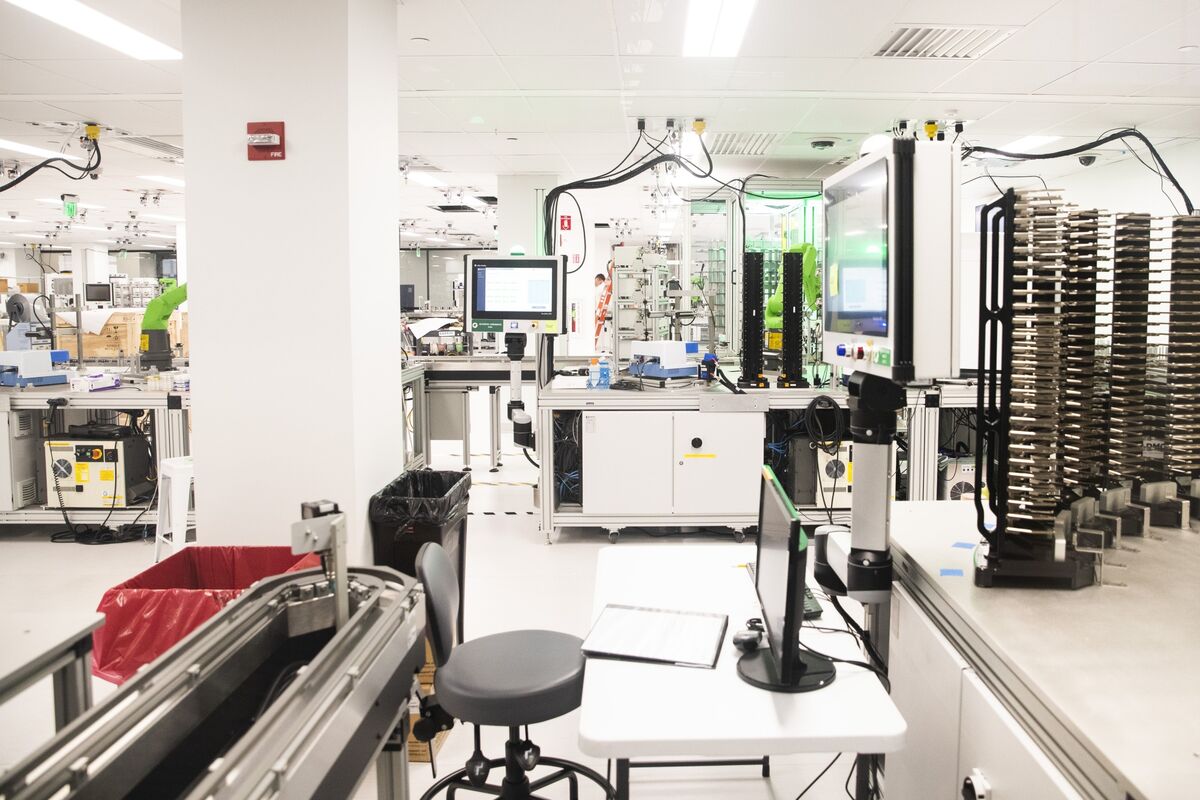
Ginkgo Bioworks (NYSE:DNA) Trying to Prevent Future Man-Made Biological Threats
Synthetic biology firm Ginkgo Bioworks has developed tools that US intelligence agencies can use to detect engineered DNA at scale, a milestone that could better protect the nation from human-made biological threats. The new software could be used to provide an early warning of bioweapons, such as a new deadly bacteria, or a modified virus that thwarts existing vaccines.