

It seems like some want to be taking bubble baths waiting for the right thought to hit while they burn down our libraries.
Self-organizing systems: what, how, and why?
I present a personal account of self-organizing systems, framing relevant questions to better understand self-organization, information, complexity, and emergence. With this aim, I start with a notion and examples of self-organizing systems (what?), continue with their properties and related concepts (how?), and close with applications (why?) in physics, chemistry, biology, collective behavior, ecology, communication networks, robotics, artificial intelligence, linguistics, social science, urbanism, philosophy, and engineering.

Self-Organization in Biological Systems
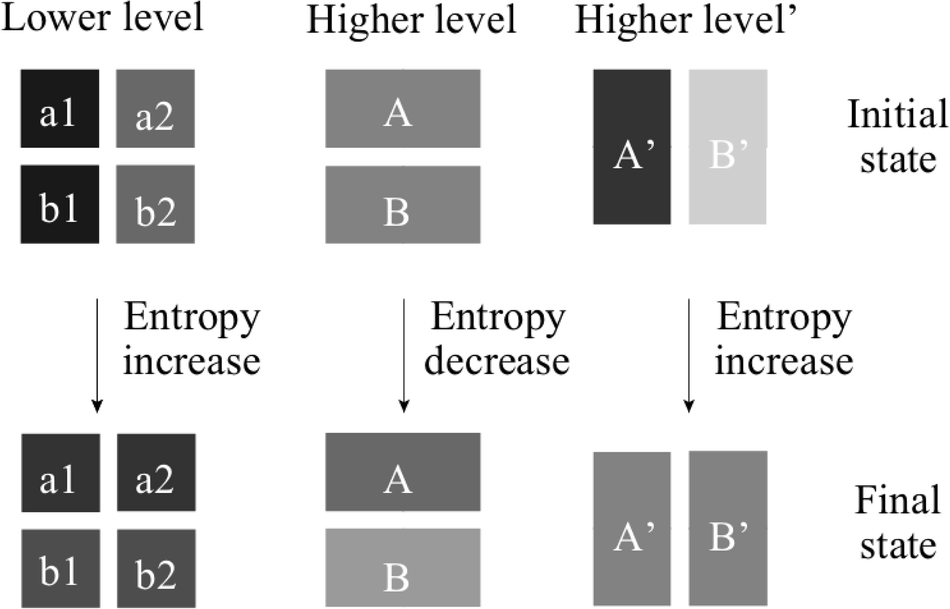
The synchronized flashing of fireflies at night. The spiraling patterns of an aggregating slime mold. The anastomosing network of army-ant trails. The coordinated movements of a school of fish. Researchers are finding in such patterns—phenomena that have fascinated naturalists for centuries—a fertile new approach to understanding biological systems: the study of self-organization. This book, a primer on self-organization in biological systems for students and other enthusiasts, introduces readers to the basic concepts and tools for studying self-organization and then examines numerous examples of self-organization in the natural world. Self-organization refers to diverse pattern formation processes in the physical and biological world, from sand grains assembling into rippled dunes to cells combining to create highly structured tissues to individual insects working to create sophisticated societies. What these diverse systems hold in common is the proximate means by which they acquire order and structure. In self-organizing systems, pattern at the global level emerges solely from interactions among lower-level components. Remarkably, even very complex structures result from the iteration of surprisingly simple behaviors performed by individuals relying on only local information. This striking conclusion suggests important lines of inquiry: To what degree is environmental rather than individual complexity responsible for group complexity? To what extent have widely differing organisms adopted similar, convergent strategies of pattern formation? How, specifically, has natural selection determined the rules governing interactions within biological systems? Broad in scope, thorough yet accessible, this book is a self-contained introduction to self-organization and complexity in biology—a field of study at the forefront of life sciences research.

Bringing organizational maturity to radical groups | willowbl00
I’m honored to have helped establish, or to help continue fostering, several radical groups that have survived past their origin moment and group. The challenges that come with the second or third generation of stewards while also navigating organizational momentum are unlike those of founding a group, and I’d like to chat about them with you here. Each section has a founding pattern, the results of that pattern, and what to do about it to mature more. None of the sections involve imposing hierarchy on a distributed organization.
Emergence: the remarkable simplicity of complexity
From the fractal patterns of snowflakes to cellular lifeforms, our universe is full of complex phenomena – but how does this complexity arise? “Emergence” describes the ability of individual components…

Developmental Spaces: Cultural incubators for a time of transformation | Conscious Communities
The whitepaper. Rufus Pollock, Rosie Bell and Boaz Feldman. September 2025.

Emergence: the connected lives of ants, brains, cities and software
In the tradition of Being Digital and The Tipping Point…

Here Comes Everybody (book)
Here Comes Everybody: The Power of Organizing Without Organizations is a book by Clay Shirky published by Penguin Press in 2008 on the effect of the Internet on modern group dynamics and organization. The author considers examples such as Wikipedia, MySpace, and other social media in his analysis. According to Shirky, the book is about "what happens when people are given the tools to do things together, without needing traditional organizational structures". The title of the work alludes to HCE, a recurring and central figure in James Joyce's Finnegans Wake and considers the impacts of self-organizing movements on culture, politics, and business.

Roomy and community organizing for system change
Roomy is a group messaging app that gives online communities tools for autonomous collaboration — designable spaces not just for chat, but for cultivating a web of shared understanding together. We show how cheap, user-controlled, interoperable data on ATProto can enable online communities to channel impassioned mobilizing into sustained organizing in the shadow of Big Tech's empire.
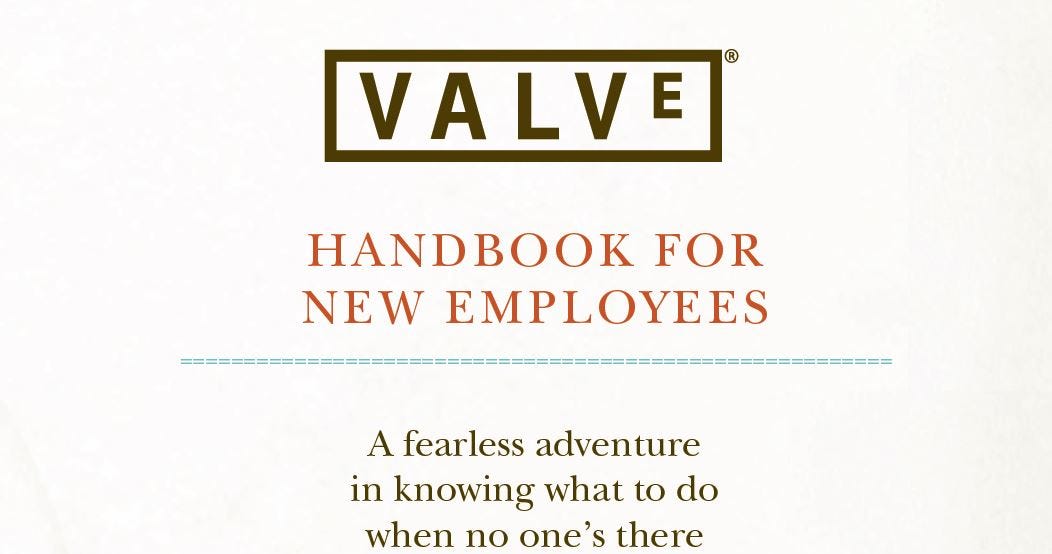
The Nightmare of Valve’s self-organizing “utopia”
How Valve’s perfect work culture turned into a toxic bully’s yard and what it tells us about “flat hierarchy” workplaces.
Off the Clock: a members-only community on atproto spaces
Hi everyone! I’d like to share Off the Clock, a members-only community site for friends, family, colleagues, and neighbors, built on atproto spaces. This started as a hands-on experiment to model and work through communities, sub-communities, and feeds in the context of atproto space and has been instrumental in working through the quirks and processes. (The screenshots are from a working demo community with made-up members.) What it is Off the Clock is a community container that implement...

Off the Clock: a members-only community on atproto spaces
Hi everyone! I’d like to share Off the Clock, a members-only community site for friends, family, colleagues, and neighbors, built on atproto spaces. This started as a hands-on experiment to model and work through communities, sub-communities, and feeds in the context of atproto space and has been instrumental in working through the quirks and processes. (The screenshots are from a working demo community with made-up members.) What it is Off the Clock is a community container that implement...
Landslide / Holdfast
Notes on what’s happening to our ability to collectively know things, and a look ahead to what this community is especially well positioned to do to support and revitalize our info ecosystems and the humans inside them.

Google: Organize the world's information Atmosphere: Let the world's information self-organize

TJ
In some ways, atproto, bluesky, @semble.so, @sill.social, @standard.site and so on are building new indexes for the web. I really hope atproto succeeds and goes fully mainstream. Think of the amazing search engines that can be built on such rich index data. Maybe web3 can actually happen.
Organizing

Governance, collaboration, how to work together without being awful.
Conflict Systems
Spaces as Layers - Nick's Blog
web.archive.org
Axioms for Organizers by Fred Ross, Sr. | Fred Ross, Sr.
The Tyranny of Stuctureless
cdn.fastly.steamstatic.com
