


Here is a game design concept we’ve been talking about on the Keith Burgun Discord. I think it is useful for creating and honing the type of “strategic dance” we find in games lik…
Arcs in Strategy Games
It is common to hear players talk about “tactics” and “strategy” in games. In this case, the colloquial understanding of these terms happens to be pretty useful, in that it …

Achieving playfulness in strategy game design
On a recent podcast episode, Brett “BrickroadDX” Lowey and I discussed the property of “playfulness” in strategy game design, and a lot of conversation over on my stream and…

Designing Strategy: Rushdown, Economy, and Defense
Hey everyone! Today I have a good-old-fashioned formalist-ish game design article. It’s been a little while since I’ve really done one of those, unless it was attached to Push the Lane.…

The Score: How to Stop Playing Somebody Else's Game
A philosophy of games to help us win back control over …

Steam :: Battlerite :: Reflections and Future of Battlerite
A year and a half ago, we sat down to discuss the future. We were beaten and bruised, but eager; a few half-formed ideas competed with our endless passion to create the most adrenaline-filled competitive experience. It was the beginning of a great undertaking, and a wellspring of ideas came forth. Some ideas were strong, others fumbling. Running on nothing but burning desire, the ideas were solidified, refined and molded into reality.

Build, gather, brawl, repeat: The history of real-time strategy games
As we wait on a new Age of Empires this fall, let's revisit the RTS genre's highs and lows.
No One Wins in Nuclear War: Social Simulations of High-stakes Military Decision-making
WOPR is a social-simulation environment for studying how organizations make high-stakes decisions, built on a deterministic, replay-validated rules engine and using wargames as the vehicle. We instantiate it first with the published card game Nuclear War, traced against its published rules. We start with military decision-making because of its safety implications and because it needs further study, but the design is not specific to it: the decision- point contract that exposes the engine to agents is reusable across verifiable rule systems. Existing social-simulation work emphasizes persona fidelity and synthetic opinion, but lacks a verifiable rules engine with replay-checkable mechanics and private-channel negotiation. WOPR supplies that engine, and its contract makes every strategic choice an explicit agent decision. The method is agnostic to social-simulation frameworks; we adopt Concordia as the default harness for driving the game. On the same engine, WOPR layers a four-rung press ladder from silence to private single- recipient channels with structured commitments, and instantiates each faction as a collective command-and-control system rather than a single agent. We make all code, example configurations, and replay data publicly available at https://github.com/eilab-gt/wopr.
Firehose Defense — a Bluesky tower defense game
Firehose Defense is a live tower-defense game built on Bluesky's AT Protocol. Pick any Bluesky account: their mutuals march out to fight for you while the rest of the firehose streams down as enemies. Place towers, recruit ally bosses, and survive the timeline.
A Showcase Of Caravan Sandwitch's Beautiful Art
We chat with art director Charles Boury about the game's various visual inspirations.

Predicting outcomes for games of skill by redefining what it means to win
The Elo rating system is a highly successful ranking algorithm for games of skill where, by construction, one team wins and the other loses. A primary limitation of the original Elo algorithm is its inability to predict information beyond a match's win-loss probability. Specifically, the victor is awarded the same point bounty if he beats a team by 1 point or 10 points; only the rating difference between the team and its opponent affects the match bounty. In this work, we explain that Elo ratings and predictions can be naturally extended to include margin-of-victory information by simply redefining "what it means to win." We create ratings for each value of the margin-of-victory and use these ratings to predict the full distribution of point spread outcomes for matches which have not yet been played.

GameSpot's SIMply Divine: The Story of Maxis Software
GameSpot action adventure driving puzzle role-playing simulation sports strategy hardware
Game Theory | Open Yale Courses
This course is an introduction to game theory and strategic thinking. Ideas such as dominance, backward induction, Nash equilibrium, evolutionary stability, commitment, credibility, asymmetric information, adverse selection, and signaling are discussed and applied to games played in class and to examples drawn from economics, politics, the movies, and elsewhere.
Flywheel Effect: Why Positive Feedback Loops are a Meta-Competitive Advantage
A fascinating adventure through Competitive Advantages, Mental Models, and practical lessons for operators. Also lots of fun pictures here!

Davey Wreden: Playing Stories - Aalto University Games Now! -lecture series
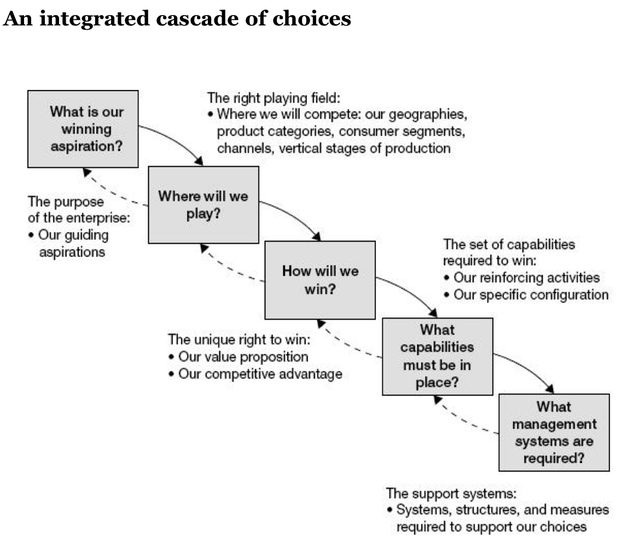
Playing to Win: How Strategy Really Works
How Strategy Really Works. This approach grew out of the strategy practice at Monitor Company and subsequently became the standard process at P&G.
̶B̶a̶d̶ Good Game Design - Clicker Games (Idle Games, Incremental Games)