

How often do you check your email per day? Does checking your email make you more productive or less productive? Oh, sure, we delude ourselves into thinking we’re being extra-productive by obsessively checking and responding to our email, but in reality we’re attending too frequently to our
A World Without Email: Reimagining Work in an Age of Communication Overload
A New York Times and Wall Street Journal bestsellerFrom New York Times bestselling author Cal Newport comes a bold vision for liberating workers from the tyranny of the inbox--and unleashing a new era of productivity.Modern knowledge workers communicate constantly. Their days are defined by a relentless barrage of incoming messages and back-and-forth digital conversations--a state of constant, anxious chatter in which nobody can disconnect, and so nobody has the cognitive bandwidth to perform substantive work. There was a time when tools like email felt cutting edge, but a thorough review of current evidence reveals that the "hyperactive hive mind" workflow they helped create has become a productivity disaster, reducing profitability and perhaps even slowing overall economic growth. Equally worrisome, it makes us miserable. Humans are simply not wired for constant digital communication.We have become so used to an inbox-driven workday that it's hard to imagine alternatives. But they do exist. Drawing on years of investigative reporting, author and computer science professor Cal Newport makes the case that our current approach to work is broken, then lays out a series of principles and concrete instructions for fixing it. In A World without Email, he argues for a workplace in which clear processes--not haphazard messaging--define how tasks are identified, assigned and reviewed. Each person works on fewer things (but does them better), and aggressive investment in support reduces the ever-increasing burden of administrative tasks. Above all else, important communication is streamlined, and inboxes and chat channels are no longer central to how work unfolds.The knowledge sector's evolution beyond the hyperactive hive mind is inevitable. The question is not whether a world without email is coming (it is), but whether you'll be ahead of this trend. If you're a CEO seeking a competitive edge, an entrepreneur convinced your productivity could be higher, or an employee exhausted by your inbox, A World Without Email will convince you that the time has come for bold changes, and will walk you through exactly how to make them happen.
Email Isn’t The Thing You’re Bad At
You and me, we’re bad at a lot of things. But email isn’t one of those things, no matter how much it seems like it.

My Mad Quest to Fix Email Showed Me the Real Reason We Hate It
Last summer, I reached peak email despair. I started using email when I was 6 years old to keep in touch with my grandmother, and I’ve used it ever sin ...

Is Email Making Professors Stupid?
It used to simplify crucial tasks. Now it’s strangling scholars’ ability to think.
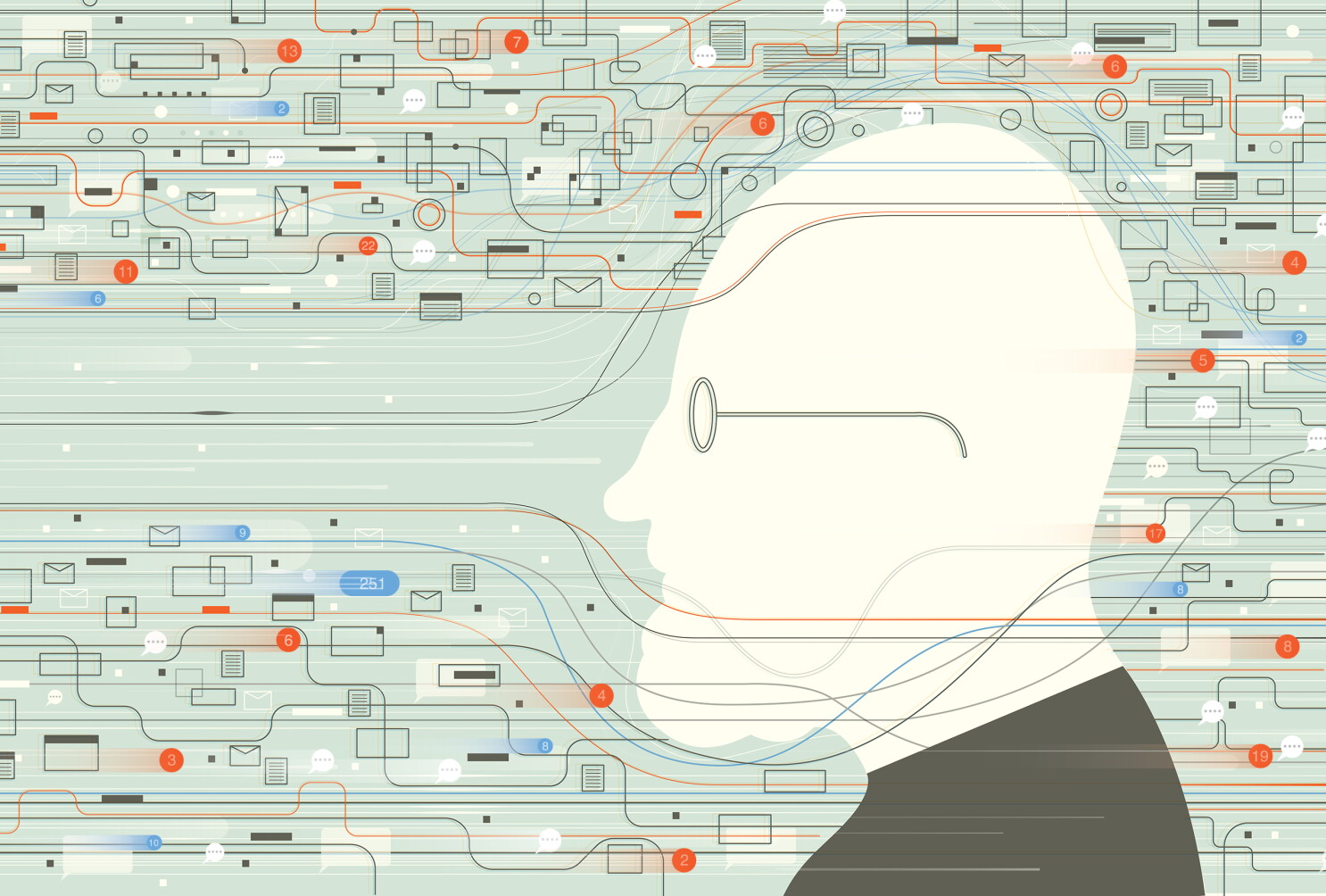
Modern work requires attention. Constant alerts steal it - Stack Overflow
Attention—the time and freedom to focus—is your team’s most valuable resource.
Less stress, more productivity: why working fewer hours is better for you and your employer
There’s always too much work to be done on software projects, too many features to implement, too many bugs to fix. Some days you’re just not going through the backlog fast enough, you’re not producing enough code, and it’s taking too long to fix a seemingly-impossible bug. And to make things worse you’re wasting time in pointless meetings instead of getting work done. Once it gets bad enough you can find yourself always scrambling, working overtime just to keep up. Pretty soon it’s just expected, and you need to be available to answer emails at all hours even when there are no emergencies. You’re tired and burnt out and there’s still just as much work as before. The real solution is not working even harder or even longer, but rather the complete opposite: working fewer hours.
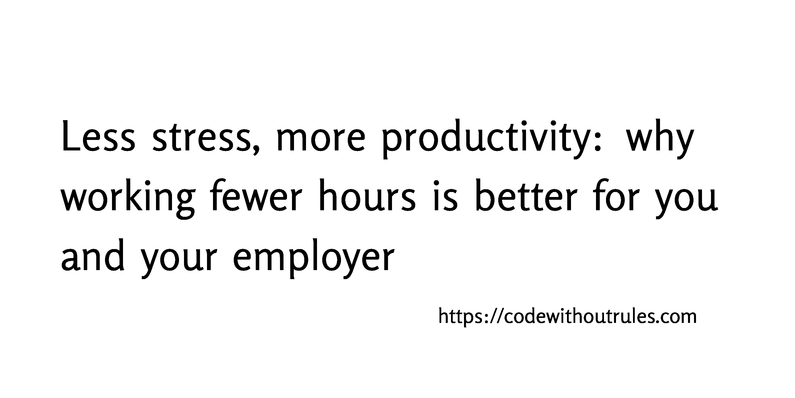
Email Doesn't Suck. It's Email Clients That Need Improving
Don't hate the technology, hate the implementation.
Email filters: Stay organized with these best practices | Proton
Learn how email filters can create better email organization and workflow, and increase your productivity at work.
Email filters: Stay organized with these best practices | Proton
Learn how email filters can create better email organization and workflow, and increase your productivity at work.
10 Realistic Ways to Keep Your Overflowing Inbox Under Control
Something I've noticed from building Exist is that a surprising amount of work in a startup is just sending emails. Responding to customer feedback and support requests, discussing our plans and progress, getting advice from other startup founders, setting up meetings: all of this happens via email. I'm resigned to...

Being busy is killing our ability to think creatively
Here's why you should try to fit less—not more—into each day.

Fire And Motion
Sometimes I just can’t get anything done. Sure, I come into the office, putter around, check my email every ten seconds, read the web, even do a few brainless tasks like paying the American E…

Mailing-List 2.0: Discourse
You got a few people working on something and you seek for an efficient way to communicate (ideas, news, messages, etc.) online. This guide gives you an overview about what you could expect in the past and what you should ask for nowadays. Mails According to Wikipedia, the first mail was sent in 1971. The access to a network we call Internet today was quite limited in these early days. Users have been mostly universities, and I guess, not everyone, but mostly the STEM disciplines Science, Technology, Engineering, and Mathematics. So it comes at no surprise that mails are perceived as inconvenient and antiquated.
Slack didn’t kill email — and it might have made it stronger
Front’s Mathilde Collin on why email is making a comeback

How to Send Emails to Very Busy People (and a Case Study Teardown)
Check out my follow-up piece on getting things on the calendars of Very Busy People.

