

After we created Stack Overflow, some people were convinced we had built a marginally better mousetrap for asking and answering questions. The inevitable speculation began: can we use your engine to build a Q&A site about {topic}? Our answer was Stack Exchange. Pay us $129 a month (and up)
What does Stack Overflow want to be when it grows up?
I sometimes get asked by regular people in the actual real world what it is that I do for a living, and here’s my 15 second answer: We built a sort of Wikipedia website for computer programmers to post questions and answers. It’s called Stack Overflow. As of
Sean Tilley (@deadsuperhero@social.wedistribute.org)
While it’s true that the Big Platforms have a massive hold over online creators when it comes to financial incentive, I still think there’s some worthwhile things we can do.Ask Big Creators what to...

StackExchange Founder Vows to Reinvent Online Discourse
Jeff Atwood wants to improve the entire internet. That's always been his goal a better place. He started by co-founding StackOverflow, a question-and-answer site for software developers that revolutionized the way they learn online, and eventually, this evolved into StackExchange, a network of Q&A sites spanning myriad topics. Now, Atwood has renewed his crusade with Discourse, an open source application for building online message boards that he hopes will become as ubiquitous as WordPress.

Why bother paying for software anymore?
And why design is the answer AI bros didn’t expect.

Why We Can’t Figure Out Why Infrastructure Is So Expensive
And why it’s going to be so expensive to find an answer.

AI and the Collapse of the www
This paper studies market design for generative AI intermediation. AI answer systems can improve user experience while diverting visits that finance publisher content and generate source-level quality signals. I show that an AI platform that underinternalizes future content reproduction retains too little referral traffic and can make costly open-web information subcritical, even with truthful content, accurate answers, and rational users. The mechanism can be self-reinforcing: less source-level measurement weakens conventional search, inducing further AI reliance. Sustainable repair requires replacing displaced revenue and deleted measurement through visitor-replacement royalties, audited provenance, human-information audits, and keystone-topic compensation.

The UK paid £4.1 million for a bookmarks site
Or, as they like to call it, the 'AI Skills Hub'. Which was built by PwC because of course it was

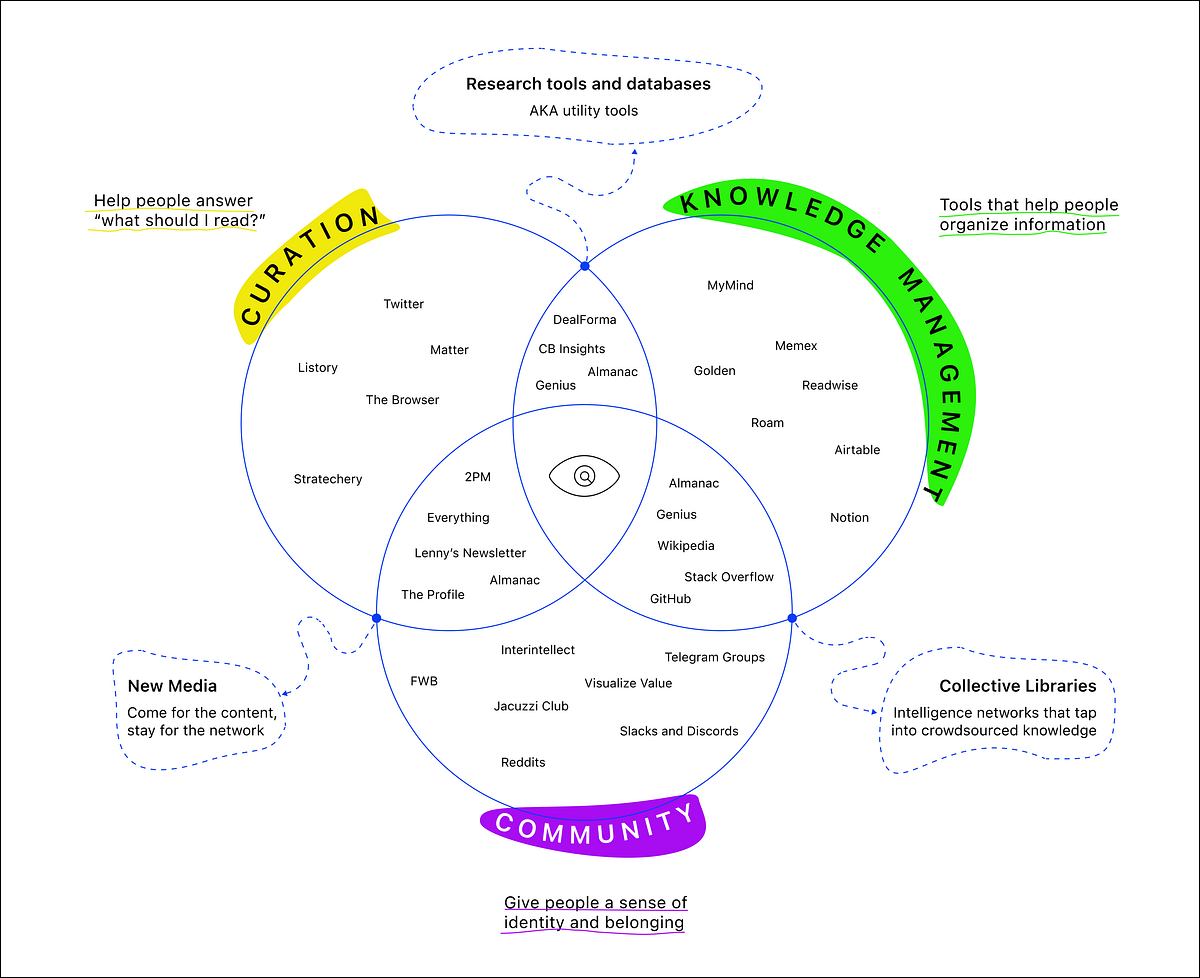
The rise of community-curated knowledge networks
The Internet put thousands of years of human thought at our fingertips, and enabled billions of people to create content. At least 2.5…
Part I: The Next Great Online Community
There’s a lack of innovation in community software. Let's dive into internet history, and get inspired!
The AI browser wars are about to begin
Artificial intelligence is already writing an obituary for the internet as we know it. So why is everyone building new web browsers?

Reddit’s Sale of User Data for AI Training Draws FTC Inquiry
The platform says it stands to make more than $200 million in coming years from Google and other companies that want user comments to feed AI projects. Regulators have questions.

Where Browsers Come From
In this post, I’ll talk about the evolution of the economics around browsers, and what we should think about as we move forward.
Hitting the High Notes
In March, 2000, I launched this site with the shaky claim that most people are wrong in thinking you need an idea to make a successful software company: The common belief is that when you’re …

How the small web is creating an anti-slop internet
What is the small web? A new crop of platforms are answering algorithmic fatigue with a return to human-curated basics.

Keynote: The Death of the Browser - Rachel-Lee Nabors, AgentQL
