


If you were to print the amount of photos uploaded to Facebook in one day, they would stack taller than 8 Eiffel Towers. 9 amazing social media facts to go.
The Danger of Exaggerating the Political Importance of Social Media - Cal Newport
The Pew Research Center recently released a new study on American Twitter use. As Jennifer Rubin reported in the Washington Post, one of the most ... Read more

The Interplay of Knowledge Overestimation, Social Media Use, and Populist Ideas: Cross-Sectional and Experimental Evidence From Germany and Taiwan - Niels G. Mede, Adrian Rauchfleisch, Julia Metag, Mike S. Schäfer, 2024
Social media expose users to an abundance of information about various issues. But they also make it difficult for users to assess the quality of this informati...

Custodians of the Internet
A revealing and gripping investigation into how social media platforms police what we post online—and the large societal impact of these decisions Most use...
Social media is dead – here’s what comes next | New Scientist
A new information ecosystem is on the rise, featuring closer connections, cosy media and worker-owned websites, writes Annalee Newitz

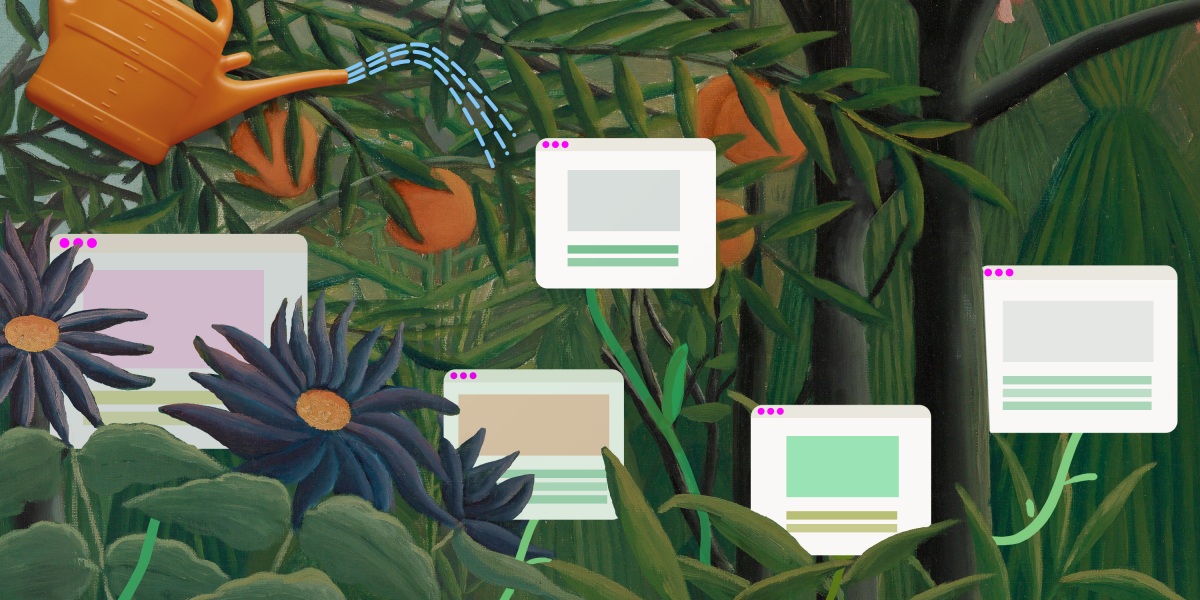
Digital gardens let you cultivate your own little bit of the internet
A growing number of people are creating individualized, creative sites that eschew the one-size-fits-all look and feel of social media
Whose Global Village — Ramesh Srinivasan
In the digital age, technology has shrunk the physical world into a “global village,” where we all seem to be connected as an online community as information travels to the farthest reaches of the planet with the click of a mouse. Yet from the US election, to the growth of the alt-right movement, to the Dakota pipeline to the question of ISIS, we also have begun to recognize how incredibly disconnected we are at the same time, occupying various bubbles and self-selected communities.While we think of platforms such as Twitter and Facebook as open and accessible to all, in reality, these are commercial entities developed primarily by and for the Western world. Considering how new technologies increasingly shape labor, economics, and politics, these tools often reinforce the inequalities of globalization, rarely reflecting the perspectives of those at the bottom of the digital divide.
Facebook and Twitter shutter pro-Trump network reaching 55 million accounts
They used AI-generated faces as profile photos

Building resilient social media
Next week I’ll be in Berlin, speaking at a Franco-German “Summit on European Digital Sovereignty” satellite event to help launch…

The Atmosphere . Building the open social web
FediForum | Growing the Open Social Web:<br>An Online Un-Workshop
Since the Twitter takeover by Elon Musk over three years ago, the Open Social Web has been adopted by an enthusiastic community. People world-wide are building and using open social platforms and open social protocols to better interact with others online.

How The Enshittification Of Social Media Is Decreasing The Switching Costs And Enabling Something New
In the last few weeks I’ve written about how Elon Musk’s “changes” to how Twitter is running have done an amazing job convincing people to join Mastodon. And I’ve also…

No Sense of Place: The Impact of Electronic Media on Social Behavior
Electronic media present us with a collage of experiences from everyplace. We eat dinner at home while watching starving children thousands of miles away reach out to us for food. From our easy chairs, we stare at blindfolded hostages, and coolly

Email Is The Last, And Ultimate, Social Graph | TechCrunch
One of the magical innovations of the Web 2.0 era was when the bigger social platforms opened their doors to third-party app developers. LinkedIn, Facebook and Twitter widely touted ,and profited from, the concept of allowing consumers to plug their social graph into other applications. We saw the meteoric rise of games, apps and business tools that leverage the ability to quickly insert value into the relationship. RIP, Good Times.

Elena Rossini 🌈 (@_elena@mastodon.social)
Attached: 1 image 📝 #WSocial state of the network - Friday July 10th 📣 for those who are curious about it, considering the enthusiastic endorsement by prestigious European institutions #OpenData allows me to crunch numbers. On day 23 since its beta launch in Brussels, W Social has 11291 accounts: - 469 new users since yesterday - 899 users have published one or more posts - 72 new users posting since yesterday - 92% have never* published a single post *may be related to #WIdentity and its 13-step process
Shifts in U.S. Social Media Use, 2020–2024: Decline, Fragmentation, and Enduring Polarization
The social media ecosystem appears to be in flux. Twitter’s rebranding to X has come to symbolize a broader reorganization of online publics – political reshuffling, user attrition, and uncertainty over the role of legacy platforms. Simultaneously, the shift from text-based, networked feeds toward algorithmically curated, short-form video has accelerated, with TikTok setting the pace for the wider ecosystem [18, 14, 16]. At the same time, everyday communication increasingly migrates from large, open networks to semi-private spaces such as group chats and messaging apps. Commentators describe a digital public sphere in transition: smaller, more fragmented, less dominated by traditional social networking sites, and rise of more broadcast-oriented forms of media – with some even suggesting that we are seeing the beginning of the end of the social media era.
🐝 Social Media (SB Commentary)

things I said about social media

Bee 🐝 (@sweetbee.vip)
Bee 🐝 (@sweetbee.vip)
Bee 🐝 (@sweetbee.vip)