


Rose George | Metropolitan Books | August 2013 | 17 minutes (4,213 words) The following is the opening chapter of Rose George’s new book, Ninety Percent of Everything. Our thanks to the author for sharing it with the Longreads community. * * * Friday. No sensible sailor goes to sea on the day of the Crucifixion or the […]
Ninety Percent of Everything: Inside Shipping, the Invisible Industry That Puts Clothes on Your Back, Gas in Your Car, and Food on Your Plate
Eye-opening and compelling, the overlooked world of freight shipping, revealed as the foundation of our civilizationOn ship-tracking websites, the waters are black with dots. Each dot is a ship; each ship is laden with boxes; each box is laden with goods. In postindustrial economies, we no longer produce but buy. We buy, so we must ship. Without shipping there would be no clothes, food, paper, or fuel. Without all those dots, the world would not work.Freight shipping has been no less revolutionary than the printing press or the Internet, yet it is all but invisible. Away from public scrutiny, shipping revels in suspect practices, dubious operators, and a shady system of "flags of convenience." Infesting our waters, poisoning our air, and a prime culprit of acoustic pollution, shipping is environmentally indefensible. And then there are the pirates.Rose George, acclaimed chronicler of what we would rather ignore, sails from Rotterdam to Suez to Singapore on ships the length of football fields and the height of Niagara Falls; she patrols the Indian Ocean with an anti-piracy task force; she joins seafaring chaplains, and investigates the harm that ships inflict on endangered whales.Sharply informative and entertaining, Ninety Percent of Everything reveals the workings and perils of an unseen world that holds the key to our economy, our environment, and our very civilization.

How Does All Your Stuff Get to You? Inside the Shipping Industry
<p>Almost everything you own and consume came to you via a container ship, but we know almost nothing about the industry. Rose George, author of the new book <i><a href="http://www.amazon.com/Ninety-Percent-Everything-Shipping-Invisible/dp/0805092633" target="_blank">Ninety Percent of Everything</a></i>, on what keeps the world running.</p>

‘Waiting to Die’ by Paul Krafft from Capital and Labor (1907)
The reverend William Schuler Harris’ Capital and Labor (1907) frames its titular subjects as locked in a perennial struggle, “dating back to the time when the Egyptians laid the lash upon their slaves”. Writing in the early twentieth century, Harris is skeptical of the “orator [who] frequently soars into ecstasies over the privileges of the American workers”, for he sees how the labor force is suffering under the “galling yoke” of trusts and monopolies. Substitute those scourges of the Gilded Age with unfettered multinational conglomerates and something similar holds true today. The author’s list of obstacles facing workers are as relevant now as they were more than a century ago: the needs of “civilized life” increase more rapidly than wages; the skilled worker remains at…

The Coral Reef of Humanity Encircling the Rapacious Pirate Vessels of Commerce
How to think about what unions do.

The Seas Will Save Us: How an Army of Ocean Farmers are Starting an Economic Revolution
I’m a fisherman who dropped out of high school in 1986 at the age of 14. Over my lifetime, I’ve spent many nights in jail. I’m an…


Inside The Global “Club” That Helps Executives Escape Their Crimes
632K subscribers in the TrueReddit community. A subreddit for really great, insightful articles and discussion. Please follow the sub's rules and…
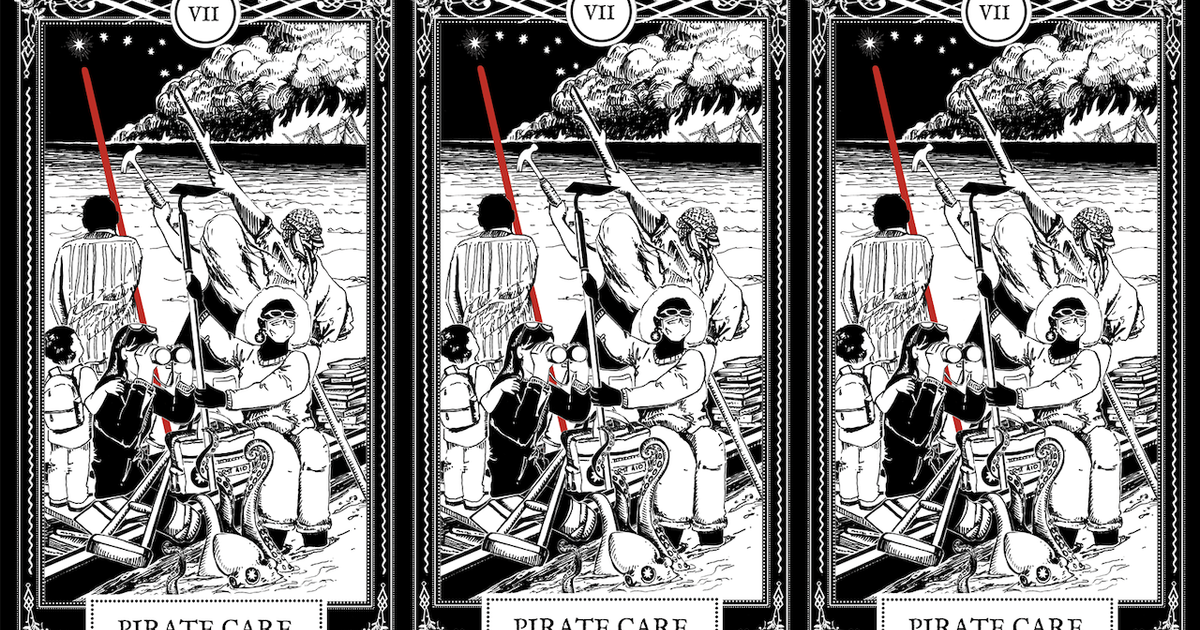
Pirate Care: Against the Criminalization of Solidarity - Notes - e-flux
Valeria Graziano, Marcell Mars, and Tomislav Medak elaborate their concept of “pirate care.”
Carnival Cash: The Cult of Seniority - DaedTech
Alright, screw it. Let’s burn the boats. I said I wasn’t going to get into this until I released the book, but the idealist career advice post I had planned doesn’t make sense without a discussion of corporate seniority. If you haven’t read this recent post, in which I outline the terms pictured below, you’ll probably want...

David Graeber: "Spotlight on the financial sector did make apparent just how bizarrely skewed our economy is in terms of who gets rewarded"
David Graeber explains why the more your job helps others, the less you get paid

Subscribe
mandy brown writes about work like a field surgeon operates, careful and propulsive and all in on keeping us alive—to ourselves, to our colleagues, to the world. Unfuckwithable.

A Book in 5 Minutes: Summary of Dan Pink’s “To Sell is Human” - Tech.co
Don’t have time to read? Here’s a quick but comprehensive summary of Dan Pink’s “To Sell is Human,” released on December 31, 2012.

Marc Mulholland on Twitter / X
We just might be living in an era which will put Ernest Mandel's third proof of the Marxist 'labour theory of value' -- 'proof by reduction to the absurd' -- to a real-world test. pic.twitter.com/er5qxdtBdr— Marc Mulholland (@katheder) November 18, 2026

Profit, cost, price, learned societies; further thoughts on Samuel A. Moore's Publishing Beyond the Market
Since I last wrote, I have had a few more thoughts on Samuel Moore’s book. Again, these are not necessarily things that he does not discuss or things that he should have discussed. They are merely thoughts that occurred to me in response to reading his work.

Soledad Brother: The Prison Letters of George Jackson
A collection of Jackson's letters from prison, Soledad …

More work for your labor-value - The Wobbly World of Miftah's Words
...and more exploitation for your location.