

A user friendly game engine written in Rust
Designing And Building Stockfighter, Our Programming Game | Kalzumeus Software
The image library is now pure Rust · Piston
A user friendly game engine written in Rust

The Game of Oligarchy | Brewster Kahle's Blog
I just invented and played a game today with my family, and it worked great– it was fun and we learned an important lesson. Similar to the game “Monopoly” which shows that one person ends up monopolizing even though you think the rules are “fair,” the game of Oligarchy shows that the “free market” leads inexorably to one person getting all the money and everyone else going broke. And fast.
Talking About Money | Kalzumeus Software
The Math of Idle Games, Part I
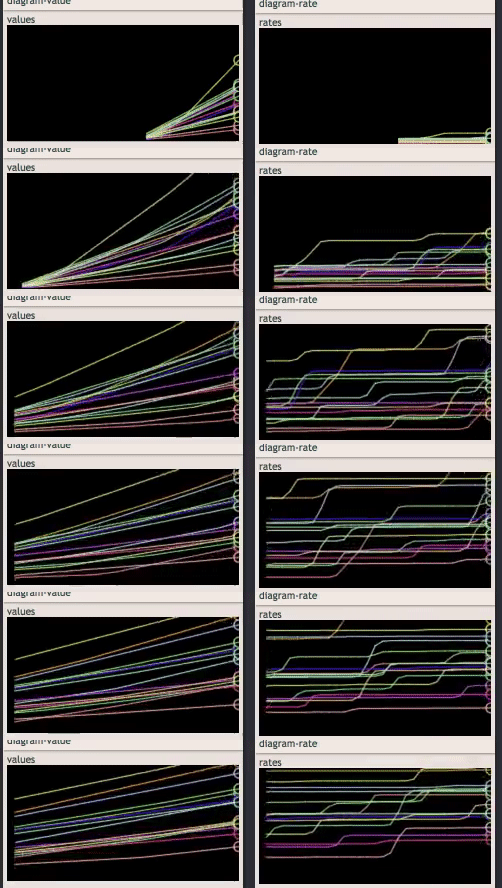
Originally published October 4, 2016 I’ve given a few talks in the past about the appeal and general mechanics of idle games, but what if you actually wanted to make one? Theory and patterns are nice, but there’s some complicated math running behind it. And how on earth
Towards Efficient Data Valuation Based on the Shapley Value
{\em “How much is my data worth?”} is an increasingly common question posed by organizations and individuals alike. An answer to this question could allow, for instance, fairly distributing profits among multiple data contributors and determining prospective compensation when data breaches happen. In this paper, we study the problem of \emph{data valuation} by utilizing the Shapley value, a popular notion of value which originated in coopoerative game theory. The Shapley value defines a unique payoff scheme that satisfies many desiderata for the notion of data value. However, the Shapley value often requires \emph{exponential} time to compute. To meet this challenge, we propose a repertoire of efficient algorithms for approximating the Shapley value. We also demonstrate the value of each training instance for various benchmark datasets.
The Math of Idle Games, Part II
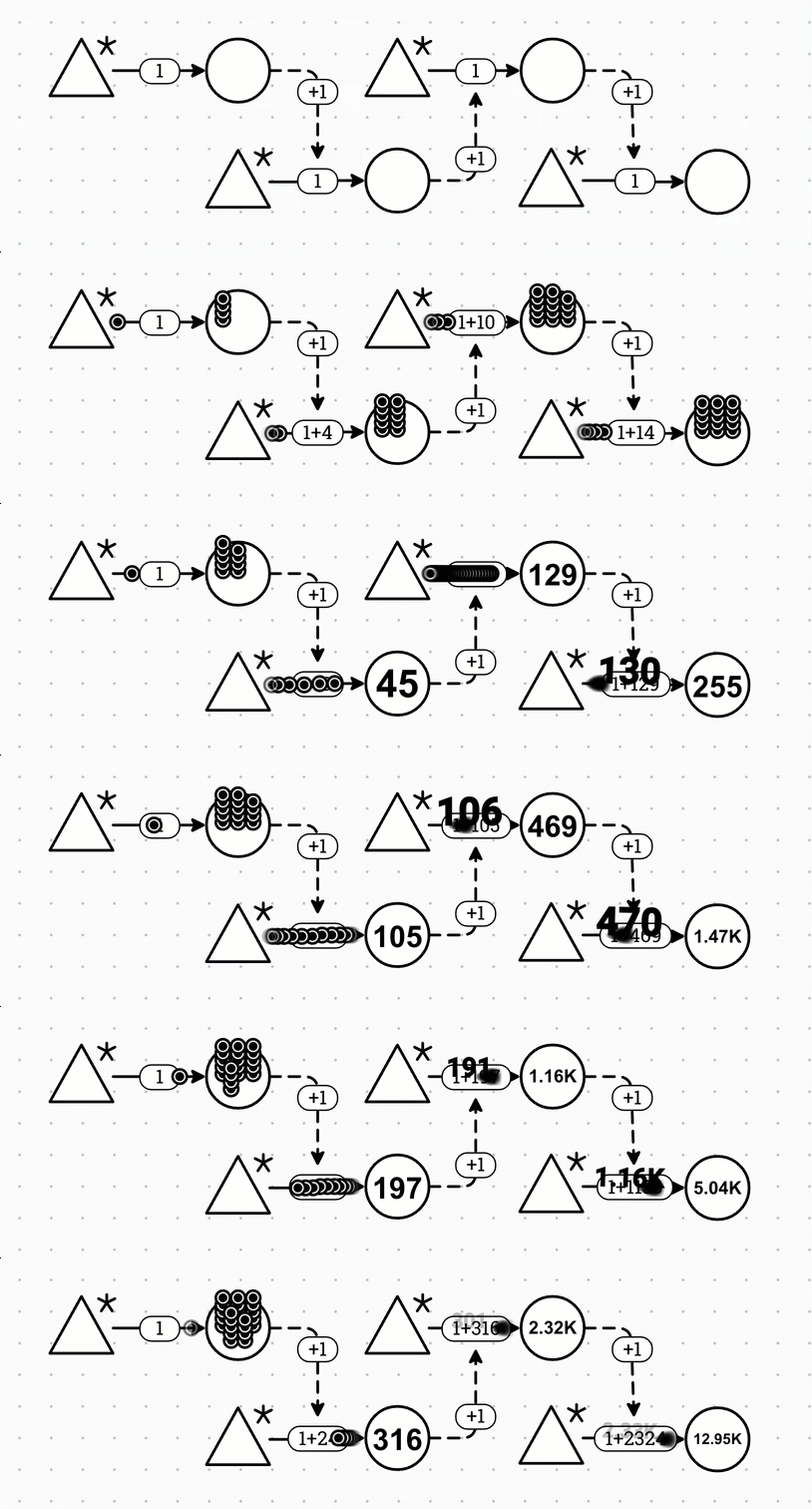
Originally published October 28, 2016 In Part I [https://www.sirpinski.com/the-math-of-idle-games-part-i/] of this three-part series, we looked at some of the standard math behind rapid-growth idle games, primarily at the relationships between exponential and polynomial growth and some methods of
Pretty State Machine Patterns in Rust
A computer scientist working in open source towards a more hopeful future.
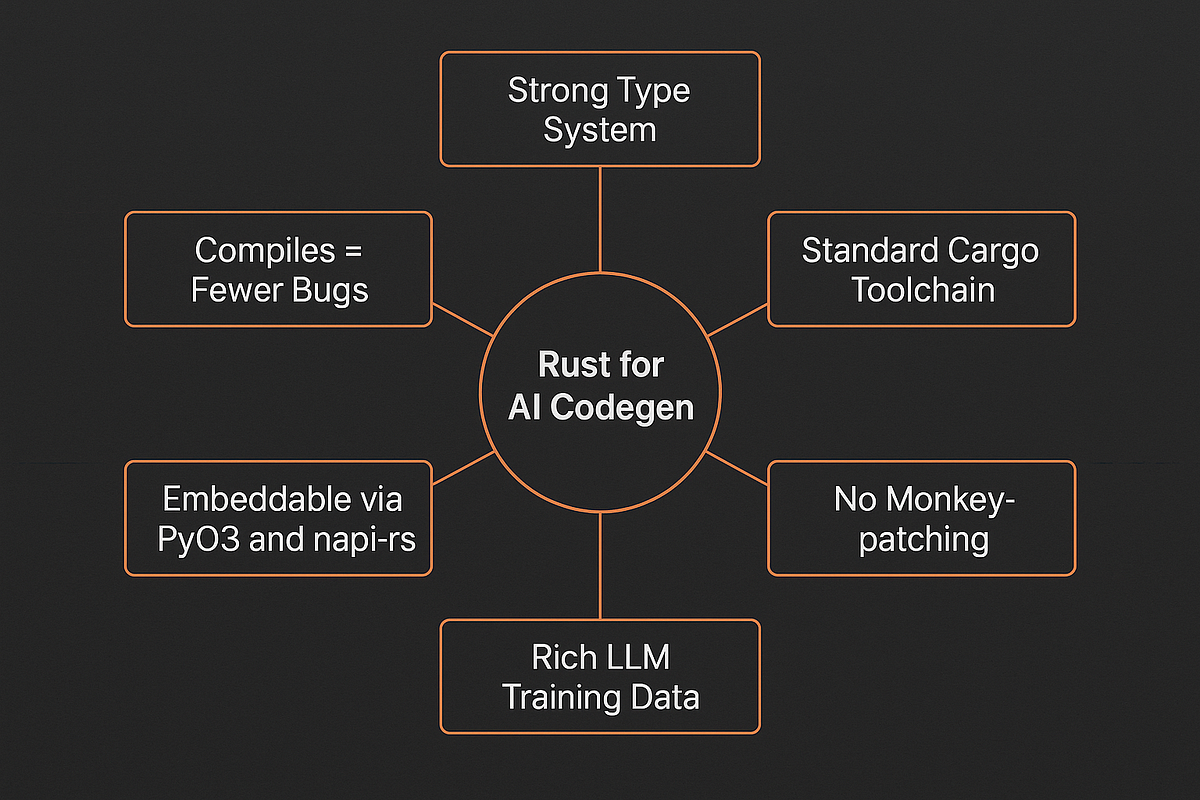
Rust Is Winning the AI Code Generation Race
I’ve been generating a lot of code with AI agents lately. Most of it in Rust, and nice about it is that it consistently better than what I…
Building the Future of Games on ATProto | Birbhouse Games
Game platforms hold too much power over developers. We want to change that by decentralizing games with ATProto — devs own their data, players own their progress, and no payment processor can take it away.
On the Impact of the Utility in Semivalue-based Data Valuation
Semivalue–based data valuation uses cooperative‐game theory intuitions to assign each data point a value reflecting its contribution to a downstream task. Still, those values depend on the...
Why Rust is the Future of Game Development | thefuntastic
Rust, not related to the video game also called Rust, is a promising systems programming language with novel features ideally suited for game development. Exposure and awareness within the game developer community, however, remains limited. In this post, I provide a gentle introduction to Rust and attempt to justify its place on your radar.

Is Inequality Inevitable?
Wealth naturally trickles up in free-market economies, model suggests

Game Theory | Open Yale Courses
This course is an introduction to game theory and strategic thinking. Ideas such as dominance, backward induction, Nash equilibrium, evolutionary stability, commitment, credibility, asymmetric information, adverse selection, and signaling are discussed and applied to games played in class and to examples drawn from economics, politics, the movies, and elsewhere.