

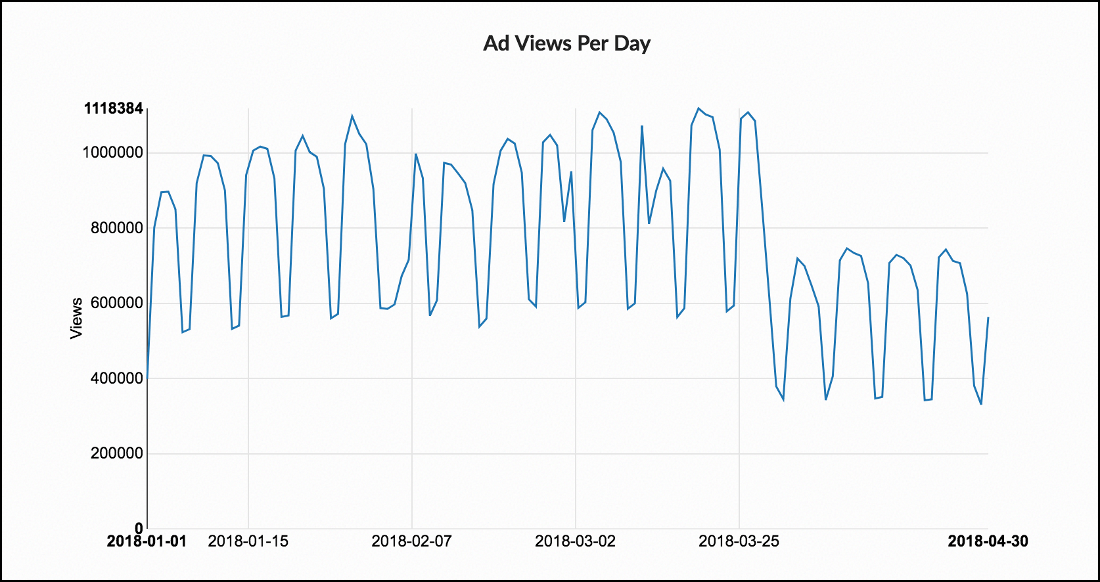
Last time, we shared how ethical advertising works to keep Read the Docs sustainable without creepy ad targeting. This time, we will share about one of our biggest challenges with advertising. At the beginning of April, Read the Docs was added to one of the most popular ad block lists: the Easyli...
Using Ads to Sustain Open Source
Why someone who loves Privacy Badger, uses a non-tracking browser, and never cared for ads, is advocating their ethical use for open…
Why Stack Overflow Doesn’t Care About Ad Blockers - Stack Overflow
Hi! I’m Steve Feldman, Senior Ad Ops Manager at Stack Overflow. My whole life I’ve been fascinated by advertising. Even as a kid, I wondered what a company was trying to tell me by using one word instead of another in an ad. Over time, I developed a strong (read: subjective) opinion of what makes an ad ’good,’ and what makes an ad ’bad.’ It took me many years-- in fact, it wasn’t until joining the Ad Sales team at Stack Overflow-- to finally figure out that the common thread shared by the best ads is relevance. Maintaining that relevance is how we’ve managed to avoid one of the biggest issues facing publishers today: ad blocking.

Thank you for ad blocking | thankyouforadblocking.com is a public awareness campaign focused on increasing awareness about the danger associated with online advertising.
I became interested with the topics of privacy and internet user rights more than 20 years ago in my native Finland, which at the time was toted as the first information society in the world. I was one of the first commercial internet developers, and became fascinated with the user data aspect of the internet the moment I saw awstats for the first time. It was an early server-log based web analytics solution, in the time when there were no tracking tag based solutions available. The idea of allowing 3rd-party tags on websites came later. Today it is not hard to find premium websites with more than 100 such 3rd-party tags.
Uniregistry sponsors Read the Docs and Open Source
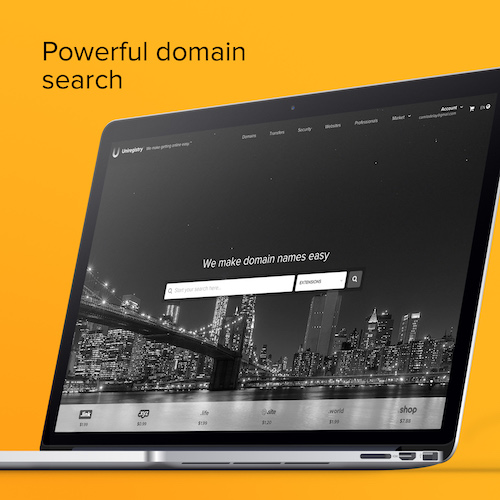
Today we’re excited to announce an important sponsorship partner in our Ethical Advertising campaign: Uniregistry. Our goal with our ethical advertising program is to provide important funding for open source, and show that it can be done ethically – without tracking our users and only offering a...
I truly hate mostpeopleslop
In 2006, Joe Sugarman published a book called The Adweek Copywriting Handbook - and an axiom stuck... "The sole purpose of the first sentence in an advertisement is to get you to read the second sentence." That line, more or less, explains how social media turned into a pile of

Privacy vs. Profit: The Impact of Google's Manifest Version 3 (MV3) Update on Ad Blocker Effectiveness
Google's recent update to the manifest file for Chrome browser extensions, transitioning from manifest version 2 (MV2) to manifest version 3 (MV3), has raised concerns among users and ad blocker providers, who worry that the new restrictions, notably the shift from the powerful WebRequest API to the more restrictive DeclarativeNetRequest API, might reduce ad blocker effectiveness. Because ad blockers play a vital role for millions of users seeking a more private and ad-free browsing experience, this study empirically investigates how the MV3 update affects their ability to block ads and trackers. Through a browser-based experiment conducted across multiple samples of ad-supported websites, we compare the MV3 to MV2 instances of four widely used ad blockers. Our results reveal no statistically significant reduction in ad-blocking or anti-tracking effectiveness for MV3 ad blockers compared to their MV2 counterparts, and in some cases, MV3 instances even exhibit slight improvements in blocking trackers. These findings are reassuring for users, indicating that the MV3 instances of popular ad blockers continue to provide effective protection against intrusive ads and privacy-infringing trackers. While some uncertainties remain, ad blocker providers appear to have successfully navigated the MV3 update, finding solutions that maintain the core functionality of their extensions.

Google subsidizing hate group’s anti-trans and anti-diversity ads
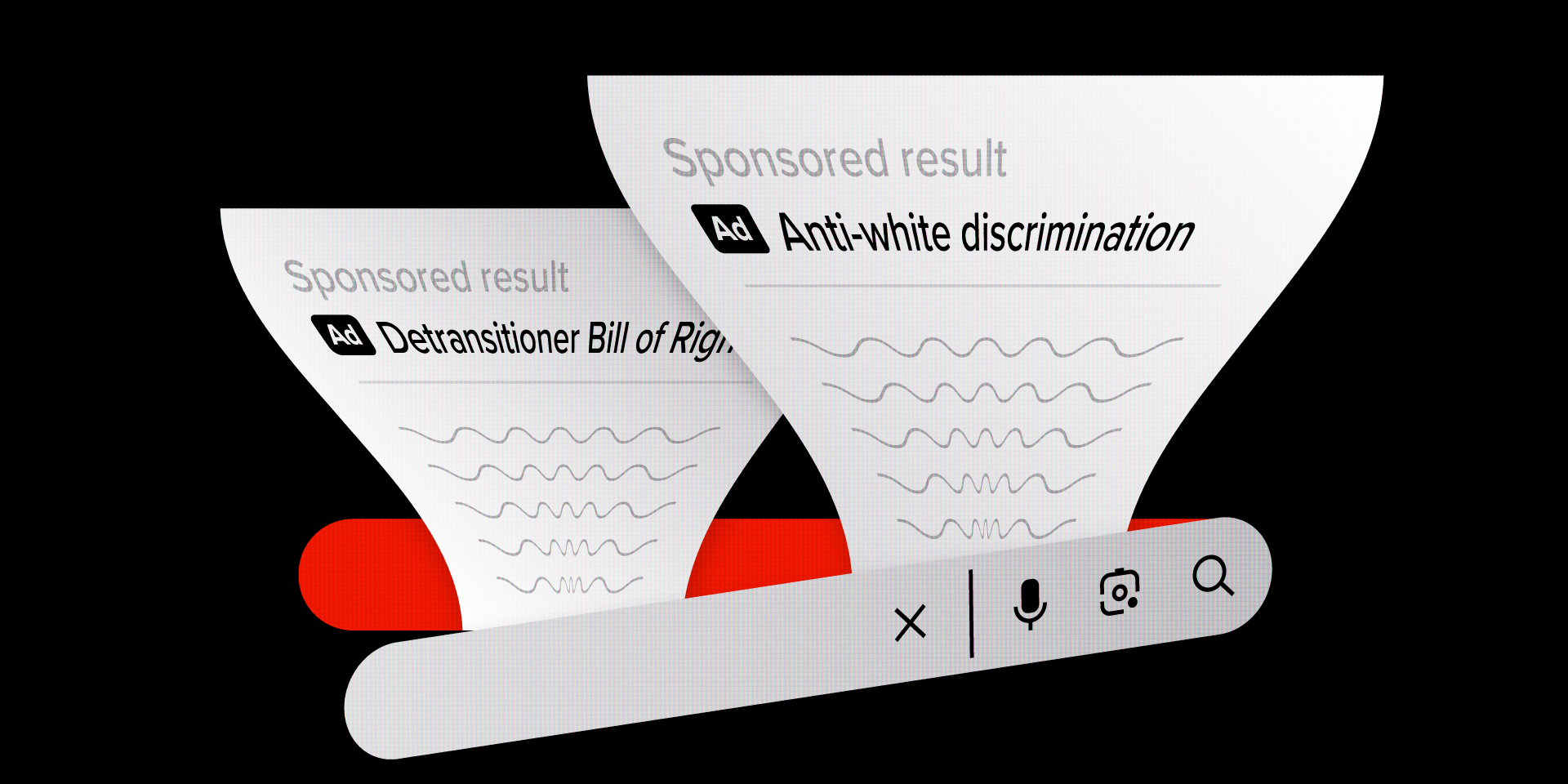
Google’s Ad Grants program subsidizes advertisements by the anti-LGBTQ+ hate group Do No Harm, including sponsored search results for the group’s so-called “Detransitioner Bill of Rights,” according to a search of Google’s ad transparency data.1 Do No Harm’s model policy, the “Detransitioner Bill of Rights,” wrongly suggests that gender-affirming healthcare can “contribute” to distress among […]
Beware online "filter bubbles" | Eli Pariser
Debunking the science of advertising
We delve into the world of advertising, worth hundreds of billions of dollars annually, to find out if it's really even that effective. A collection with 3 stories from The Correspondent.

uBlock Origin - Free, open-source ad blocker extension
uBlock Origin is a free, open-source ad blocker extension and content blocker. Block ads on YouTube, Twitch, and across the web with low CPU and memory usage. Available for Firefox, Edge, Opera, and Chrome via uBlock Origin Lite.

New Research: Is an Ad-Supported Internet Feasible in Emerging Markets? | The Mozilla Blog
Fresh research conducted by Caribou Digital and funded by Mozilla explores digital advertising models in the Global South — whether they can succeed, and

Scam Ads Are Flooding Social Media. These Former Meta Staffers Have a Plan
Rob Leathern and Rob Goldman, who both worked at Meta, are launching a new nonprofit that aims to bring transparency to an increasingly opaque, scam-filled social media ecosystem.

Tracking Harris and Trump’s Ad Spending on Facebook and Instagram
Meta’s Ad Library is free to use, and provides useful insights into how politicians and their campaigns are advertising on social media platforms.

The Dystopian Reality of Online Advertising

Meta’s “Trusted Experts” helped me run scam ads on Facebook and Instagram
A Reuters reporter created ads promising unrealistic investment returns and easily placed them on Meta's social media platforms.
