

I’ve observed thousands of founders and thought a lot about what it takes to make a huge amount of money or to create something important. Usually, people start off wanting the former and end up...
Interviews with Failed & Successful Startup Founders
+200 interviews with the brains behind shut down and active startups. Learn from their wins and their mistakes and become a better founder.
How Bad Entrepreneurs Reveal Themselves in the First 5 Seconds of a Pitch
A few simple words is all it takes to figure out a founder’s odds of startup success.
You Weren't Meant to Have a Boss
March 2008, rev. June 2008Technology tends to separate normal from natural. Our bodies weren't designed to eat the foods that people in rich countries eat, or to get so little exercise. There may be a similar problem with the way we work: a normal job may be as bad for us intellectually as white flour or sugar is for us physically.I began to suspect this after spending several years working with startup founders. I've now worked with over 200 of them, and I've noticed a definite difference between programmers working on their own startups and those working for large organizations. I wouldn't say founders seem happier, necessarily; starting a startup can be very stressful. Maybe the best way to put it is to say that they're happier in the sense that your body is happier during a long run than sitting on a sofa eating doughnuts.Though they're statistically abnormal, startup founders seem to be working in a way that's more natural for humans.I was in Africa last year and saw a lot of animals in the wild that I'd only seen in zoos before. It was remarkable how different they seemed. Particularly lions. Lions in the wild seem about ten times more alive. They're like different animals. I suspect that working for oneself feels better to humans in much the same way that living in the wild must feel better to a wide-ranging predator like a lion. Life in a zoo is easier, but it isn't the life they were designed for. TreesWhat's so unnatural about working for a big company? The root of the problem is that humans weren't meant to work in such large groups.Another thing you notice when you see animals in the wild is that each species thrives in groups of a certain size. A herd of impalas might have 100 adults; baboons maybe 20; lions rarely 10. Humans also seem designed to work in groups, and what I've read about hunter-gatherers accords with research on organizations and my own experience to suggest roughly what the ideal size is: groups of 8 work well; by 20 they're getting hard to manage; and a group of 50 is really unwieldy. [1] Whatever the upper limit is, we are clearly not meant to work in groups of several hundred. And yet—for reasons having more to do with technology than human nature—a great many people work for companies with hundreds or thousands of employees.Companies know groups that large wouldn't work, so they divide themselves into units small enough to work together. But to coordinate these they have to introduce something new: bosses.These smaller groups are always arranged in a tree structure. Your boss is the point where your group attaches to the tree. But when you use this trick for dividing a large group into smaller ones, something strange happens that I've never heard anyone mention explicitly. In the group one level up from yours, your boss represents your entire group. A group of 10 managers is not merely a group of 10 people working together in the usual way. It's really a group of groups. Which means for a group of 10 managers to work together as if they were simply a group of 10 individuals, the group working for each manager would have to work as if they were a single person—the workers and manager would each share only one person's worth of freedom between them.In practice a group of people are never able to act as if they were one person. But in a large organization divided into groups in this way, the pressure is always in that direction. Each group tries its best to work as if it were the small group of individuals that humans were designed to work in. That was the point of creating it. And when you propagate that constraint, the result is that each person gets freedom of action in inverse proportion to the size of the entire tree. [2]Anyone who's worked for a large organization has felt this. You can feel the difference between working for a company with 100 employees and one with 10,000, even if your group has only 10 people. Corn SyrupA group of 10 people within a large organization is a kind of fake tribe. The number of people you interact with is about right. But something is missing: individual initiative. Tribes of hunter-gatherers have much more freedom. The leaders have a little more power than other members of the tribe, but they don't generally tell them what to do and when the way a boss can.It's not your boss's fault. The real problem is that in the group above you in the hierarchy, your entire group is one virtual person. Your boss is just the way that constraint is imparted to you.So working in a group of 10 people within a large organization feels both right and wrong at the same time. On the surface it feels like the kind of group you're meant to work in, but something major is missing. A job at a big company is like high fructose corn syrup: it has some of the qualities of things you're meant to like, but is disastrously lacking in others.Indeed, food is an excellent metaphor to explain what's wrong with the usual sort of job.For example, working for a big company is the default thing to do, at least for programmers. How bad could it be? Well, food shows that pretty clearly. If you were dropped at a random point in America today, nearly all the food around you would be bad for you. Humans were not designed to eat white flour, refined sugar, high fructose corn syrup, and hydrogenated vegetable oil. And yet if you analyzed the contents of the average grocery store you'd probably find these four ingredients accounted for most of the calories. "Normal" food is terribly bad for you. The only people who eat what humans were actually designed to eat are a few Birkenstock-wearing weirdos in Berkeley.If "normal" food is so bad for us, why is it so common? There are two main reasons. One is that it has more immediate appeal. You may feel lousy an hour after eating that pizza, but eating the first couple bites feels great. The other is economies of scale. Producing junk food scales; producing fresh vegetables doesn't. Which means (a) junk food can be very cheap, and (b) it's worth spending a lot to market it.If people have to choose between something that's cheap, heavily marketed, and appealing in the short term, and something that's expensive, obscure, and appealing in the long term, which do you think most will choose?It's the same with work. The average MIT graduate wants to work at Google or Microsoft, because it's a recognized brand, it's safe, and they'll get paid a good salary right away. It's the job equivalent of the pizza they had for lunch. The drawbacks will only become apparent later, and then only in a vague sense of malaise.And founders and early employees of startups, meanwhile, are like the Birkenstock-wearing weirdos of Berkeley: though a tiny minority of the population, they're the ones living as humans are meant to. In an artificial world, only extremists live naturally. ProgrammersThe restrictiveness of big company jobs is particularly hard on programmers, because the essence of programming is to build new things. Sales people make much the same pitches every day; support people answer much the same questions; but once you've written a piece of code you don't need to write it again. So a programmer working as programmers are meant to is always making new things. And when you're part of an organization whose structure gives each person freedom in inverse proportion to the size of the tree, you're going to face resistance when you do something new.This seems an inevitable consequence of bigness. It's true even in the smartest companies. I was talking recently to a founder who considered starting a startup right out of college, but went to work for Google instead because he thought he'd learn more there. He didn't learn as much as he expected. Programmers learn by doing, and most of the things he wanted to do, he couldn't—sometimes because the company wouldn't let him, but often because the company's code wouldn't let him. Between the drag of legacy code, the overhead of doing development in such a large organization, and the restrictions imposed by interfaces owned by other groups, he could only try a fraction of the things he would have liked to. He said he has learned much more in his own startup, despite the fact that he has to do all the company's errands as well as programming, because at least when he's programming he can do whatever he wants.An obstacle downstream propagates upstream. If you're not allowed to implement new ideas, you stop having them. And vice versa: when you can do whatever you want, you have more ideas about what to do. So working for yourself makes your brain more powerful in the same way a low-restriction exhaust system makes an engine more powerful.Working for yourself doesn't have to mean starting a startup, of course. But a programmer deciding between a regular job at a big company and their own startup is probably going to learn more doing the startup.You can adjust the amount of freedom you get by scaling the size of company you work for. If you start the company, you'll have the most freedom. If you become one of the first 10 employees you'll have almost as much freedom as the founders. Even a company with 100 people will feel different from one with 1000.Working for a small company doesn't ensure freedom. The tree structure of large organizations sets an upper bound on freedom, not a lower bound. The head of a small company may still choose to be a tyrant. The point is that a large organization is compelled by its structure to be one. ConsequencesThat has real consequences for both organizations and individuals. One is that companies will inevitably slow down as they grow larger, no matter how hard they try to keep their startup mojo. It's a consequence of the tree structure that every large organization is forced to adopt.Or rather, a large organization could only avoid slowing down if they avoided tree structure. And since human nature limits the size of group that can work together, the only way I can imagine for larger groups to avoid tree structure would be to have no structure: to have each group actually be independent, and to work together the way components of a market economy do.That might be worth exploring. I suspect there are already some highly partitionable businesses that lean this way. But I don't know any technology companies that have done it.There is one thing companies can do short of structuring themselves as sponges: they can stay small. If I'm right, then it really pays to keep a company as small as it can be at every stage. Particularly a technology company. Which means it's doubly important to hire the best people. Mediocre hires hurt you twice: they get less done, but they also make you big, because you need more of them to solve a given problem.For individuals the upshot is the same: aim small. It will always suck to work for large organizations, and the larger the organization, the more it will suck.In an essay I wrote a couple years ago I advised graduating seniors to work for a couple years for another company before starting their own. I'd modify that now. Work for another company if you want to, but only for a small one, and if you want to start your own startup, go ahead.The reason I suggested college graduates not start startups immediately was that I felt most would fail. And they will. But ambitious programmers are better off doing their own thing and failing than going to work at a big company. Certainly they'll learn more. They might even be better off financially. A lot of people in their early twenties get into debt, because their expenses grow even faster than the salary that seemed so high when they left school. At least if you start a startup and fail your net worth will be zero rather than negative. [3]We've now funded so many different types of founders that we have enough data to see patterns, and there seems to be no benefit from working for a big company. The people who've worked for a few years do seem better than the ones straight out of college, but only because they're that much older.The people who come to us from big companies often seem kind of conservative. It's hard to say how much is because big companies made them that way, and how much is the natural conservatism that made them work for the big companies in the first place. But certainly a large part of it is learned. I know because I've seen it burn off.Having seen that happen so many times is one of the things that convinces me that working for oneself, or at least for a small group, is the natural way for programmers to live. Founders arriving at Y Combinator often have the downtrodden air of refugees. Three months later they're transformed: they have so much more confidence that they seem as if they've grown several inches taller. [4] Strange as this sounds, they seem both more worried and happier at the same time. Which is exactly how I'd describe the way lions seem in the wild.Watching employees get transformed into founders makes it clear that the difference between the two is due mostly to environment—and in particular that the environment in big companies is toxic to programmers. In the first couple weeks of working on their own startup they seem to come to life, because finally they're working the way people are meant to.Notes[1] When I talk about humans being meant or designed to live a certain way, I mean by evolution.[2] It's not only the leaves who suffer. The constraint propagates up as well as down. So managers are constrained too; instead of just doing things, they have to act through subordinates.[3] Do not finance your startup with credit cards. Financing a startup with debt is usually a stupid move, and credit card debt stupidest of all. Credit card debt is a bad idea, period. It is a trap set by evil companies for the desperate and the foolish.[4] The founders we fund used to be younger (initially we encouraged undergrads to apply), and the first couple times I saw this I used to wonder if they were actually getting physically taller.Thanks to Trevor Blackwell, Ross Boucher, Aaron Iba, Abby Kirigin, Ivan Kirigin, Jessica Livingston, and Robert Morris for reading drafts of this.
When to Fold: The Cost of Failing Slow in a Startup
Failing Slow: Why One Founder Regretted Keeping His Startup Alive
Founders Hub | Transform Finance
The founder playbook for building a company that lasts and stays true to why you started it. Research, case studies, and practical tools for incorporation, fundraising terms, board structure, ownership, and culture.
12 Things I Learned from Chris Dixon about Startups | Andreessen Horowitz
#1 “If everyone loves your idea, I might be worried that it’s not forward thinking enough.” Anyone thinking about starting a business should be searching for mispriced opportunities. While markets are mostly efficient in eliminating opportunities for extraordinary profit, there are always areas of an economy in which there are significant uncertainty. These areas are...

Purpose Ventures - Purpose
Conventional VC is often at odds with the ambitions of purpose-driven entrepreneurs and their founding values and missions. These founders are interested in more than growth for growth’s sake. They want to build lasting, impactful businesses and preserve their mission in the future.
Build the thing you wish to see in the world
For most of my career, I've been confusing building products with building businesses—and that confusion kept me from pursuing a lot of ideas. Two weeks off helped me realize that not everything needs to be a startup, and some of the best things we build are the ones we build just because we want them to exist.
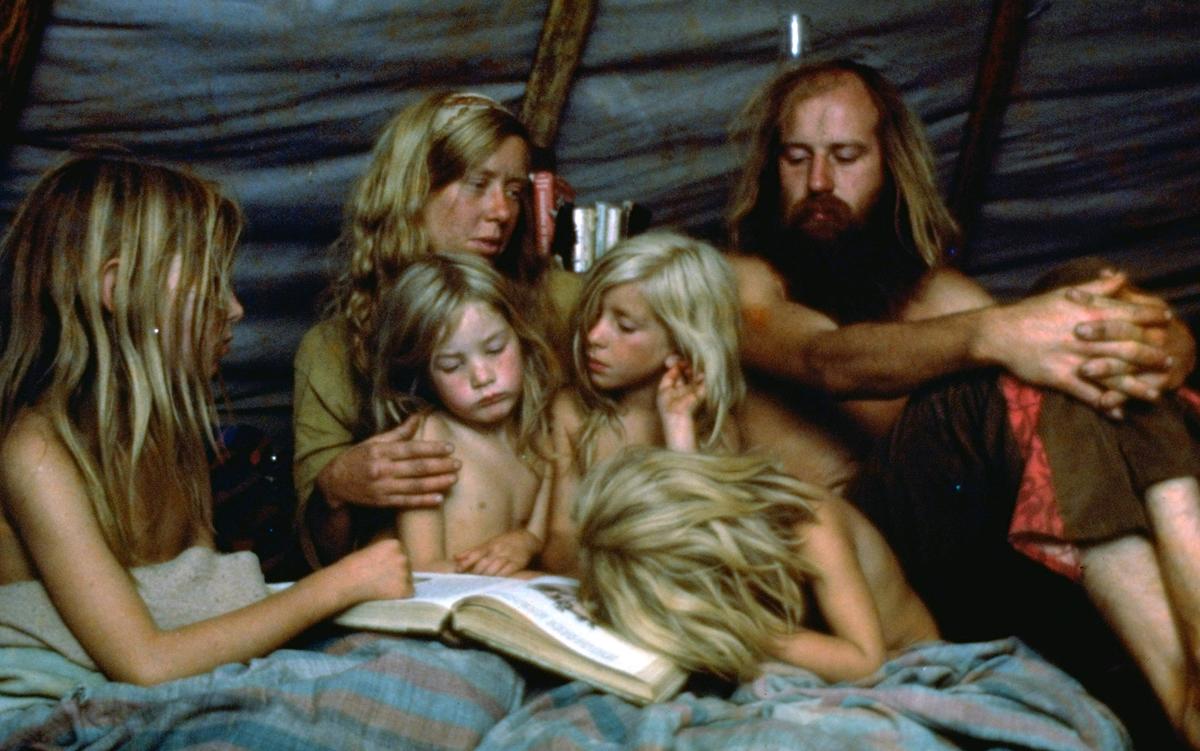
Like start-ups, most intentional communities fail – why? | Aeon Essays
Most utopian communities are, like most start-ups, short-lived. What makes the difference between failure and success?
Ideas for Startups
October 2005(This essay is derived from a talk at the 2005 Startup School.)How do you get good ideas for startups? That's probably the number one question people ask me.I'd like to reply with another question: why do people think it's hard to come up with ideas for startups?That might seem a stupid thing to ask. Why do they think it's hard? If people can't do it, then it is hard, at least for them. Right?Well, maybe not. What people usually say is not that they can't think of ideas, but that they don't have any. That's not quite the same thing. It could be the reason they don't have any is that they haven't tried to generate them.I think this is often the case. I think people believe that coming up with ideas for startups is very hard-- that it must be very hard-- and so they don't try do to it. They assume ideas are like miracles: they either pop into your head or they don't.I also have a theory about why people think this. They overvalue ideas. They think creating a startup is just a matter of implementing some fabulous initial idea. And since a successful startup is worth millions of dollars, a good idea is therefore a million dollar idea.If coming up with an idea for a startup equals coming up with a million dollar idea, then of course it's going to seem hard. Too hard to bother trying. Our instincts tell us something so valuable would not be just lying around for anyone to discover.Actually, startup ideas are not million dollar ideas, and here's an experiment you can try to prove it: just try to sell one. Nothing evolves faster than markets. The fact that there's no market for startup ideas suggests there's no demand. Which means, in the narrow sense of the word, that startup ideas are worthless.QuestionsThe fact is, most startups end up nothing like the initial idea. It would be closer to the truth to say the main value of your initial idea is that, in the process of discovering it's broken, you'll come up with your real idea.The initial idea is just a starting point-- not a blueprint, but a question. It might help if they were expressed that way. Instead of saying that your idea is to make a collaborative, web-based spreadsheet, say: could one make a collaborative, web-based spreadsheet? A few grammatical tweaks, and a woefully incomplete idea becomes a promising question to explore.There's a real difference, because an assertion provokes objections in a way a question doesn't. If you say: I'm going to build a web-based spreadsheet, then critics-- the most dangerous of which are in your own head-- will immediately reply that you'd be competing with Microsoft, that you couldn't give people the kind of UI they expect, that users wouldn't want to have their data on your servers, and so on.A question doesn't seem so challenging. It becomes: let's try making a web-based spreadsheet and see how far we get. And everyone knows that if you tried this you'd be able to make something useful. Maybe what you'd end up with wouldn't even be a spreadsheet. Maybe it would be some kind of new spreadsheet-like collaboration tool that doesn't even have a name yet. You wouldn't have thought of something like that except by implementing your way toward it.Treating a startup idea as a question changes what you're looking for. If an idea is a blueprint, it has to be right. But if it's a question, it can be wrong, so long as it's wrong in a way that leads to more ideas.One valuable way for an idea to be wrong is to be only a partial solution. When someone's working on a problem that seems too big, I always ask: is there some way to bite off some subset of the problem, then gradually expand from there? That will generally work unless you get trapped on a local maximum, like 1980s-style AI, or C.UpwindSo far, we've reduced the problem from thinking of a million dollar idea to thinking of a mistaken question. That doesn't seem so hard, does it?To generate such questions you need two things: to be familiar with promising new technologies, and to have the right kind of friends. New technologies are the ingredients startup ideas are made of, and conversations with friends are the kitchen they're cooked in.Universities have both, and that's why so many startups grow out of them. They're filled with new technologies, because they're trying to produce research, and only things that are new count as research. And they're full of exactly the right kind of people to have ideas with: the other students, who will be not only smart but elastic-minded to a fault.The opposite extreme would be a well-paying but boring job at a big company. Big companies are biased against new technologies, and the people you'd meet there would be wrong too.In an essay I wrote for high school students, I said a good rule of thumb was to stay upwind-- to work on things that maximize your future options. The principle applies for adults too, though perhaps it has to be modified to: stay upwind for as long as you can, then cash in the potential energy you've accumulated when you need to pay for kids.I don't think people consciously realize this, but one reason downwind jobs like churning out Java for a bank pay so well is precisely that they are downwind. The market price for that kind of work is higher because it gives you fewer options for the future. A job that lets you work on exciting new stuff will tend to pay less, because part of the compensation is in the form of the new skills you'll learn.Grad school is the other end of the spectrum from a coding job at a big company: the pay's low but you spend most of your time working on new stuff. And of course, it's called "school," which makes that clear to everyone, though in fact all jobs are some percentage school.The right environment for having startup ideas need not be a university per se. It just has to be a situation with a large percentage of school.It's obvious why you want exposure to new technology, but why do you need other people? Can't you just think of new ideas yourself? The empirical answer is: no. Even Einstein needed people to bounce ideas off. Ideas get developed in the process of explaining them to the right kind of person. You need that resistance, just as a carver needs the resistance of the wood.This is one reason Y Combinator has a rule against investing in startups with only one founder. Practically every successful company has at least two. And because startup founders work under great pressure, it's critical they be friends.I didn't realize it till I was writing this, but that may help explain why there are so few female startup founders. I read on the Internet (so it must be true) that only 1.7% of VC-backed startups are founded by women. The percentage of female hackers is small, but not that small. So why the discrepancy?When you realize that successful startups tend to have multiple founders who were already friends, a possible explanation emerges. People's best friends are likely to be of the same sex, and if one group is a minority in some population, pairs of them will be a minority squared. [1]DoodlingWhat these groups of co-founders do together is more complicated than just sitting down and trying to think of ideas. I suspect the most productive setup is a kind of together-alone-together sandwich. Together you talk about some hard problem, probably getting nowhere. Then, the next morning, one of you has an idea in the shower about how to solve it. He runs eagerly to to tell the others, and together they work out the kinks.What happens in that shower? It seems to me that ideas just pop into my head. But can we say more than that?Taking a shower is like a form of meditation. You're alert, but there's nothing to distract you. It's in a situation like this, where your mind is free to roam, that it bumps into new ideas.What happens when your mind wanders? It may be like doodling. Most people have characteristic ways of doodling. This habit is unconscious, but not random: I found my doodles changed after I started studying painting. I started to make the kind of gestures I'd make if I were drawing from life. They were atoms of drawing, but arranged randomly. [2]Perhaps letting your mind wander is like doodling with ideas. You have certain mental gestures you've learned in your work, and when you're not paying attention, you keep making these same gestures, but somewhat randomly. In effect, you call the same functions on random arguments. That's what a metaphor is: a function applied to an argument of the wrong type.Conveniently, as I was writing this, my mind wandered: would it be useful to have metaphors in a programming language? I don't know; I don't have time to think about this. But it's convenient because this is an example of what I mean by habits of mind. I spend a lot of time thinking about language design, and my habit of always asking "would x be useful in a programming language" just got invoked.If new ideas arise like doodles, this would explain why you have to work at something for a while before you have any. It's not just that you can't judge ideas till you're an expert in a field. You won't even generate ideas, because you won't have any habits of mind to invoke.Of course the habits of mind you invoke on some field don't have to be derived from working in that field. In fact, it's often better if they're not. You're not just looking for good ideas, but for good new ideas, and you have a better chance of generating those if you combine stuff from distant fields. As hackers, one of our habits of mind is to ask, could one open-source x? For example, what if you made an open-source operating system? A fine idea, but not very novel. Whereas if you ask, could you make an open-source play? you might be onto something.Are some kinds of work better sources of habits of mind than others? I suspect harder fields may be better sources, because to attack hard problems you need powerful solvents. I find math is a good source of metaphors-- good enough that it's worth studying just for that. Related fields are also good sources, especially when they're related in unexpected ways. Everyone knows computer science and electrical engineering are related, but precisely because everyone knows it, importing ideas from one to the other doesn't yield great profits. It's like importing something from Wisconsin to Michigan. Whereas (I claim) hacking and painting are also related, in the sense that hackers and painters are both makers, and this source of new ideas is practically virgin territory.ProblemsIn theory you could stick together ideas at random and see what you came up with. What if you built a peer-to-peer dating site? Would it be useful to have an automatic book? Could you turn theorems into a commodity? When you assemble ideas at random like this, they may not be just stupid, but semantically ill-formed. What would it even mean to make theorems a commodity? You got me. I didn't think of that idea, just its name.You might come up with something useful this way, but I never have. It's like knowing a fabulous sculpture is hidden inside a block of marble, and all you have to do is remove the marble that isn't part of it. It's an encouraging thought, because it reminds you there is an answer, but it's not much use in practice because the search space is too big.I find that to have good ideas I need to be working on some problem. You can't start with randomness. You have to start with a problem, then let your mind wander just far enough for new ideas to form.In a way, it's harder to see problems than their solutions. Most people prefer to remain in denial about problems. It's obvious why: problems are irritating. They're problems! Imagine if people in 1700 saw their lives the way we'd see them. It would have been unbearable. This denial is such a powerful force that, even when presented with possible solutions, people often prefer to believe they wouldn't work.I saw this phenomenon when I worked on spam filters. In 2002, most people preferred to ignore spam, and most of those who didn't preferred to believe the heuristic filters then available were the best you could do.I found spam intolerable, and I felt it had to be possible to recognize it statistically. And it turns out that was all you needed to solve the problem. The algorithm I used was ridiculously simple. Anyone who'd really tried to solve the problem would have found it. It was just that no one had really tried to solve the problem. [3]Let me repeat that recipe: finding the problem intolerable and feeling it must be possible to solve it. Simple as it seems, that's the recipe for a lot of startup ideas.WealthSo far most of what I've said applies to ideas in general. What's special about startup ideas? Startup ideas are ideas for companies, and companies have to make money. And the way to make money is to make something people want.Wealth is what people want. I don't mean that as some kind of philosophical statement; I mean it as a tautology.So an idea for a startup is an idea for something people want. Wouldn't any good idea be something people want? Unfortunately not. I think new theorems are a fine thing to create, but there is no great demand for them. Whereas there appears to be great demand for celebrity gossip magazines. Wealth is defined democratically. Good ideas and valuable ideas are not quite the same thing; the difference is individual tastes.But valuable ideas are very close to good ideas, especially in technology. I think they're so close that you can get away with working as if the goal were to discover good ideas, so long as, in the final stage, you stop and ask: will people actually pay for this? Only a few ideas are likely to make it that far and then get shot down; RPN calculators might be one example.One way to make something people want is to look at stuff people use now that's broken. Dating sites are a prime example. They have millions of users, so they must be promising something people want. And yet they work horribly. Just ask anyone who uses them. It's as if they used the worse-is-better approach but stopped after the first stage and handed the thing over to marketers.Of course, the most obvious breakage in the average computer user's life is Windows itself. But this is a special case: you can't defeat a monopoly by a frontal attack. Windows can and will be overthrown, but not by giving people a better desktop OS. The way to kill it is to redefine the problem as a superset of the current one. The problem is not, what operating system should people use on desktop computers? but how should people use applications? There are answers to that question that don't even involve desktop computers.Everyone thinks Google is going to solve this problem, but it is a very subtle one, so subtle that a company as big as Google might well get it wrong. I think the odds are better than 50-50 that the Windows killer-- or more accurately, Windows transcender-- will come from some little startup.Another classic way to make something people want is to take a luxury and make it into a commmodity. People must want something if they pay a lot for it. And it is a very rare product that can't be made dramatically cheaper if you try.This was Henry Ford's plan. He made cars, which had been a luxury item, into a commodity. But the idea is much older than Henry Ford. Water mills transformed mechanical power from a luxury into a commodity, and they were used in the Roman empire. Arguably pastoralism transformed a luxury into a commodity.When you make something cheaper you can sell more of them. But if you make something dramatically cheaper you often get qualitative changes, because people start to use it in different ways. For example, once computers get so cheap that most people can have one of their own, you can use them as communication devices.Often to make something dramatically cheaper you have to redefine the problem. The Model T didn't have all the features previous cars did. It only came in black, for example. But it solved the problem people cared most about, which was getting from place to place.One of the most useful mental habits I know I learned from Michael Rabin: that the best way to solve a problem is often to redefine it. A lot of people use this technique without being consciously aware of it, but Rabin was spectacularly explicit. You need a big prime number? Those are pretty expensive. How about if I give you a big number that only has a 10 to the minus 100 chance of not being prime? Would that do? Well, probably; I mean, that's probably smaller than the chance that I'm imagining all this anyway.Redefining the problem is a particularly juicy heuristic when you have competitors, because it's so hard for rigid-minded people to follow. You can work in plain sight and they don't realize the danger. Don't worry about us. We're just working on search. Do one thing and do it well, that's our motto.Making things cheaper is actually a subset of a more general technique: making things easier. For a long time it was most of making things easier, but now that the things we build are so complicated, there's another rapidly growing subset: making things easier to use.This is an area where there's great room for improvement. What you want to be able to say about technology is: it just works. How often do you say that now?Simplicity takes effort-- genius, even. The average programmer seems to produce UI designs that are almost willfully bad. I was trying to use the stove at my mother's house a couple weeks ago. It was a new one, and instead of physical knobs it had buttons and an LED display. I tried pressing some buttons I thought would cause it to get hot, and you know what it said? "Err." Not even "Error." "Err." You can't just say "Err" to the user of a stove. You should design the UI so that errors are impossible. And the boneheads who designed this stove even had an example of such a UI to work from: the old one. You turn one knob to set the temperature and another to set the timer. What was wrong with that? It just worked.It seems that, for the average engineer, more options just means more rope to hang yourself. So if you want to start a startup, you can take almost any existing technology produced by a big company, and assume you could build something way easier to use.Design for ExitSuccess for a startup approximately equals getting bought. You need some kind of exit strategy, because you can't get the smartest people to work for you without giving them options likely to be worth something. Which means you either have to get bought or go public, and the number of startups that go public is very small.If success probably means getting bought, should you make that a conscious goal? The old answer was no: you were supposed to pretend that you wanted to create a giant, public company, and act surprised when someone made you an offer. Really, you want to buy us? Well, I suppose we'd consider it, for the right price.I think things are changing. If 98% of the time success means getting bought, why not be open about it? If 98% of the time you're doing product development on spec for some big company, why not think of that as your task? One advantage of this approach is that it gives you another source of ideas: look at big companies, think what they should be doing, and do it yourself. Even if they already know it, you'll probably be done faster.Just be sure to make something multiple acquirers will want. Don't fix Windows, because the only potential acquirer is Microsoft, and when there's only one acquirer, they don't have to hurry. They can take their time and copy you instead of buying you. If you want to get market price, work on something where there's competition.If an increasing number of startups are created to do product development on spec, it will be a natural counterweight to monopolies. Once some type of technology is captured by a monopoly, it will only evolve at big company rates instead of startup rates, whereas alternatives will evolve with especial speed. A free market interprets monopoly as damage and routes around it.The Woz RouteThe most productive way to generate startup ideas is also the most unlikely-sounding: by accident. If you look at how famous startups got started, a lot of them weren't initially supposed to be startups. Lotus began with a program Mitch Kapor wrote for a friend. Apple got started because Steve Wozniak wanted to build microcomputers, and his employer, Hewlett-Packard, wouldn't let him do it at work. Yahoo began as David Filo's personal collection of links.This is not the only way to start startups. You can sit down and consciously come up with an idea for a company; we did. But measured in total market cap, the build-stuff-for-yourself model might be more fruitful. It certainly has to be the most fun way to come up with startup ideas. And since a startup ought to have multiple founders who were already friends before they decided to start a company, the rather surprising conclusion is that the best way to generate startup ideas is to do what hackers do for fun: cook up amusing hacks with your friends.It seems like it violates some kind of conservation law, but there it is: the best way to get a "million dollar idea" is just to do what hackers enjoy doing anyway. Notes[1] This phenomenon may account for a number of discrepancies currently blamed on various forbidden isms. Never attribute to malice what can be explained by math.[2] A lot of classic abstract expressionism is doodling of this type: artists trained to paint from life using the same gestures but without using them to represent anything. This explains why such paintings are (slightly) more interesting than random marks would be.[3] Bill Yerazunis had solved the problem, but he got there by another path. He made a general-purpose file classifier so good that it also worked for spam.
Silicon Valley’s Best Kept Secret: Founder Liquidity
Ask most venture-backed founders why they get 10x more equity than employee #1, 100x more equity than employee #5, and 1000x more equity than employee #15, and you'll get the same answer: "I'M TAKING SO MUCH RISK, IT'S SO HARD TO START A COMPANY, I MADE A BIG MOVE!!!" And

Five ways to build a $100 million business
Some time ago my friend (and co-investor in Clio , Jobber and Unbounce ) Boris Wertz wrote a great blog post about "the only 2 ways to bui...

Breaking a myth: Data shows you don't actually need a co-founder | TechCrunch
We are often told that starting a startup on your own is madness. There are thousands of articles out there that tell you that and why why you need a co-founder. Probably solid advice, but data from CrunchBase shows a different side of the story. More than half of startups with an exit did so with just a single founder. The average is 1.72 founders.

Before You Grow | Y Combinator
Startups are defined by growth [http://www.paulgraham.com/growth.html], but growth isn’t step one in building a great company. If you focus on trying to grow before you make a product people love, you are unlikely to succeed. We’ve said this before, but it’s worth repeating–many founders hurt their companies by focusing on growth too soon. I’m not saying don’t grow at all–getting people to use your product, even in its earliest form, will help you better understand what your customers want. Bu
Why it's nice to compete against a large, profitable company
Competing against big firms? Their revenue streams are their Achilles heel. Learn how smaller startups have a shot.
Is America Encouraging the Wrong Kind of Entrepreneurship?
In a 1990 paper, “Entrepreneurship: Productive, Unproductive, and Destructive,” late economist William Baumol argued that not all entrepreneurs are equal: there are both “productive” and “unproductive” endeavors. Most people think of all entrepreneurship to be what Baumol referred to as the “productive” kind, where the companies that founders launch commercialize something new or better, benefiting society and themselves in the process. Baumol was worried, however, by a very different sort of entrepreneur, the “unproductive” ones who exploit special relationships with the government to construct regulatory moats, secure public spending for their own benefit, or bend specific rules to their will — in the process, stifling competition to create advantage for their firms. Two recent trends indicate that this may be happening in the U.S. today: rising profits, especially those earned by the largest businesses in the economy, and suggestive evidence of an increase in efforts to shape the rules of the game. Baumol may have been ahead of his time. If the U.S. is going to tackle its many problems, we are going to have to find ways to encourage would-be entrepreneurs to start innovative, productive businesses, rather than dedicating their efforts to co-opting government in order to secure economic advantage.