

When there is a structural reason consumers don’t have freedom of choice, and the free market can’t work, consumers need minimal protection from the government so that they don’t get abused. We...
The New Utilities: Private Power, Social Infrastructure, and the Revival of the Public Utility Concept
From the renewed controversies over financial regulation and the problem of too-big-to-fail (TBTF) financial firms, to the clash over the FCC’s ‘net neutrality’

The implications of the end of net neutrality | TechCrunch
When Donald Trump pulled off a stunning victory to win the U.S. presidency, the entire world began to speculate about what a Trump administration will look like. As the chief executive of a native advertising network, I -- and many others that work in digital media -- am keeping a particularly close eye on how the president will handle net neutrality.

FCC plan would give Internet providers power to choose the sites customers see and use
The move would roll back the Obama-era rules on net neutrality, setting the stage for a vote next month that could reshape the entire digital ecosystem.

Victory for Net Neutrality -- Let’s Take It Across The Finish Line | The Mozilla Blog
Today, we heard that we’ve won a stunning victory in the fight to protect net neutrality. The U.S. Federal Communications Commission (FCC) has put forwar

Keep the Internet Open
The FCC has announced plans to roll back policies on net neutrality, and its new head has indicated he has no plan to stop soon. The internet is a public good, and I believe access should be a...
Infrastructural Regulation and the New Utilities
From too-big-to-fail financial firms to net neutrality to internet platforms and the water crisis in Flint, Michigan, we now face a variety of legal and public
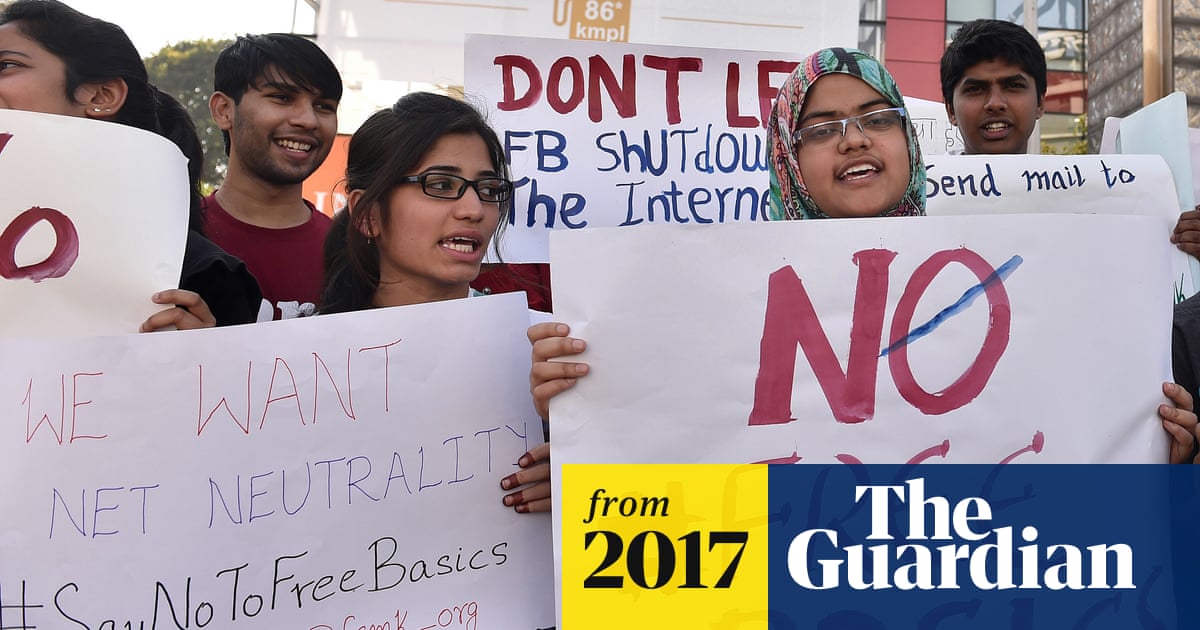
'It's digital colonialism': how Facebook's free internet service has failed its users
Free Basics, built for developing markets, focuses on ‘western corporate content’ and violates net neutrality principles, researchers say
Restoring Consumer Sovereignty: How Markets Manipulate Us and What the Law Can Do About It
Abstract. For decades, there has been broad consensus within antitrust, intellectual property, and consumer law scholarship that consumers make decisions i
Why Is The Media Smearing New FCC Chair Ajit Pai As The Enemy Of Net Neutrality?
The good news for tech: incoming FCC Chair Ajit Pai wil provide stable, consistent, light-touch regulation of the Internet. The bad news: the media is slamming him as a net neutrality-hating monster.

A Day in the Life of an Ensh*ttificator
Trump’s F.C.C. Pick Quickly Targets Net Neutrality Rules (Published 2017)
Ajit Pai, the new head of the commission, has taken aim at the key components and consumer protections in President Obama’s internet policies.

Long Live the Web: A Call for Continued Open Standards and Neutrality
The Web is critical not merely to the digital revolution but to our continued prosperity—and even our liberty. Like democracy itself, it needs defending

Taking this a step farther, what if we popularize the idea of Account Service Providers (ASP) and advocating for laws where: - accounts on the internet are separate from apps/platforms - ASPs follow net neutrality - ASPs must interop so accounts freely move between them (like phone numbers)

Robin Berjon
One thing I've been toying with, instead of talking about "PDS" and cryptic nonsense like that is: Atmosphere Service Provider, like an ISP but for the social internet. Part of the motivation is that "Sign in with Atmosphere" only works if people have seen that before.
"The Internet isn't value-neutral, and neither is the IETF. We want the Internet to be useful for communities that share our commitment to openness and fairness. We embrace technical concepts such as decentralized control, edge-user empowerment, and sharing of resources." (2004)

RFC 3935: A Mission Statement for the IETF
datatracker.ietf.orgIs this a viable theory of change that points to an actual coherent vision for the future of a safe internet? There’s a lot of poor theories of change in current legislation on both sides of the aisle. Who is championing public utility moderation as an alternative to panopticon age gating?

Tynan is afk til 10/19 ⁂
More and more I think moderation as a whole should be publicly funded. Lots of institutions providing lots of diverse moderation services would unlock product creators and communities to thrive safely.
The internet has evolved to foster a fatal expectation: that the things we depend on every day are free. They aren't, but we're allowed to pretend they are with the help of ad-driven business models. The real cost is substantial, and can be measured in time, money, relationships, health, and more.

Fund Your Internet
fundyourinternet.org

