


We believe (and developers tell us) that job seekers should be empowered with as much information as possible when looking for a job – especially salary. So we ran an experiment on Stack Overflow Jobs to see if the evidence would support it. Remarkably, we learned that job listings which include a salary range got 75% more clicks than job listings that don’t. With this experiment, we’re even more convinced that transparency isn’t just the right thing to do, it’s good for companies, too. Along with much of the tech community, we were impressed with Buffer’s boldness and leadership in salary transparency. So…
The Downside of Full Pay Transparency
Proponents tout the benefits of sharing pay information across an organization. But for most companies, the costs outweigh the benefits.

GitLab & Buffer CEOs talk transparency at scale
The two transparency advocates recently met to talk about openness in business, what they keep confidential, and some things they've learned as their companies grow.

Social media promotion improves job market outcomes
Social media has transformed how academics disseminate research, but its effect on academic job outcomes remains unclear. Previous research has shown correlations between social media exposure and metrics like citation counts, but these relationships may be confounded by unobserved factors such as researcher quality or access to professional networks. We examine whether social media promotion causally affects job market outcomes in economics through a field experiment on Twitter (now X). We first collect tweets about job market papers from 519 candidates and post them from a dedicated account. We then randomize half of the posts to be quote-tweeted by established economists in the candidates’ fields, and measure the effects on both online visibility and hiring outcomes. We find that posts in the treatment group receive 441% more views and 303% more likes than those in the control group. Candidates whose posts were assigned to be quote-tweeted receive one additional flyout invitation compared to the control group average of 5.4 flyouts. Furthermore, women in the treatment group receive 0.9 more job offers than women in the control group, who receive 3 offers on average. Exploring mechanisms, we find that academic reputation drives these results, with stronger effects for quote-tweets from highly cited scholars and for candidates from top institutions. Our findings suggest social media promotion causally increases research visibility and improves academic job market outcomes.

Silicon Valley’s Exclusive Salary Database
Unlike popular self-reported salary sites like Glassdoor or Stack Overflow, Option Impact is reserved for elite users—VCs and the executives at the startups they back.

Lunar Logic Blog | Open Salaries: Outcomes (Looking back after 20 months)
What happens when you give employees control of their own salaries? A lot of great things, actually.
How to Hire
Most companies approach hiring with faulty assumptions and poor practices. They believe talent is fixed rather than contextual. They fail to create real partnerships between internal recruiters and hiring managers. And they rely too much on salary surveys and rigid compensation formulas. The author shares what she learned about making and keeping great hires during her 14 years as the chief talent officer at Netflix. The process requires probing beneath the surface of people and their résumés; engaging managers in every aspect of hiring; ensuring that recruiters deeply understand the business and are not viewed as support staff; adopting a mindset in which you’re always recruiting; and coming up with compensation that suits the performance you need and the future you aspire to. These lessons may be especially relevant to fast-growing tech-based firms, whose rapid innovation means a continual need for new talent. But organizations of all types can benefit from taking a fresh look at their hiring and compensation practices.

Pay Enough or Don't Pay at All*
Abstract. Economists usually assume that monetary incentives improve performance, and psychologists claim that the opposite may happen. We present and disc

a simple (local) solution to the pay gap — wingolog
wingolog: article: a simple (local) solution to the pay gap
Why Big Tech's Privacy Promises Are Lies
The Effect of Payment Transparency on Consumption: Quasi-Experiments from the Field
Recent research suggests that the method of making a payment can influence the willingness to pay and consumption behavior. In this manuscript, we argue that payment mechanisms differ from each other along the dimensions of transparency, and that the degree of transparency correlates positively with the pain of paying using the mechanism, and negatively with consumption and spending. We replicate previous experimental results using quasi-experiments from the field, and find that the lower the payment transparency, the greater is the consumption. However, this effect is weak for products whose consumption rates are inflexible.
The Effects of Financial Incentives in Experiments: A Review and Capital-Labor-Production Framework
We review 74 experiments with no, low, or high performance-based financial incentives. The modal result has no effect on mean performance (though variance is usually reduced by higher payment). Higher incentive does improve performance often, typically judgment tasks that are responsive to better effort. Incentives also reduce “presentation” effects (e.g., generosity and risk-seeking). Incentive effects are comparable to effects of other variables, particularly “cognitive capital” and task “production” demands, and interact with those variables, so a narrow-minded focus on incentives alone is misguided. We also note that no replicated study has made rationality violations disappear purely by raising incentives.
Show your work: The new terms for trust in journalism - PressThink
The transparency movement has finally come of age. Power has shifted to the users. Their trust has to be earned in different ways now.
AI layoffs are looking more and more like corporate fiction that's masking a darker reality, Oxford Economics suggests | Fortune
"Firms don't appear to be replacing workers with AI on a significant scale," the firm said. It suspects some are trying to "dress up layoffs" as good news.

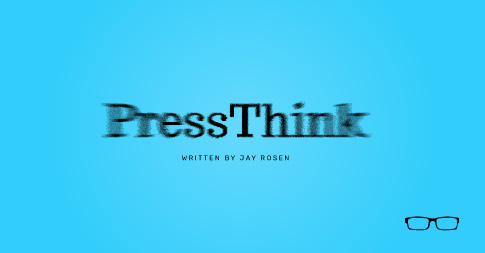
With the backlash to data centers, Flock and AI glasses, a mass opposition to big tech is underway. Silicon Valley is in denial.
The backlash against data centers is difficult to understand if your salary depends on your not understanding it.
Disclosure: Psychology Changes Everything
We review literature examining the effects of laws and regulations that require public disclosure of information. These requirements are most sensibly imposed in situations characterized by misaligned incentives and asymmetric information between, for example, a buyer and seller or an advisor and advisee. We review the economic literature relevant to such disclosure and then discuss how different psychological factors complicate, and in some cases radically change, the economic predictions. For example, limited attention, motivated attention, and biased assessments of probability on the part of information recipients can significantly diminish, or even reverse, the intended effects of disclosure requirements. In many cases, disclosure does not much affect the recipients of the information but does significantly affect the behavior of the providers, sometimes for the better and sometimes for the worse. We review research suggesting that simplified disclosure, standardized disclosure, vivid disclosure, and social comparison information can all be used to enhance the effectiveness of disclosure policies.

