


Jon McLoone on why we learn times tables, whether knowing them to 12 is better than to 10, approximation multiplication, & education recommendations
Times Tables — Learn, Play and Print the Multiplication Tables
Practise every times table from 1 to 12 with free games, speed tests, printable charts and worksheets. Works on phones, tablets and computers. No sign-up.
Spanner, the Google Database That Mastered Time, Is Now Open to Everyone
About a decade ago, a handful of Google's most talented engineers started building a system that seems to defy logic.
The End of Mathematics — Daniel Litt
I'm currently returning to Toronto from a summit on the future of mathematics, at OpenAI. Sebastian Bubeck asked me to talk a bit about the future we'd all like to avoid, where humans are mathematically disempowered. Jacob Tsimerman advised us to try to prioritize detail over correctness, and I have no doubt that I succeeded in deprioritizing correctness.

Uri Bram 🔍 on Twitter / X
So I got memed into trying MathAcademy and it was one of the weirdest product experiences of my life. In short: I think they have an amazing product, but they're very opinionated about how you use it, and as a result I can't use it at all.Basically: they've figured out some…— Uri Bram 🔍 (@UriBram) January 16, 2025
‘Breathtaking,’ ‘Devastating’: Mathematics Reels After New OpenAI Release
Hundreds of new A.I.-generated findings moved the frontiers of higher math in a single day — dispelling any doubt that the field is forever changed.

Using spaced repetition systems to see through a piece of mathematics
By Michael Nielsen, January 2019
Anna Stansbury on Twitter / X
Nope. This paper is about US academics 1900-1960! The present looks different.Asking people to stop drawing inference from these stats as if they're about the present& asking authors to put time period in their title and abstract!🙏 https://t.co/bphnK6Hy7H— Anna Stansbury (@annastansbury) December 31, 2024
Dylan Wiliam on Twitter / X
The best journal article titles tell you what the study actually found, rather than being a teaser to make you read the paper. Here's a good example: "Spaced mathematics practice improves test scores and reduces overconfidence" https://t.co/iXxdkAgYPM ($)— Dylan Wiliam (@dylanwiliam) December 31, 2024
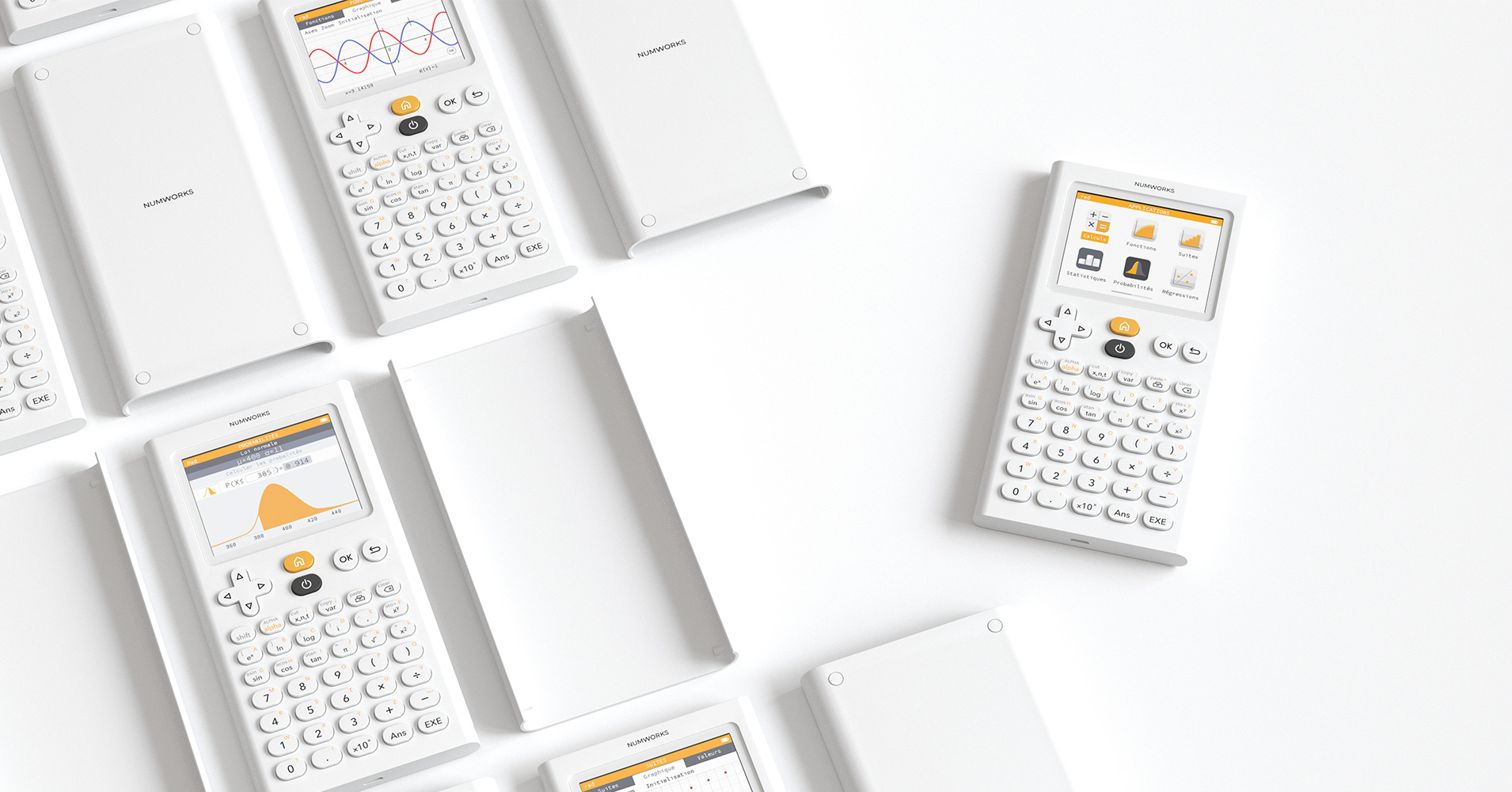
NumWorks Graphing Calculator
The graphing calculator that makes everybody a math person.
Mathematicians still don’t know the fastest way to multiply numbers
A 23-year-old student overturned an ancient conjecture about one of math’s simplest operations
A first introduction to data science education in secondary schools: Teaching and learning about data exploration with <span style="font-variant:small-caps;">CODAP</span> using survey data
Abstract In this paper, we will describe an introduction to Data Science for secondary school students. We will report on the design and implementation of an introductory unit on “Data and data detectives with CODAP” in which secondary school students used the online tool CODAP to explore real and meaningful survey data on leisure time activities and media use (so‐called JIM‐PB data) in a statistical project setting as a starting point for data science. The JIM‐PB data set served as a valuable data set that offered meaningful and exciting opportunities for data exploration for secondary school students, and CODAP proved to be a valuable tool for the first explorations of this data.

My year in data
What do I actually do with my time? How productive am I? I logged everything I did in 2020 and got some pretty cool data out of this.
An update on leap seconds – Tony Finch
It has been a couple of years since my previous blog post about leap seconds, though I have been tweeting on the topic fairly frequently: see my page on date, time, and leap seconds for an index of threads. But Twitter now seems a lot less likely to stick around, so I’ll aim to collect more of my thinking-out-loud here on my blog.
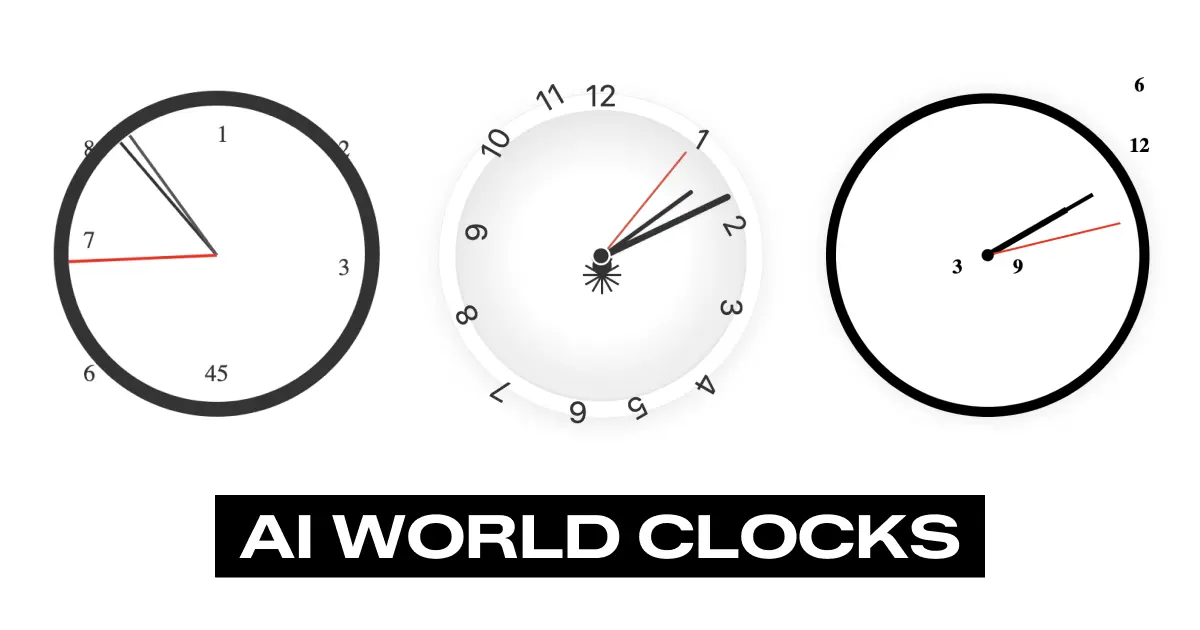
AI World Clocks
The current time as rendered by 9 different AI models. By Brian Moore.
Thomas Wolf on Twitter / X
Very thoughtful piece from Kevin Buzzard (perfect IMO score, number theorist, pioneer of formal maths in Lean)if math is not just about “human understanding,” then what is it about?and if ai capabilities keep growing exponentially what happens since “mathematics is infinite”? https://t.co/h7yYmZS01T pic.twitter.com/wFp2fec52Q— Thomas Wolf (@Thom_Wolf) October 2, 2026
