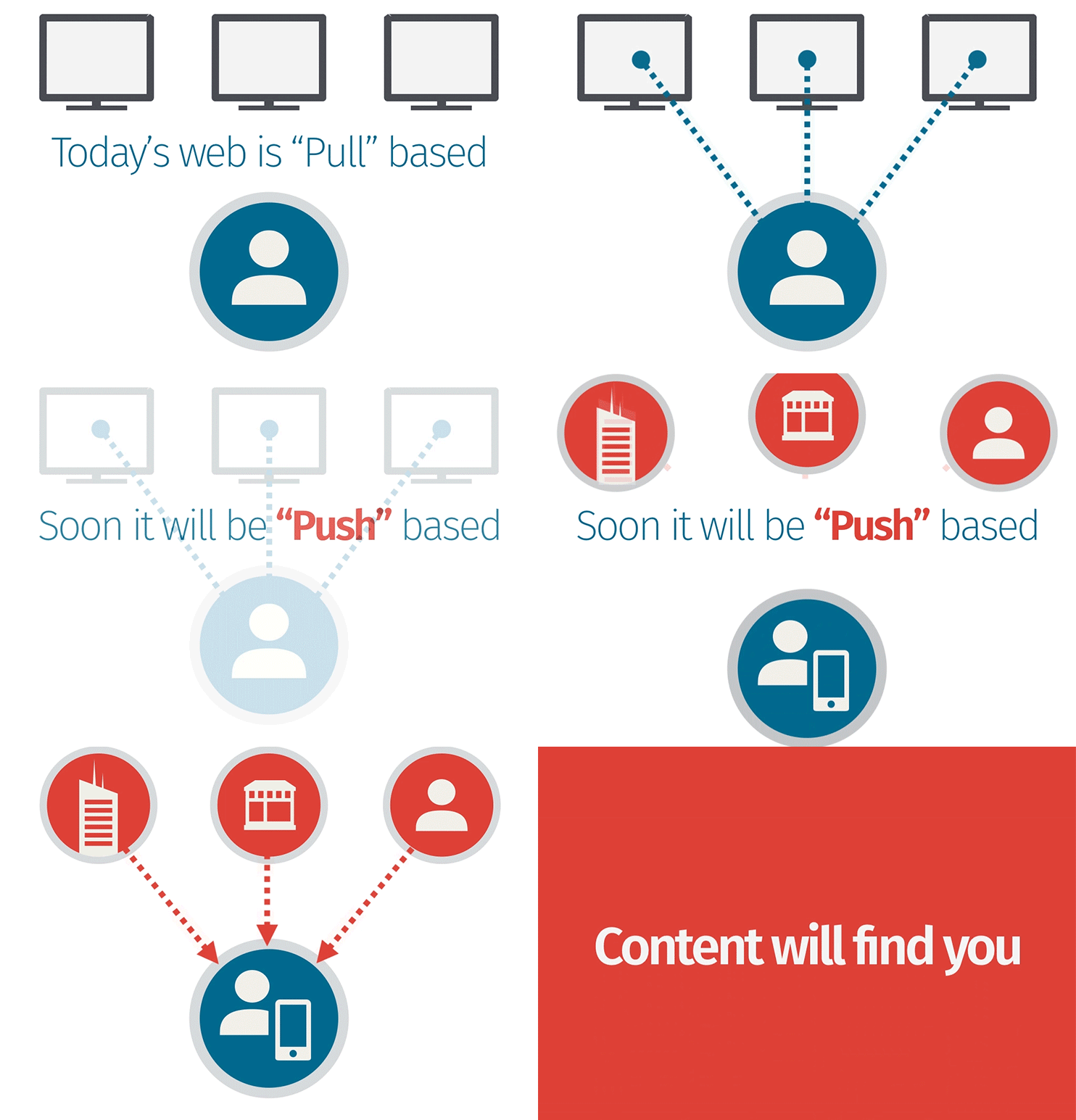
We are at the beginning of a massive re-architecture of the web where we go from "pull" to "push". Eventually, content will find us.
It's time to rebuild the web
The web was never supposed to be a few walled gardens of concentrated content owned by a few major publishers; it was supposed to be a cacophony of different sites and voices.

The web is for everyone: Our vision for the evolution of the web | The Mozilla Blog
Over the last two decades, the web has woven itself into the fabric of our lives. What began as a research project has become the world’s most important

The Missing Building Blocks of the Web
At a time when millions are losing trust in the the web’s biggest sites, it’s worth revisiting the idea that the web was supposed to be…

My journey to the heart of the forgotten internet
Slowly but surely, huge swaths of the internet are vanishing. But the artefacts of the early web are still out there, and they have lessons for the future.


Semble: Collective knowledge foraging in trail-based social networks beyond feeds (Lightning Talk)
Funding The Web: A Wise Choice
The Web is slow-motion collapsing for multiple reasons, but at the heart of it all is a little known system: the Search/Browser Levy. Let's fix it!

Social media is dead – here’s what comes next | New Scientist
A new information ecosystem is on the rise, featuring closer connections, cosy media and worker-owned websites, writes Annalee Newitz

Against cultural heritage wastelands
“There is nothing more ephemeral than a website,” writes Élika Ortega on her blog in January 2025. The technology underlying the web is constantly changing. Major content management services such a...
Funding The Web: From Cartel to Covenant
The Web is slow-motion collapsing for multiple reasons, but at the heart of it all is a little known system: the Search/Browser Levy. Let's fix it!
Scholarly Context Not Found: One in Five Articles Suffers from Reference Rot
The emergence of the web has fundamentally affected most aspects of information communication, including scholarly communication. The immediacy that characterizes publishing information to the web, as well as accessing it, allows for a dramatic increase in the speed of dissemination of scholarly knowledge. But, the transition from a paper-based to a web-based scholarly communication system also poses challenges. In this paper, we focus on reference rot, the combination of link rot and content drift to which references to web resources included in Science, Technology, and Medicine (STM) articles are subject. We investigate the extent to which reference rot impacts the ability to revisit the web context that surrounds STM articles some time after their publication. We do so on the basis of a vast collection of articles from three corpora that span publication years 1997 to 2012. For over one million references to web resources extracted from over 3.5 million articles, we determine whether the HTTP URI is still responsive on the live web and whether web archives contain an archived snapshot representative of the state the referenced resource had at the time it was referenced. We observe that the fraction of articles containing references to web resources is growing steadily over time. We find one out of five STM articles suffering from reference rot, meaning it is impossible to revisit the web context that surrounds them some time after their publication. When only considering STM articles that contain references to web resources, this fraction increases to seven out of ten. We suggest that, in order to safeguard the long-term integrity of the web-based scholarly record, robust solutions to combat the reference rot problem are required. In conclusion, we provide a brief insight into the directions that are explored with this regard in the context of the Hiberlink project.
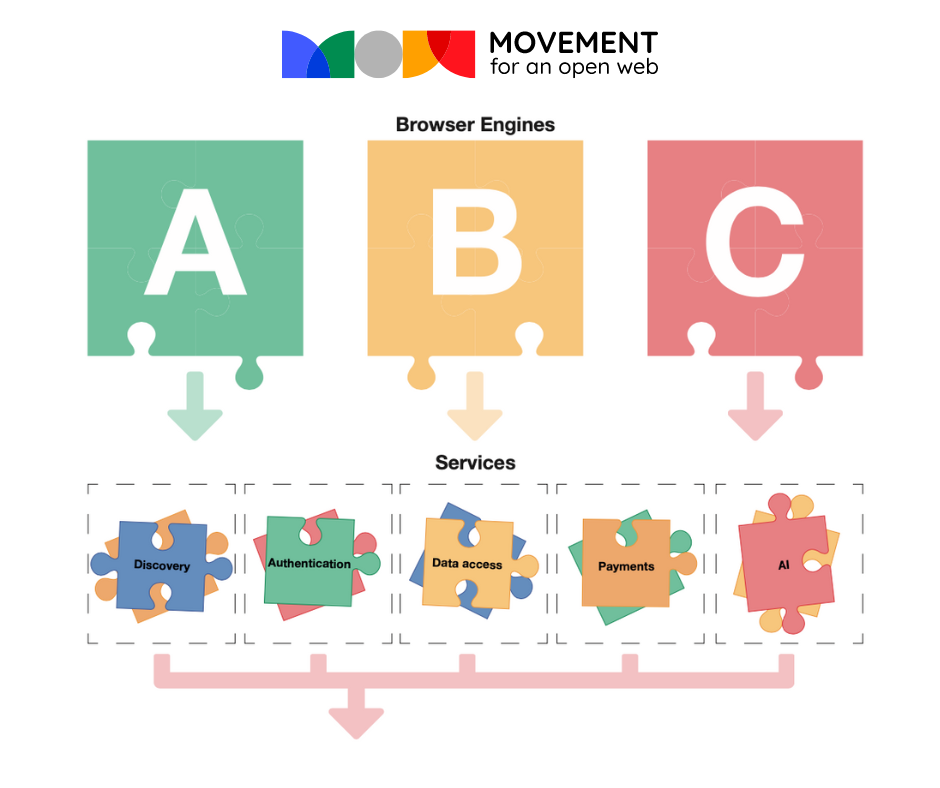
Break up the Browsers. A Proposal to Save the Open Web. - Movement For An Open Web
The Open Web is one of the world’s modern wonders. Based on core, universally recognised technical standards and owned and controlled by no one body, it is a unique structureRead More

Toward Wayfinding Infrastructure for the Living Web · Atlas Research Group
Our world is getting crazier by the day. Our old maps and compasses weren’t made for this complexity. While new tools may open up amazing possibilities, they also make it easier to lose ourselves – especially when they don’t belong to us, and make us vulnerable to other people’s hidden choices and unsavory intentions about what is worth attending to.

The Better Web / The Human Web / The Living Web
A response to Aaron Parecki's response: on the false dichotomy of rewriting with Claude or shutting down, why 'understanding matters more than tools' sever…

The Group That Rules the Web
Billions of humans will use the Web over the next decade, yet very few of those people are in a position to define what is “the Web” and what isn’t.