

How ePortfolios can help 'tame' the flood of openness and educational opportunity arising with MOOCs and other new modalities.
Reproducible research: methodological principles for transparent…
This Mooc proposes methodological principles for open and transparent science. It deals in a practical way with note-taking, computational documentation, replicability of analyses.

Alternative Universities: Speculative Design for Innovation in Higher Education
Imagining the universities of the future.How can we re-envision the university? Too many examples of what passes for educational innovation today—MOOCs especially—focus on transactions, on questions of delivery. In Alternative Universities, David J. Staley argues that modern universities suffer from a poverty of imagination about how to reinvent themselves. Anyone seeking innovation in higher education today should concentrate instead, he says, on the kind of transformational experience universities enact. In this exercise in speculative design, Staley proposes ten models of innovation in higher education that expand our ideas of the structure and scope of the university, suggesting possibilities for what its future might look like. What if the university were designed around a curriculum of seven broad cognitive skills or as a series of global gap year experiences? What if, as a condition of matriculation, students had to major in three disparate subjects? What if the university placed the pursuit of play well above the acquisition and production of knowledge? By asking bold "What if?" questions, Staley assumes that the university is always in a state of becoming and that there is not one "idea of the university" to which all institutions must aspire. This book specifically addresses those engaged in university strategy—university presidents, faculty, policy experts, legislators, foundations, and entrepreneurs—those involved in what Simon Marginson calls "university making." Pairing a critique tempered to our current moment with an explanation of how change and disruption might contribute to a new "golden age" for higher education, Alternative Universities is an audacious and essential read.

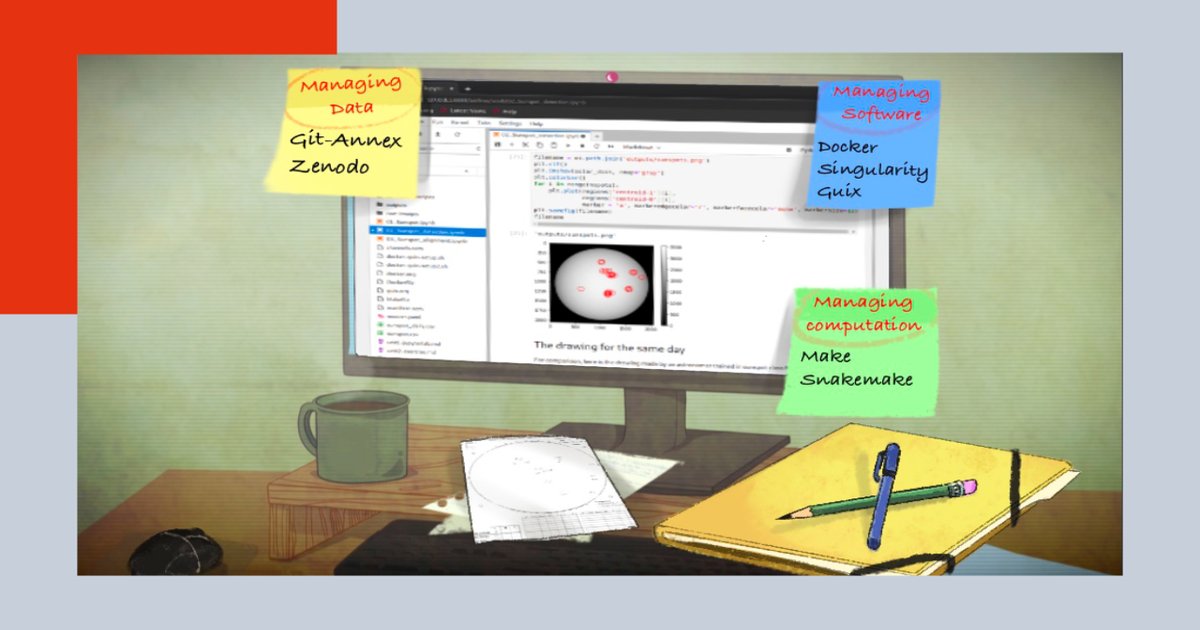
Reproducible Research II: Practices and tools for managing compu…
In this MOOC, we will show you how to improve your practices and your ability to manage and process larger amounts of data, complex computations, while controlling your software environment.
The Open University
This article considers the various uses of e-portfolios in an educational context and looks at the particular characteristics of the electronic version of portfolios. It then focuses on the application of the e-portfolio as an assessment method. A case is made for the use of the e-portfolio as an appropriate end of course assessment process where learning objects are the basis of the course design. Evaluation data from such a course is presented. This is a post-graduate online course run by the Institute of Educational Technology at the Open University. Conclusions are drawn from the evaluation about the appropriateness of eportfolios as an end of course assessment method.

Udacity's Sebastian Thrun, Godfather Of Free Online Education, Changes Course - Fast Company
He captivated the world with visions of self-driving cars and Google Glass and has signed up 1.6 million students for online classes. So why is he pivoting away from MOOCs? "We don't educate people as others wished, or as I wished," Thrun says.

How to Break the Academic Silo Mindset - The Community Solution Education System
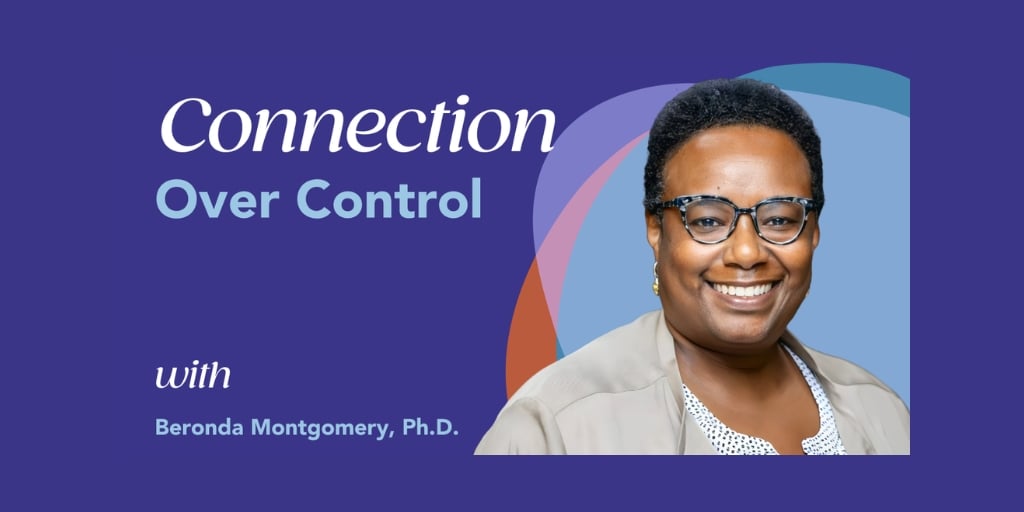
What’s stopping higher education from reaching its full potential? In this episode of Radical Cooperation, Dr. Michael Horowitz sits down with Dr. Beronda Montgomery—biologist, author of Lessons from Plants, and former Vice President for Academic Affairs and Dean at Grinnell College—to unpack why silos persist in colleges and universities, and how those divisions hold institutions […]
Information Access of the Oppressed: Freirean Design for Emancipatory Information Access
Online information access (IA) platforms are targets of authoritarian capture. We explore the question of how to safeguard our platforms and ensure emancipatory outcomes through the lens of Paulo Freire's theories of emancipatory pedagogy. Freire's theories provide a radically different lens for exploring IA's sociotechnical concerns relative to the current dominating frames of fairness, accountability, and transparency. We make explicit, with the intention to challenge, the technologist-user dichotomy in IA platform development that mirrors the teacher-student relation in Freire's analysis. By extending Freire's analysis to IA, we critique the technologists-as-liberator frame where it is the burden of (altruistic) technologists to mitigate the risks of emerging technologies for marginalized communities. Instead, we advocate for Freirean Design whose goal is to structurally expose the platform for co-option and co-construction by community members in aid of their emancipatory struggles.

My Visit to Alpha School, Part 2
Why one member of Alpha’s Learning Science Team did an about-face on education technology.

Openness and Ownership: Who Owns School Work?
This post first appeared on Educating Modern Learners

What Do We Mean By Open Education
This post first appeared on Educating Modern Learners. This article was part 2 of an exploration of what “open” means and affords in education.

Open Standards and the Digital Age
Cambridge University Press, 2014 Available in hardcover, paperback, and e-book formats: Cambridge University Press How did openness become a foundational value for the networks of the twenty-first …

OER Commons
OER Commons is a dynamic digital library and network. Explore open education resources and join our network of educators dedicated to curriculum improvement.
Against Technofeudal Education
Pillars For Protecting Our "Core Infrastructure" From OpenAI
Sharing Notes about Collective Intelligence — Pop Junctions
Last week, my travels took me to San Antonio where I delivered one of the keynote addresses at the Educause Learning Initiative conference -- a gathering focused on the application of technology for learning at the college and university level. My presentation, "What Wikipedia Can Teach Us Ab
