

Data science for data about you. Computing is expanding our ability to collect and process data about our everyday lives. This seminar covers personal informatics, the collection of data from daily activities for reflection and self-experimentation. We will cover methods for knowing more about yourself through using technology to track different types of data and how to interpret them, and run controlled experiments on yourself. We will learn about self-reflection and visualization, experimental design, time-series analysis and apply them to domains of location, sleep, activity, time spent, health and wellness. These topics will be pursued through independent reading, assignments, class discussion, and a semester-long self-tracking and experimentation project. Students should already be comfortable working programmatically with data, and preferably taken a course in: data science, machine learning, user interfaces, or probability/statistics. The seminar will have limited enrollment. Please fill out this form to apply. Note: if you've taken CS 1300, then CS 2951R is more organic, smaller and intimate, less formal, and a bit more like an experiment in itself! We will use Slack for sharing content and posting comments about readings, and the only written handin will be one assignment writeup (A0). Reading comments should be interesting things you noticed in the reading that you'd like us to talk about in class. The assignments will be opportunities for you to do something fun with your own data, and you will share the findings in short "show and tells" in class.
Data Science in 2020: Computing, Curricula, and Challenges for the Next 10 Years
In the past 10 years, new data science courses and programs have proliferated at the collegiate level. As faculty and administrators enter the race to provide data science training and attract new ...

Callysto: Bringing Jupyter and Computational Thinking to the K-12 Curriculum
Cybera and the Pacific Institute for Mathematical Sciences are participating in the new national CanCode program, to develop coding and digital skills from kindergarten to grade 12. With the launch of the Callysto project, we are creating tools and frameworks that help teachers bring computational thinking into their math, science, social sciences, and humanities courses - giving students the analytical skills needed to comprehend the digital world. Leveraging the Jupyter 'All-in-One' Science Platform to put friendly yet powerful compute tools in classroom settings, we are creating showcase modules and workshop training for K-12 teachers to incorporate data and computing into the broad curriculum. At this presentation, you will learn about how Callysto will: Bring computational thinking to classrooms through K-12 teacher training Create opportunities to participate in free workshop training sessions and content creation Help K-12 teachers gain public recognition for participating in this educational training project Note: This presentation is related to our 2017 BCNET presentation on "Bringing The Thunder: Deploying Jupyter Notebooks For Research, Education, And Innovation." View Slidedeck
Developing Competencies for the Future of Data and Computing: The Role of K-12
Skills in computing and data are critical for students to thrive in a data-driven world. While efforts to expand learning in these areas have grown, opportunities to participate are unevenly distributed and lack coherence across grades and subjects. Our new report identifies seven shared competencies for data and computing and how they align with existing STEM standards and classroom practice. Through addressing curriculum, teacher preparation, professional learning, technology access, assessment, and system-level coordination, the report calls for sustained, coordinated action to ensure that all students have meaningful opportunities to develop literacy in data and computing.
Multi-Homed Personal Data for Education
This blogpost is part of a 20-day project I'm doing for the SURF/NPuls EduWallet Incubator this year, exploring what Personal Data Stores (PDSs) like the Solid Project can add to Wallets.
Foundations of Data Science for Students in Grades K-12
On September 13 and 14, 2022, the Board on Science Education at the National Academies of Sciences, Engineering, and Medicine held a workshop entitled Foundations of Data Science for Students in Grades K–12. Speakers and participants explored the rapidly growing field of K-12 data science education, by surveying the current landscape, surfacing what is known, and identifying what is needed to support student learning, develop curriculum and tools, and prepare educators. To support these conversations, four papers were commissioned and discussed during the workshop. This publication summarizes the presentations and discussion of the workshop.
Augment
A collection of essays on the future of personal computing — specifically, on the kind we’d like to see more of in the future, and the ideas that might help us get there.

Introductory data science across disciplines, using Python, case studies, and industry consulting projects
Abstract Data and its applications are increasingly ubiquitous in the rapidly digitizing world and consequently, students across different disciplines face increasing demand to develop skills to answer both academia's and businesses' increasing need to collect, manage, evaluate, apply and extract knowledge from data and critically reflect upon the derived insights. On the basis of recent experiences at the University of Ttingen, Germany, we present a new approach to teach the relevant data science skills as an introductory service course at the university or advanced college level. We describe the outline of a complete course that relies on case studies and project work built around contemporary data sets, including openly available online teaching resources.

A first introduction to data science education in secondary schools: Teaching and learning about data exploration with <span style="font-variant:small-caps;">CODAP</span> using survey data
Abstract In this paper, we will describe an introduction to Data Science for secondary school students. We will report on the design and implementation of an introductory unit on “Data and data detectives with CODAP” in which secondary school students used the online tool CODAP to explore real and meaningful survey data on leisure time activities and media use (so‐called JIM‐PB data) in a statistical project setting as a starting point for data science. The JIM‐PB data set served as a valuable data set that offered meaningful and exciting opportunities for data exploration for secondary school students, and CODAP proved to be a valuable tool for the first explorations of this data.

Interleaving Computational and Inferential Thinking: Data Science for Undergraduates at Berkeley · Issue 3.2, Spring 2021
The undergraduate data science curriculum at the University of California, Berkeley is anchored in five new courses that emphasize computational thinking, inferential thinking, and the perspective gained by working on real-world problems. We believe that interleaving these elements within our core courses is essential to preparing students to engage in data-driven inquiry at the scale that contemporary scientific and industrial applications demand. This new curriculum is already reshaping the undergraduate experience at Berkeley, where these courses have become some of the most popular on campus and have led to a surging interest in a new undergraduate major and minor program in data science.

Open science meets orange skies: K-12 educators’ engagement with computational notebooks to explore scientific events with human impacts
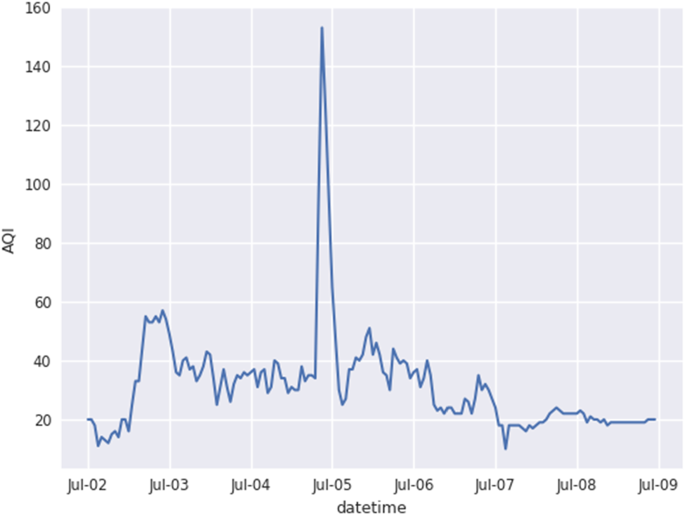
Computational notebooks are becoming a popular method to introduce mathematics, data, and scientific computing concepts to secondary students. Advocates argue computational notebooks encourage transparency and reproducibility in student work and can enable more personalized investigations of publicly available civic and scientific datasets. However, little is known about how teachers navigate these complex artifacts, let alone how they might support their students in doing so. In this paper, we investigate six pre-service and two in-service K-12 teachers’ sensemaking during a structured clinical think-aloud interview as they engaged with a computational notebook that examines disruptions in local air quality. The notebook presented a common event (annual fireworks) and an extreme event that impacted human health, during which the skies above the greater metropolitan San Francisco Bay region in California, USA turned orange due to wildfire pollution (“Orange Skies Day”, Sept 9, 2020). We examine the ideas that participants engaged as they interacted with the notebooks, and identify three ways in which they interacted with code in the notebook: to make sense of the scientific phenomenon (all participants), to make sense of the available data (6 out of 8 participants), and/or integrate these two dimensions (4 out of 8 participants). We present examples of each of these three forms of sensemaking, highlight their similarities and distinguishing features, and discuss implications for teacher education.
Teaching Programming for First-Year Data Science
This summary was generated using automated tools and was not authored or reviewed by the article's author(s). It is provided to support discovery, help readers assess relevance, and assist readers from adjacent research areas in understanding the work. It is intended to complement the author-supplied abstract, which remains the primary summary of the paper. The full article remains the authoritative version of record. Click here to learn more.

Keynote: Bridging Gaps with Code: Transforming K12 Education with Jupyter Everywhere - I. Martinez
CS Learn
Free lectures from Carnegie Mellon's Kenneth C. Griffin School of Computer Science, now on YouTube. Self-paced courseware comes next.

Integrated Data Science for Secondary Schools: Design and Assessment of a Curriculum
This summary was generated using automated tools and was not authored or reviewed by the article's author(s). It is provided to support discovery, help readers assess relevance, and assist readers from adjacent research areas in understanding the work. It is intended to complement the author-supplied abstract, which remains the primary summary of the paper. The full article remains the authoritative version of record. Click here to learn more.

Data Science Education K-12 Research to Practice Conference. Online registration by Cvent