

There is almost no social movement of a kind that leads human industrial society into a new direction. This may be because the likely participants and leaders of a vanguard have no territory. The missing ingredient is cohesion. Enough cohesion can create Virtual Territory, or a network for the cultural revolution that's needed to replace the systematic destruction of our biosphere.
Capitalism Without Humans
As new technologies (not immigrants) replace human labor, "machine breaking" as a tactic of rebellion is taking on a renewed vitality.

Introduction to Movement Ecology
Bridging Social Movements and the New Social Web (working draft) - Variable Context with @CaptainCalliope.blue
On connecting movements, media, and new protocol ecosystems to rebuild the civic, cultural, and technical foundations of a freer, more self-determining society.
Holding the Roots: Resourcing the Infrastructure Behind Movements - Interaction Institute for Social Change
There’s a quiet revolution underway. You can see it in church gatherings and small-town meetings, on Zoom calls between elders and young organizers, in community art projects, healing circles, and protest planning sessions. Across the country, IISC has had the deep honor of supporting and witnessing this movement: the call for food justice in Mississippi,... Read More

Ten Elements of Movement Building - WKKF Community Leadership Network
What defines a social movement? How does a movement gain power?

It’s time for movements to rethink social media
Movements can still find people on social media. But the real organizing has to happen somewhere else — and that's the part we keep skipping.

The revolution will not be funded: beyond the non-profit industrial complex
Introduction : the revolution will not be funded / Andrea Smith -- The political logic of the non-profit industrial complex / Dylan Rodríguez -- In the shadow of the shadow state / Ruth Wilson Gilmore -- From black awakening in capitalist America / Robert L. Allen -- Democratizing American philanthropy / Christine E. Ahn -- The filth on philanthropy : progressive philanthropy's agenda to misdirect social justice movements / Tiffany Lethabo King and Ewuare Osayande -- Between radical theory and community praxis : reflections on organizing and the non-profit industrial complex / Amara H. Pérez -- Native organizing before the non-profit industrial complex / Madonna Thunder Hawk -- Fundraising is not a dirty word : community-based economic strategies for the long haul / Stephanie Guilloud and William Cordery -- "We were never meant to survive" : fighting violence against women and the fourth world war / Ana Clarissa Rojas Durazo -- Social service or social change? / Paul Kivel -- Pursuing a radical anti-violence agenda inside/outside a non-profit structure / Alisa Bierria -- The NGOization of the Palestine liberation movement : interviews with Hatem Bazian, Noura Erekat, Atef Said, and Zeina Zaatari / Andrea Smith -- Radical social change : searching for a new foundation / Adjoa Florência Jones de Almeida -- Are the cops in our heads and hearts? / Paula X. Rojas -- Non-profits and the autonomous grassroots / Eric Tang -- On our own terms : ten years of radical community building with Sista II Sista / Nicole Burrowes ... [et al.]

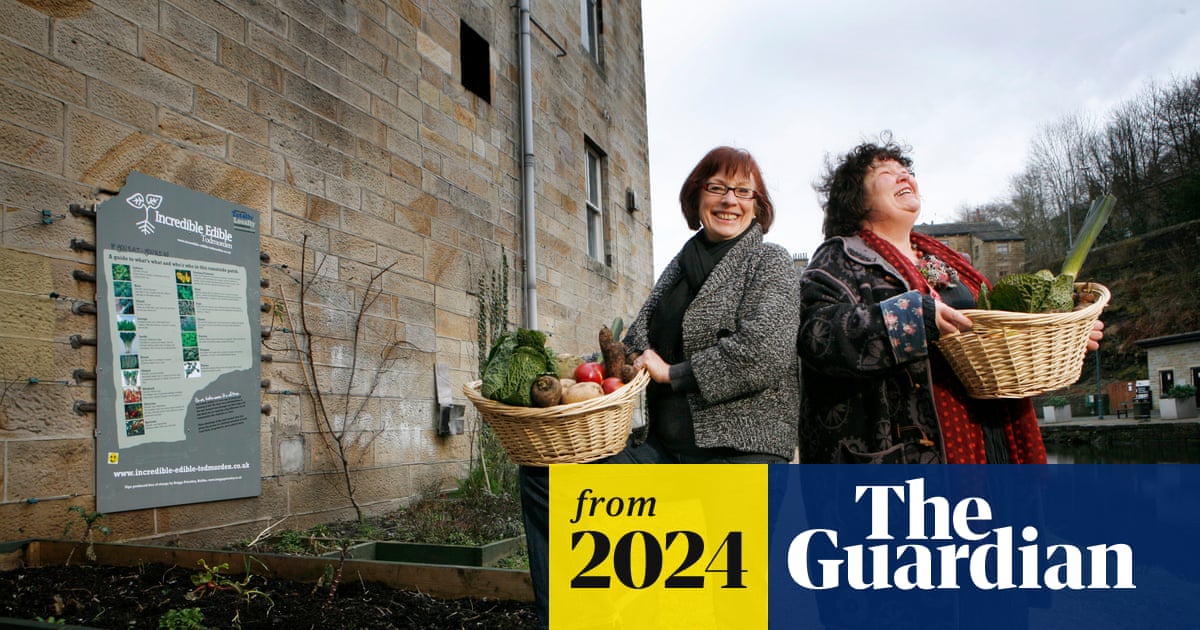
‘The system is the problem, not people’: how a radical food group spread round the world
Incredible Edible’s guerrilla gardening movement encourages people to take food-growing – and more – into their own hands
Hope in Common
We seem to have reached an impasse. Capitalism as we know it appears to be coming apart. But as financial institutions stagger and crumble, there is no obvious alternative. Organized resistance appears scattered and incoherent; the global justice movement a shadow of its former self. There is good reason to believe that, in a generation […]

How Can the Social Sector Rebuild Trust and Align Movements for Greater Collective Impact?
Civil society is under pressure — trust is declining, advocacy [...]

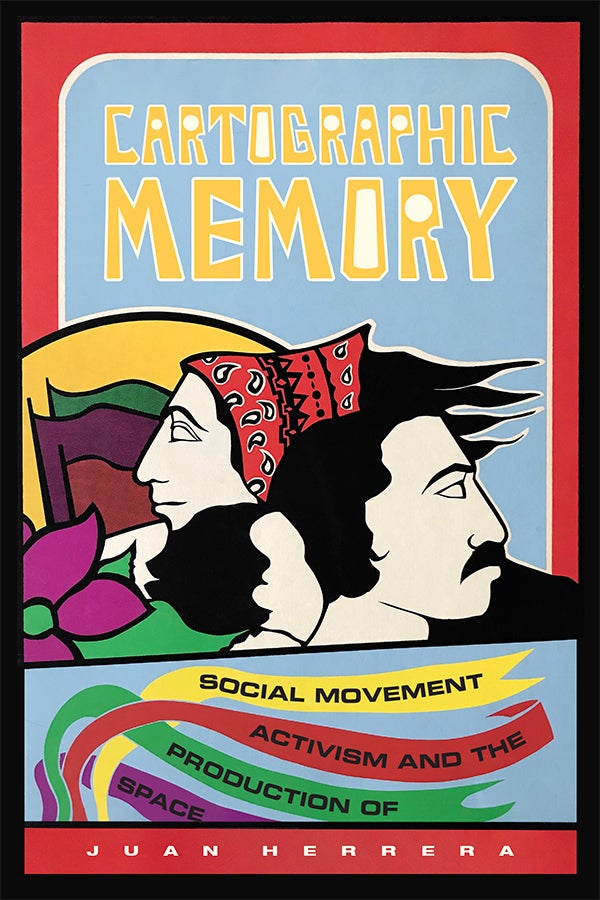
Cartographic Memory: Social Movement Activism and the Production of Space
“Cartographic Memory is a creative, important, and well-written book that offers a vital analysis of Latinx activism in Oakland. Juan Herrera’s concept of social movement continuities helps us analyze the range of ways that actors make social change, rather than only focusing on the most radical politics or certain epic moments. Herrera’s book is an outstanding contribution toward building a nuanced and complex understanding of Latinx social movements.” - Victoria Lawson, author of Making Development Geography
Metrics for Building, Scaling, and Funding Social Movements
Investing in movements or networks for social change is a strategy that some funders are using. But, how do you measure the results? Marino Morino, who wrote “Leap of Reason: Managing to Outcomes in an Era of Scarcity” pointed me to this recent report, “Transactions, Transformations, Translations: Metrics That Matter for Building, Scaling and Funding Social Movements” by Manual Paster, Jennifer Ito, and Rachel Rosner with the USC Program for Environmental and Regional Equity and funded by the Ford Foundation. The report addresses metrics for success for investing in broad field social movements or networked approaches to social change. The report is written for funders and those on the ground doing the work in the context of networks, although it doesn’t go deep into practice. The report captures a conundrum in measuring social change movements or networked approaches. Outcomes for “wicked problems” can be easily counted – policies passed, housing the homeless, educating children. But there are less tangible results such as “we changed the frame” or “we shifted members’ consciousness” which for grassroots organizers on the ground view as the vibrancy of the network . The report lays out some new metrics for movement building – that are paths to the more easily counted tangible results and where the unit of analysis is the movement or network, not an organization. As the report points out, movement organizers are grappling with big questions. It is less about how to raise funds for their organizations (although that’s important) but focused on the big picture: What is the long-term change that we want to see? What is needed to achieve it? What roles do different organizations play? The report identifies metrics to measure progress around this these questions – it asks and answers – “What exactly are the right metrics for today?

Preface | The World After Capital
Since publishing the previous version of The World After Capital, I have met with people across the political spectrum to discuss the ideas from the book. When I present these in person, I emphasize that the ideas are neither left nor right but forward (credit to Scott Santens who first used this phrase about Universal Basic Income). My writing, however, at times has alienated readers who identify as being more on the right. In this new edition, I am therefore making an extra effort to emphasize how both my diagnosis of where we are at and my suggestions for how to move forward do not map onto the existing political divides. Instead this is a new way of understanding our challenges and opportunities that can be the basis for movements and parties that are not trapped in Industrial Age ideology.
The Great Social Media Diaspora
What happens when sprawling online communities fracture into politically homogenous, self-governing communities?

Alternative Cultures Are Beautiful and Important. They're Also Not Enough.
"The conscious destruction of a competing ethic” and the need for organizing and direct action

"what if engineering a scientific revolution is, at least in part, a problem of organizing humans and coordinating effort?" uniconq.substack.com/p/the-ground-truth-institute h/t @ranganaut.bsky.social

The Ground Truth Institute
uniconq.substack.com