


This talk explores the role of tool design and media coverage in the relative success of Operation Payback and earlier activist Distributed Denial of Service (DDOS) actions. This event will be webcast live at 12:30pm ET.
The Cyber Resilience Act: A Five Alarm Fire
On October 21, 2016, CNN’s website was knocked offline. So was the BBC and Guardian’s. Amazon, Etsy and Shopify too, along with Quora, Reddit, and Twitter – among others. Huge swaths of the internet were taken down by a series of attacks on the DNS provider Dyn. These Distributed Denial of Service (DDoS) attacks were

NeurIPS Poster Stop DDoS Attacking the Research Community with AI-Generated Survey Papers
Slides and Video for Stop DDoS Attacking the Research Community with AI-Generated Survey Papers

The Case for Digital Public Infrastructure
The introduction of new media technologies invariably brings about potent social and economic shifts. We are well into one of those shifts as the advent of the consumer internet has destabilized existing models of news production and distribution and enabled new hegemons to establish massive and powerful businesses. Two decades into this shift, societies are asking difficult questions about whether internet technologies and the business models that accompany them are dangerous for our citizens and our democracies.
+KAOS: Ten Years of Hacking and Media Activism
At the end of the 20th century, hacking was bleeding edge. When the ideas, practices and pranks of this experimental niche of technophiles attracted the attention of a handful of activists in Italy, they understood that information and communication were what would give shape and voice to social, political, and cultural processes in the near future. +KAOS is a cut and paste of interviews, like a documentary film transposed on paper. It describes the peculiar relationship between hacktivism and activism, in Italy and beyond, highlighting the importance of maintaining digital infrastructures. While this may not sound as glamorous as sneaking into a server and leaking data, it is a fundamental topic: not even the most emblematic group of hacktivists can operate without the services of radical server collectives. Autistici/Inventati (https://www.autistici.org - https://www.inventati.org)

Digital hopes, real power: From connection to collective action
If the Arab Spring was defined by optimism about what the internet could do, the years since have been marked by a more sober understanding of what it takes to defend it

Cloudflare DDoS Threat Report 2026 Q3: More swarms, fewer giants
Cloudflare mitigated over 8,200 DDoS attacks per hour in Q3 2026 as attackers shifted to shorter, high-frequency strikes. Explore the latest threat data, including the collapse of CLDAP vectors and the impact of recent botnet takedowns.

Meet Gatebot - a bot that allows us to sleep
In the past, we’ve spoken about how Cloudflare is architected to sustain the largest DDoS attacks. During traffic surges we spread the traffic across a very large number of edge servers.

The punk rock internet – how DIY rebels are working to replace the tech giants
Around the world, a handful of visionaries are plotting an alternative online future. Is it really possible to remake the internet in a way that’s egalitarian, decentralised and free of snooping?

The Day I Logged 1 In Every 2000 Public IPv4: Visualizing The AI Scraper DDoS - VulpineCitrus
In an attempt to grasp the magnitude of web scraper attacks against my websites, i went the way of visualizing.

Whose Global Village — Ramesh Srinivasan
In the digital age, technology has shrunk the physical world into a “global village,” where we all seem to be connected as an online community as information travels to the farthest reaches of the planet with the click of a mouse. Yet from the US election, to the growth of the alt-right movement, to the Dakota pipeline to the question of ISIS, we also have begun to recognize how incredibly disconnected we are at the same time, occupying various bubbles and self-selected communities.While we think of platforms such as Twitter and Facebook as open and accessible to all, in reality, these are commercial entities developed primarily by and for the Western world. Considering how new technologies increasingly shape labor, economics, and politics, these tools often reinforce the inequalities of globalization, rarely reflecting the perspectives of those at the bottom of the digital divide.
Detroit Digital Justice Coalition - Allied Media Projects
The Detroit Digital Justice Coalition (DDJC) is comprised of people and organizations in Detroit who believe that communication is a fundamental human right. We are…Read more
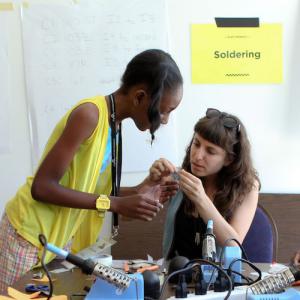
Hundreds of ‘pink slime’ local news outlets are distributing algorithmic stories and conservative talking points
<p>Editor’s Note: This is the first of our four pieces on this network. In August 2020, we found that the size of the network had nearly tripled to over 1200 sites. In October 2021, we found that the network had received funding from multiple dark money groups as well as collaborated with advocacy groups on topics to […]</p>

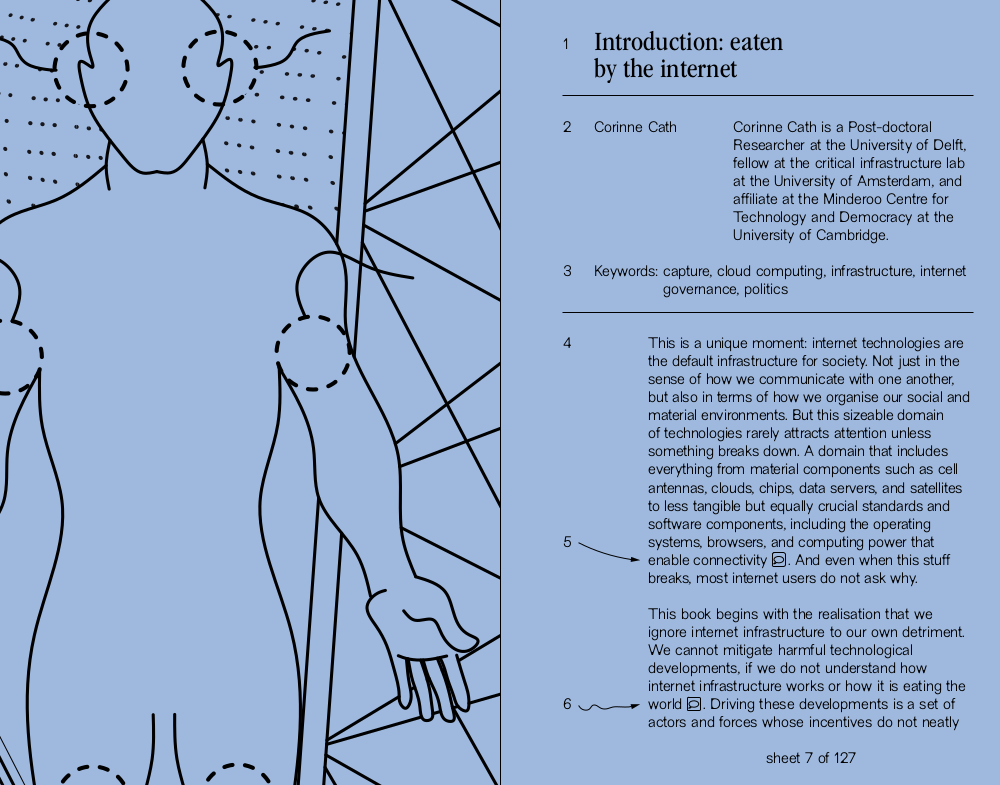
Eaten by the Internet
This book makes internet infrastructure visible as a force of political power, which is transforming the social world, from the bottom up—through fifteen chapters contributed by a global set of researchers, activists, and techies. We are living a unique moment: internet technologies are the default infrastructure for society, not just how we communicate but also how we organise our social life, politics, and economy, all the way down to our material environments, like cities. Our world is eaten by the internet. This means that those who control the internet control the bounds of public speech, economic production, social cohesion, and politics, making its infrastructure a core political terrain in the networked age. The book’s chapters cover a wide set of topics, spanning from the global politics of content moderation by internet infrastructure to the colonialism inherent in the race to plug the moon, from the harms wrought by blockchain companies in rural America to the particularities of online censorship across Asia. The chapters take on thorny topics, discussing power consolidation in the advertisement and cloud industry, the role of internet infrastructure in the war in Ukraine, and tech’s environmental impact—amongst others. In doing so, this book roots contemporary technology debates in the politics of internet infrastructure and urges us to ask how can we ensure our infrastructures sustain us, rather than consume us?
Decentralized Deliberation Stack (DDS)
A W3C Community Group working draft for an open stack for sovereign, verifiable, interoperable, and resilient deliberation.
Y’all, I hate to rain on the dead bot parade, but the Yandex data center destruction doesn’t seem to have significantly impacted social media bots. I made temporal graphs of X posts about AfD around the time of the attack and there’s no sign of a sudden dip or residual impact on that conversation.
