


A new paper from the Media Cloud team concludes that a diverse set of actors working in conjunction through the networked public sphere played a central, arguably decisive, role in turning around the Federal Communications Commission policy on net neutrality.
The implications of the end of net neutrality | TechCrunch
When Donald Trump pulled off a stunning victory to win the U.S. presidency, the entire world began to speculate about what a Trump administration will look like. As the chief executive of a native advertising network, I -- and many others that work in digital media -- am keeping a particularly close eye on how the president will handle net neutrality.

Net neutrality and online freedom, why it matters | Proton
Today, we are participating in the Internet-wide Day of Action alongside Amazon, Netflix, Github, and many others to counter this decision.

What we need to do to save the Internet as we know it – Open Policy & Advocacy
Today, President Obama announced his support for clear, enforceable rules to protect net neutrality, grounded in “Title II” reclassification by the Federal Communications Commission. We’re nearing the end of a ...

Victory for Net Neutrality -- Let’s Take It Across The Finish Line | The Mozilla Blog
Today, we heard that we’ve won a stunning victory in the fight to protect net neutrality. The U.S. Federal Communications Commission (FCC) has put forwar

The Guardian view on the freedom of the internet: it’s under attack around the world | Editorial
Editorial: The net is a powerful weapon, and governments don’t want it in the hands of their critics
FCC plan would give Internet providers power to choose the sites customers see and use
The move would roll back the Obama-era rules on net neutrality, setting the stage for a vote next month that could reshape the entire digital ecosystem.

Making the Internet Work for Democracy
Political space -- the time and interest of elected leaders -- is not guaranteed to last. We need to make the benefits of an Internet-connected society more visible and permanent.

The New Utilities: Private Power, Social Infrastructure, and the Revival of the Public Utility Concept
From the renewed controversies over financial regulation and the problem of too-big-to-fail (TBTF) financial firms, to the clash over the FCC’s ‘net neutrality’

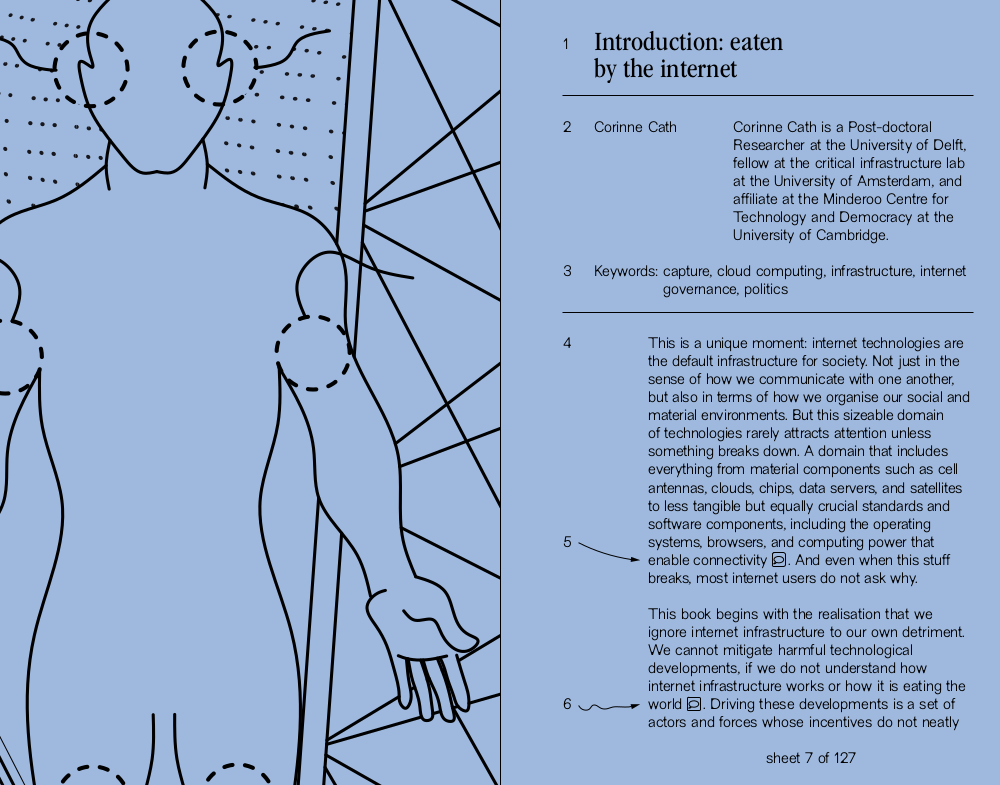
Eaten by the Internet
This book makes internet infrastructure visible as a force of political power, which is transforming the social world, from the bottom up—through fifteen chapters contributed by a global set of researchers, activists, and techies. We are living a unique moment: internet technologies are the default infrastructure for society, not just how we communicate but also how we organise our social life, politics, and economy, all the way down to our material environments, like cities. Our world is eaten by the internet. This means that those who control the internet control the bounds of public speech, economic production, social cohesion, and politics, making its infrastructure a core political terrain in the networked age. The book’s chapters cover a wide set of topics, spanning from the global politics of content moderation by internet infrastructure to the colonialism inherent in the race to plug the moon, from the harms wrought by blockchain companies in rural America to the particularities of online censorship across Asia. The chapters take on thorny topics, discussing power consolidation in the advertisement and cloud industry, the role of internet infrastructure in the war in Ukraine, and tech’s environmental impact—amongst others. In doing so, this book roots contemporary technology debates in the politics of internet infrastructure and urges us to ask how can we ensure our infrastructures sustain us, rather than consume us?
Why Is The Media Smearing New FCC Chair Ajit Pai As The Enemy Of Net Neutrality?
The good news for tech: incoming FCC Chair Ajit Pai wil provide stable, consistent, light-touch regulation of the Internet. The bad news: the media is slamming him as a net neutrality-hating monster.

Hip-hop's profane victory: How corporations co-opted black cool
From YouTube to Netflix, here's why the end of net neutrality will affect people of color more than we realize

The Case for Digital Public Infrastructure
The introduction of new media technologies invariably brings about potent social and economic shifts. We are well into one of those shifts as the advent of the consumer internet has destabilized existing models of news production and distribution and enabled new hegemons to establish massive and powerful businesses. Two decades into this shift, societies are asking difficult questions about whether internet technologies and the business models that accompany them are dangerous for our citizens and our democracies.
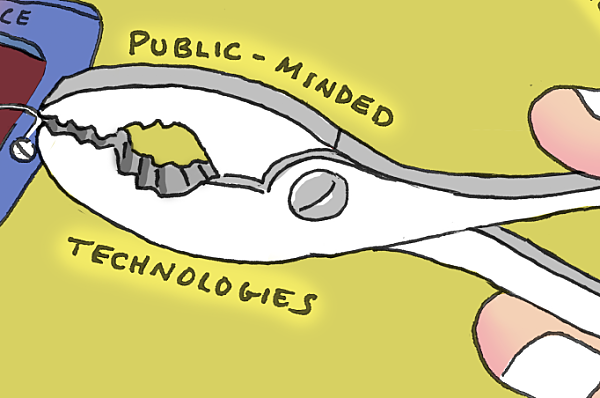
Net neutrality
When there is a structural reason consumers don’t have freedom of choice, and the free market can’t work, consumers need minimal protection from the government so that they don’t get abused. We...
Centralization, Decentralization, and Internet Standards
This document discusses aspects of centralization that relate to Internet standards efforts. It argues that, while standards bodies have a limited ability to prevent many forms of centralization, they can still make contributions that assist in the decentralization of the Internet.
Opinion | Mark Zuckerberg: The Internet needs new rules. Let’s start in these four areas.
We need a more active role for governments and regulators.

Is this a viable theory of change that points to an actual coherent vision for the future of a safe internet? There’s a lot of poor theories of change in current legislation on both sides of the aisle. Who is championing public utility moderation as an alternative to panopticon age gating?

Tynan Purdy ⁂
More and more I think moderation as a whole should be publicly funded. Lots of institutions providing lots of diverse moderation services would unlock product creators and communities to thrive safely.