

"Our primary objective is to bring audiences to the trusted environment of the Guardian to support building deeper relationships."
Once Again, Facebook Is Using Privacy As A Sword To Kill Independent
Facebook claims that their role as guardian of users’ privacy gives them the power to shut down apps that give users more control over their own social media experience. Facebook is wrong. The latest

Death by a thousand likes: How Facebook and Twitter are killing the open web
Here’s one way to understand the symbiotic relationship between publications and platforms in the digital age. Publications depend on advertising dollars to keep producing content, so they need to hold readers’ attention. Big platforms like Facebook and Twitter already have plenty of attention, but they need vast quantities of content to fill up their newsfeeds. It seems natural, then, that publications have started relying on platforms to drive readership.

Publishers fearing Facebook dependency: fight for your future, reinvent RSS.
Right now Facebook accounts for over 40% of all traffic for U.S. news organizations, making many dependent on the social network for…

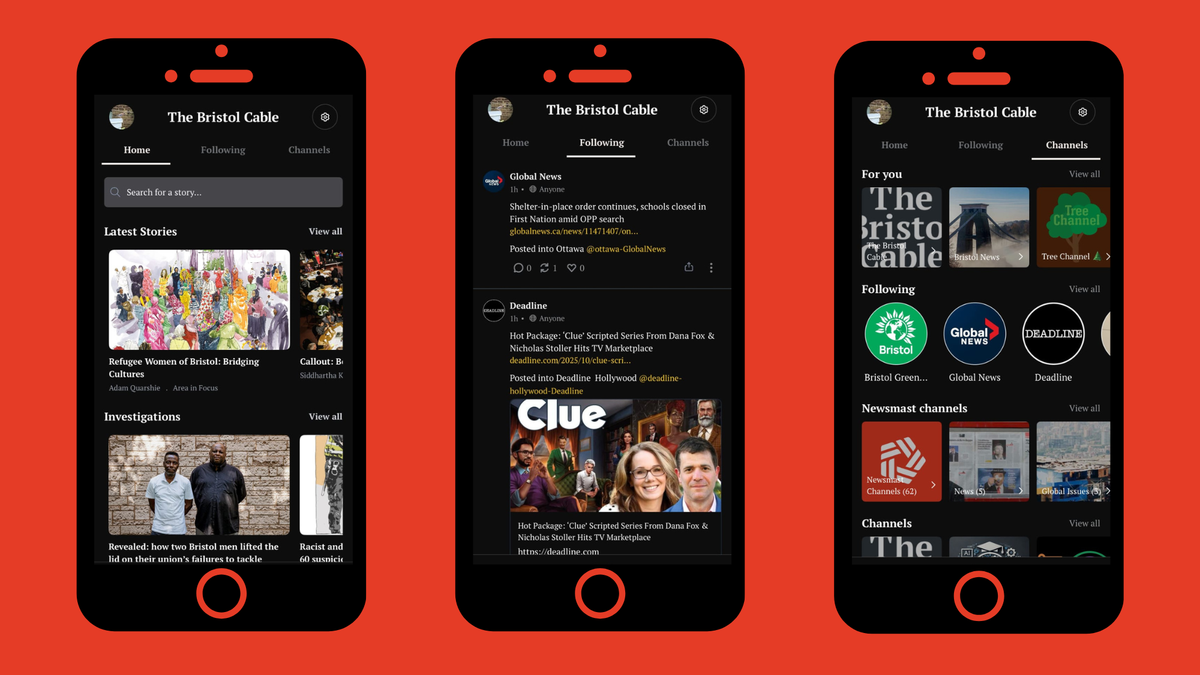
Bristol Cable launches hybrid news and social networking app in bid to double membership
A "world first" mobile experience aims to give members curated discussions and community connections within a privacy-focused platform
Facebook isn't just giving these agitators a platform: it's paying them
An ABC NEWS Verify investigation reveals Facebook is directly funding some controversial Australian content creators including a white nationalist and an anti-vaxxer influencer.
Apple vs. Facebook is Kayfabe - Infrequently Noted
Apple vs. Facebook is, and always was, kayfabe. In reality, Apple is Facebook's chauffeur; holding Zuck's coat while Facebook wantonly surveils iPhones owners. How can we be sure? Because Apple continues to allow wide-scale abuse of In-App Browsers.

Facebook content management controversies
Facebook and Meta Platforms have been criticized for their management of various content on posts, photos and entire groups and profiles. This includes but is not limited to allowing violent content, including content related to war crimes, and not limiting the spread of fake news and COVID-19 misinformation on their platform, as well as allowing incitement of violence against multiple groups.

How to Fix Facebook—Before It Fixes Us
An early investor explains why the social media platform’s business model is such a threat—and what to do about it.

Changes to the Facebook Algorithm Decreased News Visibility Between 2021-2024
Platforms, especially Facebook, are primary news sources in the US. In its widely criticized "War on News," Meta algorithmically deprioritized news and political content. We use data from 40 news organizations (5,243,302 Facebook posts, 7,875,372,958 user reactions) and 21 non-news pages (396,468 posts; 1,909,088,308 reactions) between January 1, 2016 and February 13, 2025 to examine how these changes influenced news visibility on the platform. Reactions to news declined by 78% between 2021 and 2024 while reactions to non-news pages increased, indicating targeted suppression of news visibility. Low-quality sources were especially suppressed, yet the 2025 end to "War on News" increased user reactions to news, especially low-quality ones. These changes do not reflect decreased news supply, Facebook user base, or interest in news over this period.

Following news on social media boosts knowledge, belief accuracy and trust
Many worry that news on social media leaves people uninformed or even misinformed. Here we conducted a preregistered two-wave online field experiment in France and Germany (N = 3,395) to estimate the effect of following the news on Instagram and WhatsApp. Participants were asked to follow two accounts for 2 weeks and activate the notifications. In the treatment condition, the accounts were those of news organizations, while in the control condition they covered cooking, cinema or art. The treatment enhanced current affairs knowledge, participants’ ability to discern true from false news stories and awareness of true news stories, as well as trust in the news. The treatment had no significant effects on feelings of being informed, political efficacy, affective polarization and interest in news or politics. These results suggest that, while some forms of social media use are harmful, others are beneficial and can be leveraged to foster a well-informed society.

Show your work: The new terms for trust in journalism - PressThink
The transparency movement has finally come of age. Power has shifted to the users. Their trust has to be earned in different ways now.

One Response to the Cambridge Analytica Scandal: Block Facebook's
With Facebook in a dominant position in hosting a huge portion of the world’s social conversation, we’ve been worried about the incredible power the company has accumulated and the risks that poses

How we decide what news is important, and why that process maybe flawed
Have you ever thought about the type of news that populates on your Facebook feed? Where does it come from and how is it specifically…
Note from Mark Zuckerberg
Everything we do at Facebook is focused on our mission to make the world more open and connected.
Newsmast Foundation - Social Community App
Bring your people and content together in a safer, calmer, independent space supported by an education charity.
The Nightmare of Eternal Spring: Why Social Media Can't Survive on "Niceness" Alone - Nightflight