

Midlife is tough: the idealism of youth has faded, as has inevitably some of its fitness and vigor. At the same time, the responsibilities of adulthood have grown: the kids that were such a fresh adventure when they were infants and toddlers are now grappling with their own transition into adulthood – and you try to remind yourself that the kids that you have sacrificed so much for probably don’t actually hate your guts, regardless of that post they just liked on the ‘gram. Making things more challenging, while you are navigating the turbulence of teenagers, your own parents are likely entering life’s twilight, needing help in new ways from their adult children. By midlife, in addition to the singular joys of life, you have also likely experienced its terrible sorrows: death, heartbreak, betrayal. Taken together, the fading of youth, the growth in responsibility and the endurance of misfortune can lead to cynicism or (worse) drastic and poorly thought-out choices. Add in a little fear of mortality and some existential dread, and you have the stuff of which midlife crises are made…
The Global Decline in the Mental Health of the Young
One of the major findings in wellbeing research until recently was that happiness was U-shaped by age and unhappiness hump-shaped by age. There was a midlife crisis — a finding reported in well over 600 published papers using data on 145 countries. It was present in both developing and developed countries. And it was persistent over time. The finding of a peak in ill-being in midlife was consistent with Anne Case and Angus Deaton’s work on mortality and the so-called “deaths of despair.”1 In the US in particular and to a lesser extent in other countries, White prime-aged individuals without a college degree had high death rates from suicide, drug overdoses, and cirrhosis of the liver. Drug overdose deaths in the US, for example, peaked at midlife ages. In 2023, the Centers for Disease Control and Prevention (CDC) reported that overdose death rates per 100,000 by age rose from 13.5 for 15-to-24-year-olds to 45.6 for 25-to-34-year-olds and 60.8 for 35-to-44-year-olds, and then declined to 53.3 for 45-to-54-year-olds, 49.2 for 55-to-64-year-olds, and 14.7 for those over the age of 65.2 The morbidity data matched the mortality data.

Despair and anxiety among UK youth
For years, the age profile of mental ill health was hump-shaped, peaking when people were in their late 40s or early 50s. But in recent years the mental health of the young has deteriorated to such an extent that, today, anxiety and despair peak when UK citizens are in their mid-20s. In most international surveys, adolescents in England, Scotland, and Wales are among the least happy in the world. This column focuses on one of the many likely contributory factors to young people’s mental health – the rise in social media, underpinned by the smartphone.

The Missing Middle of Open Source
Why serious, maintainer-driven projects struggle to sustain themselves—and what it will take to fix it.

The Retweeting Class
I have often found myself confounded by the behaviour of some people who seem impervious to reality — like the people still on X today. Here, I try to understand what grounds their epistemology and its consequences, and what that means for the rest of us. Being committed to a better future is where genuine seriousness is, and that seriousness can only be approached in a spirit of embodied, determined, relentless hope.
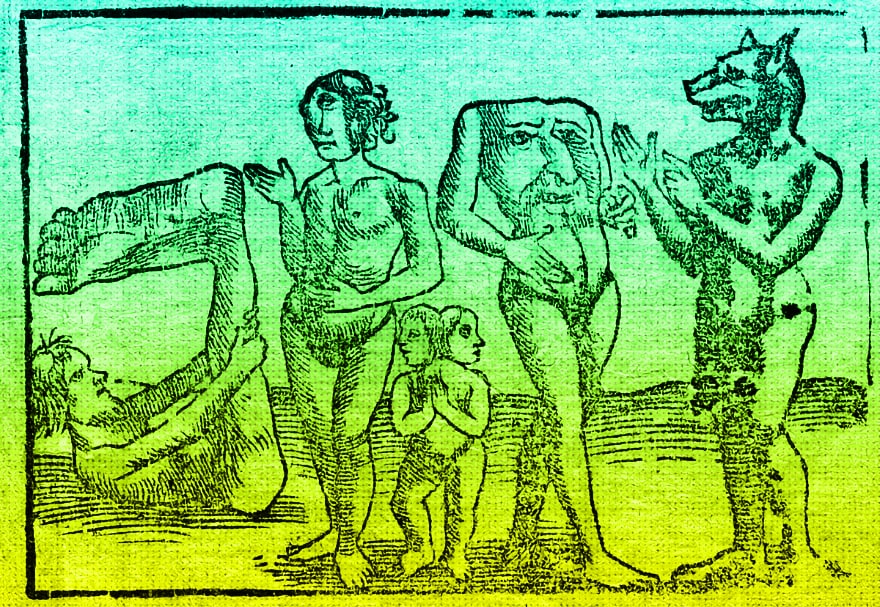
Why Does Everyone Hate Children?
Why Does Everyone Hate Children?
Young people five times more likely to have no friends than a decade ago | IPPR
The number of young people with no close friends has increased five-fold since 2014Gen Z are more isolated, more distressed and less productive than previo

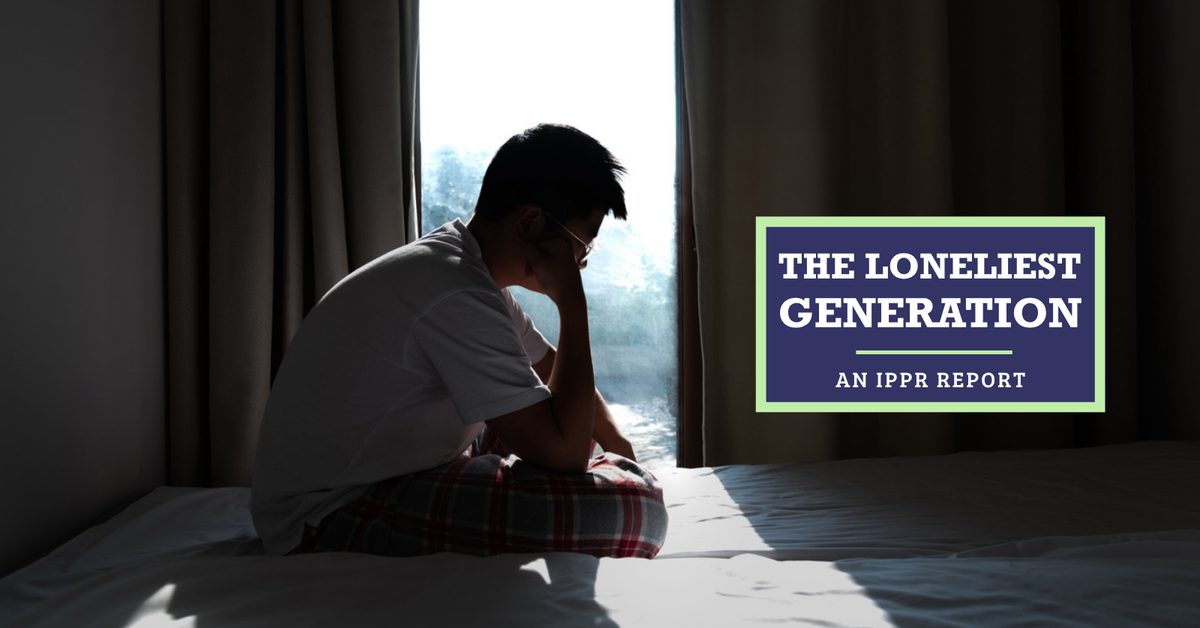
The loneliest generation: What it is like to grow up in England today | IPPR
A connected society is one in which we care about how others are doing and, in turn, others look out for our wellbeing. It is the state and public services
Philosophy Officer on Instagram: "I AM SO EMOTIONALLY MATURE I have massive problems with this term. Most people would say it means something along the lines of: the ability to understand, process, regulate or communicate emotions in a healthy way. Now the issue is that all of the terms you use to explain it leave so much room for interpretation the definition becomes almost vacuous. To understand an emotion means to know what caused it? To know the impact it has on you physiologically? To understand how it affects your cognition? To know how it affects others? Same goes with the term healthy, get far enough into a discussion on what it means to be healthy and people will start to disagree. Mental health? Physical? Communal? Spiritual? What’s more is that this term is thrown around in place of simple personality traits or individual quirks. Because someone is more emotional are they now less mature because they have an objectively more difficult time regulating them? Is the person with a dark sense of humour immature because he can’t hold in a laugh when everyone else finds the situation morbid or cruel? I think, to a great extent, it’s a bit of a shield or barrier of a term that absolves ourselves from taking responsibility for our behaviours. At the end of the day we know ourselves best, or at least better than most people. This means we best understand our emotions, how we regulate them, how we control them etc. We have this epistemic bias towards ourselves, since we simply know more about ourselves therefore we will often reason that others have less. Sorry I couldn’t polish off my ideas more I gotta run bye friends"
102K likes, 186 comments - the_philofficer on July 6, 2026: "I AM SO EMOTIONALLY MATURE I have massive problems with this term. Most people would say it means something along the lines of: the ability to understand, process, regulate or communicate emotions in a healthy way. Now the issue is that all of the terms you use to explain it leave so much room for interpretation the definition becomes almost vacuous. To understand an emotion means to know what caused it? To know the impact it has on you physiologically? To understand how it affects your cognition? To know how it affects others? Same goes with the term healthy, get far enough into a discussion on what it means to be healthy and people will start to disagree. Mental health? Physical? Communal? Spiritual? What’s more is that this term is thrown around in place of simple personality traits or individual quirks. Because someone is more emotional are they now less mature because they have an objectively more difficult time regulating them? Is the person with a dark sense of humour immature because he can’t hold in a laugh when everyone else finds the situation morbid or cruel? I think, to a great extent, it’s a bit of a shield or barrier of a term that absolves ourselves from taking responsibility for our behaviours. At the end of the day we know ourselves best, or at least better than most people. This means we best understand our emotions, how we regulate them, how we control them etc. We have this epistemic bias towards ourselves, since we simply know more about ourselves therefore we will often reason that others have less. Sorry I couldn’t polish off my ideas more I gotta run bye friends".

Why major life decisions should be approached with ‘epistemic humility’ | Psyche Videos
At a crossroads in life? No matter how much you deliberate, one unknowable remains: the person you will be on the other side
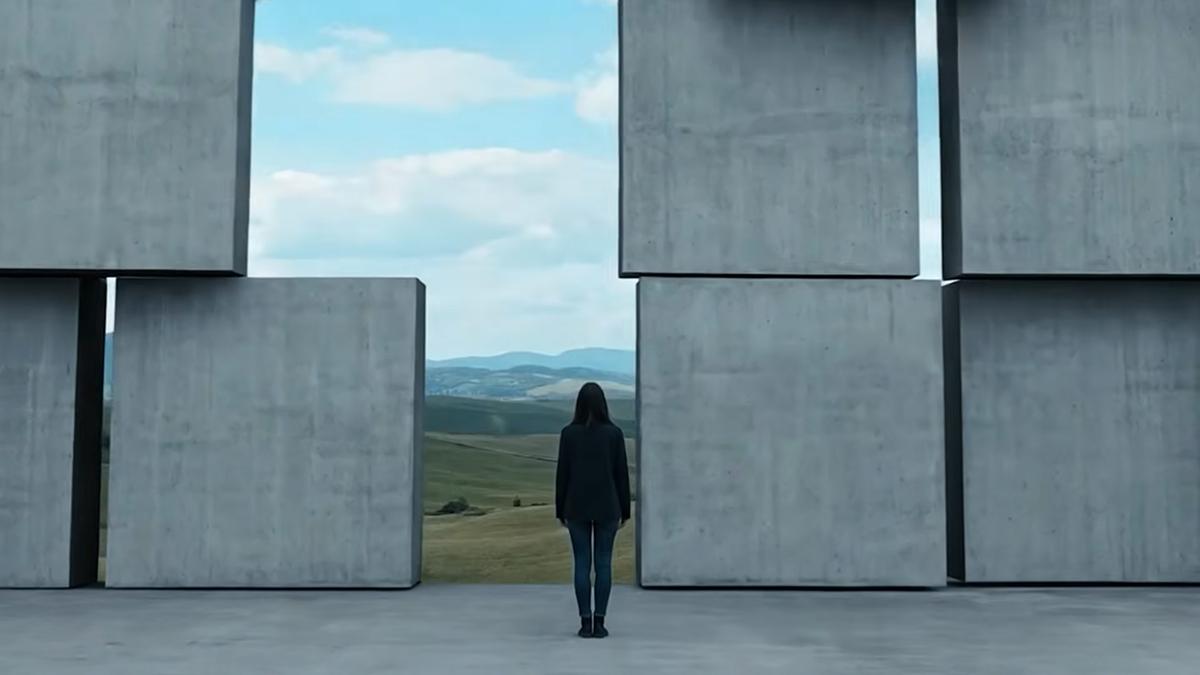
Degeneracy is a Symptom
On Conspicuous Despair, the Ponzi stage of being alive, and why your grandparents are wrong about you.

Increlution
Survive the ever increasing pressure of time for as long as you can! A minimalistic incremental game about time management that takes inspiration from roguelite games, with a focus on meta-progression. Every generation has a better chance at survival, because previous lives influence its instincts

A Rule is to Break
Simply celebrating childhood: the joy, the wonder of discovery, the spontaneity, and strong emotions Wild Child is free to do as she pleases. <i>A Rule Is To Break: A Child's Guide to Anarchy</i> follows Wild Child as she learns about just being herself and how that translates into kid autonomy. It presents the ideas of challenging societal expectations and tradition and expressing yourself freely in kid-terms that are both funny and thought provoking—it even functions as a guidebook for adults to understand what it is to be a critically thinking, creative individual. Wild Child is <i>the</i> role model for disobedience that is sometimes civil.<br><br> Mostly pictures (that are cute!) and a little text, and looks good, but don't expect much of a lesson in real anarchy! For ages 4 and up!

Teen Life on Social Media in 2022: Connection, Creativity and Drama
Majorities of teens credit social media with strengthening their friendships and providing support while also noting the emotionally charged side of these platforms.

Social media and youth mental health: Simple narratives produce biased interpretations.
"There is a contrast between my biological development, confidently realizing its in-built norm, and my fumbling psychological development, realizing partially..one among many apparently possible orders .. Learning what to want is the most radical, the most painful and the most creative art of life"
