The United States Department of Defense Office of Force Transformation (OFT) was established October 29, 2001 in the Office of the Secretary of Defense. Secretary of Defense Donald Rumsfeld called for the creation of this new office to support his transformation vision along with President George W. Bush’s broad mandate to transform U.S. military capabilities. The transformation process intends to challenge the status quo with new concepts for American defense to ensure an overwhelming and continuing competitive advantage. The Director, Force Transformation serves as advocate, focal point, and catalyst for transformation among the Department, reporting directly to the Secretary and Deputy Secretary of Defense.
Exploring the Militarization of US Police Forces
The United States Defense Department’s 1033 program began in 1997, it allows for the transfer of excess military equipment to civilian law enforcement agencies. Most of the equipment obtained is justifiable, things such as cold weather clothing, diesel generators and flashlights. However, a significant portion of it is explicitly combat-oriented in nature, equipment such as M-16 rifles, tanks, and mine-resistant vehicles.
Trump DoD Axed a Program Meant to Limit Civilian Casualties — ProPublica
The Pentagon dismantled its civilian protection mission as Defense Secretary Pete Hegseth made “lethality” a top priority and the Trump administration reorganized national security around two principles: more aggression, less accountability.

Dempsey Wants to ‘Rebalance the Use of Military Power'
The U.S. military needs to do less foreign fighting and more foreign training, says Joint Chiefs Chairman Gen. Martin Dempsey in an exclusive interview. By James Kitfield
Why Defense Could Now Be a Market for Startups
The U.S. Department of Defense is coming to grips with the idea that the technologies it needs to keep the country safe and secure are no…
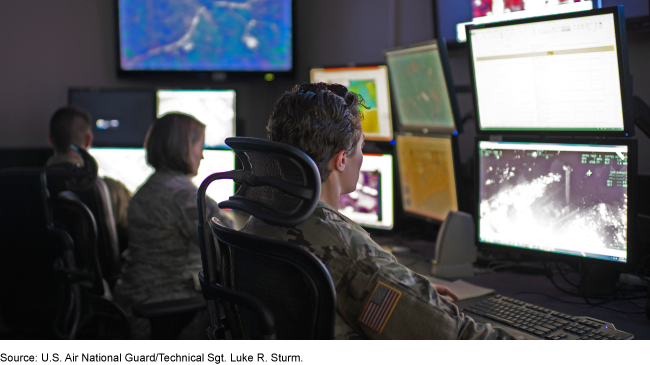
Defense Intelligence: Comprehensive Plan Needed to Improve Stakeholder Engagement in the Development of New Military Intelligence System
Intelligence collected on foreign militaries is critical for the U.S. military. The Defense Intelligence Agency's database for this intelligence doesn...
Theory of change
A theory of change (ToC) is an explicit theory of how and why it is thought that a social policy or program activities lead to outcomes and impacts. ToCs are used in the design of programs and program evaluation, across a range of policy areas.


“I hoped the system would have had more capacity for institutional reform than it has.”
Those are the words of Mike Bracken, the former head of the United Kingdom’s Government Digital Service, as he reflected on his departure back in 2015. More than a decade later, those reflections are on my mind following the recent announcement of Digital Transformation Canada (DTC), which will bring together many of the federal government’s IT organizations into one unit. This includes my old team, the Canadian Digital Service. From the start, we had high hopes to change how the government delivered digital services. It didn’t work out that way. Will DTC be different?
Pentagon secretly installs military influencers in civilian roles
Conservative veterans with large social media followings have been hired by the Defense Department and are amplifying Pete Hegseth’s culture-war fights.

How Russia Is Reshaping Command and Control for AI-Enabled Warfare
Kateryna Bondar examines how Russia conceptualizes, builds, and adapts its command and control (C2) architecture under wartime pressures, in the first installment of a series on Russia’s use of AI in military operations.

A Trail of Evidence Leading to AT&T’s Partnership with the NSA — ProPublica
Documents provided by Edward Snowden mention a special relationship between the National Security Agency and an unnamed telecommunications company. Here’s how we figured out that’s AT&T.

Military Analyst: Network State Takeover of U.S. Government
The United States is currently evolving into a Network State, says a military analyst who writes regularly on the subject.

Military Intelligence | New Technology Solutions
It may come as no surprise to you that some of the most challenging work available in computer science is to be found in the USA military.
The Defense Reformation
Our nation is in an undeclared state of emergency, and must resurrect the American Industrial Base we depended on in the depths of the Cold War.

Bidirectional Transformations: A Cross-Discipline Perspective
The GRACE International Meeting on Bidirectional Transformations was held in December 2008 near Tokyo, Japan. The meeting brought together researchers and practitioners from a variety of sub-disciplines of computer science to share research efforts and help create a new community. In this report, we survey the state of the art and summarize the technical presentations delivered at the meeting. We also describe some insights gathered from our discussions and introduce a new effort to establish a benchmark for bidirectional transformations.

BLUF: The Military Standard That Can Make Your Writing More Powerful
BLUF is a military communications acronym — it stands for “bottom line up front” — that’s designed to enforce speed and clarity in reports and emails.