


Monte Carlo methods, also called the Monte Carlo experiments or Monte Carlo simulations, are a broad class of computational algorithms based on repeated random sampling for obtaining numerical results, conceptualized by Polish mathematician Stanisław Ulam. The underlying concept is to use randomness to solve deterministic problems.
What is random generation?
I wanted to write this as a sequel to "What is a property?" where I would talk about how Property-Based Testing libraries generate random structures, don't worry, I'll still do that! But I realized that without talking about randomness in computers, the writing would be incomplete. So the first part of this article will go into a core problem that we consider "solved" in PBT, which is designing good random number generators, with the latter part talking about implementing complex random data generators on top of such RNGs.
Computational statistics
Computational statistics, or statistical computing, is the study which is the intersection of statistics and computer science, and refers to the statistical methods that are enabled by using computational methods. It is the area of computational science specific to the mathematical science of statistics. This area is fast developing. The view that the broader concept of computing must be taught as part of general statistical education is gaining momentum.

Execution in strategy games should be considered “randomness”
I have long considered execution to be basically a form of randomness, similar to dice rolls or card draws. I have also long recognized that not everyone agrees with me, and some people find the id…


The 100:10:1 method – the heart of my game design process
This is the second post of a series on practical game-design techniques. Here’s the first. In my years designing games, my methods have evolved from Games-Randomly-Emerging-from-the-Inchoate…

Keynote: Reproducibility and replicability of computer simulations | Canal U
Since the early days of the reproducibility crisis, much progress has been made in understanding and improving computational reproducibility and replicability (R and R)...

Embracing Playful Imperfection With The CSS random() Function — Smashing Magazine
Design systems thrive on consistency, so where does randomness fit in? Through playful demos of organic typography, bouncing letters, and splayed cards, Brecht De Ruyte shows how the new CSS `random()` function brings a little imperfection to the web without JavaScript libraries or preprocessor loops that generate hundreds of lines of static CSS.

Gimuby
Genetic algorithms are loved for their flexibility and easiness of understanding. The island model is initially a way to distribute genetic algorithm, but also can provide better results than genetic algorithm even if distribution of computations is not considered
Random Object Creativity Technique — Think Jar Collective
Michael Michalko shares a useful technique for generating relevant creative ideas using random words to inspire creativity.

Against theory-motivated experimentation: Can random experimental choice lead to better theories?
Scientists must choose which among many experiments to perform. We study the epistemic success of experimental choice strategies proposed by philosophers of science or executed by scientists themselves. We develop a multi-agent model of the scientific process that jointly formalizes its core aspects: active experimentation, theorizing, and social learning. We find that agents who choose new experiments at random develop the most informative and predictive theories of the world. The agents aiming to confirm, falsify theories, or resolve theoretical disagreements end up with an illusion of epistemic success: they develop promising accounts for the data they collected, while misrepresenting the ground truth that they intended to learn about. Agents experimenting in these theory-motivated ways acquire less diverse or less representative samples from the ground truth that also turn out to be easier to account for. Random data collection, on the other hand, combines virtues of diverse and representative sampling from a target scientific domain which enables cumulative development of the successful theoretical accounts of it. We suggest that randomization, already a gold standard within experiments, is also beneficial at the level of experiments themselves.

Let’s Use the Emergent CSS random() Function in all the Browsers | CSS-Tricks
The journey to create a polyfill for the upcoming CSS random() function that works in all browsers.

The Strange Math That Predicts (Almost) Anything
The evolution of CHI-FRO
Three principles from an engineering-heavy partnership to build out tools for probabilistic programming

Computational reproducibility

The why and how of making scientific computations reproducible
Konrad Hinsen's blog
Home Page - Software Heritage
GNU Guix transactional package manager and distribution — GNU Guix
Keynote: Reproducibility and replicability of computer simulations | Canal U

Reproducible research: methodological principles for transparent…
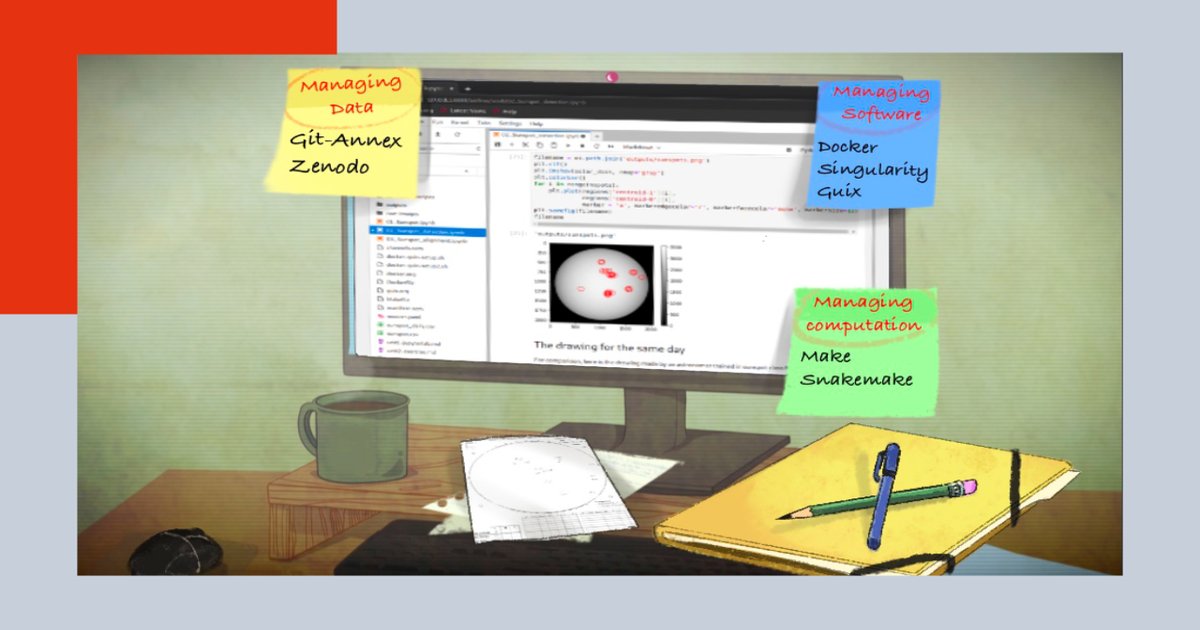
Reproducible Research II: Practices and tools for managing compu…