


The dangers of surveillance might seem hypothetical—but history shows us we have a lot to fear.
Opinion | Surveillance: A Threat to Democracy (Published 2013)
Security can be achieved by less-intrusive or sweeping means, without trampling on democratic freedoms and basic rights.

To Repress or to Co‐opt? Authoritarian Control in the Age of Digital Surveillance
This article studies the consequences of digital surveillance in dictatorships. I first develop an informational theory of repression and co-optation. I argue that digital surveillance resolves dicta...

Looking Through the Eyes of China’s Surveillance State (Published 2018)
A rare chance to try on a tool of a would-be surveillance dystopia gave a glimpse of the wariness that a closely watched populace can’t hide.

Vigilantism comes for Flock
More Americans than ever are destroying Flock license plate cameras amid rising backlash against the company. Is the tide turning on intrusive U.S. mass surveillance, and where does the privacy fight go next?

Why 'I Have Nothing to Hide' Is the Wrong Way to Think About Surveillance
Many don’t understand why they should be concerned about surveillance if they have nothing to hide. It’s even less clear in the world of 'oblique' surveillance, given that apologists will always frame our use of information-gathering services like a mobile phone plan or Gmail as a choice. if everyone’s every action were being monitored, and everyone technically violates some obscure law at some time, then punishment becomes purely selective.

Pluralistic: Surveillance is inequality’s stabilizer (26 Jun 2025) – Pluralistic: Daily links from Cory Doctorow
The "dictator's dilemma" pits a dictator's desire to create social stability by censoring public communications in order to prevent the spread of anti-regime messages with the dictator's need to know whether powerful elites are becoming restless and plotting a coup:
Why NSA surveillance scares me
Nothing To Hide explains why you should care about surveillance even though you have nothing to hide. But it missed the point that most con...
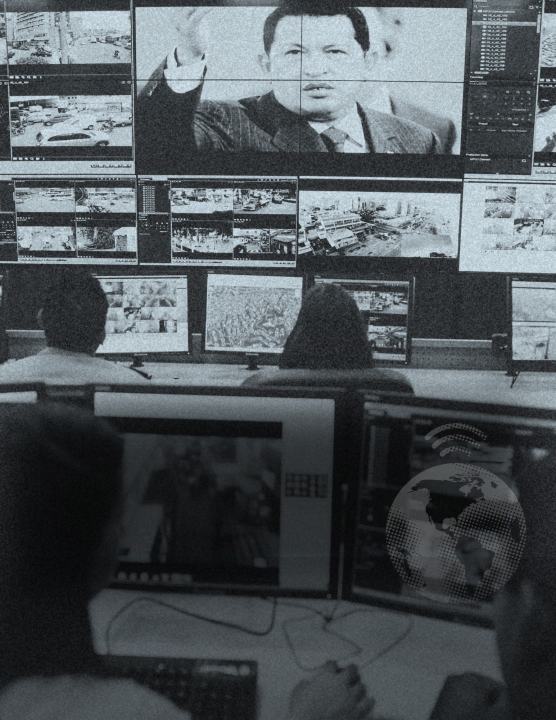
Watch the Watchers: Surveillance technologies for political control in Venezuela
Despite changes in leadership, Venezuela's extensive surveillance infrastructure remains fully operational.
Why Privacy Matters Even if You Have ‘Nothing to Hide’
What’s the problem with ubiquitous surveillance? Don’t think Orwell; think Kafka.
Why Privacy Matters Even if You Have ‘Nothing to Hide’
What’s the problem with ubiquitous surveillance? Don’t think Orwell; think Kafka.
State Capacity of Secret Surveillance
The state capacity-civil society tradeoff model tends to treat the “state” and “civil society” as separate entities who move to constrain one another. However, this modeling technique leaves out the nuances of individual action within a collective setting by treating each as a relative black box. This article explores this balance in the context of the surveillance state that has arisen in the 20th and 21st century. As state capacity in surveillance increases it better allows the state to respond to threats to citizens from citizens. However, the increased capacity also lessens the ability of societal pressure to check authoritarian advances even in a nation with a thriving civil society presence.
State Capacity of Secret Surveillance
The state capacity-civil society tradeoff model tends to treat the “state” and “civil society” as separate entities who move to constrain one another. However, this modeling technique leaves out the nuances of individual action within a collective setting by treating each as a relative black box. This article explores this balance in the context of the surveillance state that has arisen in the 20th and 21st century. As state capacity in surveillance increases it better allows the state to respond to threats to citizens from citizens. However, the increased capacity also lessens the ability of societal pressure to check authoritarian advances even in a nation with a thriving civil society presence.
Mass surveillance silences minority opinions, according to study
A new study shows that knowledge of government surveillance causes people to self-censor their dissenting opinions online.
Mass surveillance silences minority opinions, according to study
A new study shows that knowledge of government surveillance causes people to self-censor their dissenting opinions online.
Pluralistic: Surveillance vs guillotines (11 Aug 2026) – Pluralistic: Daily links from Cory Doctorow
In the summer of 2013, two esoteric, technical, incredibly important texts were published within weeks of one another: the first is the Snowden leaks, which revealed a system of global, pervasive digital surveillance; the second was Thomas Piketty's Capital in the 21st Century, a book about the economic inevitability (and political instability) of oligarchy: