

Genetic algorithms are loved for their flexibility and easiness of understanding. The island model is initially a way to distribute genetic algorithm, but also can provide better results than genetic algorithm even if distribution of computations is not considered
SwarmEvolve: Latent Agent Swarms for Evolutionary Discovery and Optimization
LLM-guided evolutionary search uses AI agents to improve programs for mathematical and computational problems by iteratively refining solutions and combining high-scoring methods. However, the...

The lost art of mathematical modelling
We provide a critique of mathematical biology in light of rapid developments in modern machine learning. We argue that out of the three modelling activities – (1) formulating models; (2) analysing models; and (3) fitting or comparing models to data – inherent to mathematical biology, researchers currently focus too much on activity (2) at the cost of (1). This trend, we propose, can be reversed by realising that any given biological phenomenon can be modelled in an infinite number of different ways, through the adoption of a pluralistic approach, where we view a system from multiple, different points of view. We explain this pluralistic approach using fish locomotion as a case study and illustrate some of the pitfalls – universalism, creating models of models, etc. – that hinder mathematical biology. We then ask how we might rediscover a lost art: that of creative mathematical modelling.
Autonomous Mathematical Discovery in an Open-World Multi-Agent Environment
We study autonomous mathematical discovery in the Station, an open-world multi-agent environment in which AI agents from different model families pursue a shared research goal without a central...

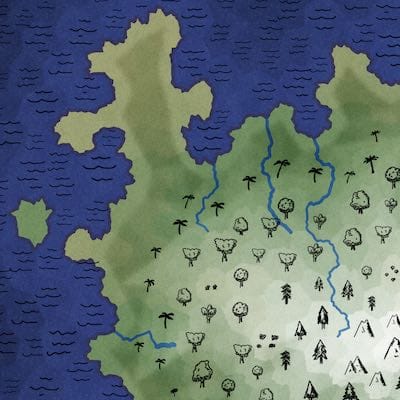
Cozy Kingdoms Generation
Cozy Kingdoms is the marriage of a procedural map generation method, a really good tileset, and a name generation algorithm. It looks a bit ...

The Interface of Kai Krause's Software @mprove
Matthias Müller-Prove, Innovative Benutzungsschnittstellen, 1998/99, University of Hamburg

Category theory for computing science
Category theory for computing science by Michael Barr, 1990, Prentice Hall edition, in English

Algorithmic Botany: Home
Welcome to Algorithmic Botany, the website of the Biological Modeling and Visualization research group in the Department of Computer Science at the University of Calgary.
Monte Carlo method
Monte Carlo methods, also called the Monte Carlo experiments or Monte Carlo simulations, are a broad class of computational algorithms based on repeated random sampling for obtaining numerical results, conceptualized by Polish mathematician Stanisław Ulam. The underlying concept is to use randomness to solve deterministic problems.

Laboratory of Evolutionary Design
Developing biological AI for human good at Stanford University

Making Worlds: Introduction
In this multi-part series I try to make a procedural planet generator that runs on the GPU.

Agentic systems are adept at solving well-scoped, verifiable problems in computational biology
We introduce CompBioBench, a benchmark of 100 diverse tasks for evaluating agentic systems in computational biology. Unlike mathematics and programming, which more readily admit systematic verification, biological data are inherently noisy and open to interpretation.
The Global Brain Algorithm
<p>This is a collection of explanations on the global brain algorithm. We explain core concepts in simple terms that help to understand the algorithms as a whole.</p>
About Causal Islands
Causal Islands is about connecting people across industries, disciplines, and communities to share, design, and learn about the future of computing together.

Computational reproducibility

The why and how of making scientific computations reproducible
Konrad Hinsen's blog
Home Page - Software Heritage
GNU Guix transactional package manager and distribution — GNU Guix

Keynote: Reproducibility and replicability of computer simulations | Canal U

Reproducible research: methodological principles for transparent…
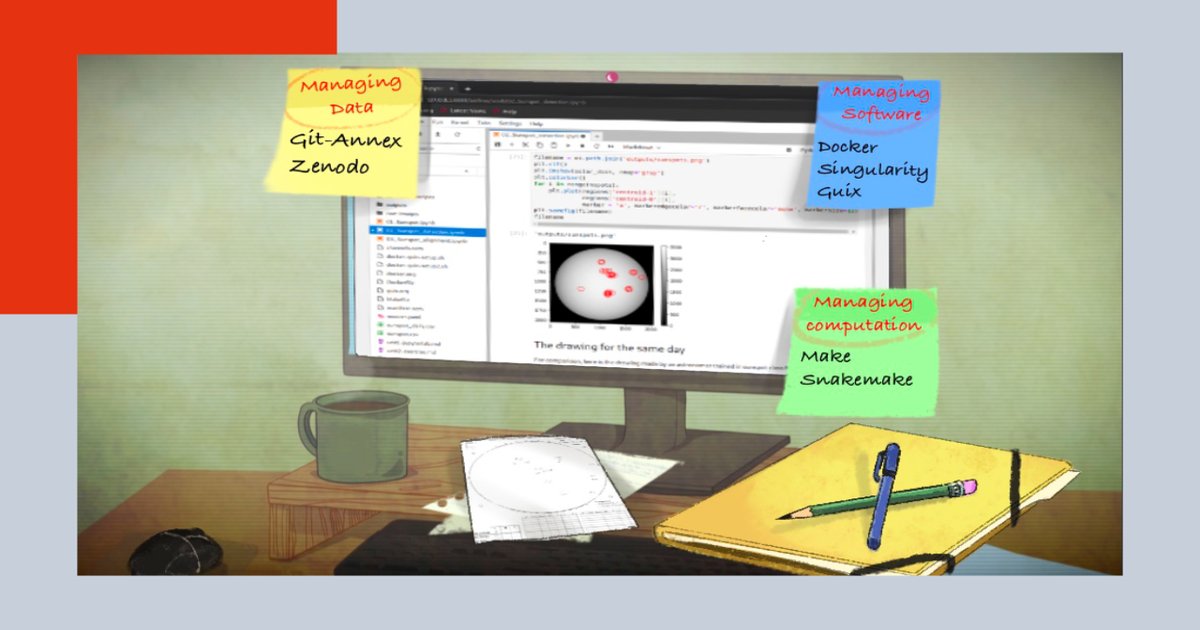
Reproducible Research II: Practices and tools for managing compu…