Causality
Written by one of the preeminent researchers in the field, this book provides a comprehensive exposition of modern analysis of causation. It shows how causality has grown from a nebulous concept into a mathematical theory with significant applications in the fields of statistics, artificial intelligence, economics, philosophy, cognitive science, and the health and social sciences. Judea Pearl presents and unifies the probabilistic, manipulative, counterfactual, and structural approaches to causation and devises simple mathematical tools for studying the relationships between causal connections and statistical associations. Cited in more than 2,100 scientific publications, it continues to liberate scientists from the traditional molds of statistical thinking. In this revised edition, Judea Pearl elucidates thorny issues, answers readers' questions, and offers a panoramic view of recent advances in this field of research. Causality will be of interest to students and professionals in a wide variety of fields. Dr Judea Pearl has received the 2011 Rumelhart Prize for his leading research in Artificial Intelligence (AI) and systems from The Cognitive Science Society.

The C-Word: Scientific Euphemisms Do Not Improve Causal Inference From Observational Data
Causal inference is a core task of science. However, authors and editors often refrain from explicitly acknowledging the causal goal of research projects; they refer to causal effect estimates as associational estimates. This commentary argues that using the term “causal” is necessary to improve the quality of observational research. Specifically, being explicit about the causal objective of a study reduces ambiguity in the scientific question, errors in the data analysis, and excesses in the interpretation of the results.

A Statistical Interrogation of “The Case for Causality, Part 1” by Rausch and Haidt – Matthew B. Jané
I don’t know anything about the literature on social media and mental health so my focus on this post is to interrogate the statistical approach taken by the article written by Zach Rausch and Jonathon Haidt (link here) and to some extent the original meta-analysis by Ferguson.

mediation: R Package for Causal Mediation Analysis
In this paper, we describe the R package mediation for conducting causal mediation analysis in applied empirical research. In many scientific disciplines, the goal of researchers is not only estimating causal effects of a treatment but also understanding the process in which the treatment causally affects the outcome. Causal mediation analysis is frequently used to assess potential causal mechanisms. The mediation package implements a comprehensive suite of statistical tools for conducting such an analysis. The package is organized into two distinct approaches. Using the model-based approach, researchers can estimate causal mediation effects and conduct sensitivity analysis under the standard research design. Furthermore, the design-based approach provides several analysis tools that are applicable under different experimental designs. This approach requires weaker assumptions than the model-based approach. We also implement a statistical method for dealing with multiple (causally dependent) mediators, which are often encountered in practice. Finally, the package also offers a methodology for assessing causal mediation in the presence of treatment noncompliance, a common problem in randomized trials.

Wow! Using noise in data to tease apart causation vs correlation http://t.co/69DoZrjcLu Super cool statistical technique. via @sarawinge
Wow! Using noise in data to tease apart causation vs correlation http://t.co/69DoZrjcLu Super cool statistical technique. via @sarawinge— Tim O'Reilly (@timoreilly) December 18, 2014
Recursive partitioning for heterogeneous causal effects
In this paper we propose methods for estimating heterogeneity in causal effects in experimental and observational studies and for conducting hypothesis tests about the magnitude of differences in treatment effects across subsets of the population. We provide a data-driven approach to partition the data into subpopulations that differ in the magnitude of their treatment effects. The approach enables the construction of valid confidence intervals for treatment effects, even with many covariates relative to the sample size, and without “sparsity” assumptions. We propose an “honest” approach to estimation, whereby one sample is used to construct the partition and another to estimate treatment effects for each subpopulation. Our approach builds on regression tree methods, modified to optimize for goodness of fit in treatment effects and to account for honest estimation. Our model selection criterion anticipates that bias will be eliminated by honest estimation and also accounts for the effect of making additional splits on the variance of treatment effect estimates within each subpopulation. We address the challenge that the “ground truth” for a causal effect is not observed for any individual unit, so that standard approaches to cross-validation must be modified. Through a simulation study, we show that for our preferred method honest estimation results in nominal coverage for 90% confidence intervals, whereas coverage ranges between 74% and 84% for nonhonest approaches. Honest estimation requires estimating the model with a smaller sample size; the cost in terms of mean squared error of treatment effects for our preferred method ranges between 7–22%.

The Dimensions of Emergent Spacetime in the Influence Network
The Dimensions of Emergent Spacetime in the Influence Network KEVIN KNUTH, State Univ of NY -Albany -It has been previously demonstrated that the consistent quantification of a causally ordered set of events (influence network) with respect to

Vasilis Syrgkanis on Twitter / X
Interesting times! Thanks to the amazing work of my student @JiyuanTan, we recently released a fully automated agentic pipeline that automates theoretical research in causal inference https://t.co/GclkTcHjjT.— Vasilis Syrgkanis (@syrgkanis) September 14, 2026
CausalSmith · AI Causal Scientist
Working papers from CausalSmith, an AI causal scientist: econometric theory in which every theorem, assumption, and lemma is machine-verified in Lean 4.
Causal Inference Is Eating Machine Learning
Your most accurate model might be your most dangerous one.

Quantifying causal emergence shows that macro can beat micro | PNAS
Causal interactions within complex systems can be analyzed at multiple spatial and temporal scales. For example, the brain can be analyzed at the l...

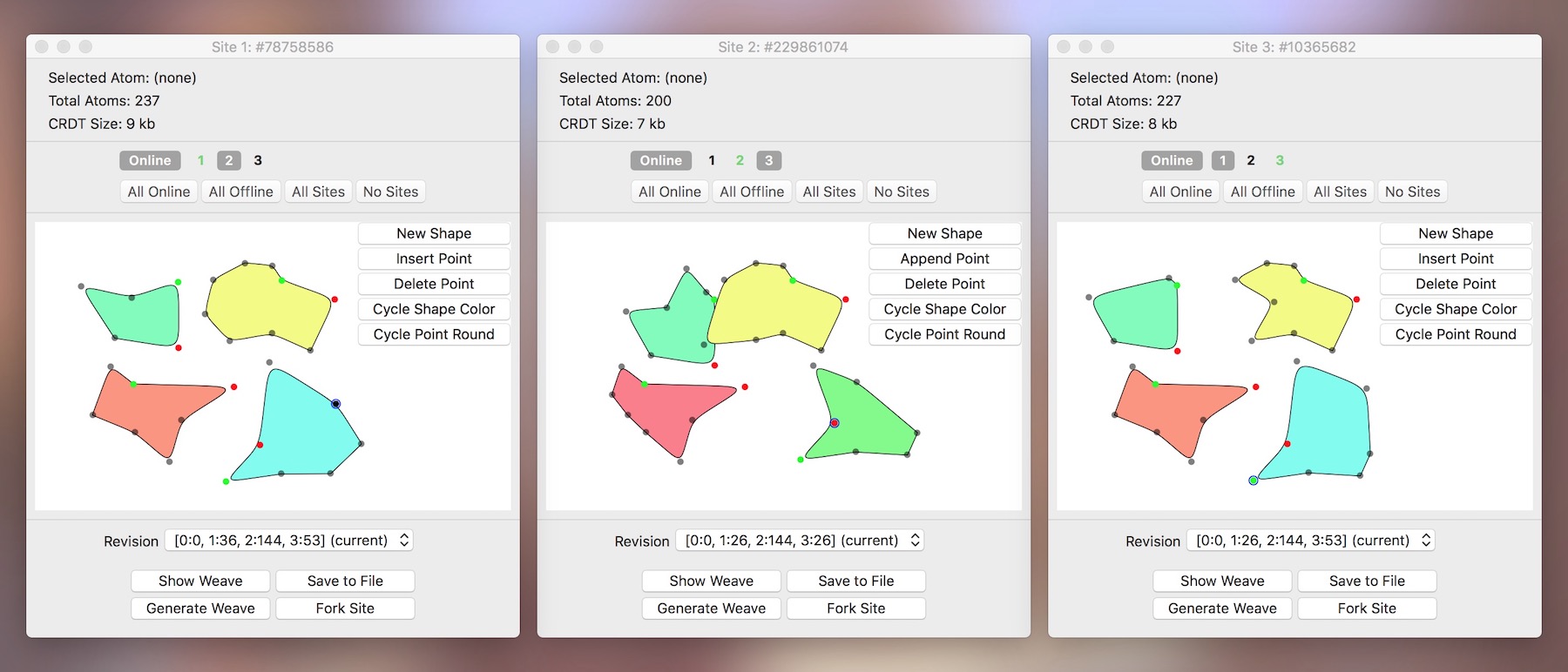
Data Laced with History: Causal Trees & Operational CRDTs
An in-depth exploration of a new class of expressive, performant, and intuitive CRDTs, together with macOS and iOS sample code.
About Causal Islands
Causal Islands is about connecting people across industries, disciplines, and communities to share, design, and learn about the future of computing together.

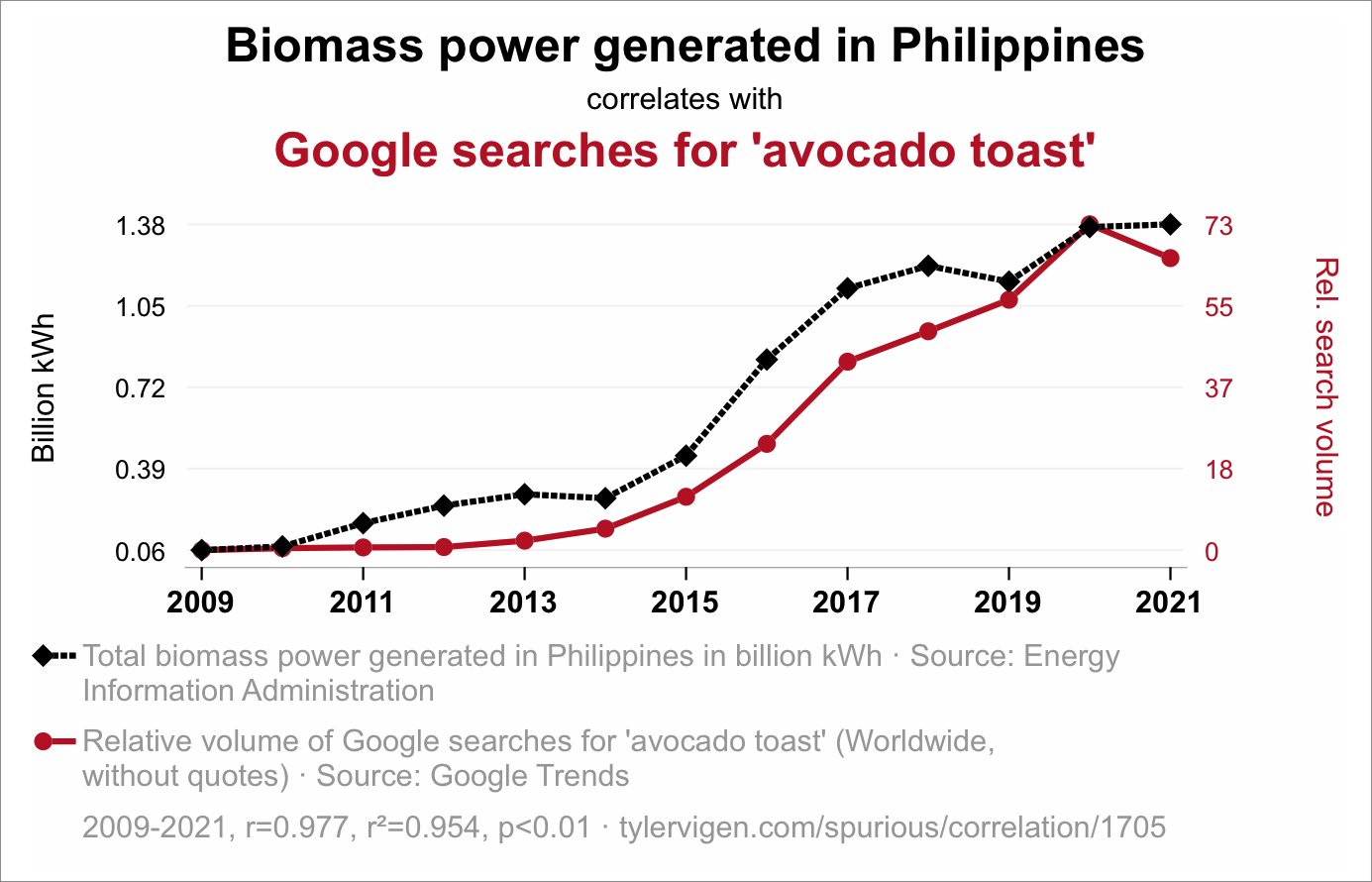
Spurious Correlations
For his Spurious Correlations project, Tyler Vigen compares data sets that are the very definition of “correlation is not causation”. For instance, the number o
The central role of the propensity score in observational studies for causal effects
Abstract. The propensity score is the conditional probability of assignment to a particular treatment given a vector of observed covariates. Both large and