


Businesses hoping to survive over the long term will have to remake themselves into better competitors at least once along the way. These efforts have gone under many banners: total quality management, reengineering, rightsizing, restructuring, cultural change, and turnarounds, to name a few. In almost every case, the goal has been to cope with a new, more challenging market by changing the way business is conducted. A few of these endeavors have been very successful. A few have been utter failures. Most fall somewhere in between, with a distinct tilt toward the lower end of the scale. John P. Kotter is renowned for his work on leading organizational change. In 1995, when this article was first published, he had just completed a ten-year study of more than 100 companies that attempted such a transformation. Here he shares the results of his observations, outlining the eight largest errors that can doom these efforts and explaining the general lessons that encourage success. Unsuccessful transitions almost always founder during at least one of the following phases: generating a sense of urgency, establishing a powerful guiding coalition, developing a vision, communicating the vision clearly and often, removing obstacles, planning for and creating short-term wins, avoiding premature declarations of victory, and embedding changes in the corporate culture. Realizing that change usually takes a long time, says Kotter, can improve the chances of success.
The 8-Step Process for Leading Change | Dr. John Kotter
The 8-Step Process for Leading Change is an award-winning strategy by Dr. John Kotter from Leading Change & has transformed countless organizations.


Reinventing Organizations
The Surprising Value of Obvious Insights | MIT Sloan Management Review
Confirming what people already believe can sometimes help organizations overcome barriers to change.

"Ten Areas of Technological Change", John Smart, 2012
Leadership of Technological Change: Ten Areas of Strategic Disruption, Opportunity, and Threat
What Is Strategy?
Today’s dynamic markets and technologies have called into question the sustainability of competitive advantage. Under pressure to improve productivity, quality, and speed, managers have embraced tools such as TQM, benchmarking, and re-engineering. Dramatic operational improvements have resulted, but rarely have these gains translated into sustainable profitability. And gradually, the tools have taken the place of strategy. In his five-part article, Michael Porter explores how that shift has led to the rise of mutually destructive competitive battles that damage the profitability of many companies. As managers push to improve on all fronts, they move further away from viable competitive positions. Porter argues that operational effectiveness, although necessary to superior performance, is not sufficient, because its techniques are easy to imitate. In contrast, the essence of strategy is choosing a unique and valuable position rooted in systems of activities that are much more difficult to match. Porter thus traces the economic basis of competitive advantage down to the level of the specific activities a company performs. Using cases such as Ikea and Vanguard, he shows how making trade-offs among activities is critical to the sustainability of a strategy. Whereas managers often focus on individual components of success such as core competencies or critical resources, Porter shows how managing fit across all of a company’s activities enhances both competitive advantage and sustainability. While stressing the role of leadership in making and enforcing clear strategic choices, Porter also offers advice on how companies can reconnect with strategies that have become blurred over time.

Many Strategies Fail Because They’re Not Actually Strategies
Many strategy execution processes fail because “new strategies” are often not strategies at all. A real strategy involves a clear set of choices that define what the firm is going to do and what it’s not going to do. Many strategies fail to get implemented because they do not represent such a set of clear choices. And many so-called strategies are in fact goals. “We want to be the number one or number two in all the markets in which we operate” is one of those. It does not tell you what you are going to do; all it does is tell you what you hope the outcome will be. But you’ll still need a strategy to achieve it. Another reason why many implementation efforts fail is that executives see it as a pure top-down, two-step process: “The strategy is made; now we implement it.” That’s unlikely to work. A successful strategy execution process is seldom a one-way trickle-down cascade of decisions.

Rebuilding product strategy for the next era
For tech leaders navigating change, this is how we’re doing it differently. By Suba Vasudevan, COO, Mozilla.

The Future of Organizations is Responsive
How to Unlock Your Organization’s Potential to Change the World

AMP IT UP: Leading for Hypergrowth by Raising Expectations, Increasing Urgency, and Elevating Intensity
Exponential growth is a critical goal for today's emerging ventures. And while such growth can feel elusive, game-changing transformation is within our
Experiment with Organizational Change Before Going All In
Your intuition is never enough.

A Practice in Emergence: Creating Resist’s New Theory of Change, Strategic Priorities, and Culture…
By Jax Gil

Crossing the River by Feeling the Stones - Simon Wardley
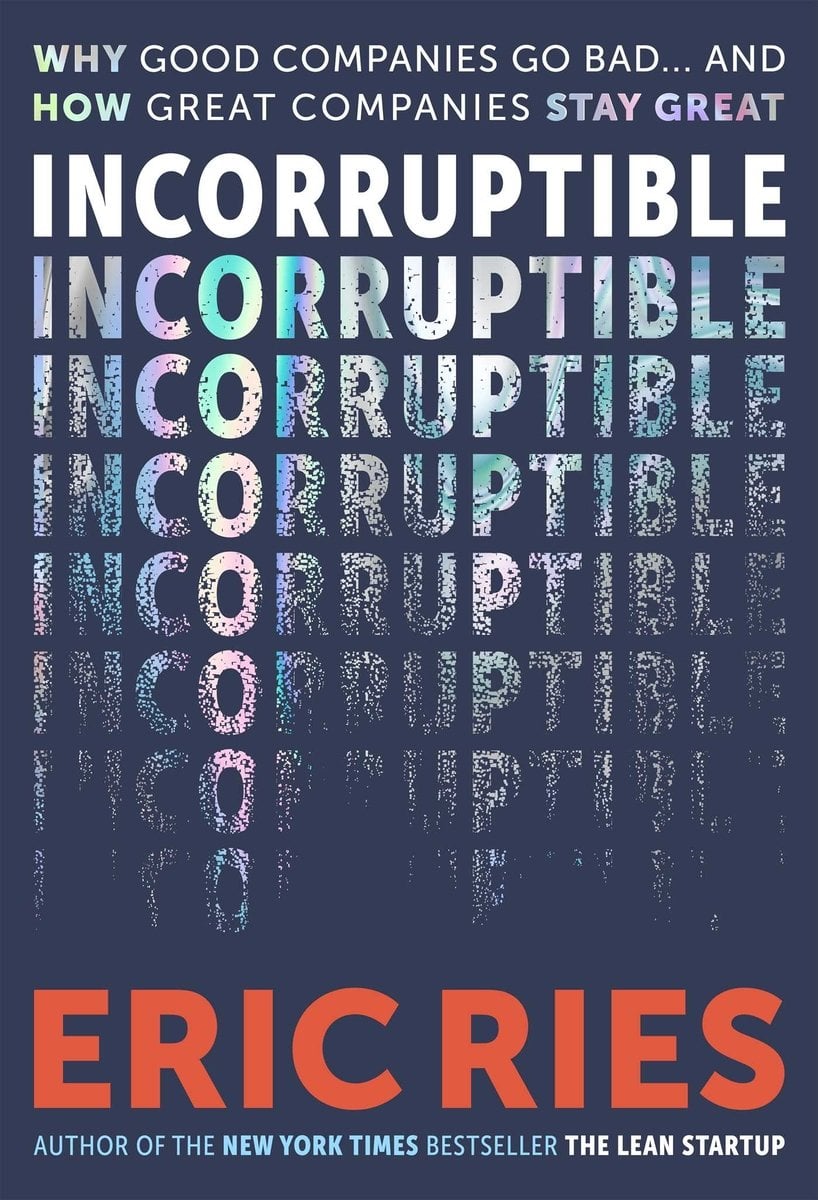
Incorruptible
Instant New York Times Bestseller "Incorruptible by Eric Ries is the best and most important business book of the year." —Dan Heath, NYT Bestselling Author & Podcast Host of "What It's Like To Be..." A Thinkers50 Best New Management Book | A Next Big Idea Club Must-Read From Eric Ries, creator of The Lean Startup, comes a bold and urgently needed rethink of how organizations are built—and why success itself so often turns companies against the people and principles that made them worth building in the first place. For decades, we've explained corporate corruption as a problem of bad actors, moral weakness, or isolated scandals. But that story doesn't match reality. Again and again, companies founded with strong ideals drift toward short-term thinking, extractive behavior, and mission abandonment—often despite the best intentions of the people inside them. Incorruptible argues that this failure is not primarily ethical. It is structural. As organizations grow, the systems that govern them—ownership, incentives, charters, accountability, and decision-making—quietly reshape behavior. When those systems are poorly designed, even principled leaders are pushed toward outcomes they never wanted. Success itself becomes a form of financial gravity, bending companies away from their original purpose. Drawing on two decades of work with founders, CEOs, investors, and institution builders, Ries shows how these failures arise predictably—and how they can be prevented. He reframes corporate governance not as bureaucracy or compliance, but as a creative and strategic act at the heart of building enduring, mission-controlled companies. At a moment when trust in business is eroding, Incorruptible offers a clear-eyed diagnosis and a practical blueprint for change. Success alone will not protect what matters most. Only incorruptible design can. Get more information and bonus materials at incorruptible.co.
Turnaround Management: Does Your Company Need A New Captain? | TechCrunch
When thinking of business "turnaround," names like McDonald’s and Samsung come to mind as they struggle to navigate the changing market and waning consumer interest. Yet, a business at any stage of growth may require a turnaround or ‘pivot’ on its core strategy. This is a concept with which many startup founders are familiar.
