


An article from McGill Law Journal / Revue de droit de McGill, on Érudit.
The Fiduciary Obligation
ROBERT FLANNIGAN; The Fiduciary Obligation, Oxford Journal of Legal Studies, Volume 9, Issue 3, 1 October 1989, Pages 285–322, https://doi.org/10.1093/ojls

The Critical Resource Theory of Fiduciary Duty
This Article proposes a new theory to unify the law of fiduciary duty. The prevailing view holds that fiduciary law is atomistic, arising for varied reasons in

Chapter Eight—Technology and the Law: The Automobile · University of Wisconsin Law School Digital Repository · University of Wisconsin Law School Digital Repository
University of Wisconsin Law School Law Library 975 Bascom Mall Madison, WI 53706 608-262-3394
Adequate indigent defense should be a top priority
This past weekend, I published a story for The Commonwealth assessing Mississippi’s 23 circuit court districts’ indigent defense plans — that is how each of those courts provides lawyers to indigent, or poor, criminal defendants charged with a felony who can’t afford their own counsel.
Consumption, Debt, and Portfolio Choice: Testing the Effects of Bankruptcy Law
In the United States, consumer bankruptcy (Chapter 7 and Chapter 13) is designed to provide debtors a fresh start. Broadly speaking, after a household successfully files a bankruptcy petition, its unsecured debts are erased, but it must forfeit any assets above an exemption level determined by law. Laws regulating bankruptcy are a complex mix of state and federal rules. While the specific legal details are beyond the scope of this essay, in general, state laws set the exemption levels above which households forfeit assets; these range from exemptions as low as $75 to more than $100,000 (or, indeed, potentially unlimited levels).1
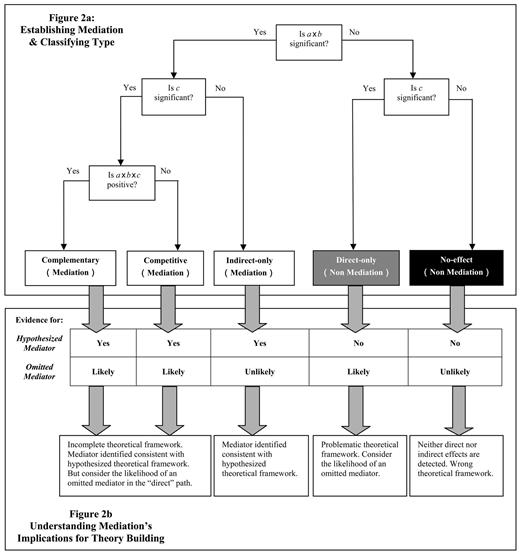
Reconsidering Baron and Kenny: Myths and Truths about Mediation Analysis
Abstract. Baron and Kenny’s procedure for determining if an independent variable affects a dependent variable through some mediator is so well known that i
Les inégalités aux Etats-Unis (5/5) : une financiarisation prédatrice
traduction française du billet de blog "Predatory financialization. Understanding Inequality: Part V" de Paul Krugman

Meet the Author: Alicia Solow-Niederman
Alicia Solow-NiedermanAssociate Professor of LawGeorge Washington University Law School

Law.com | The Premier Source for Global Legal News & Analysis
Law.com delivers news, insights and resources that allow legal professionals to anticipate opportunities, adapt to change, and prepare for future success.
Public Benefit Limited Liability Company: The New Entity on the Block
A public benefit LLC has additional requirements to be transparent, accountable and uphold its public benefit purpose while maintaining fiduciary duties.

When Does Worker Ownership Work? ESOPs, Law Firms, Codetermination, and Economic Democracy
Price and Sovereignty Harvard Law Review
[W]e must not overlook the actual fact that dominion over things is also imperium over our fellow human beings. — Professor Morris R. Cohen,...

La taxation des transactions financières : une opportunité à réinventer
Les débats autour de la taxation des transactions financières passent peut-être à côté de l’essentiel. Alors qu’on a tendance à se focaliser sur son taux, c’est en changeant les modalités de collecte qu’on pourrait améliorer son rendement.

Combattre la pauvreté est un investissement qui rapporte, affirme une étude publiée par un collectif d’associations de solidarité
Selon une modélisation, publiée par le collectif Alerte, la persistance de la pauvreté coûte très cher aux finances publiques, tandis qu’un effort additionnel pour la combattre serait remboursé en dix ans.

Comment la justice négociée est devenue prisée des cols blancs
Ces procédures sont devenues un outil incontournable de la réponse pénale à la corruption et à la fraude fiscale. Le dispositif reste très discuté : est-ce un instrument au service de l’efficacité judiciaire ou l’illustration d’une justice à deux vitesses ? Récit de ses coulisses par ses acteurs.

Tax and the Law of Market Cycles
<p>The signature development in financial regulation over the past two decades has been the macroprudential turn: the recognition that healthy financial conditi