


Can we teach a neural network to perform like a human?
Making a Neural Synthesizer Instrument
In a previous post, we described the details of NSynth (Neural Audio Synthesis), a new approach to audio synthesis using neural networks. We hinted at furthe...

Composing Music With Recurrent Neural Networks
Writeup for my first major machine learning project.
Jordan Rudess and MIT’s jam_bot: A New Era of Human-AI Musical Collaboration
As We May Think Credit: Mostafa 'Neo' Mohsenvand

Deep learning for assisting the process of music composition (part 1)
This is part 1 of my explorations of using deep learning for assisting the process of music composition. In this part, I look at some almost-winning output of a model trained by deep learning metho…

Machines learn to play Tabla — Gaurav Trivedi
Using Karpathy's char-RNN to train a recurrent neural network on tabla compositions, generating new rhythmic sequences and exploring whether deep learning can capture the grammar of Indian classical percussion.

A foundation model of vision, audition, and language for in-silico neuroscience | Research - AI at Meta
Cognitive neuroscience is fragmented into specialized models, each tailored to specific experimental paradigms, hence preventing a unified model of...
Learning Synths | Hacker News
It teaches you step by step all the aspects of a synth engine: oscillators, wave shapes, amplitude, filters, modulation, unison, FM… But most of all it trains your ear, which allows you to replicate the sound in your head and build it from scratch.
Deep Learning for Guitar Effect Emulation
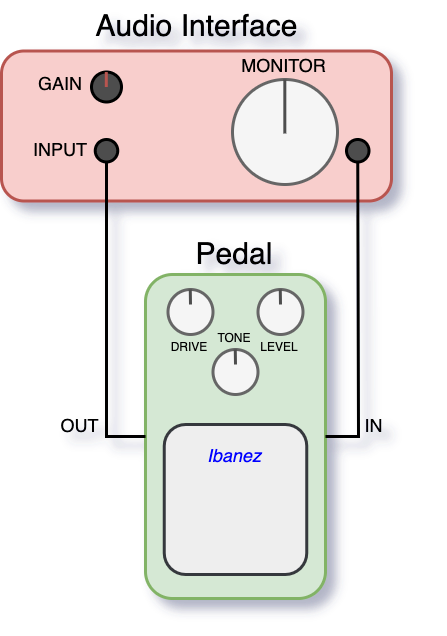
Since the 1940s, electric guitarists, keyboardists, and other instrumentalists have been using effects pedals, devices that modify the sound of the original audio source. Typical effects include distortion, compression, chorus, reverb, and delay. Early effects pedals consisted of basic analog circuits, often along with vacuum tubes, which were later replaced with transistors. Although many pedals today apply effects digitally with modern signal processing techniques, many purists argue that the sound of analog pedals can not be replaced by their digital counterparts. We’ll follow a deep learning approach to see if we can use machine learning to replicate the sound of an iconic analog effect pedal, the Ibanez Tube Screamer. This post will be mostly a reproduction of the work done by Alec Wright et al. in Real-Time Guitar Amplifier Emulation with Deep Learning (Wright et al., 2020).
AI learns language from skewed sources. That could change how we humans speak – and think | Bruce Schneier
Large language models aren’t trained on real-life conversations. As we encounter their language, it could affect our own

JacobPlaster/ann-writer
An artificial machine learning program that attempts to impersonate the writing style of any given text training set
Our New SAM Audio Model Transforms Audio Editing
We're introducing SAM Audio, a state-of-the-art AI model that enables you to segment sound.
lfnoise/sapf
Sound As Pure Form - a Forth-like language for audio synthesis using lazy lists and APL-like auto-mapping.
Neural Computer: A New Machine Form Is Emerging
A research essay on Neural Computer: how it differs from agents, world models, and conventional computers; what runtime and CNC would mean; what current prototypes already show; and how software and hardware might change.
I trained a cellular automaton to write English, using no neural net at all
Each word or letter is written into a grid of integer cells. Learned rules rewrite the cells, and the next word is read from the grid. You can watch…