


Science fiction from the very literary to the very pulpy has pondered whether humans are doomed to oppress each other because we live in a hierarchical

A quote from 1984
In the long run, a hierarchical society was only possible on a basis of poverty and ignorance.

Why hierarchy creates a destructive force within the human psyche (by dr. Robert Sapolsky)
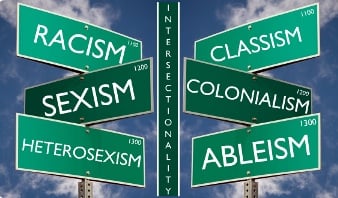
Kyriarchy 101: We’re Not Just Fighting the Patriarchy Anymore - Everyday Feminism
We need a word to describe the complex social order that keeps these intersecting oppressions in place. Kyriarchy is an excellent word for this concept.
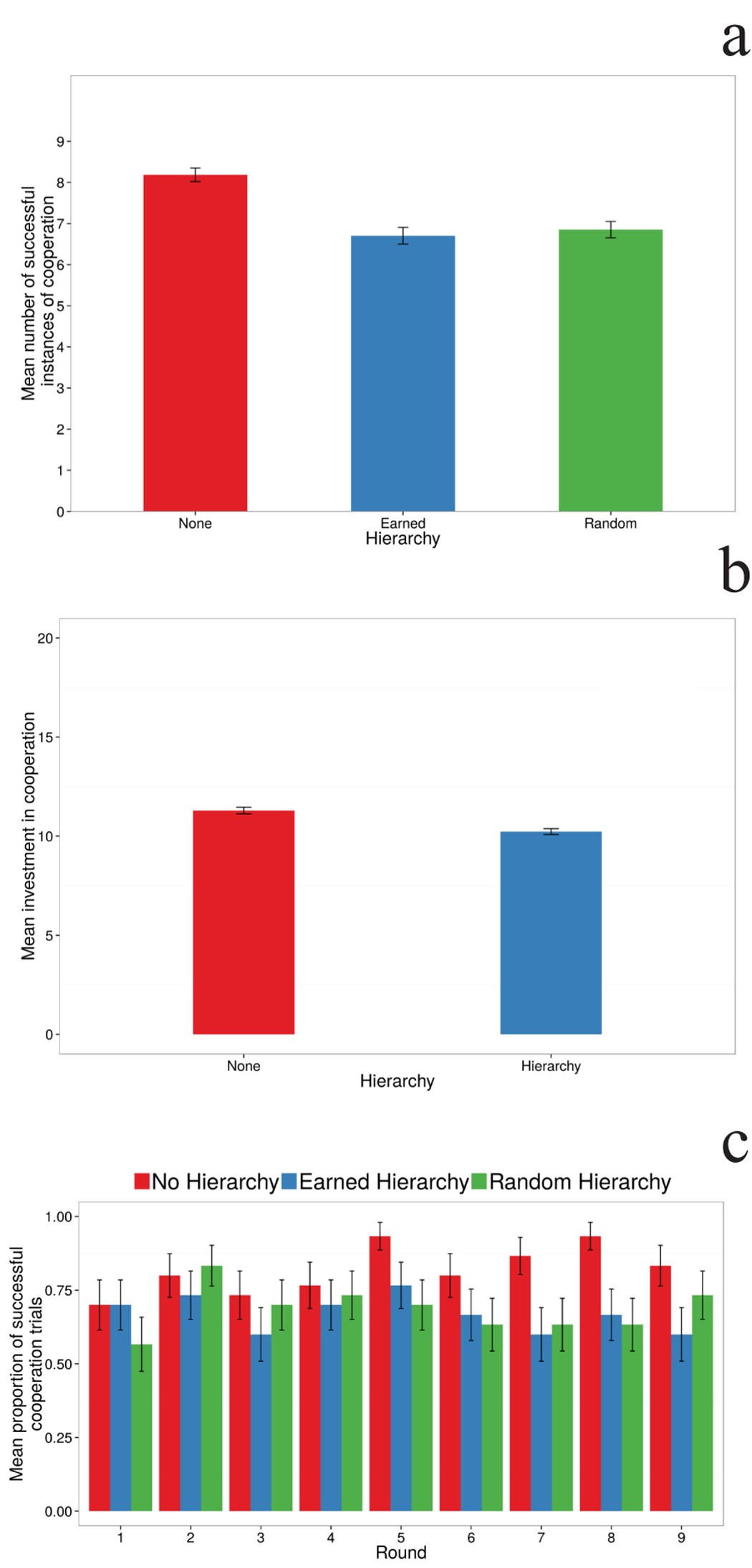
Hierarchy is Detrimental for Human Cooperation
Studies of animal behavior consistently demonstrate that the social environment impacts cooperation, yet the effect of social dynamics has been largely excluded from studies of human cooperation. Here, we introduce a novel approach inspired by nonhuman primate research to address how social hierarchies impact human cooperation. Participants competed to earn hierarchy positions and then could cooperate with another individual in the hierarchy by investing in a common effort. Cooperation was achieved if the combined investments exceeded a threshold and the higher ranked individual distributed the spoils unless control was contested by the partner. Compared to a condition lacking hierarchy, cooperation declined in the presence of a hierarchy due to a decrease in investment by lower ranked individuals. Furthermore, hierarchy was detrimental to cooperation regardless of whether it was earned or arbitrary. These findings mirror results from nonhuman primates and demonstrate that hierarchies are detrimental to cooperation. However, these results deviate from nonhuman primate findings by demonstrating that human behavior is responsive to changing hierarchical structures and suggests partnership dynamics that may improve cooperation. This work introduces a controlled way to investigate the social influences on human behavior and demonstrates the evolutionary continuity of human behavior with other primate species.
Technology is Society Made Durable
Is it possible to devise a set of concepts that could replace the technology/society divide? This set of new concepts - association and substitution - might help to rephrase some of the traditional questions of social order and especially that of the durability of domination of power. However, instead of using different tools to analyse power and weakness, it is argued that power and domination are simply different values of variables that should be studied in their whole range. By reconstructing networks it is argued that a full description of power and domination may be obtained.

The Ecology of Freedom
Murray Bookchin The Ecology of Freedom The Emergence and Dissolution of Hierarchy 1982 Converted September 2018; footnotes, section spacing, and...
Nurturing our humanity: how domination and partnership shape our brains, lives, and future
Nurturing Our Humanity offers a new perspective on our …

Nurturing Our Humanity: How Domination and Partnership Shape Our Brains, Lives, and Future - The Center for Partnership Systems
By Riane Eisler and Douglas P. Fry Nurturing Our Humanity: How Domination and Partnership Shape Our Brains, Lives, and Future, by Riane Eisler and Douglas P. Fry, holds the key to a clear perspective on our personal and social options in today’s world, showing how to structure our environments – from family and gender relations […]

Reimagining Ourselves at the End of Our World: Kinship, Interconnection, and Spirituality in the Metacrisis - The Great Simplification
Over the past decade, the world has become increasingly chaotic and uncertain – and so, too, has our cultural vision for the future. While the events we face now may feel unprecedented, they are rooted in much deeper patterns, which humanity has been playing out for millennia. If we take the time to understand past trends, we can also employ practices and philosophies that might counteract them – such as focusing on kinship, intimacy, and resilience – to help pave the way for a better future. How might we nurture the foundations of a different kind of society, even while the end of our current civilization plays out around us?

The Tyranny of Structurelessness
"The Tyranny of Structurelessness" is an essay by American feminist Jo Freeman that concerns power relations within radical feminist collectives. The essay, inspired by Freeman's experiences in a 1960s women's liberation group,[1][2] reflected on the feminist movement's experiments in resisting leadership hierarchy and structured division of labor. This lack of structure, Freeman writes, disguised an informal, unacknowledged, and unaccountable leadership, and in this way ensured its malefaction by denying its existence.[3] As a solution, Freeman suggests formalizing the existing hierarchies in the group and subjecting them to democratic control.
We Interrupt This Program . . .
During liminal periods of all kinds, social hierarchies may be reversed or temporarily dissolved, continuity of tradition may become…

Systems of Global Governance in the Era of Human-Machine Convergence
Technology is increasingly shaping our social structures and is becoming a driving force in altering human biology. Besides, human activities already proved to have a significant impact on the Earth system which in turn generates complex feedback loops between social and ecological systems. Furthermore, since our species evolved relatively fast from small groups of hunter-gatherers to large and technology-intensive urban agglomerations, it is not a surprise that the major institutions of human society are no longer fit to cope with the present complexity. In this note we draw foundational parallelisms between neurophysiological systems and ICT-enabled social systems, discussing how frameworks rooted in biology and physics could provide heuristic value in the design of evolutionary systems relevant to politics and economics. In this regard we highlight how the governance of emerging technology (i.e. nanotechnology, biotechnology, information technology, and cognitive science), and the one of climate change both presently confront us with a number of connected challenges. In particular: historically high level of inequality; the co-existence of growing multipolar cultural systems in an unprecedentedly connected world; the unlikely reaching of the institutional agreements required to deviate abnormal trajectories of development. We argue that wise general solutions to such interrelated issues should embed the deep understanding of how to elicit mutual incentives in the socio-economic subsystems of Earth system in order to jointly concur to a global utility function (e.g. avoiding the reach of planetary boundaries and widespread social unrest). We leave some open questions on how techno-social systems can effectively learn and adapt with respect to our understanding of geopolitical complexity.

NETWORKED MINDS: Where human evolution is heading
by Dirk Helbing [1] Having studied the technological and social forces shaping our societies, we are now turning to the evolutionary for...

Eusociality
Eusociality is the highest level of organization of sociality. It is defined by the following characteristics: cooperative brood care, overlapping generations within a colony of adults, and a division of labor into reproductive and non-reproductive groups. The division of labor creates specialized behavioral groups within an animal society, sometimes called castes. Eusociality is distinguished from all other social systems because individuals of at least one caste usually lose the ability to perform behaviors characteristic of individuals in another caste. Eusocial colonies can be viewed as superorganisms.

Relationship Anarchy

The principles of Anarchism, applied to our relationships. Will also discuss amatonormativity, which tends to also pull in acespec.

A love story

Be jealous. Make demands. Want more.
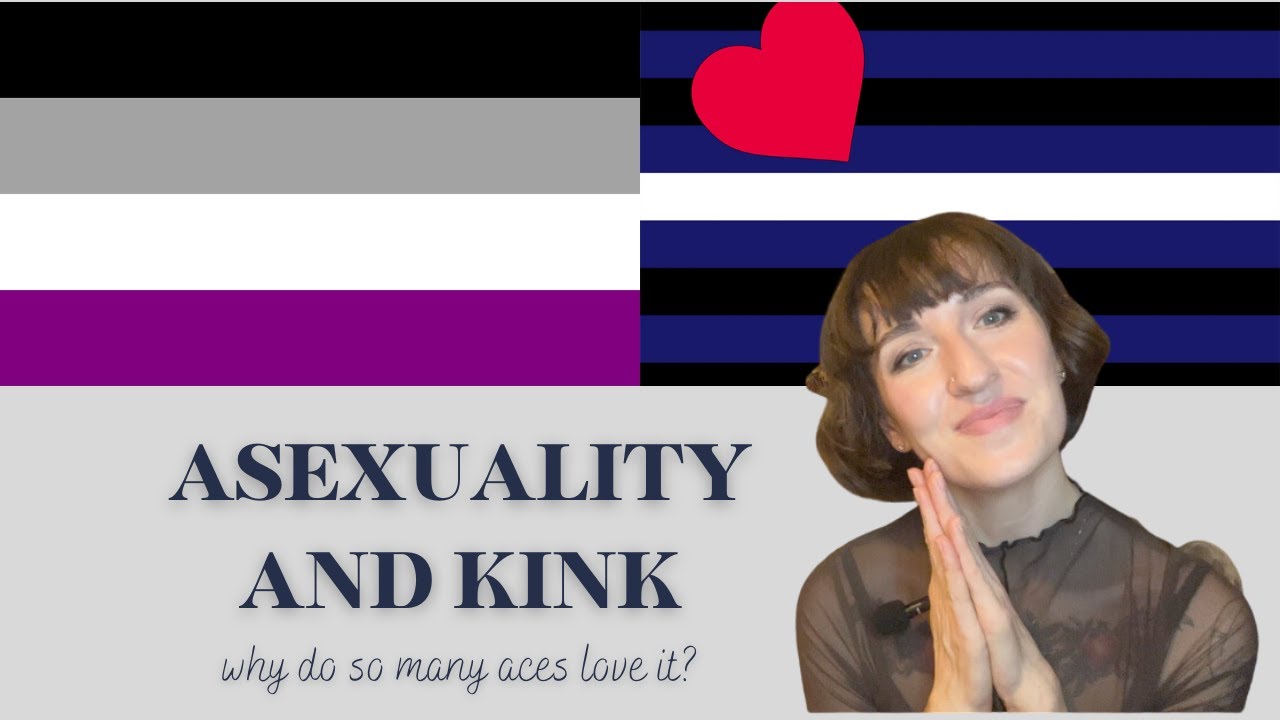
Asexuality and Kink: Why Do So Many Aces Love It?

A Theory of Messaging Styles & Ghosting.

Relationship Design

A Typology of Insecurities in Non-monogamy