


For the past 80 million years, a tiny water-borne organism called the bdelloid rotifer has lived and thrived without the benefits of sexual reproduction.
A Cell So Minimal That It Challenges Definitions of Life | Quanta Magazine
The newly described microbe represents a world of parasitic, intercellular biodiversity only beginning to be revealed by genome sequencing.
A Biology and Business Worthy of Life – The Paradigm Shift of Organisms and Organisations
I would like in this article to first bring your attention to a project from Stephen L. Talbott who is a Senior Researcher and Publications Editor at The Nature Institute. The project is titled Bio…

Biological Sex is a social construct
I recently tweeted, as an aside, that biological sex is a social construct, and the backlash and attacks were swift, incredulous and heavily reliant upon very basic biology. There is a common perce…

The Octopus: An Alien Among Us
Self-replicating, bacterial life first appeared on Earth about 4 billion years ago. For most of Earth’s history, life remained at the single-celled level, and nothing like a nervous system existed …

What constitutes an individual organism in biology? | Aeon Essays
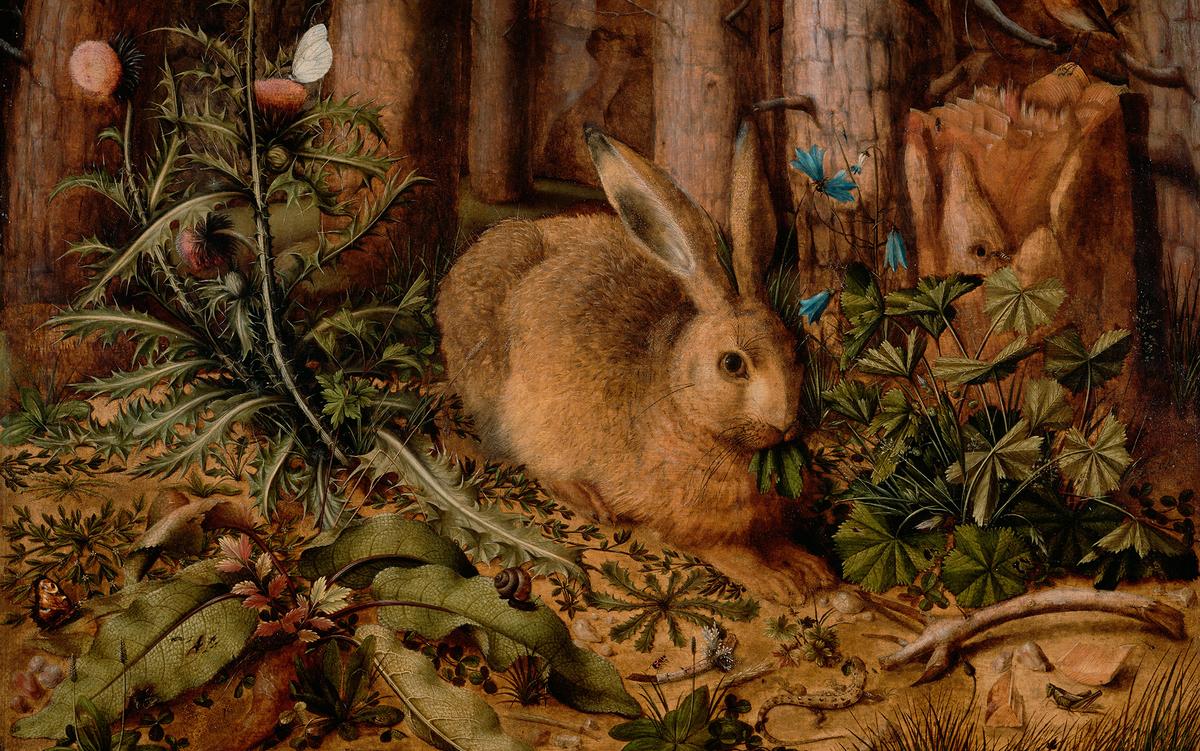
Working out where one hare ends and another begins is easy; a siphonophore, not so much. What is an individual in nature?
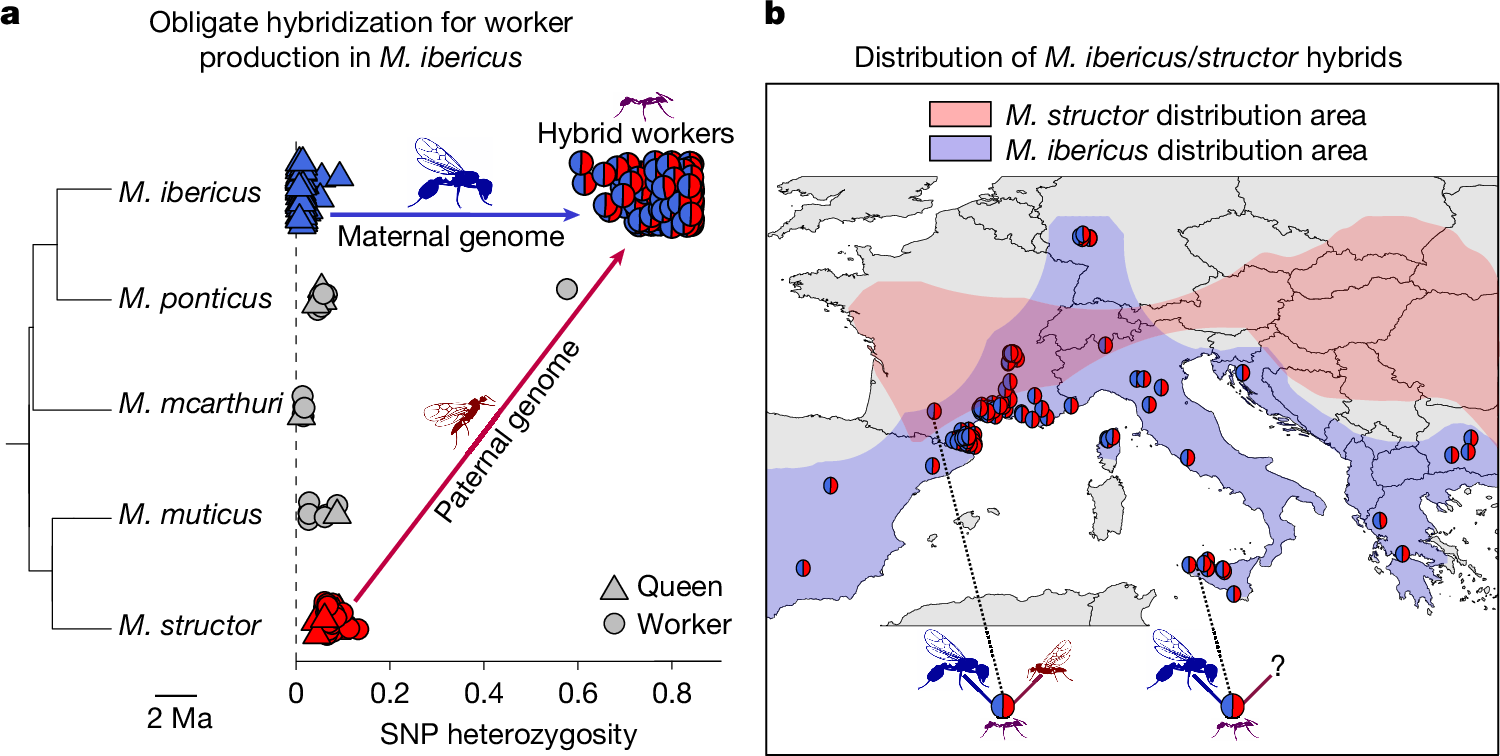
One mother for two species via obligate cross-species cloning in ants
Living organisms are assumed to produce same-species offspring1,2. Here, we report a shift from this norm in Messor ibericus, an ant that lays individuals from two distinct species. In this life cycle, females must clone males of another species because they require their sperm to produce the worker caste. As a result, males from the same mother exhibit distinct genomes and morphologies, as they belong to species that diverged over 5 million years ago. The evolutionary history of this system appears as sexual parasitism3 that evolved into a natural case of cross-species cloning4,5, resulting in the maintenance of a male-only lineage cloned through distinct species’ ova. We term females exhibiting this reproductive mode as xenoparous, meaning they give birth to other species as part of their life cycle.
Organism without a brain creates external memories for navigation
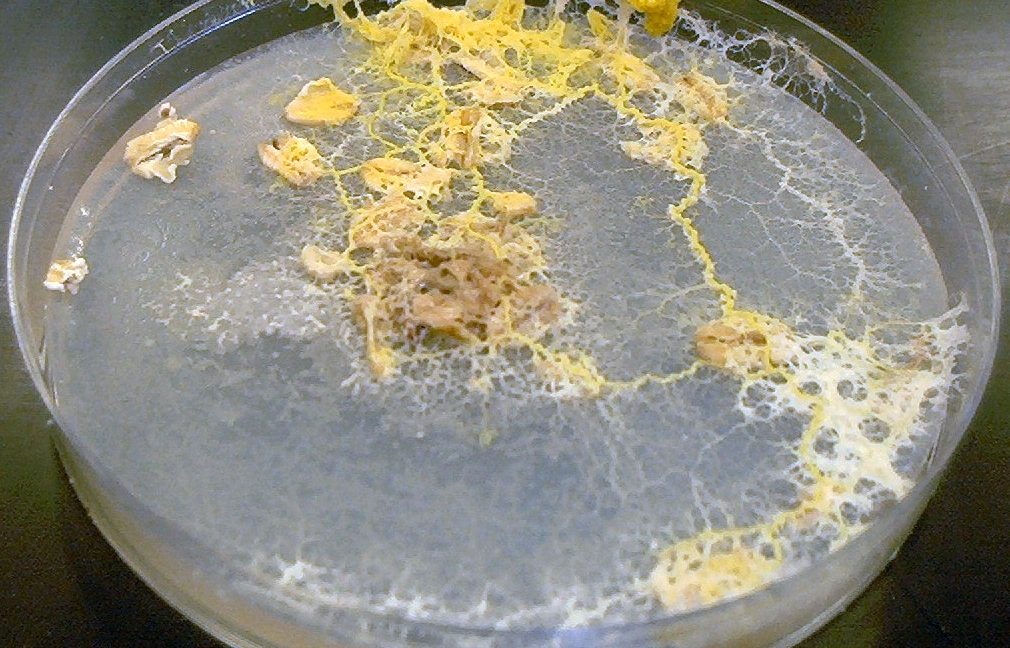
The slime mold stores a record of where it's been using, well, slime.
A cellular entity retaining only its replicative core: Hidden archaeal lineage with an ultra-reduced genome
Abstract Defining the minimal genetic requirements for cellular life remains a fundamental question in biology. Genomic exploration continually reveals novel microbial lineages, often exhibiting extreme genome reduction, particularly within symbiotic relationships. Here, we report the discovery of Candidatus Sukunaarchaeum mirabile, a novel archaeon with an unprecedentedly small genome of only 238 kbp —less than half the size of the smallest previously known archaeal genome— from a dinoflagellate-associated microbial community. Phylogenetic analyses place Sukunaarchaeum as a deeply branching lineage within the tree of Archaea, representing a novel major branch distinct from established phyla. Environmental sequence data indicate that sequences closely related to Sukunaarchaeum form a diverse and previously overlooked clade in microbial surveys. Its genome is profoundly stripped-down, lacking virtually all recognizable metabolic pathways, and primarily encoding the machinery for its replicative core: DNA replication, transcription, and translation. This suggests an unprecedented level of metabolic dependence on a host, a condition that challenges the functional distinctions between minimal cellular life and viruses. The discovery of Sukunaarchaeum pushes the conventional boundaries of cellular life and highlights the vast unexplored biological novelty within microbial interactions, suggesting that further exploration of symbiotic systems may reveal even more extraordinary life forms, reshaping our understanding of cellular evolution. Graphical Abstract

Future of the human climate niche | PNAS
All species have an environmental niche, and despite technological advances, humans are unlikely to be an exception. Here, we demonstrate that for ...

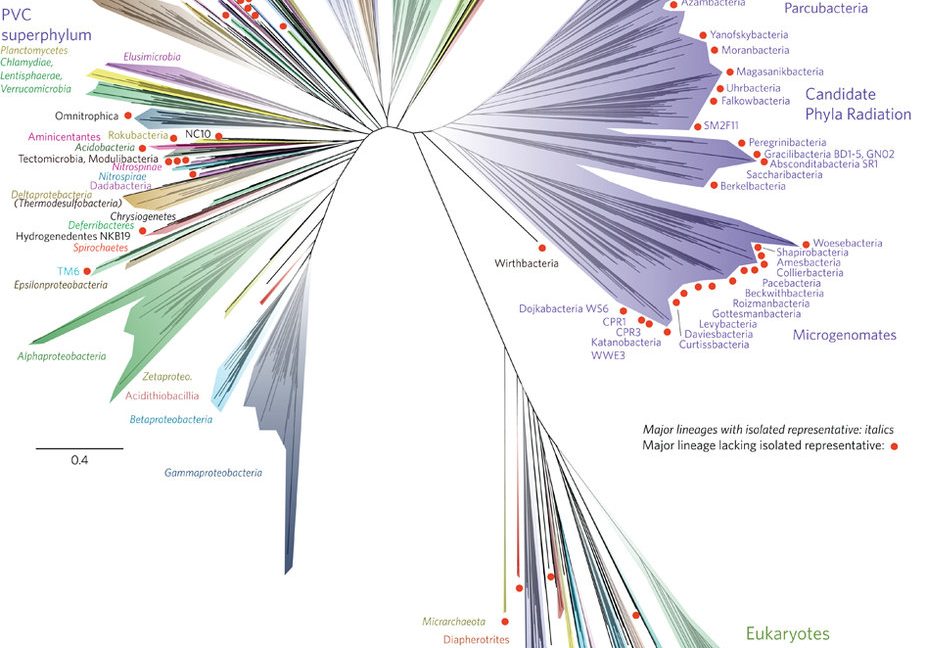
Tree of life shows that trees are a rarity
A new tree of life shows that a poorly understood group of bacteria is enormous.
jsomers.net | I should have loved biology
In biology class, biology wasn't presented as a quest for the secrets of life. The textbooks wrung out the questing.

A living agent · NODECODE
A living agent organism in Lisp. It becomes yours and evolves over time.
Sex Redefined: The Idea of 2 Sexes Is Overly Simplistic
Biologists now think there is a larger spectrum than just binary female and male

Symbiotic organs in insects: diversity, functional implications, and terminology
Abstract With over a million described species, insects represent the most successful group of animals on Earth. One of the drivers of insect diversity is their ability to engage in multifold beneficial symbioses with microorganisms, often involving specialized host organs to accommodate intra- or extracellular symbionts. The existence of such organs and their importance for sustaining and transmitting beneficial symbionts has been known for over a century, and specific terms have been established for categorizing organs harbouring intracellular bacteria (bacteriomes) or fungi (mycetomes), or cuticular crypts containing extracellular fungi (mycetangia). For others, however, general terms are lacking, e.g. organs containing extracellular bacteria associated with the cuticle or with the digestive tract. Furthermore, previously established terms have been misused in other contexts. Notably, ‘bacteriome’ has been increasingly employed in the microbiome field to refer to bacterial communities, instead of the term’s original meaning of specialized organs housing intracellular bacterial symbionts. Here, we review and categorize the diversity of symbiotic organs in insects and propose a unified terminology. Our hope is that this common language will facilitate communication and thereby support the field of symbiosis research in unravelling commonalities and differences in the evolution, ecology, development, physiology and molecular basis across symbiotic interactions. This article is part of the theme issue ‘Life in natural microcosms’.

Sex, Death and Mushrooms (Published 2015)
Contemplating mortality during a fungus-hunting expedition in a forest moving toward winter.
