At the Entertainment Weekly Brave New Heroes panel at Comic-Con yesterday, moderator Lynette Rice asked a panel full of men who have played an assortment
Social Constructs (or, 'What is A Woman, Really?')
On Agent Carter, Everybody's Preying On The Weak Minds Of Men
Considering that Agent Carter is a show about a female hero proving herself in a sexist world, it's fascinating how much of the storylines have turned out

Political Science and Transphobia
What It's Like Raising Money As A Woman In Silicon Valley
Editor's note: We don't publish many anonymous pieces on Forbes.com, but this compelling first-person account of sexism in the startup world merits an exception. I met the author several months ago and was floored by the stories she had to tell about her dealings with mostly male investors. Like many [...]

Agent Carter Has Become One of the Most Unique Stories in the Marvel Universe
Agent Carter is a show all about sexism, and particularly all about the notion that after World War II, women who had made a material contribution to the
Who's Afraid of Gender? (A Guide to Judith Butler)
Who's Afraid of Gender? (A Guide to Judith Butler)
Male-dominated subcultures and why they stay that way
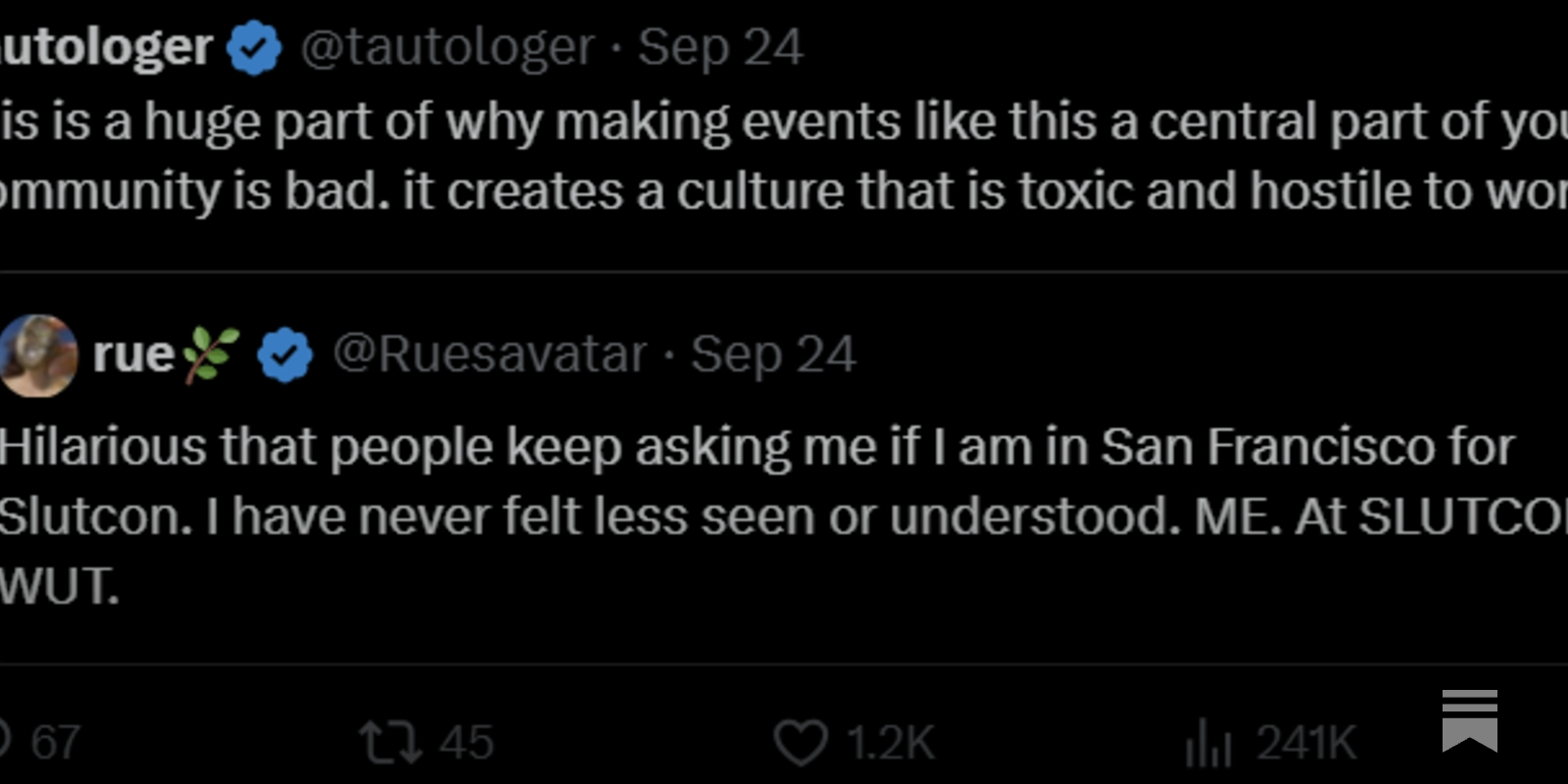
Slutcon, high school debate, EAs, rationalists, and you, the person reading this.
Insights into Sexism: Male Status and Performance Moderates Female-Directed Hostile and Amicable Behaviour
Gender inequality and sexist behaviour is prevalent in almost all workplaces and rampant in online environments. Although there is much research dedicated to understanding sexist behaviour, we have almost no insight into what triggers this behaviour and the individuals that initiate it. Although social constructionist theory argues that sexism is a response towards women entering a male dominated arena, this perspective doesn’t explain why only a subset of males behave in this way. We argue that a clearer understanding of sexist behaviour can be gained through an evolutionary perspective that considers evolved differences in intra-sexual competition. We hypothesised that female-initiated disruption of a male hierarchy incites hostile behaviour from poor performing males who stand to lose the most status. To test this hypothesis, we used an online first-person shooter video game that removes signals of dominance but provides information on gender, individual performance, and skill. We show that lower-skilled players were more hostile towards a female-voiced teammate, especially when performing poorly. In contrast, lower-skilled players behaved submissively towards a male-voiced player in the identical scenario. This difference in gender-directed behaviour became more extreme with poorer focal-player performance. We suggest that low-status males increase female-directed hostility to minimize the loss of status as a consequence of hierarchical reconfiguration resulting from the entrance of a woman into the competitive arena. Higher-skilled players, in contrast, were more positive towards a female relative to a male teammate. As higher-skilled players have less to fear from hierarchical reorganization, we argue that these males behave more positively in an attempt to support and garner a female player’s attention. Our results provide the clearest picture of inter-sexual competition to date, highlighting the importance of considering an evolutionary perspective when exploring the factors that affect male hostility towards women.
You can't "masculinity" your way out of oppression
Yep, Orphan Black's Male Clones Are Terrible Human Beings
The Castor clones come out to play in this week’s episode of Orphan Black, and their definition of “play” is just plain horrible. Plus, while most of our
If we liberate men’s sexuality, the war against women can end
As a dominatrix, men come to me to explore a sexuality that is socially forbidden. While patriarchy endures, they will never be free to express who they are, or treat women as they should be treated.

What do we want from Black women on screen?
From Teyana Taylor’s Oscar-nominated turn in One Battle After Another to Industry’s ruthless Harper Stern, Black women are taking on some of the most morally complex roles on screen. But what does “good” representation really mean and must it always be aspirational? Michaela Makusha investigates.

Gender Trouble: Feminism and the Subversion of Identity
One of the most talked-about scholarly works of the past fifty years, Judith Butler’s Gender Trouble is as celebrated as it is controversial.Arguing that traditional feminism is wrong to look to a natural, 'essential' notion of the female, or indeed of sex or gender, Butler starts by questioning the category 'woman' and continues in this vein with examinations of 'the masculine' and 'the feminine'. Best known however, but also most often misinterpreted, is Butler's concept of gender as a reiterated social performance rather than the expression of a prior reality.Thrilling and provocative, few other academic works have roused passions to the same extent.

Megan | @megievalist on Twitter / X
The girls need to drop their resentment against men!These female characters, by virtue of sheer skill and discipline, are able to perform on par with male characters whose talent is attributed to divine intervention or external influence.Perspective issue! https://t.co/EmEgtU0kjx— Megan | @megievalist (@megievalist) November 1, 2026
'love island' and the mirror of red pill ideology in modern dating
red pill masculinity, the objectification of women through entertainment ecosystems—and how it helps script modern heterosexual dating culture