


Do you spend more than seven hours a day parked in front of a computer monitor? Results from a newly published study suggest you could be stripping your
Computer Vision Syndrome
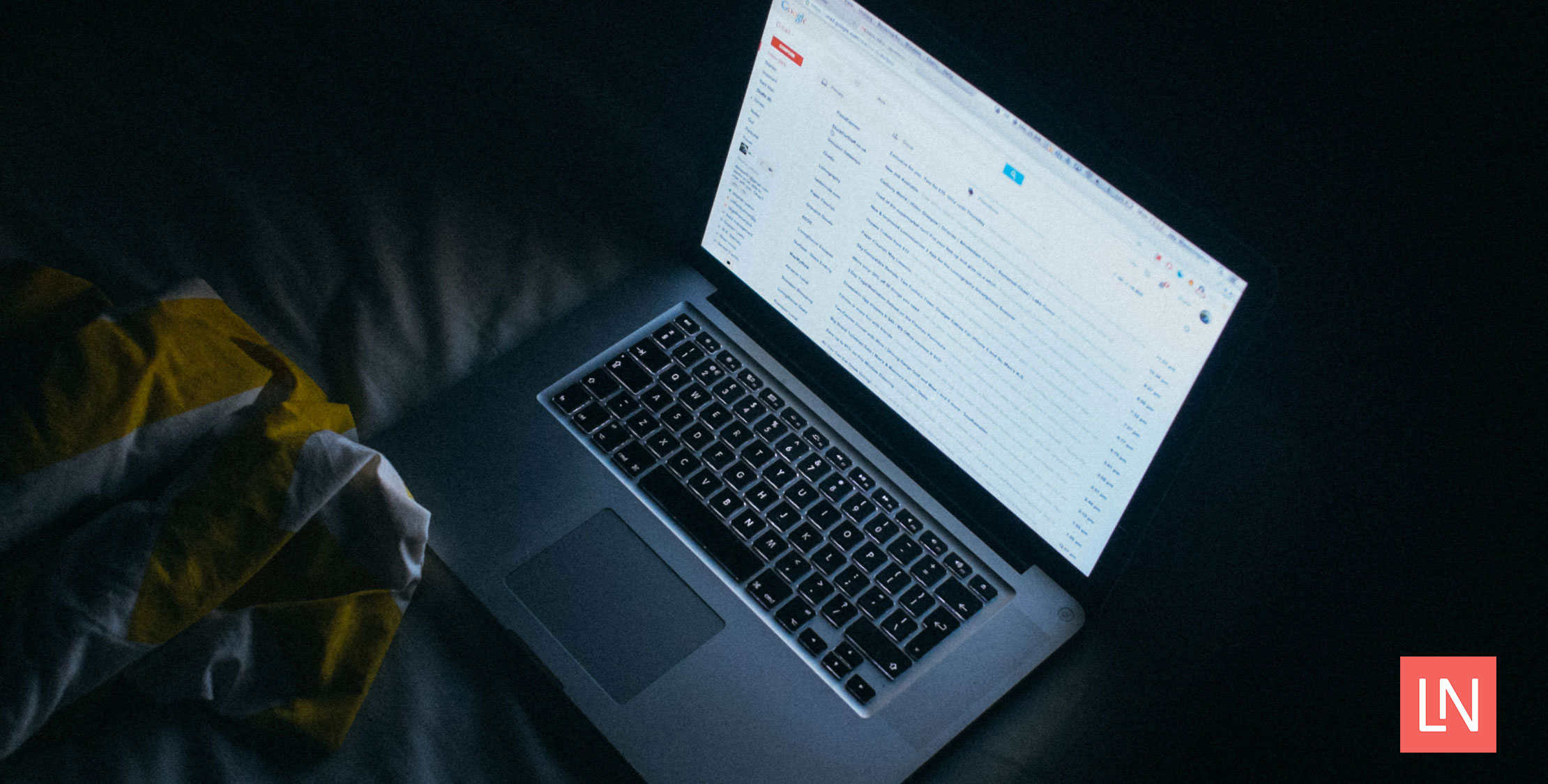
In no point in human history have people been staring at bright screens just a few feet from their face like they are today. Computer vision syndrome or CVS (no…
How to improve your WFH lighting to reduce eye strain | Russell Baylis - Designer
I work from home everyday, I am susceptible to eye strain, eye pain, and dizziness. Having a working environment that’s as easy on my eyes as possible is of critical importance. I'd like to share what I've learned over the years in hopes that it can be helpful to you if you work from home, and like many, have experienced WFH eye strain.
Declining eyesight can be improved by looking at red light, pilot study says | CNN
Just a few minutes of gazing into a small red light each day may help stave off eyesight decline as we age, a new study finds. If the results are replicated in future studies, the work could have relevance for a spectrum of aging-related conditions.

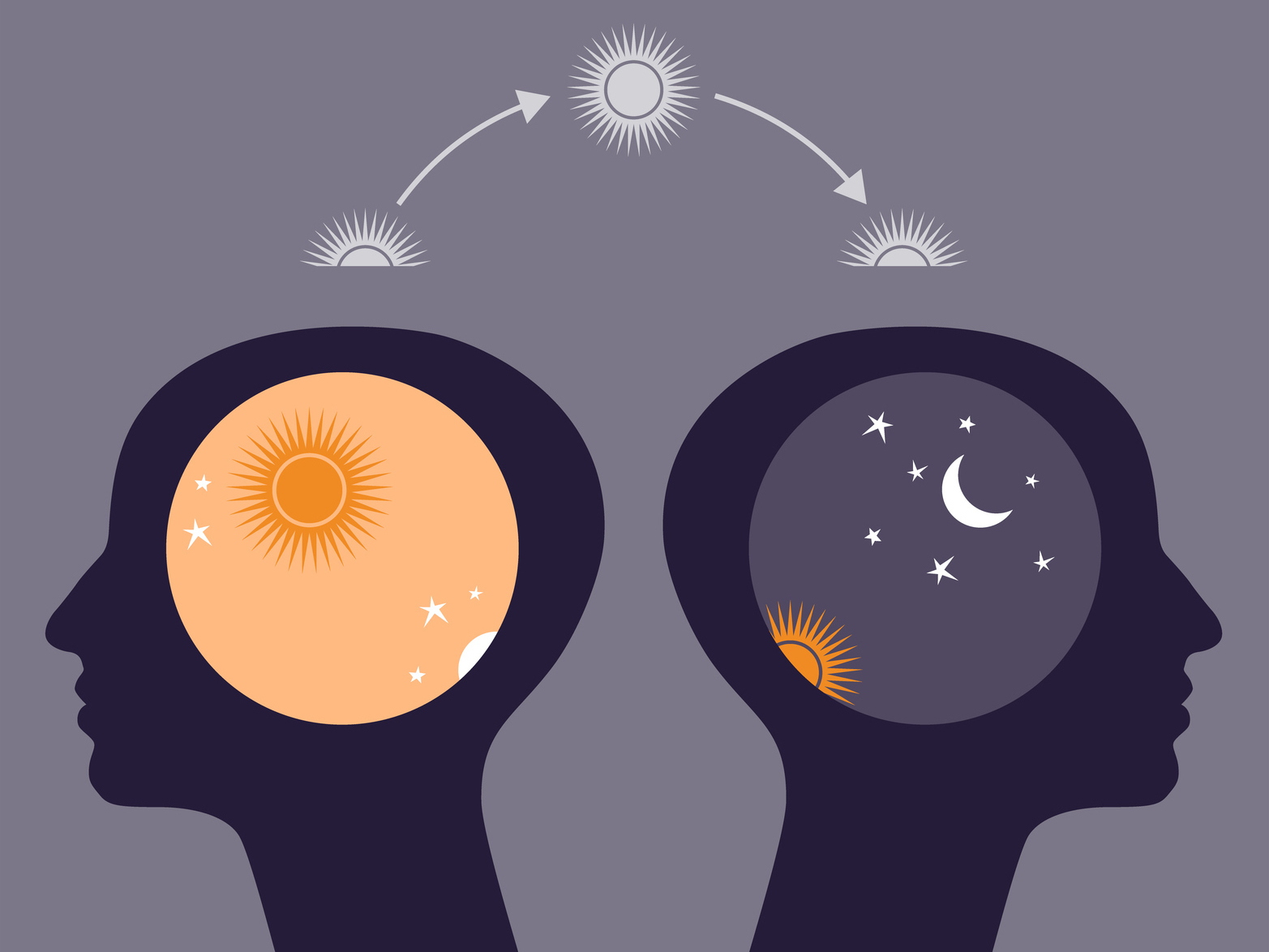
Getting more light in the day and less at night is good for your health. Here's why
Diet, exercise and sleep are fundamental to our health, but so it our relationship to light. A massive, new study suggests light-driven disruption can take years off our lives.
We’ve always been distracted, or at least worried that we are | Aeon Essays
Worried that technology is ‘breaking your brain’? Fears about attention spans and focus are as old as writing itself

Your Brain 'Blinks' When Your Attention Shifts, Researchers Discover - Slashdot
Science_afficionado quotes Vanderbilt University's Research News: When your attention shifts from one place to another, your brain blinks. The blinks are momentary unconscious gaps in visual perception and came as a surprise to the team of Vanderbilt psychologists who discovered the phenomenon while...

Personal night light exposure predicts incidence of cardiovascular diseases in >88,000 individuals
Importance Light at night causes circadian disruption, which is a known risk factor for adverse cardiovascular outcomes. However, it is not well understood whether personal light exposure patterns predicts and individual’s risk of cardiovascular diseases. Objective To assess whether day and night light exposure predicts incidence of cardiovascular diseases, and whether relationships of light with cardiovascular diseases differ according to genetic susceptibility, sex, and age. Design Prospective cohort study. Setting United Kingdom. Participants N=88,905, age (M±SD) = 62.4±7.8 years, 56.9% female. Exposure Approximately 13 million hours of personal light exposure data, tracked by wrist-worn light sensors (one week each). Main Outcomes and Measures Incidence of coronary artery disease, myocardial infarction, heart failure, atrial fibrillation, and stroke, derived from UK National Health Service records, across a 9.5-year follow-up after light tracking. Results People with the brightest nights (90-100th percentiles) had significantly higher risks of developing coronary artery disease (adjusted-HR range: 1.23-1.32), myocardial infarction (aHRs: 1.42-1.47), heart failure (aHRs: 1.45-1.56), atrial fibrillation (aHRs: 1.28-1.32), and stroke (aHRs: 1.28-1.30), compared to people with dark nights (0-50th percentiles). These relationships were robust after adjusting for established risk factors for cardiovascular health, including physical activity, smoking, alcohol, diet, sleep duration, socioeconomic status, and polygenic risk. Relationships of night light with risk of heart failure and coronary artery disease were stronger for women, and relationships of night light with risk of heart failure and atrial fibrillation were stronger for younger individuals in this cohort. Conclusions and Relevance Night light exposure was a significant risk factor for developing cardiovascular diseases in this cohort. In addition to current preventative measures, avoiding light at night may be a useful strategy for reducing risks of cardiovascular diseases. Question Does personal light exposure predict incidence of cardiovascular diseases? Findings In this study of ∼89,000 adults aged >40 years, exposure to brighter light at night predicted higher incidence of coronary artery disease, myocardial infarction, heart failure, atrial fibrillation, and stroke, independent of established cardiovascular risk factors. Meaning Avoiding exposure to night light may lower risk for cardiovascular diseases. ### Competing Interest Statement Conflicts of Interest Disclosures: M.K.R. has consulted for Eli Lilly and has modest stock ownership in GSK. M.K.R. disclosures are not related to the current work. F.A.J.L.S. served on the Board of Directors for the Sleep Research Society and has received consulting fees from the University of Alabama at Birmingham and Morehouse School of Medicine. F.A.J.L.S. interests were reviewed and managed by Brigham and Women's Hospital and Partners HealthCare under their conflict-of-interest policies. F.A.J.L.S. consultancies are not related to the current work. S.W.C. has consulted for Dyson. A.J.K.P. and S.W.C. are co-founders and co-directors of Circadian Health Innovations PTY LTD. A.J.K.P. and S.W.C. have received research funding from Versalux and Delos. S.W.C. has received research funding from Beacon Lighting. D.P.W, A.C.B., J.M.L., and R.S. have no conflicts of interest to disclose. ### Funding Statement Funding/Support: D.P.W. was supported by the Australian Research Council (DP210102924 and DP220102812). J.M.L. was supported by National Institutes of Health (NIH) grants R35-GM146839 and R01-HG012810. F.A.J.L.S. partly supported by NIH grants R01-HL140574, R01-HL153969, R01-HL164454, and R01-HL167746. Role of the Funder/Sponsor: Funding sources did not play a role in the design and conduct of the study; collection, management, analysis, or interpretation of the data; preparation, review, or approval of the manuscript; or the final decision to submit the manuscript for publication. ### Author Declarations I confirm all relevant ethical guidelines have been followed, and any necessary IRB and/or ethics committee approvals have been obtained. Yes The details of the IRB/oversight body that provided approval or exemption for the research described are given below: This research was conducted using UK Biobank data (Project ID: 6818), and ethical approval was granted by the North West Multi-centre Research Ethics Committee. The Monash University Human Research Ethics Committee of Monash University also gave ethical approval for this work. I confirm that all necessary patient/participant consent has been obtained and the appropriate institutional forms have been archived, and that any patient/participant/sample identifiers included were not known to anyone (e.g., hospital staff, patients or participants themselves) outside the research group so cannot be used to identify individuals. Yes I understand that all clinical trials and any other prospective interventional studies must be registered with an ICMJE-approved registry, such as ClinicalTrials.gov. I confirm that any such study reported in the manuscript has been registered and the trial registration ID is provided (note: if posting a prospective study registered retrospectively, please provide a statement in the trial ID field explaining why the study was not registered in advance). Yes I have followed all appropriate research reporting guidelines, such as any relevant EQUATOR Network research reporting checklist(s) and other pertinent material, if applicable. Yes All data used in the present work are available upon application to the UK Biobank team. <https://biobank.ndph.ox.ac.uk/showcase/>

It's getting harder to focus every day
I’m feeling it right now. I had to set a timer for 15 minute on my computer and block all distractions to write this. If I didn’t force myself to focus I would easily get distracted by something after few minutes. Even when I’m doing things that I’ve been waiting to do it, I still feel the urge to do something else. I don’t know how and when this happened. During the last few years I was always studying, working, and doing open source. And actually got stuff done. Doing all of those at the same time requires paying attention to what I wanted to do and ignore the noise.
Is full-time work bad for our brains?
If you’re over 40, working more than 25 hours a week could be affecting your intelligence, new research suggests

Why this attention expert says multitasking is the enemy of focus
Paying attention to where you place your attention is a difficult feat in a digital world that's designed to be distracting. But according to Dr. Gloria Mark, it's the key to finding deep focus at work.

Mobile phone short video use negatively impacts attention functions: an EEG study
The pervasive nature of short-form video platforms has seamlessly integrated into daily routines, yet it is important to recognize their potential adverse effects on both physical and mental health. Prior research has identified a detrimental impact of excessive short-form video consumption on attentional behavior, but the underlying neural mechanisms remain unexplored. In the current study, we aimed to investigate the effect of short-form video use on attentional functions, measured through the Attention Network Test (ANT). A total of 48 participants, consisting of 35 females and 13 males, with a mean age of 21.8 years, were recruited. The Mobile Phone Short Video Addiction Tendency Questionnaire (MPSVATQ) and self-control scale (SCS) were conducted to assess the short video usage behavior and self-control ability. Electroencephalogram (EEG) data were recorded during the completion of the ANT task. The correlation analysis showed a significant negative relationship between MPSVATQ and theta power index reflecting the executive control in the prefrontal region (r = -0.395, p = 0.007), this result was not observed by using theta power index of the resting-state EEG data. Furthermore, a significant negative correlation was identified between MPSVATQ and SCS outcomes (r = -0.320, p = 0.026). These results suggest that an increased tendency towards mobile phone short video addiction could negatively impact self-control and diminish executive control within the realm of attentional functions. This study sheds light on the adverse consequences stemming from short video consumption and underscores the importance of developing interventions to mitigate short video addiction.


Brain Scans Reveal Why "Night Owls" Have It Rough in a 9-to-5 Society
The results explain why we need to "create more flexibility in our society."

The lost art of concentration: being distracted in a digital world
We check our phones every 12 minutes, often just after waking up. Always-on behaviour is harmful to long-term mental health, and we need to learn to the hit the pause button
Starting Your Day on the Internet Is Damaging Your Brain
I’ve said before the first 3 hours of your day can dictate how your life turns out. And this often begins with the very first thing that…

Artificial intelligence is going to supercharge surveillance
What happens when digital eyes get the brains to match?
