


It's important to keep experimental subjects in the dark; this isn't hard when they're rats, but can be challenging when they're humans. An informed human
The High Cost of Not Doing Experiments - Behavioral Scientist
We can pay dearly, in blood, treasure, and well-being, for experiments that aren’t done. -Richard Nisbett, Mindware

Epistemic Vigilance
Humans massively depend on communication with others, but this leaves them open to the risk of being accidentally or intentionally misinformed. To ensure that, despite this risk, communication remain...

Creating Scientific Theories with Online Communities using Gut Instinct
People's lived experiences provide intuitions about their health. Can they transform these personal intuitions into scientific theories that inform both science and their lives? My research introduces social computing architectures and system principles for people to brainstorm and test causal scientific theories. These ideas are instantiated in the Gut Instinct system (gutinstinct.ucsd.edu). 344 voluntary online participants from 27 countries created 399 personally-relevant questions about the human microbiome, 75 (19%) of which microbiome experts found potentially scientifically novel. To test their theories, end users design structurally-sound experiments, improve them via community reviews, and run them with other participants. Controlled experiments show that participants create better hypotheses and experimental designs when they have access to procedural training. My research illustrates a novel way to tackle complex, creative tasks online by building expertise in online volunteer communities.

Individual-level interventions against sycophantic AI reduce its appeal but not its persuasiveness
AI chatbots can be "sycophantic," or overly agreeable and flattering toward users. Sycophantic AI has been shown to entrench attitudes, yet users frequently fail to recognize it (a phenomenon we call "sycophancy blindness"). We tested whether increasing users' awareness of sycophancy protects them from its harmful effects in two preregistered experiments (n = 1,590). In the first, participants received a brief written warning about sycophancy before conversing with a sycophantic chatbot. In the second, participants watched a video of a sycophantic AI validating several other users, including users on opposite sides of the same conflict, before interacting with it themselves. Both interventions changed how participants evaluated the AI. The warning reduced the AI's perceived objectivity, and the video reduced enjoyment of the AI --- an effect mediated by the reduced belief that its validation was uniquely earned. We then pooled our experiments with two prior studies of sycophancy awareness interventions (six interventions total, n = 3,982). The pattern across experiments was consistent: while the interventions made the sycophantic AI appear less objective and trustworthy, none reduced its persuasiveness. These results suggest that individual-level interventions, such as warning labels or AI literacy, may not be enough to protect users from AI harms.

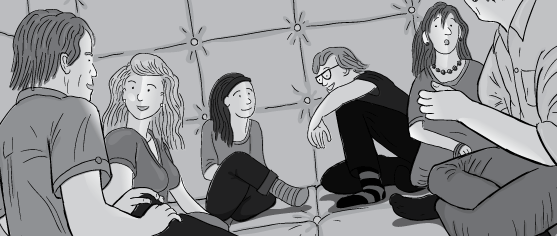
Deviance in the Dark psychology experiment – Stuart McMillen comics
A classic behavioral psychology experiment. In the 1970s, researchers took eight strangers and shut them inside a dark room for an hour. What happened next?
The Cognitive Debt of Digging Through Preprints
Your Brain on MIT Media Lab

Warning labels shift perceptions of sycophantic AI, but not its influence
Recent work has raised concerns about the influence of sycophantic AI on user judgment and relationships. One proposed mitigation, which has received regulatory attention, is to warn users about potentially harmful AI behaviors such as sycophancy. In a preregistered experiment in which participants (N = 2,610) discussed real interpersonal conflicts with an AI system, we test whether warning labels mitigate sycophancy's influence. We find that a basic AI disclosure (``This chatbot is AI'') has no detectable effect. Labeling the system as sycophantic (``...may agree with you and validate you even when you are wrong...'') does shift users' perceptions, reducing perceived objectivity and trust, but it does not reliably reduce sycophancy's influence on users' self-perceived rightness or their willingness to repair the conflict. Our results reveal a gap between AI perception and AI influence: by shifting perception without reducing influence, warning-based interventions may offer a false sense of protection. Addressing the harms of sycophancy will therefore require understanding the specific mechanisms through which it shapes judgment, and improving model behavior itself.
The Hole In Your Brain That Makes You Doomscroll
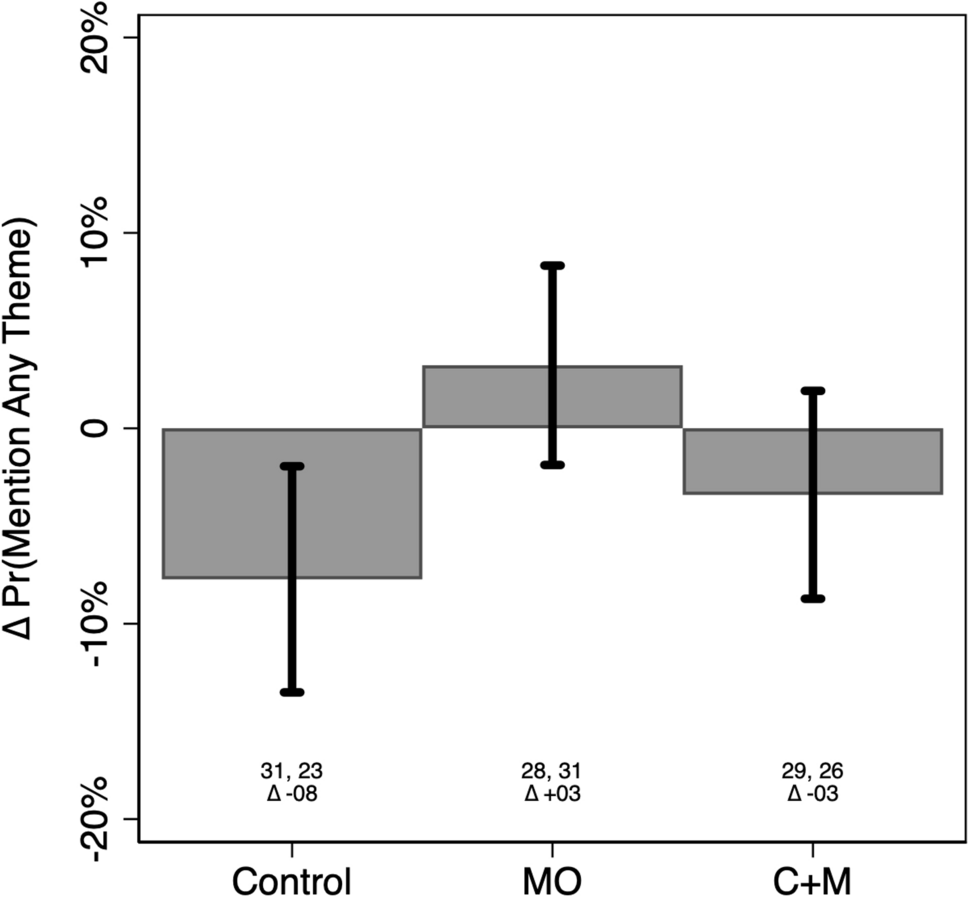
“Influencing the influencers:” a field experimental approach to promoting effective mental health communication on TikTok
A substantial body of social scientific research considers the negative mental health consequences of social media use on TikTok. Fewer, however, consider the potentially positive impact that mental health content creators (“influencers”) on TikTok can have to improve health outcomes; including the degree to which the platform exposes users to evidence-based mental health communication. Our novel, influencer-led approach remedies this shortcoming by attempting to change TikTok creator content-producing behavior via a large, within-subject field experiment (N = 105 creators with a reach of over 16.9 million viewers; N = 3465 unique videos). Our randomly-assigned field intervention exposed influencers on the platform to either (a) asynchronous digital (.pdf) toolkits, or (b) both toolkits and synchronous virtual training sessions that aimed to promote effective evidence-based mental health communication (relative to a control condition, exposed to neither intervention). We find that creators treated with our asynchronous toolkits—and, in some cases, those also attending synchronous training sessions—were significantly more likely to (i) feature evidence-based mental health content in their videos and (ii) generate video content related to mental health issues. Moderation analyses further reveal that these effects are not limited to only those creators with followings under 2 million users. Importantly, we also document large system-level effects of exposure to our interventions; such that TikTok videos featuring evidence-based content received over half a million additional views in the post-intervention period in the study’s treatment groups, while treatment group mental health content (in general) received over three million additional views. We conclude by discussing how simple, cost-effective, and influencer-led interventions like ours can be deployed at scale to influence mental health content on TikTok.
Learning hurts your brain
Mice left to explore new environments get DNA damage in their neurons.
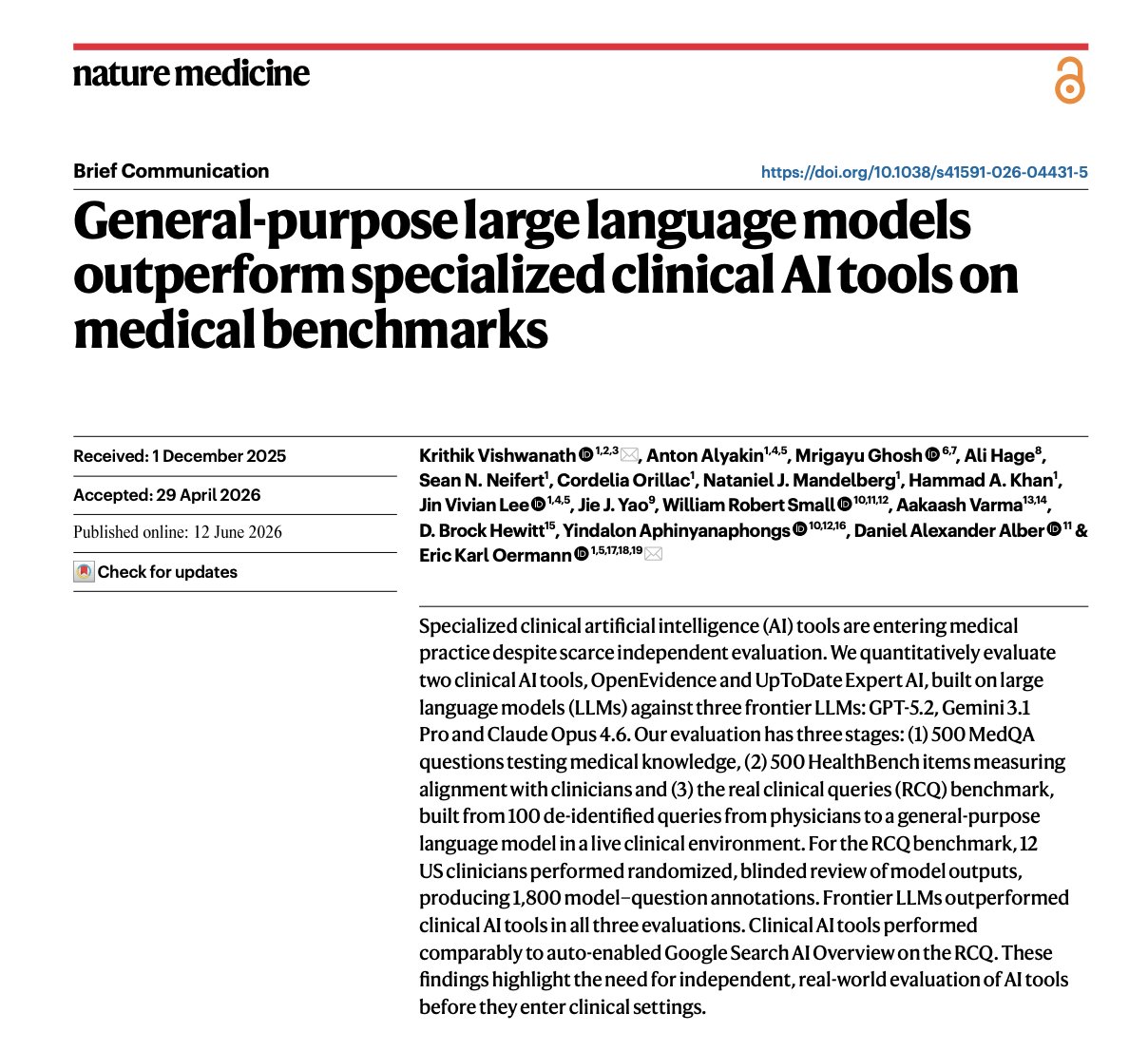
How To Prompt on Twitter / X
scientist tested a 3.5 billion dollar medical AI against regular chatGPT and it lost on every single one.they just published a paper in nature medicine, and the results are actually mindblowing.they took specialized clinical ai tools and tested them against general-purpose… pic.twitter.com/P7ePLunrDj— How To Prompt (@HowToPrompt__) July 6, 2026
Scientists may have found the root of anxiety, opening a door to treatment
"For people suffering from anxiety, this news should give hope."
Opinion | We Aren’t Built to Live in the Moment (Published 2017)
What best distinguishes human beings from other animals is our foresight, as scientists are just beginning to recognize.

We ignore what doesn’t fit with our biases – even if it costs us | New Scientist
We tend to pay more attention to information that confirms our own beliefs and biases, and we are prepared to lose money to stick to our guns

New study finds that when people help collect data or contribute to research it can build public trust by making scientists feel personally familiar and approachable, and that trust then spreads to how local and tangible the research feels. jcom.sissa.it/article/pubid/JCOM_2506_2026_…

How can citizen science reduce psychological distance to science? Insights from three projects in contested environmental contexts
jcom.sissa.itCapturing our Attention by @neillevy.bsky.social "we possess sophisticated capacities of epistemic vigilance, which work reasonably well to distinguish reliable from unreliable information, but ... we do not have parallel defences against attentional capture" > tandfonline.com/doi/full/10.1080/00048402.202…

