


Ever since Edward Snowden revealed the true extent of the National Security Agency's surveillance methods, the public debate has focused mostly on issues
NSA Surveillance Debate: Cindy Cohn vs Ronald Sievert | Learn Liberty
Former CIA Officer: President Obama Should Pardon Edward Snowden
He let Americans evaluate omniscient domestic surveillance for themselves
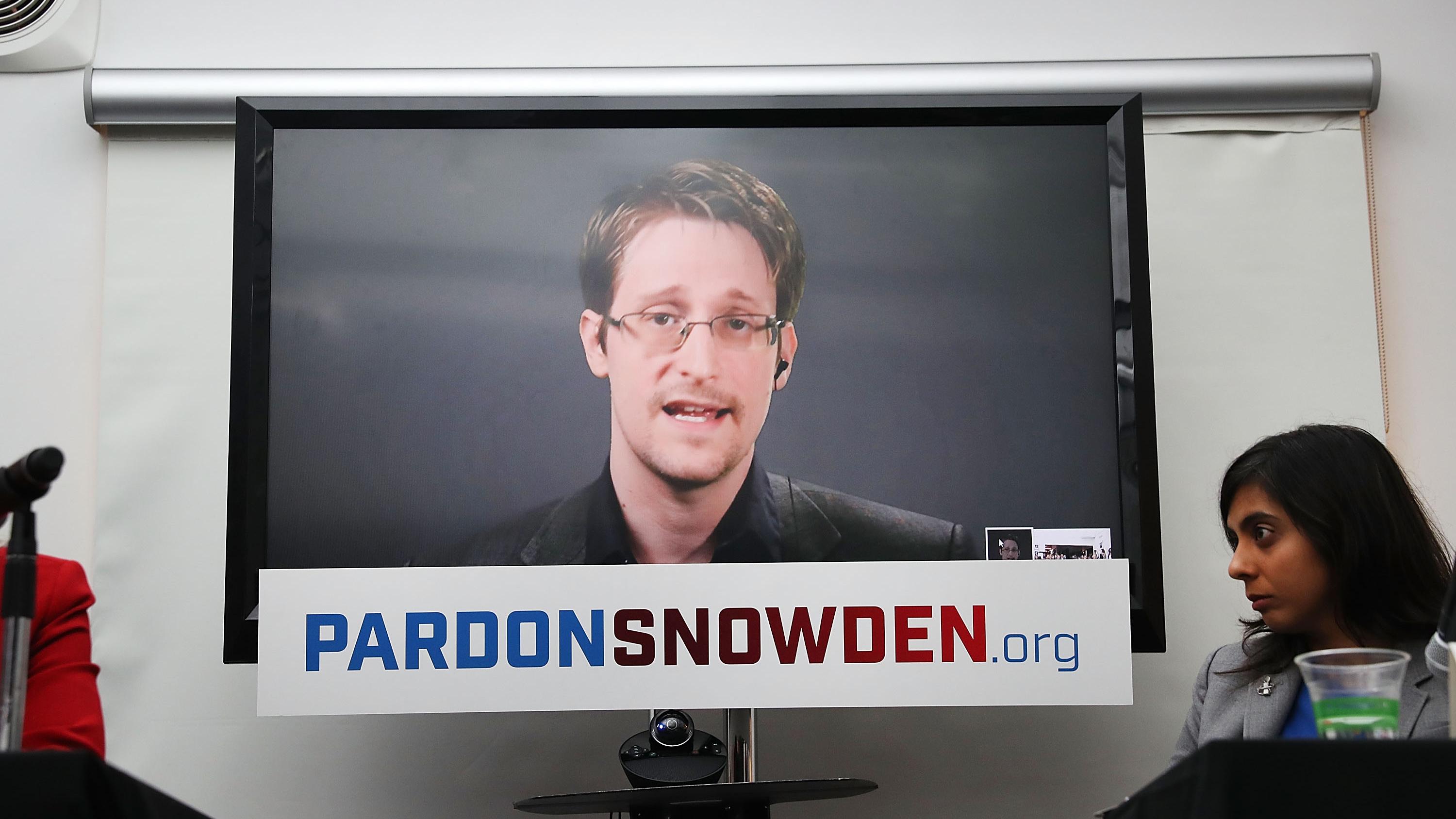
NSA files decoded: Edward Snowden's surveillance revelations explained
In the last five months, the NSA's surveillance practices have been revealed to be a massive international operation, staggering in scope. But how do all of the NSA's programmes fit together – and what does it mean for you?
After the Internet
In the wake of Edward Snowden's revelations, and concern that the internet has heightened rather than combated various forms of political and social...

The NSA phone surveillance program was illegal and expensive: And it did not stop a single terrorist attack. | Tuta
Mass surveillance costs millions of Dollars. Yet, it does not improve security.
NSA tracking cellphone locations worldwide, Snowden documents show
Snowden documents show agency is collecting billions of records on whereabouts of mobile devices

Looking back at the Snowden revelations
Edward Snowden recently released his memoirs. In some parts of the Internet, this has rekindled an ancient debate: namely, was it all worth it? Did Snowden’s leaks make us better off, or did …

Opinion | Surprise! NSA data will soon routinely be used for domestic policing that has nothing to do with terrorism
Another "national security" power evolves into an everyday power.
Data flows and water woes: The Utah Data Center
Using a new materialist line of questioning that looks at the agential potentialities of water and its entanglements with Big Data and surveillance, this article explores how the recent Snowden revelations about the National Security Agency (NSA) have reignited media scholars to engage with the infrastructures that enable intercepting, hosting, and processing immeasurable amounts of data. Focusing on the expansive architecture, location, and resource dependence of the NSA’s Utah Data Center, I demonstrate how surveillance and privacy can never be disconnected from the material infrastructures that allow and render natural the epistemological state of mass surveillance. Specifically, I explore the NSA’s infrastructure and the million of gallons of water it requires daily to cool its servers, while located in one of the driest states in the US. Complicating surveillance beyond the NSA, as also already imbricated with various social media companies, this article questions the emplacement and impact of corporate data centers more generally, and the changes they are causing to the landscape and local economies. I look at how water is an intriguing and politically relevant part of the surveillance infrastructure and how it has been constructed as the main tool for activism in this case, and how it may eventually help transform the public’s conceptualization of Big Data, as deeply material.

In NSA-intercepted data, those not targeted far outnumber the foreigners who are
Files provided by Edward Snowden show the extent ordinary Web users get caught in the net of surveillance.

John Oliver Just Changed The Surveillance Reform Debate | TechCrunch
Remember Edward Snowden? For many Americans who talked to John Oliver on Last Week Tonight, the answer is no. It's been almost two years since the world was captivated by Snowden's leaks to The Guardian and The Washington Post about American surveillance programs. For weeks it seemed there was a new headline everyday about another previously classified surveillance program or another government official calling for action on this issue. Presidential review groups were called. President Obama called for major changes to the programs.

How 9/11 changed the way America surveils its citizens • Stateline
The terrorist attacks of Sept. 11, 2001, transformed how American intelligence and law enforcement agencies collect, share and analyze information. Twenty-five years later, that infrastructure has merged with a digital world capable of generating vast amounts of data about Americans — and artificial intelligence is making it easier to connect and analyze that information. The result is a surveillance system far more powerful than anything imaginable in 2001, raising new questions about privacy, policing and civil liberties.

Edward Snowden interview: 'Smartphones can be taken over'
Smartphone users can do "very little" to stop security services getting "total control" over their devices, US whistleblower Edward Snowden tells the BBC in his first British TV interview.

Inside the NSA's War on Internet Security
US and British intelligence agencies undertake every effort imaginable to crack all types of encrypted Internet communication. The cloud, it seems, is full of holes. The good news: New Snowden documents show that some forms of encryption still cause problems for the NSA.
