


We know ants form large colonies. In 2002, we realized one specific kind of ant formed supercolonies. And then, in 2010, we learned that they had formed a
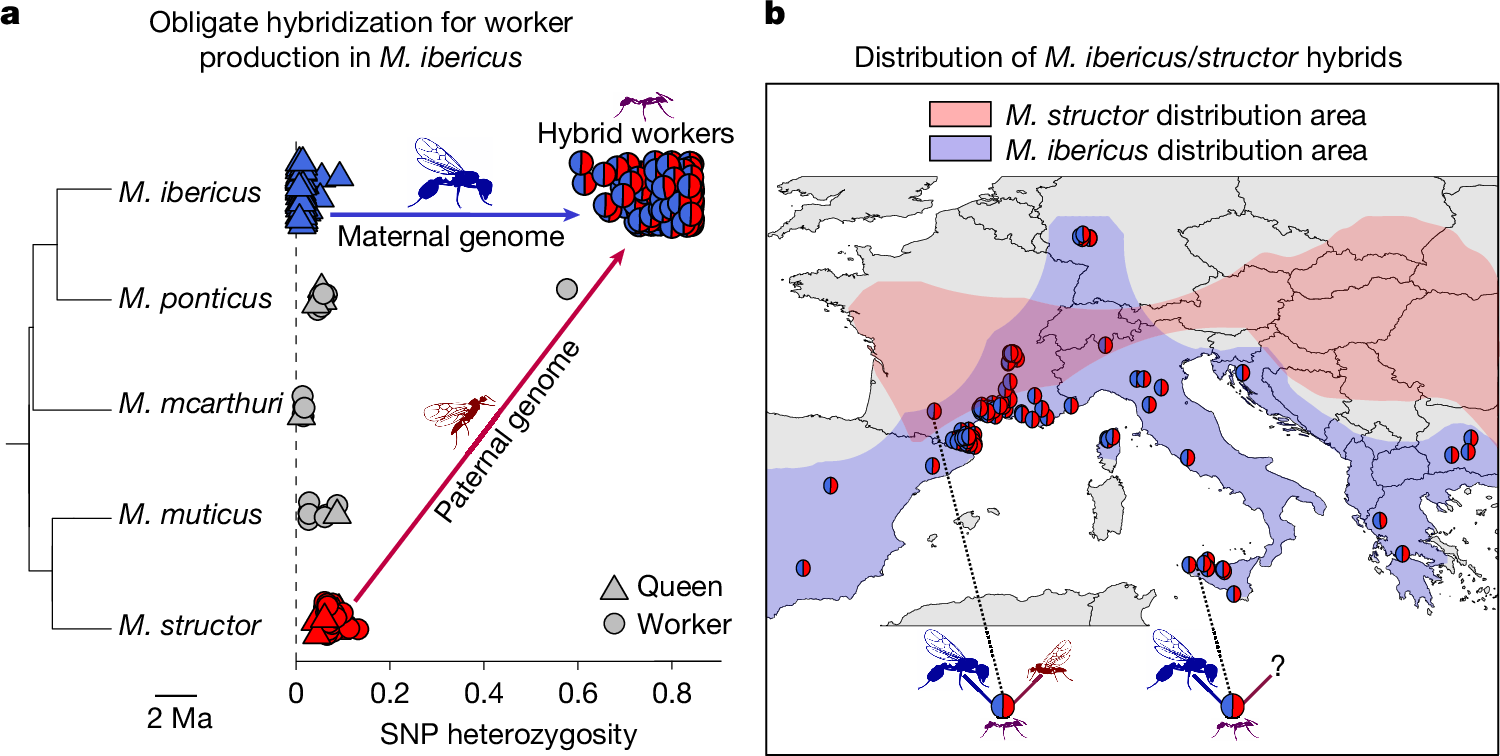
One mother for two species via obligate cross-species cloning in ants
Living organisms are assumed to produce same-species offspring1,2. Here, we report a shift from this norm in Messor ibericus, an ant that lays individuals from two distinct species. In this life cycle, females must clone males of another species because they require their sperm to produce the worker caste. As a result, males from the same mother exhibit distinct genomes and morphologies, as they belong to species that diverged over 5 million years ago. The evolutionary history of this system appears as sexual parasitism3 that evolved into a natural case of cross-species cloning4,5, resulting in the maintenance of a male-only lineage cloned through distinct species’ ova. We term females exhibiting this reproductive mode as xenoparous, meaning they give birth to other species as part of their life cycle.
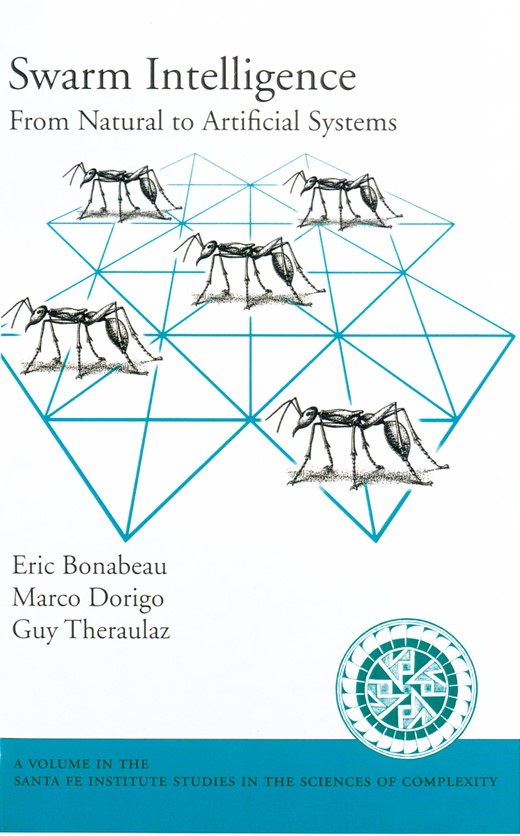
Swarm Intelligence: From Natural to Artificial Systems
Abstract. Social insects--ants, bees, termites, and wasps--can be viewed as powerful problem-solving systems with sophisticated collective intelligence. Co
What’s Earth’s dominant species by mass?
You might have heard that all the ants in the world weigh as much combined as all the humans. That isn’t true. We outweigh ants 5 to 1.1 Termites might have us beat, though.2 Either way, it’s not r…
Why agent swarms could be the next “scaling law”
An OpenAI researcher called it “the most ‘feel the AGI’ moment that I had since reasoning models.”
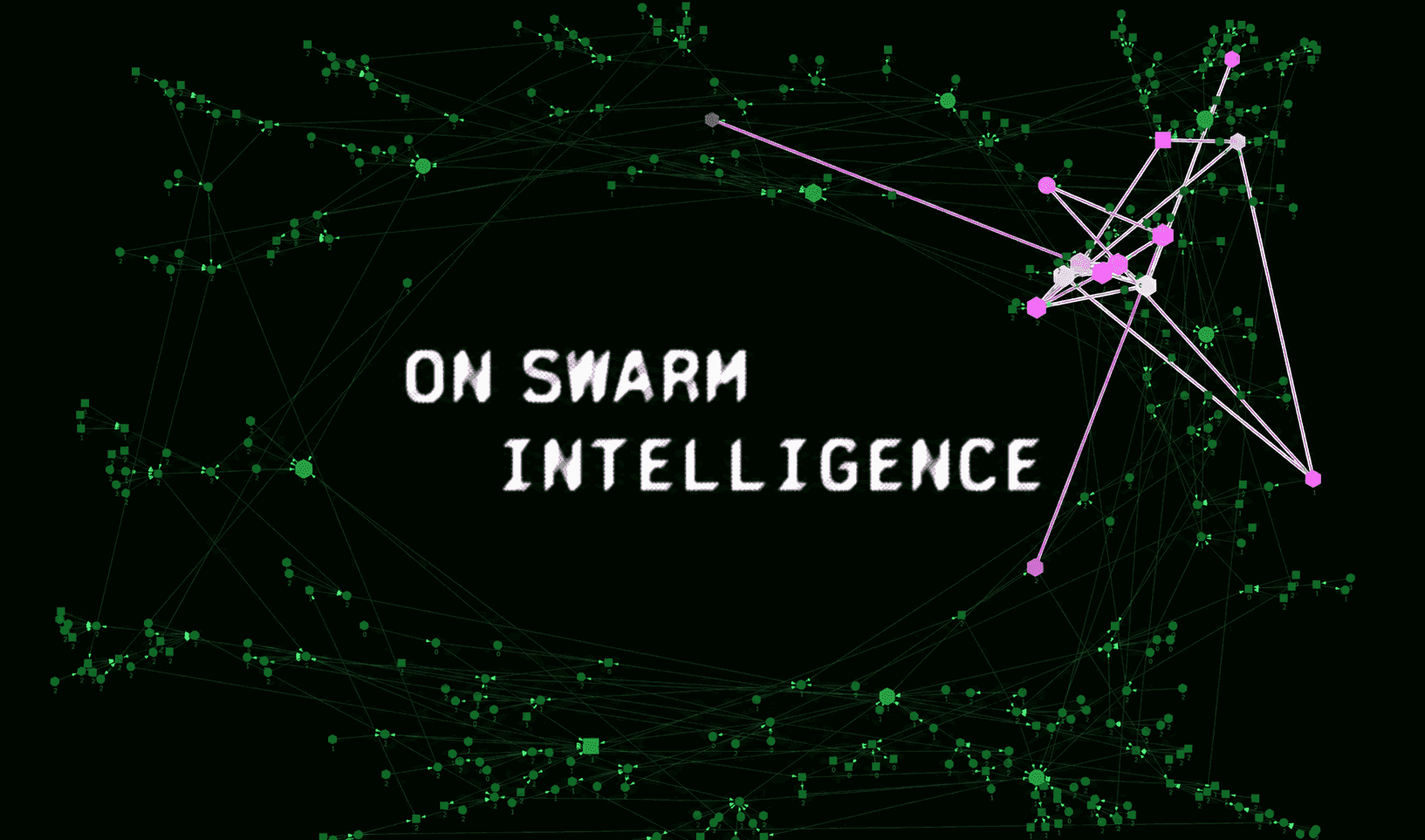
The Wasp Will Headline The New Ant-Man Sequel!
Marvel has just dropped a surprising bit of news: the third phase of its cinematic universe is getting even bigger. Not only have three mysterious new
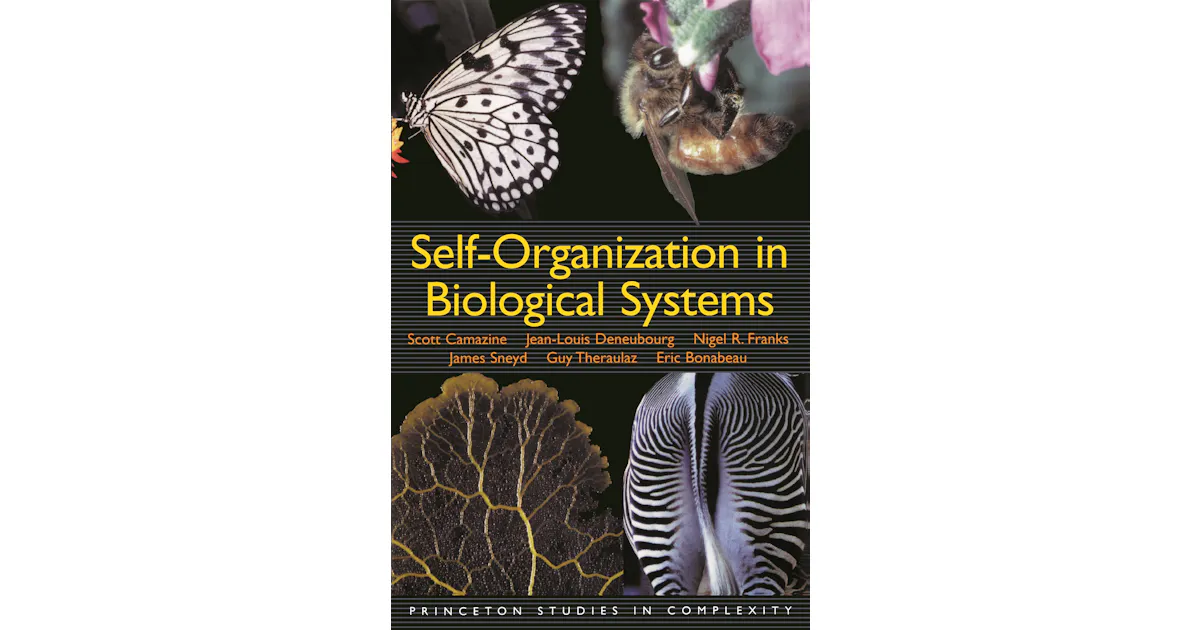
Self-Organization in Biological Systems
The synchronized flashing of fireflies at night. The spiraling patterns of an aggregating slime mold. The anastomosing network of army-ant trails. The coordinated movements of a school of fish. Researchers are finding in such patterns—phenomena that have fascinated naturalists for centuries—a fertile new approach to understanding biological systems: the study of self-organization. This book, a primer on self-organization in biological systems for students and other enthusiasts, introduces readers to the basic concepts and tools for studying self-organization and then examines numerous examples of self-organization in the natural world. Self-organization refers to diverse pattern formation processes in the physical and biological world, from sand grains assembling into rippled dunes to cells combining to create highly structured tissues to individual insects working to create sophisticated societies. What these diverse systems hold in common is the proximate means by which they acquire order and structure. In self-organizing systems, pattern at the global level emerges solely from interactions among lower-level components. Remarkably, even very complex structures result from the iteration of surprisingly simple behaviors performed by individuals relying on only local information. This striking conclusion suggests important lines of inquiry: To what degree is environmental rather than individual complexity responsible for group complexity? To what extent have widely differing organisms adopted similar, convergent strategies of pattern formation? How, specifically, has natural selection determined the rules governing interactions within biological systems? Broad in scope, thorough yet accessible, this book is a self-contained introduction to self-organization and complexity in biology—a field of study at the forefront of life sciences research.
Swarm Intelligence
Here is a possible world 50 years in the future, one I think is more likely than the scenario most people expect, which is one huge AI in the sky.
Get a Good Look at the New Superhero Revealed at the End of Ant-Man
If you’re seen Ant-Man—well, if you’ve seen Ant-Man and didn’t immediately book out of the theater when the credits start to roll like an insane
The Anthropic Hive Mind
As you’ve probably noticed, something is happening over at Anthropic. They are a spaceship that is beginning to take off.
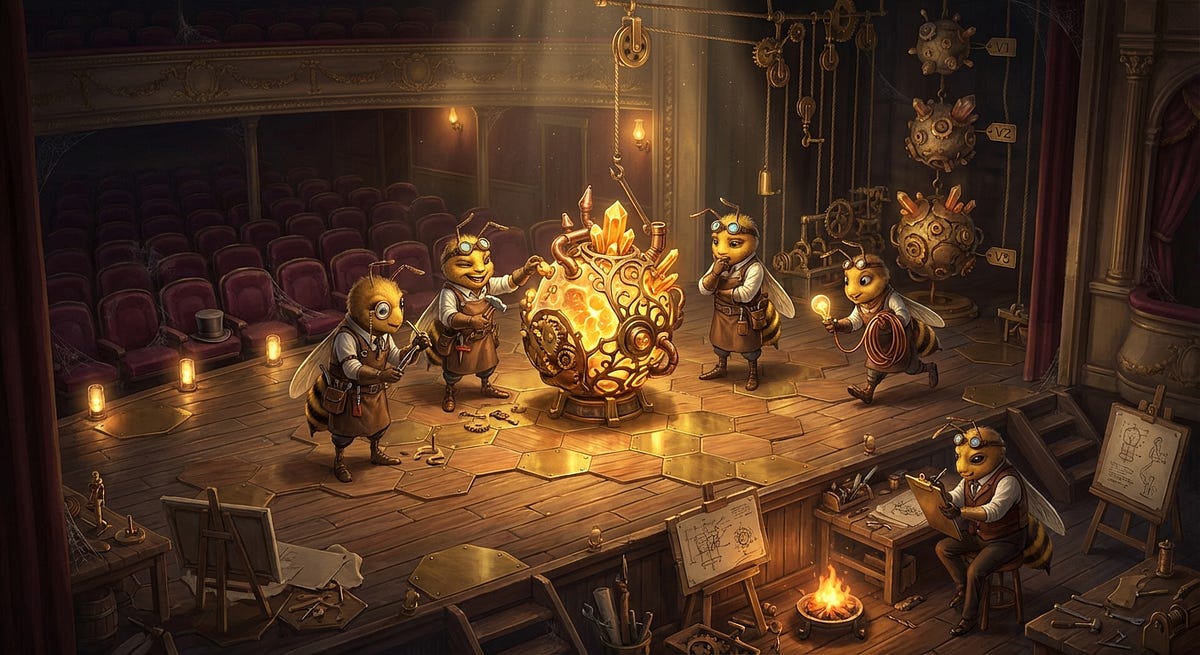
The Anthropic Hive Mind
As you’ve probably noticed, something is happening over at Anthropic. They are a spaceship that is beginning to take off.
The Anthropic Hive Mind
As you’ve probably noticed, something is happening over at Anthropic. They are a spaceship that is beginning to take off.
AI and crypto groups were among the biggest players in this year’s primaries. Here’s how they did.
Newly created super PACs mostly got their candidates — but also lost some high-profile races.

Giant “Super Neurons” Discovered in SuperAger Brains
Post-mortem brains of SuperAgers reveal significantly larger neurons in memory region.

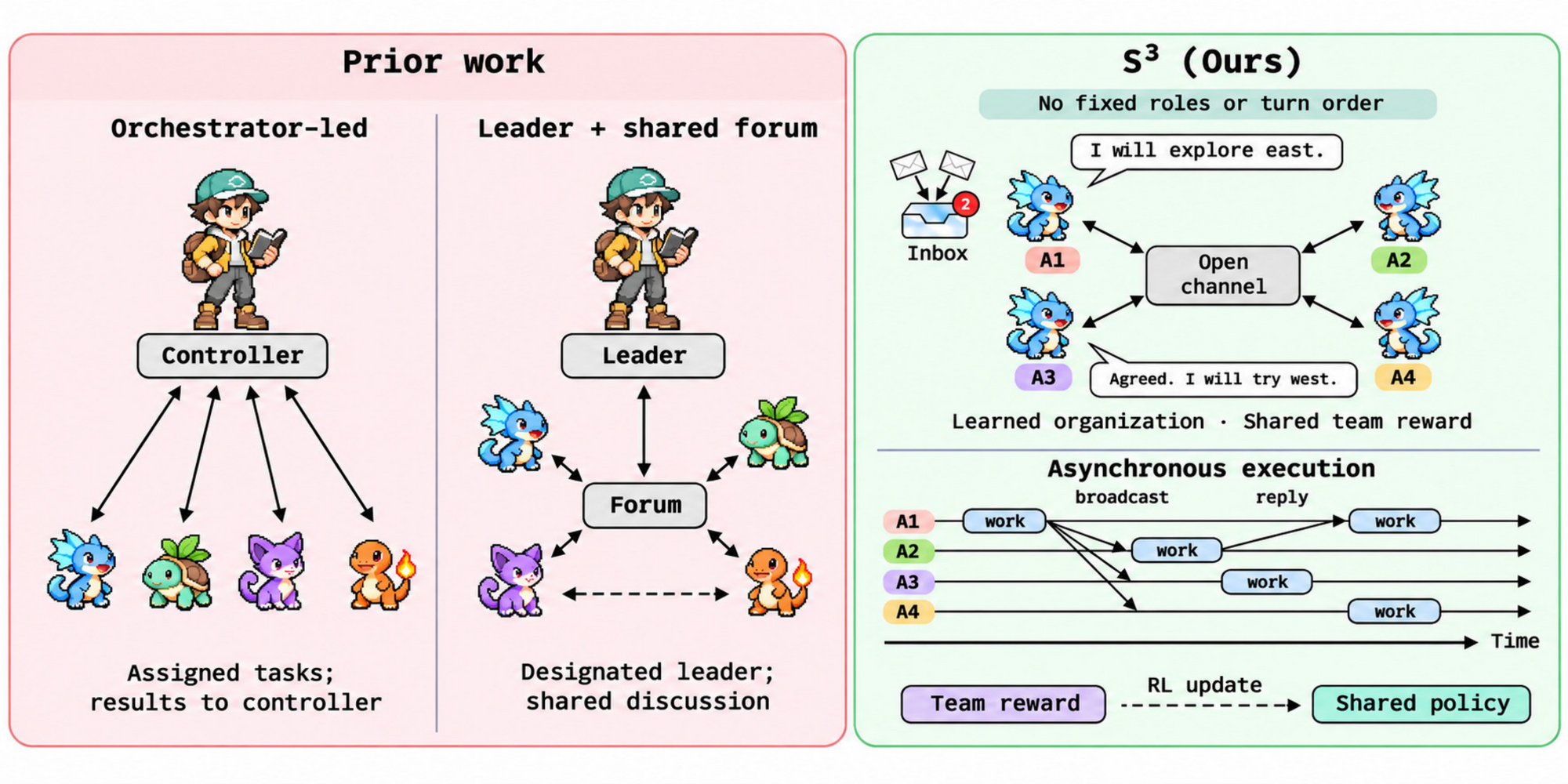
s³: Simple Scaling of Swarms
Asynchronous, role-free LLM swarms learn emergent coordination with one shared reward, beat best-of-N, and scale past their training size.
this is almost more or less louis rosenberg's swarm superintelligence btw and it seems possible to build it on atproto

joe 🐎🏹
social media where there's 100 users in your pod and any time one of the posts is liked by all 100 it graduates and is shown on the interpod feed of the other 900 users in the superpod