


It’s been well established that social isolation is a serious health risk, particularly for seniors. A 2010 study showed that too much alone time can be
Researchers Confront an Epidemic of Loneliness (Published 2016)
Social isolation is linked to physical illness and to functional and cognitive decline. Programs to reach out to the elderly are growing, particularly in Britain.

How being alone may be the key to rest
The results of the world’s largest survey on rest suggest that to feel truly rested, we need to get away from other people.

Loneliness epidemic
The concept of a "loneliness epidemic" relating to rising rates of social isolation was first described in the 2000s. Robert D. Putnam's 2000 study Bowling Alone was an early instance of describing loneliness as an epidemic, arguing that decreased participation in civic life and community groups was weakening social bonds in the United States.[5]
Death of the private self: how fifteen years of Facebook changed the human condition
In 2004, the social network site was set up to connect people. But now, with lives increasingly played out online, have we forgotten how to be alone?
America has a loneliness epidemic. Here are 6 steps to address it
Lacking connection can increase the risk for premature death to levels comparable to smoking 15 cigarettes a day, according to a new advisory from the U.S. Surgeon General.
Loneliness in the United States: A 2018 National Panel Survey of Demographic, Structural, Cognitive, and Behavioral Characteristics
Purpose: To inform health behavior intervention design, we sought to quantify loneliness and its correlates, including social media use, among adults in the United States. Design: Cross-sectional research panel questionnaire. Setting: Responses were gathered from individuals in all 50 states surveyed via Internet from February 2018 to March 2018. Participants: A total of 20 096 US panel respondents aged 18+. Measures: The University of California at Los Angeles (UCLA) Loneliness Scale (theoretical score range = 20-80) was administered along with demographic, structural, cognitive, and behavioral items. Analysis: After calibrating the sample to population norms, we conducted multivariable linear regression analysis. Results: The overall mean survey-weighted loneliness score was 44.03 (standard error = 0.09). Social support (standardized β [sβ] = −0.19) and meaningful daily interactions (sβ = −0.14) had the strongest associations with lower loneliness, along with reporting good relationships, family life, physical and mental health, friendships, greater age, being in a couple, and balancing one’s daily time. Social anxiety was most strongly associated with greater loneliness (sβ = +0.20), followed by self-reported social media overuse (sβ = +0.05) and daily use of text-based social media (sβ = +0.03). Conclusion: Our findings confirm that loneliness decreases with age, and that being in a relationship as well as everyday behavioral factors in people’s control are most strongly related to loneliness. Population health promotion efforts to reduce loneliness should focus on improving social support, decreasing social anxiety, and promoting healthy daily behaviors.

How Social Isolation Is Killing Us (Published 2016)
Research confirms our deepest intuition: Human connection lies at the heart of human well-being.

Romancing Aloneness: How to Be Alone Like a Buddhist. | elephant journal
If we cannot see ourselves, how do we expect others to see us clearly? If we cannot be alone, how can we truly enjoy being with people? The contrast in life is often what allows us to appreciate it.

What is Causing Our Epidemic of Loneliness and How Can We Fix It?
Researchers share what Americans have to say about social disconnection and potential solutions

Loneliness is taking friend-making apps mainstream
Post-pandemic loneliness is driving young adults to seek friends more intentionally.

The world’s happiest people have a beautifully simple way to tackle loneliness
Toad, a 20-year-old Danish woman living in Copenhagen, has been lonely her whole life. She is autistic, and as a child, did not have any friends. When she moved from the country to the city, not much changed. “They says it’s a phase, but a phase becomes a life,” she says, surrounded by six other young adults in a cozy apartment in Copenhagen—all of whom are working on becoming less lonely.

Sickness absence associated with shared and open-plan offices--a national cross sectional questionnaire survey
OBJECTIVE: The aim of this study was to examine whether shared and open-plan offices are associated with more days of sickness absence than cellular offices. METHODS: The analysis was based on a national survey of Danish inhabitants between 18-59 years of age (response rate 62%), and the study population consisted of the 2403 employees that reported working in offices. The different types of offices were characterized according to self-reported number of occupants in the space. The log-linear Poisson model was used to model the number of self-reported sickness absence days depending on the type of office; the analysis was adjusted for age, gender, socioeconomic status, body mass index, alcohol consumption, smoking habits, and physical activity during leisure time. RESULTS: Sickness absence was significantly related to having a greater number of occupants in the office (P<0.001) when adjusting for confounders. Compared to cellular offices, occupants in 2-person offices had 50% more days of sickness absence [rate ratio (RR) 1.50, 95% confidence interval (95% CI) 1.13-1.98], occupants in 3-6-person offices had 36% more days of sickness absence (RR 1.36, 95% CI 1.08-1.73), and occupants in open-plan offices (>6 persons) had 62% more days of sickness absence (RR 1.62, 95% CI 1.30-2.02). CONCLUSION: Occupants sharing an office and occupants in open-plan offices (>6 occupants) had significantly more days of sickness absence than occupants in cellular offices.
Associations between social media use and loneliness in a cross-national population: do motives for social media use matter?
Background: We aimed to examine the association between social media use and loneliness two years after the COVID-19 pandemic outbreak. Methods: Participants were 1649 adults who completed a cross-...
Associations between social media use and loneliness in a cross-national population: do motives for social media use matter?
Background: We aimed to examine the association between social media use and loneliness two years after the COVID-19 pandemic outbreak. Methods: Participants were 1649 adults who completed a cross-sectional online survey disseminated openly in Norway, United Kingdom, USA, and Australia between November 2021 and January 2022. Linear regressions examined time spent on social media and participants’ characteristics on loneliness, and interactions by motives for social media use. Results: Participants who worried more about their health and were younger, not employed, and without a spouse or partner reported higher levels of loneliness compared to their counterparts. More time spent on social media was associated with more loneliness (β = 0.12, p < 0.001). Three profile groups emerged for social media use motives: 1) social media use motive ratings on avoiding difficult feelings higher or the same as for maintaining contact; 2) slightly higher ratings for maintaining contact; and 3) substantially higher ratings for maintaining contact. Time spent on social media was significant only in motive profile groups 2 and 3 (β = 0.12 and β = 0.14, both p < 0.01). Conclusions: Our findings suggest that people who use social media for the motive of maintaining their relationships feel lonelier than those who spend the same amount of time on social media for other reasons. While social media may facilitate social contact to a degree, they may not facilitate the type of contact sought by those who use social media primarily for this reason.

Loneliness epidemic

And related subjects
Associations between social media use and loneliness in a cross-national population: do motives for social media use matter?

Americans’ Social Activity Has Steeply Declined in the Past 30 Years

Young people five times more likely to have no friends than a decade ago | IPPR
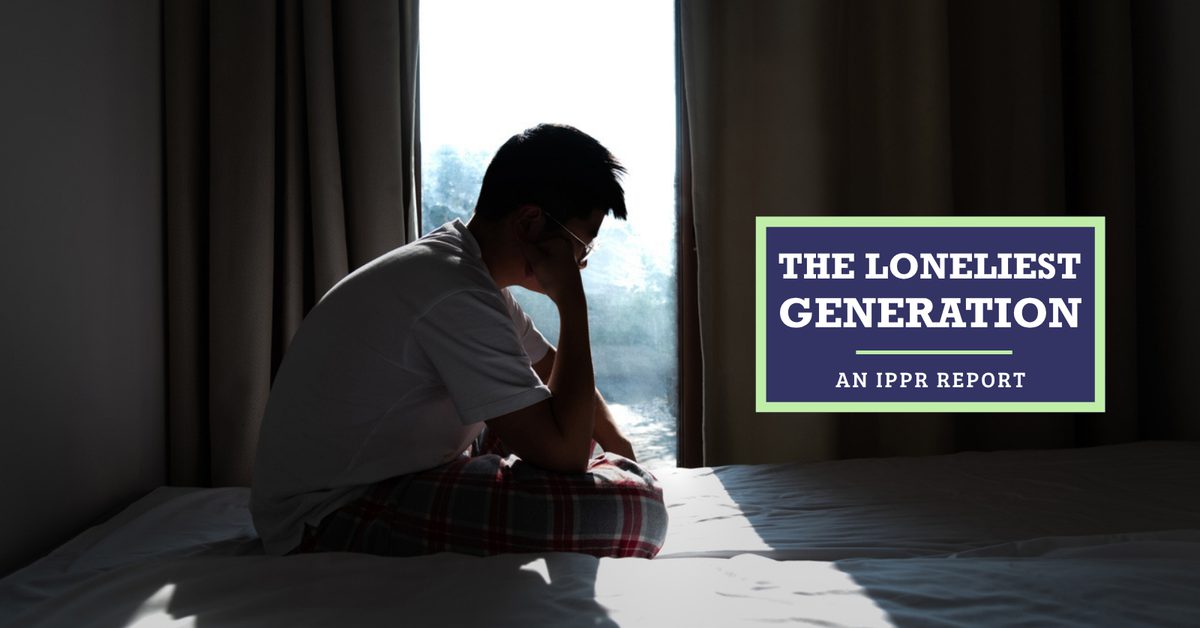
The loneliest generation: What it is like to grow up in England today | IPPR