


Complexity theorists have suggested that production “on the edge of chaos” is important to self-organization and evolutionary change in thermodynamic systems, biology, and economics. We apply this heuristic to cognitive systems and neural network activation states, which can vary from an ordered (predictable) regime, to a chaotic (unpredictable) regime. Evolutionary cytoarchitectonic theory specifies complementary anatomical systems governing stability and flexibility. Psychopathology is associated with shifts in the regulation of stability and flexibility, and may yield both increased redundancy and increased entropy within the same individual. We suggest this fits existing literature showing: (a) examples of exceptional creativity in individuals with mental illness, without an overall increase in creative achievement associated with “madness”; (b) increases in creative achievement among relatives of people with mental illness, or people with milder syndromes, for whom increased flexibility or stability is less disabling; and (c) effects of pharmacological manipulations, suggesting an inverted-U function resembling the Yerkes-Dodson Law, possibly linked to tonic and phasic dopaminergic transmission. 1. Defining creativity on the edge of chaos for cognitive and biological researchCreative works may be defined as combining novelty (or originality) and utility (or effectiveness, or value) within the domain from which they emerge (Runco and Jaeger 2012). We relate this to the ideas of Stuart Kauffman, who highlighted the importance of production “on the edge of chaos” to yield valuable change in self-organizing systems spanning thermodynamic, economic, and biochemical systems (such as those involved in the origins of life)(Kauffman 1995, Kauffman 1993). Kauffman argues that these systems can be characterized by the predictability of their components. Considering elements within complex systems, some are “orderly” (predictable, redundant) while others are more “chaotic” (unpredictable, entropic). Kauffman sees new and useful developments as emerging “on the edge of chaos,” the boundary between ordered and chaotic regimes. The Edge of Chaos theory can be applied to cognitive processes and brain activation states important for creative cognition. Considering the diversity of possible cognitive states, we can differentiate the highly predictable and orderly from the unpredictable and chaotic. In more chaotic regimes, network states are more disconnected from those in the ordered regime. But “at the edge of chaos,” the states are maximally novel while still connected to states in the ordered regime, and thus are most likely to manifest the combination of novelty and utility that is the hallmark of creativity. A similar conceptual approach was used to distinguish “rigidity”, “chaos”, and “integration” to characterize semantic network states in people with Asperger’s syndrome, schizophrenia, and healthy semantic processing, respectively (see Faust and Kenett (2014) for good graphical models; see also Siegel (2010), and Kaufman (2014) for additional examples). The theory of evolutionary cytoarchitectonic trends may provide an anatomic and neuropsychopharmacologic substrate for these cognitive dimensions, with complementary systems that increase the stability or flexibility of cognitive states via the archicortical and paleocortical trends, respectively (Bilder 2012, Christensen and Bilder 2000). Local cortical networks employ the complementary actions of tonic and phasic dopamine signaling, which putatively mediate stability and flexibility, respectively (Bilder et al. 2004); similarly, D1- and D2-like dopamine transmission may mediate persistence or updating within cell assemblies (Durstewitz and Seamans 2002). Others have emphasized noradrenergic mechanisms to achieve similar network dynamics (McClure 2006). We believe this view advances conceptualization of the role of DA in creative cognition beyond models in which DA was suggested to have a unitary function by facilitating “working memory” or “mental associations” (Flaherty 2011), or “flexibility” as manifest in higher-order personality traits (DeYoung 2006).This theory may help provide a neural systems basis for the theory that creativity results from Blind Variation and Selective Retention (BVSR)(Campbell 1960, Simonton 2011a, Simonton 2011b). Assuming that blind variation relies on “flexibility” while selective retention relies on “stability,” then our theory has multiple implications: (a) the neural system basis for “sighted” versus “blind” variations is synaptic facilitation governing the likelihood that a given network activation state will be stabilized and more likely to re-occur; (b) the “unit of analysis” upon which blind variation operates was first stated as a “thought trial” Campbell 1960); Simonton refined this to be the “ideational variant”; we suggest that BV operates on the “perception-action cycle,” with a frequency of about 3 Hz, approximately how long it takes to compare a stimulus to expectations; and (c) we distinguish systematic from stochastic variation, with the systematic approach engaging cognitive control (task positive networks), while the stochastic approach disengages cognitive control and engages default mode networks. 2. The edge of chaos, creativity, and mental healthHow do these ideas relate to the theme of this issue: creativity and madness? We suggest the link between creativity and mental illness can benefit from considering the stability and flexibility of cognitive states. For example, Martin Paulus and colleagues used a two-choice guessing paradigm to calculate the entropy of sequential responses made by people with schizophrenia (Paulus 1999). In this paradigm, people “guess” which of two alternatives (e.g., “left” or “right”) will occur next, when in fact the order of outcomes is random. We can analyze the sequence of guesses and quantify their entropy (unpredictability). Healthy people tend to have a Gaussian distribution of sequential guesses, with most responses at intermediate levels of entropy, and fewer very redundant or very entropic responses. In contrast, people with schizophrenia tended to show both more redundant (predictable) and more entropic (unpredictable) responses; longer periods of predictable behavior were interrupted by very unpredictable behavior. We showed that the entropy of responses is linked to dopamine (DA) dynamics; specifically we found that DA “tone” (the balance of agonism to antagonism) had an “inverted-U” association with predictability of responses (Bilder 1992). These examples highlight that the balance of stability and flexibility is critical to maintain optimal, healthy function.The Edge of Chaos theory is also compatible with the neural network frameworks that Ralph Hoffman, Stephen Grossberg, and their colleagues have used to describe schizophrenia (Grossberg 1999, Grossberg 2000, Hoffman and Dobscha 1989, McGlashan and Hoffman 2000). Either widespread dysconnectivity or impairment of dopamine dynamics governing the stability and flexibility of neural network activation states can lead a network to get “stuck” in a local energy minimum (thus explaining abnormal predictability), but when the activation state does shift, the new state is likely to be more “distant” and less “connected” to the preceding state (thus explaining abnormal unpredictability). We believe this model conforms with the inverted-U model relating creativity with psychopathology traits and genetic risk for psychosis (Richards et al. 1988) and with existing literature showing examples of exceptional creativity in individuals with mental illness, even though the aggregated results tend to show no overall increase in creative achievement for those with severe mental illness (Abraham et al. 2007, Eisenman 1990, Jaracz et al. 2012, Rothenberg 1983). Consistent reports suggest that healthy relatives of those with schizophrenia, and those with schizotypal traits, may have elevated creativity; we suggest that these individuals may have a tendency to greater network flexibility, but additional traits help protect them from developing schizophrenia (Abraham and Windmann 2008, Batey and Furnham 2008, Karimi et al. 2007, Kinney 2001, Nelson and Rawlings 2010, Schuldberg 2000). Consistent with this are Kinney’s (2001) results showing higher levels of creativity in people with intermediate levels of schizotypal or schizoid traits, relative to those with lower levels of these traits and relative to those with overt schizophrenia. Evidence about bipolar disorder is less clear, but empirical studies show similar inverted-U distributions: a milder degree of mood disorders, bipolar temperaments, or genetic liability (without full-blown bipolar disorder) may be linked to increased creative achievement, but more severe illness is not. For example, children with pediatric bipolar disorder perform worse on tests of set-shifting or cognitive flexibility (Dickstein 2007, Gorrindo 2005), and while adults with bipolar disorder may have increased inventiveness, scores are lower during depressive episodes (Rybakowski and Klonowska 2011). Richards, Kinney, Lunde, Benet and Merzel (1988) also reported that participants with cyclothymia, and healthy first-degree relatives of patients with bipolar disorder, had higher lifetime creativity scores compared to patients with bipolar disorder and healthy controls with no family history of major affective disorder or schizophrenia. Similarly, researchers found that hypomanic (Furnham et al. 2008) or hyperthymic traits in healthy individuals (Shapiro 1999) were significantly correlated with measures of creativity. Overall, the data suggest that hereditary risk (without severe impairment), and/or moderate subclinical variations of bipolar disorder or schizophrenia may be associated with enhanced creative achievement, while the more severe forms of these syndromes are associated with impairments of creativity, paralleling impairments in other cognitive processes. With respect to the evolutionary advantages, Kauffman wrote:If it proves true that selection tunes genomic systems to the edge of chaos, then evolution is persistently exploring networks constrained to this fascinating ensemble of dynamical systems (Kauffman, 1993, p. 522).We suggest that the underlying genomic systems, and their systems biology correlates at the level of neural network activation states, are tuned to the edge of chaos, helping explain both the observed associations and dissociations of creativity with mental illness. These assumptions are consistent with the hypothesis that neural network dynamics associated with cognitive flexibility are linked to creative achievement because these dynamics generate activation states that are novel with respect to population averages, and favor performance on metrics that are tuned to divergent thinking (problem-solving processes that involve exploring multiple alternative solutions). But if the dynamics proceed too far in the direction of flexibility, entropy, and unpredictability, then cognitive products may be novel and unpredictable, but may be “over the edge of chaos,” and not be perceived as useful, valuable, or effective. 3. Implications for mental health and promoting creative achievementThe Edge of Chaos hypothesis may help understand the pathophysiology and treatments of mental illness, and suggest paths to augment creativity. We can assess positive traits of cognitive stability and flexibility (or disadvantageous traits: rigidity and lability), and determine their relations with cellular and neuromodulatory factors. For example, widespread dysconnectivity and DA dysregulation remain candidates in the pathophysiology and treatment of schizophrenia. To the extent that interventions impact these states, monitoring stability/flexibility may be beneficial in determining when treatments are managing chaotic (overly flexible) states but not causing cognitive rigidity. For example, measures of network stability/flexibility could help titrate treatments in schizophrenia to maximize freedom from positive symptoms while minimizing cognitive impairment, or titrate the DA and norepinephrine reuptake inhibition in Attention Deficit/Hyperactivity Disorder (ADHD) to maximize attentional control. Non-pharmacological treatments might some day be tuned to optimize flexibility and stability. For example, EEG neurofeedback strategies emphasizing cognitive stability or flexibility may enhance creativity (Gruzelier 2013, Gruzelier, Foks, et al. 2014, Gruzelier, Holmes, et al. 2014), but see also (Schaller et al. 2013). Slow cortical potential neurofeedback training may enhance stability and benefit those with ADHD (Monastra 2008, Studer et al. 2014). Transcranial magnetic stimulation or direct current stimulation may also moderate cortical stability and flexibility (Nitsche et al. 2009). TDCS studies already have shown enhancements of creative thinking (Chi and Snyder 2011, Chrysikou et al. 2013, Metuki et al. 2012), but see also (Ghacibeh et al. 2006). There are further links of cognitive stability and flexibility to meditation practices referred to as focused attention and open monitoring, respectively (Lutz, Brefczynski-Lewis, et al. 2008, Lutz, Slagter, et al. 2008, Slagter et al. 2011). We are not aware of studies showing enhanced creativity among Buddhist monks, but other studies already have shown a positive impact of meditation practices on divergent thinking (Colzato et al. 2012, Horan 2009). In the future, assessment of individual differences in baseline stability and flexibility might lead to prescriptive contemplative practices. These approaches already have gained traction in the management of anxiety by broadening of attention using mobile phone applications (Enock et al. 2014), and we anticipate the future will deliver additional tools to manage brain activation states, perhaps combined with personal EEG devices.In conclusion, we believe that understanding both mental illness and creative cognition from the perspective of neural network dynamics, and specifically the regulation of the stability and flexibility of cortical activation states, helps to clarify the relation between creativity and mental illness. We further believe understanding these cognitive dynamics may have profound implications for both understanding of pathophysiology of mental illness, the development of novel intervention strategies for those who are ill, and the enhancement of creative cognition more broadly across the population.
Twin study links artistic, but not scientific, creativity to poorer mental health
The relationship between creativity and mental health has attracted the interest of many psychologists over the past decades. Some past studies have found that creativity is sometimes linked to mental ...

Combinatorial Creativity
Combinatorial creativity recombines existing ideas to spark novel, valuable innovations in cognition, AI, and design.

Brain oscillations reveal dynamic shifts in creative thought during metaphor generation
A new study reveals that creative metaphor generation involves shifting patterns of brain activity, with alpha oscillations playing a key role at different stages of the process, offering fresh insight into the neural dynamics behind verbal creativity.
Harnessing Chaos: How the Brain Turns Randomness into Robust Memory | Columbia Engineering
AI systems reveal how random fluctuations in brain activity may help stabilize memories
Translational Cognitive and Affective Neuroscience Lab
Welcome to the Translational Cognitive and Affective Neuroscience Laboratory at UC Irvine. Led by PI Cameron S Carter MD, our lab applies the tools and constructs of cognitive and affective neuroscience to build an understanding of 1) the relationship between functional brain circuitry supporting cognitive and emotional processing in the brain and the signs, symptoms, and functional challenges that are seen in serious mental health problems, including schizophrenia, bipolar disorder, and autism, and 2) understanding the links between these alterations in functional brain circuitry and their cellular and molecular underpinnings. Our work integrates deep clinical phenotyping, novel tasks, and computational approaches from experimental psychology, neuroimaging (functional and structural MRI and MRS), EEG, and neuromodulation. We are also investigating the neurodevelopmental underpinnings of serious mental health disorders and the role that genetic and environmental risk factors play in altering brain development and increasing individual risk for serious mental disorders.
Mysticism and Pattern-Matching
[Epistemic status: Total conjecture.] One of the things that got me interested in psychiatry was the sheer weirdness of the human brain’s failure modes. We all hear that the brain is like a c…

What Makes Us Smart?
Human creativity does not solely rely on our individual cognitive abilities, but instead emerges from the recombination of ideas, practices, and approaches that result from social interactions and id...

Embracing the suboptimal organization of the human brain
Human brain architecture is guiding brain-inspired artificial intelligence (AI) and has been treated as an optimal template, whose deviations could mark different psychiatric and neurological conditions. We argue this premise is wrong: under any single goal (e.g., minimal wiring cost or maximal communication efficiency), the human connectome is suboptimal. Instead, its organization reflects multi-objective trade-offs navigated over evolution and development under biological and environmental constraints. For psychopathology, atypical trajectories are not distances from an ideal brain but reweighted compromises in the same trade-off space. For neuro-AI, directly duplicating the brain’s connectivity risks copying its irrelevant compromises. Treating brains and models as products of multi-objective optimization and co-tuning relevant objectives offers a more powerful framework for interpreting clinical phenotypes and designing next-generation AI.

Making Sense of Chaos
From a pioneer in the field of complexity science and chaos theory, a plan for solving the world’s most pressing problems “Farmer convincingly argues t...
Invisible Designers: Brain Evolution Through the Lens of Parasite Manipulation
AbstractThe ability of parasites to manipulate host behavior to their advantage has been studied extensively, but the impact of parasite manipulation on the evolution of neural and endocrine mechanisms has remained virtually unexplored. If selection for countermeasures has shaped the evolution of nervous systems, many aspects of neural functioning are likely to remain poorly understood until parasites—the brain’s invisible designers—are included in the picture. This article offers the first systematic discussion of brain evolution in light of parasite manipulation. After reviewing the strategies and mechanisms employed by parasites, the paper presents a taxonomy of host countermeasures with four main categories, namely: restrict access to the brain; increase the costs of manipulation; increase the complexity of signals; and increase robustness. For each category, possible examples of countermeasures are explored, and the likely evolutionary responses by parasites are considered. The article then discusses the metabolic, computational, and ecological constraints that limit the evolution of countermeasures. The final sections offer suggestions for future research and consider some implications for basic neuroscience and psychopharmacology. The paper aims to present a novel perspective on brain evolution, chart a provisional way forward, and stimulate research across the relevant disciplines.

The Unleashed Mind: Why Creative People Are Eccentric
Highly creative people often seem weirder than the rest of us. Now researchers know why

These scientists created jewelry out of the striking shapes of chaos theory
Not just inspired by chaos theory, but directly created from its mathematical principles.

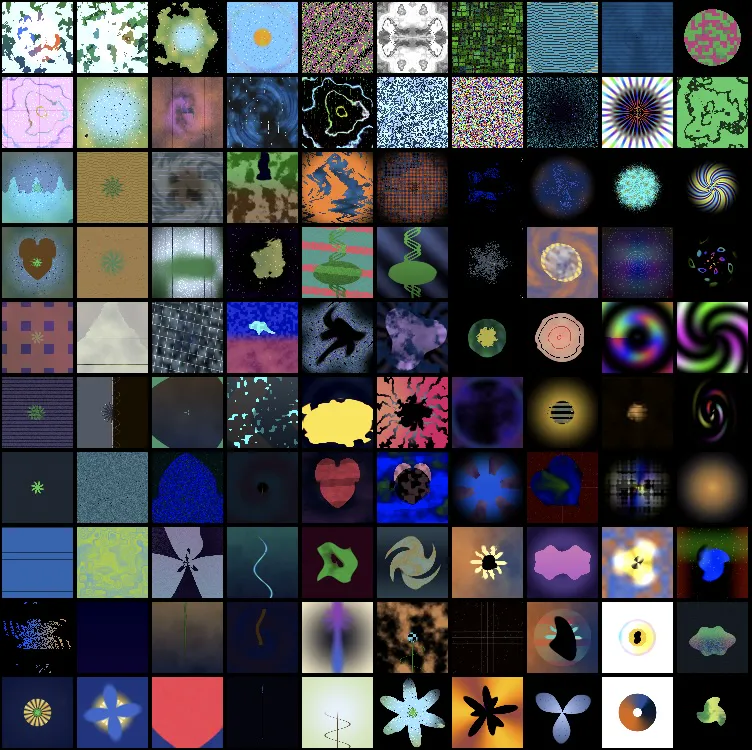
In Memoriam: Michel Baranger — New England Complex Systems Institute
Today I learned of the passing of a great physicist, friend and colleague, Michel Baranger. Professor in the MIT physics department, Michel was a student of the great physicists Hans Bethe and Richard Feynman and an important contributor to theoretical nuclear physics and quantum chaos. Michel was also a modest person and a pleasure to interact with. Our association began when he attended as a student my first course on complex systems at Boston University in the early 1990s. He honored me by calling me his teacher. He was a founding member of the NECSI board of directors serving long after he moved in retirement to Arizona. With his postdoc, long since a professor, Marcus d’Aguiar, we worked together on fundamental ideas about complex systems as well as applications to evolutionary biology. Michel's engagement with research was ever a process of building a deep understanding, focusing on key ideas, and the way we can frame them mathematically. I would pick out two papers of his to mention. The first provides a mind broadening perspective on how chaos revolutionizes traditional physics thinking, the second shows how we can use chaos to understand a key paradox of traditional physics, the way systems go toward equilibrium. Despite ill health in recent years he continued to visit us in Boston and engage in research, some of which will never be completed. We will miss him.

Stimming and Emotional Regulation:
The Essential Role of Rhythmic Self-Modulation

Neuroscientists show how neurons respond to sequences of familiar objects
The world grows increasingly more chaotic year after year, and our brains are constantly bombarded with images. A new study from Center for the Neural Basis of Cognition (CNBC), a joint project between ...
