It is common to hear players talk about “tactics” and “strategy” in games. In this case, the colloquial understanding of these terms happens to be pretty useful, in that it …
Strategy in Life
What is Strategy? Why is it easy to get wrong and so hard to get right? Strategy Structures in Life Concept-Space Getting from one point to another In a predefined direction Stars as Concept-space analogy By predefined actions Strategy in Life Know your surroundings Creating Strategies Using Strategies Summary Strategy...

Patterns of Strategy
Patterns of Strategy shows how the strategic fit between organisations drives strategic direction. It is essential reading for those who wish to understand how to manoeuvre their organisation to change its strategic fit to their advantage. The 80 ‘patterns’ of strategy help you explore options for collaboration and competition within your strategic ecosystem. A practical and authoritative guide, you can use it to plan and navigate your strategic future.


Game Theory | Open Yale Courses
This course is an introduction to game theory and strategic thinking. Ideas such as dominance, backward induction, Nash equilibrium, evolutionary stability, commitment, credibility, asymmetric information, adverse selection, and signaling are discussed and applied to games played in class and to examples drawn from economics, politics, the movies, and elsewhere.
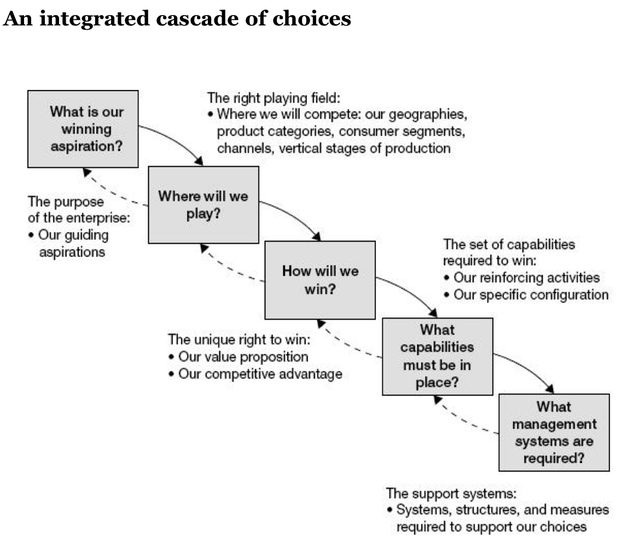
Playing to Win: How Strategy Really Works
How Strategy Really Works. This approach grew out of the strategy practice at Monitor Company and subsequently became the standard process at P&G.
Axes of Victory
Here is a game design concept we’ve been talking about on the Keith Burgun Discord. I think it is useful for creating and honing the type of “strategic dance” we find in games lik…

Designing Strategy: Rushdown, Economy, and Defense
Hey everyone! Today I have a good-old-fashioned formalist-ish game design article. It’s been a little while since I’ve really done one of those, unless it was attached to Push the Lane.…

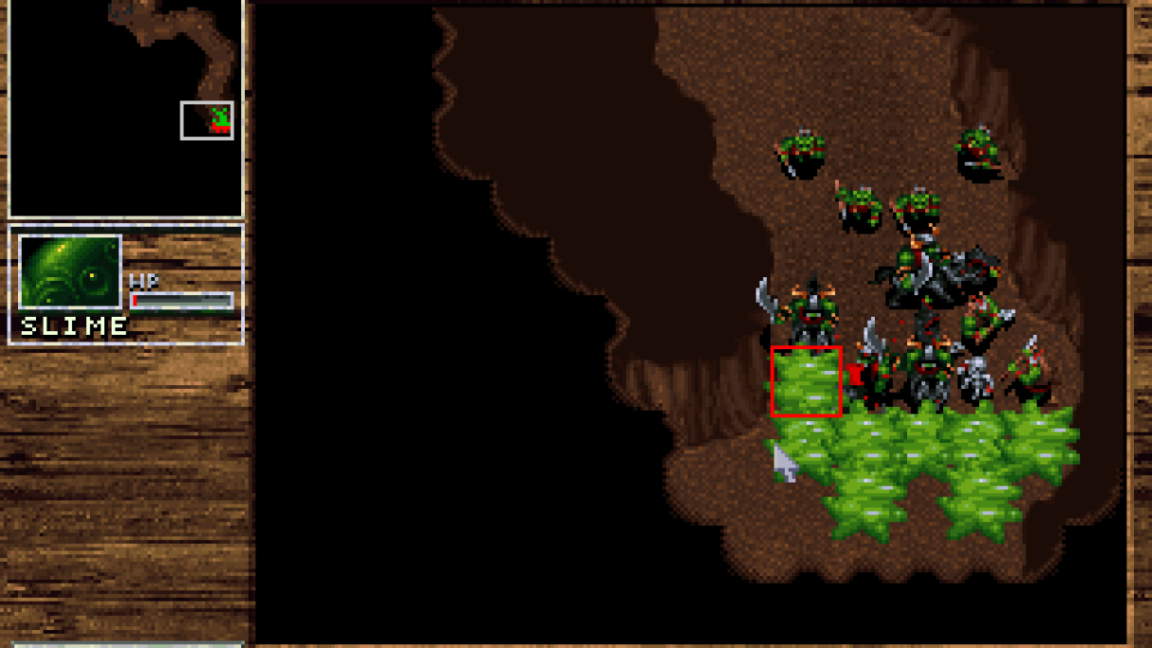
Build, gather, brawl, repeat: The history of real-time strategy games
As we wait on a new Age of Empires this fall, let's revisit the RTS genre's highs and lows.
Position: AI Is Not Ready for Strategic Conflicts
Open-ended strategic wargames are high-stakes LM-based social simulations: they model adversaries, institutions, escalation, plan brittleness, doctrine, and crisis response. Language models (LMs) are attractive because they can play agents, generate scenario branches, adjudicate ambiguous actions, and summarize lessons, but the same affordances make open-ended roles dangerous: model language determines both what an actor attempts and what becomes simulated reality. This position paper argues that no LM-enabled wargame should inform planning, doctrine, policy, or crisis response without an auditable safety case, and that the proper use of open-ended wargames today is to stress-test decision-influencing LM agents. We identify five failure modes: decision laundering, adjudication opacity, role collapse, escalation-through-adjudication, and failure of strategic imagination. Ordinary benchmarks cannot establish safety for these settings. Wargames can expose failures as stress tests; they are not themselves safety cases for consequential use.

gamesgamesgamesgamesgames/lexicon
An open data standard for describing video games and their data on ATProto.
Game Theory
Game theory is the study of the ways in which interactingchoices of economic agents produce outcomeswith respect to the preferences (or utilities) ofthose agents, where the outcomes in question might have been intendedby none of the agents. The meaning of this statement will not be clearto the non-expert until each of the italicized words and phrases hasbeen explained and featured in some examples. Doing this will be themain business of this article. First, however, we provide somehistorical and philosophical context in order to motivate the readerfor the technical work ahead.
Game Programming Patterns
I’m here to help! Game Programming Patterns is a collection of patterns I found in games that make code cleaner, easier to understand, and faster.
Clockwork Criteria: 6 Guidelines for Ideal Strategy Game Design
What are the criteria that make something a good “Clockwork Game”? The Clockwork Game Design model is something I have been working on for the last five years or so. It is specifically …
Curriculum Guide
Riot Games’ Game Design Curriculum is an entry-level course that teaches high school students the fundamental elements of game design using a framework and interactive workshops created by our own game designers. Students will ultimately utilize their newfound knowledge of core game design concepts like goals, types of fun, opposition, rules, interaction, and balance to create a paper prototype of a multiplayer game.

Position: AI Is Not Ready for Strategic Conflicts
Open-ended strategic wargames are high-stakes LM-based social simulations: they model adversaries, institutions, escalation, plan brittleness, doctrine, and crisis response. Language models (LMs) are attractive in these settings because they can play agents, generate scenario branches, adjudicate ambiguous actions, and summarize lessons. The same affordances make open-ended player and adjudicator roles dangerous: model language can determine both what an actor attempts and what subsequently becomes simulated reality. This position paper argues that no LM-enabled wargame should inform high-stakes planning, doctrine, policy, or crisis response without an auditable safety case, and that the proper use of openended wargames today is to stress-test decision-influencing LM agents. We identify five failure modes: decision laundering, adjudication opacity, role collapse, escalation-through-adjudication, and failure of strategic imagination. Ordinary benchmarks cannot establish safety for these settings. Wargames can expose failures as stress tests; they are not themselves safety cases for consequential use. Until such safety cases exist, AI is not ready for strategic conflicts.
A Strategy and Wardley Mapping Primer
If you're doing strategic work, think in terms of evolutionary flow — and learn to draw fast-and-dirty Wardley maps.