

How common biases influence development.
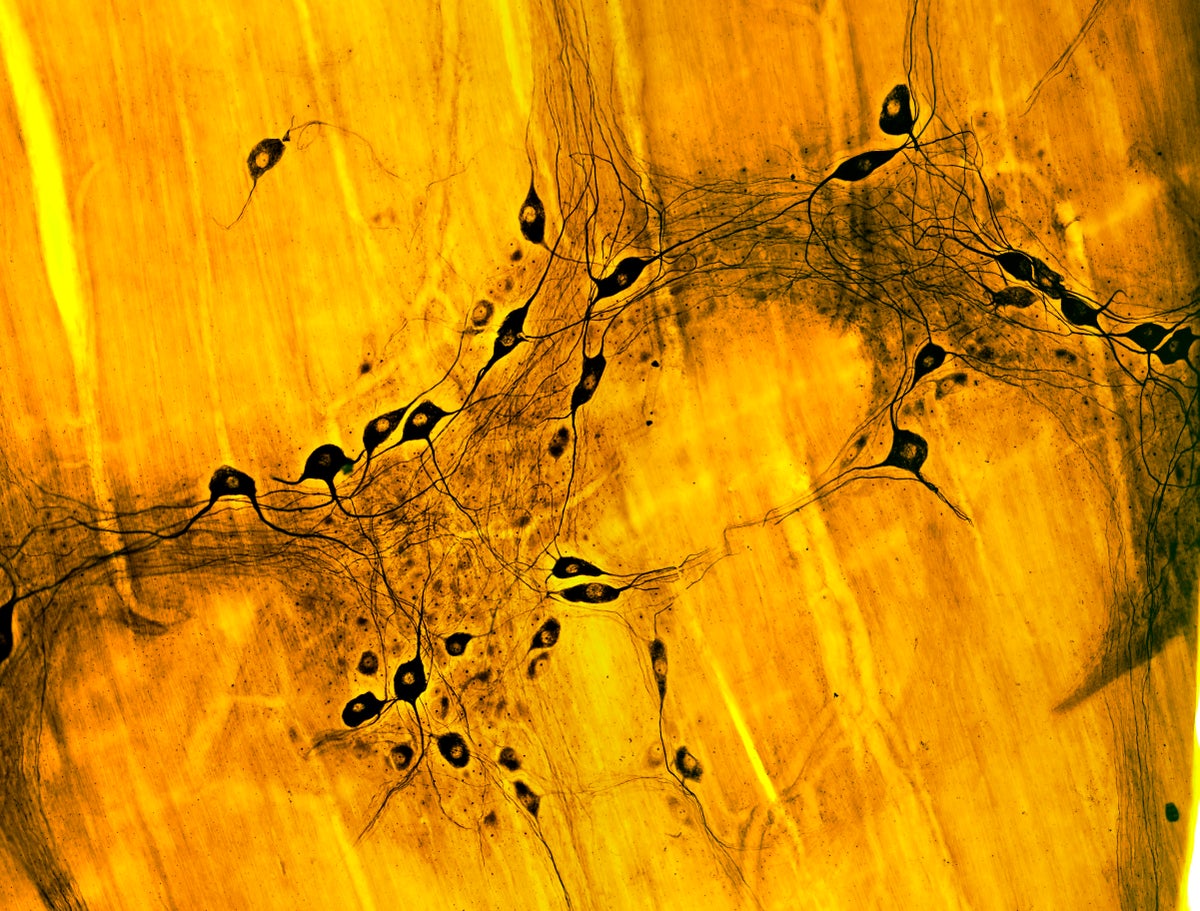
Think Twice: How the Gut's "Second Brain" Influences Mood and Well-Being
The emerging and surprising view of how the enteric nervous system in our bellies goes far beyond just processing the food we eat
AI, gender bias and development
Generative AI is quietly reinforcing harmful gender stereotypes, shaping how we see the world and ourselves. How can we ensure it doesn't affect our development work in a biased way?

Children's Acquisition and Application of Norms
All human societies are permeated by collectively shared entities that govern daily social interactions and promote coordination and cooperation: norms. While the study of norm development is not new to developmental psychology, it has only recently been the target of an interdisciplinary wave of research using new methodologies and (often) complementary theoretical accounts to describe and explain the origins and potentially species-unique aspects of human norm psychology. Here we review recent developmental research showing that young children swiftly acquire and infer norms in a variety of social contexts. Moreover, children actively enforce these norms, even as unaffected bystanders, when third parties do things the wrong way. This research suggests that the foundations of human norm psychology can be found in early childhood. Deeper insights into the ontogenetic roots of norm psychology may contribute to understanding the evolutionary emergence of human cooperation and its maintenance in the contemporary world.
We don’t have a hundred biases, we have the wrong model
Behavioral economics has identified dozens of cognitive biases that stop us from acting 'rationally'. But instead of building up a messier and messier picture of human behavior, we need a new model.
Developmental Spaces: Cultural incubators for a time of transformation | Conscious Communities
The whitepaper. Rosie Bell, Boaz Feldman and Rufus Pollock, September 2025.
The evolution of cultural adaptations: Fijian food taboos protect against dangerous marine toxins
The application of evolutionary theory to understanding the origins of our species' capacities for social learning has generated key insights into cultural evolution. By focusing on how our psychology has evolved to adaptively extract beliefs and practices by observing others, theorists have hypothesized how social learning can, over generations, give rise to culturally evolved adaptations. While much field research documents the subtle ways in which culturally transmitted beliefs and practices adapt people to their local environments, and much experimental work reveals the predicted patterns of social learning, little research connects real-world adaptive cultural traits to the patterns of transmission predicted by these theories. Addressing this gap, we show how food taboos for pregnant and lactating women in Fiji selectively target the most toxic marine species, effectively reducing a woman's chances of fish poisoning by 30 per cent during pregnancy and 60 per cent during breastfeeding. We further analyse how these taboos are transmitted, showing support for cultural evolutionary models that combine familial transmission with selective learning from locally prestigious individuals. In addition, we explore how particular aspects of human cognitive processes increase the frequency of some non-adaptive taboos. This case demonstrates how evolutionary theory can be deployed to explain both adaptive and non-adaptive behavioural patterns.

So It Is, So It Shall Be: Group Regularities License Children's Prescriptive Judgments
Abstract When do descriptive regularities (what characteristics individuals have) become prescriptive norms (what characteristics individuals should have)? We examined children's (4–13 years) and adults' use of group regularities to make prescriptive judgments, employing novel groups (Hibbles and Glerks) that engaged in morally neutral behaviors (e.g., eating different kinds of berries). Participants were introduced to conforming or non‐conforming individuals (e.g., a Hibble who ate berries more typical of a Glerk). Children negatively evaluated non‐conformity, with negative evaluations declining with age (Study 1). These effects were replicable across competitive and cooperative intergroup contexts (Study 2) and stemmed from reasoning about group regularities rather than reasoning about individual regularities (Study 3). These data provide new insights into children's group concepts and have important implications for understanding the development of stereotyping and norm enforcement.

The natural selection of bad science
Abstract. Poor research design and data analysis encourage false-positive findings. Such poor methods persist despite perennial calls for improvement, sugg

Norm Dynamics: Interdisciplinary Perspectives on Social Norm Emergence, Persistence, and Change
Social norms are the glue that holds society together, yet our knowledge of them remains heavily intellectually siloed. This article provides an interdisciplinary review of the emerging field of norm dynamics by integrating research across the social sciences through a cultural-evolutionary lens. After reviewing key distinctions in theory and method, we discuss research on norm psychology—the neural and cognitive underpinnings of social norm learning and acquisition. We then overview how norms emerge and spread through intergenerational transmission, social networks, and group-level ecological and historical factors. Next, we discuss multilevel factors that lead norms to persist, change, or erode over time. We also consider cultural mismatches that can arise when a changing environment leads once-beneficial norms to become maladaptive. Finally, we discuss potential future research directions and the implications of norm dynamics for theory and policy.

The Ecological Theatre of Selfish Elements
Abstract. Some selfish genetic elements enhance their transmission to the next generation by interfering with and eliminating competing variants within the

Handbook of Evolutionary Psychology
‘This Handbook is refreshingly different. While including requisite chapters on subfields within evolutionary psychology, it also includes chapters on evolutionary psychology’s influence on other disciplines (e.g., Anthropology, Criminology), and retrospectives on six foundational studies. And perhaps most innovative, chapters are written by an international collection of up-and-coming scholars who give their take on the current and future state of evolutionary psychology.’ – David F. Bjorklund, Florida Atlantic University, USA

A World Unobserved
Humans have always generated knowledge and judged it. That's changing fast.

Cognitive Bias Lab | Learn to Make Better Decisions
Explore cognitive biases with interactive tests, simulations, and real-world examples. Free platform to sharpen decision-making and critical thinking — no sign-up needed.
Human Adults and LLMs as Scientists: Who Benefits from Active Exploration?
A long-standing finding in the causal learning literature is that adults struggle to identify conjunctive causal rules, where an effect requires the simultaneous presence of multiple causes, while...

Why Good Managers Are So Rare
Gallup data shows they have a combination of hard-to-teach traits.
consilienceproject.org/development-in-progress/ This essay argues our idea of progress is immature, ignoring the scale of harmful side effects. Using cases like leaded gasoline and synthetic fertilizer, it calls for a mature approach that internalizes externalities for a sustainable future.- LLM gen summary

Development in Progress - The Consilience Project
consilienceproject.org