"Should I buy cards?", "How fast can I level up?" and other existential questions in Clash Royale are tackled using the power of MATH :)
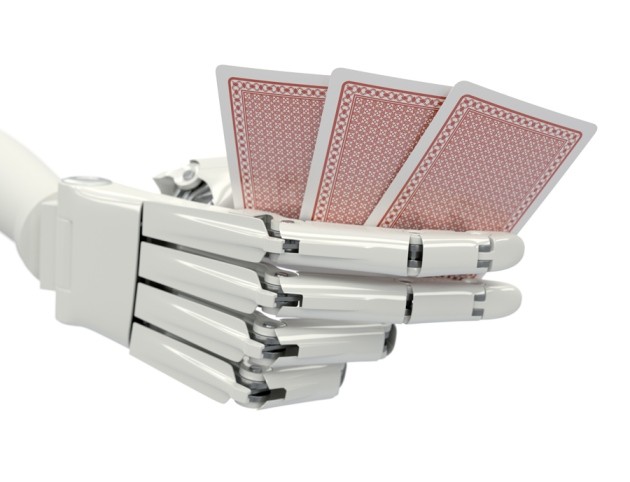
Game theorists crack poker
An 'essentially unbeatable' algorithm for the popular card game points to strategies for solving real-life problems without having complete information.
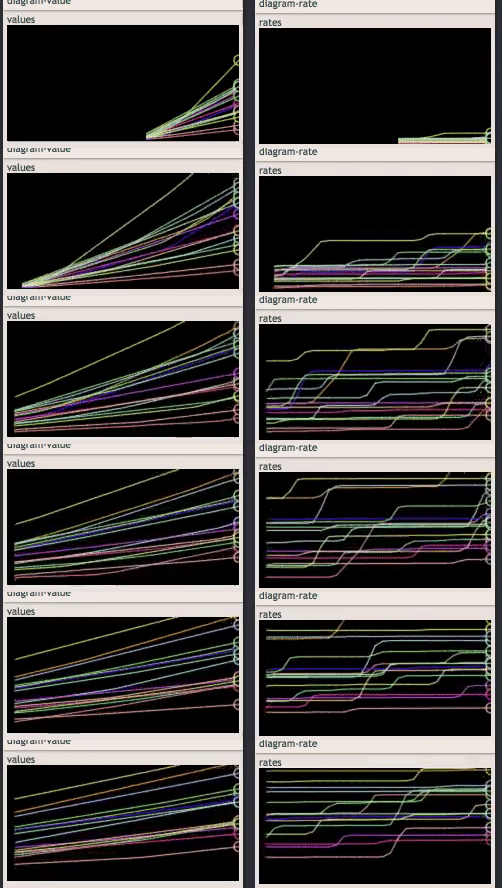
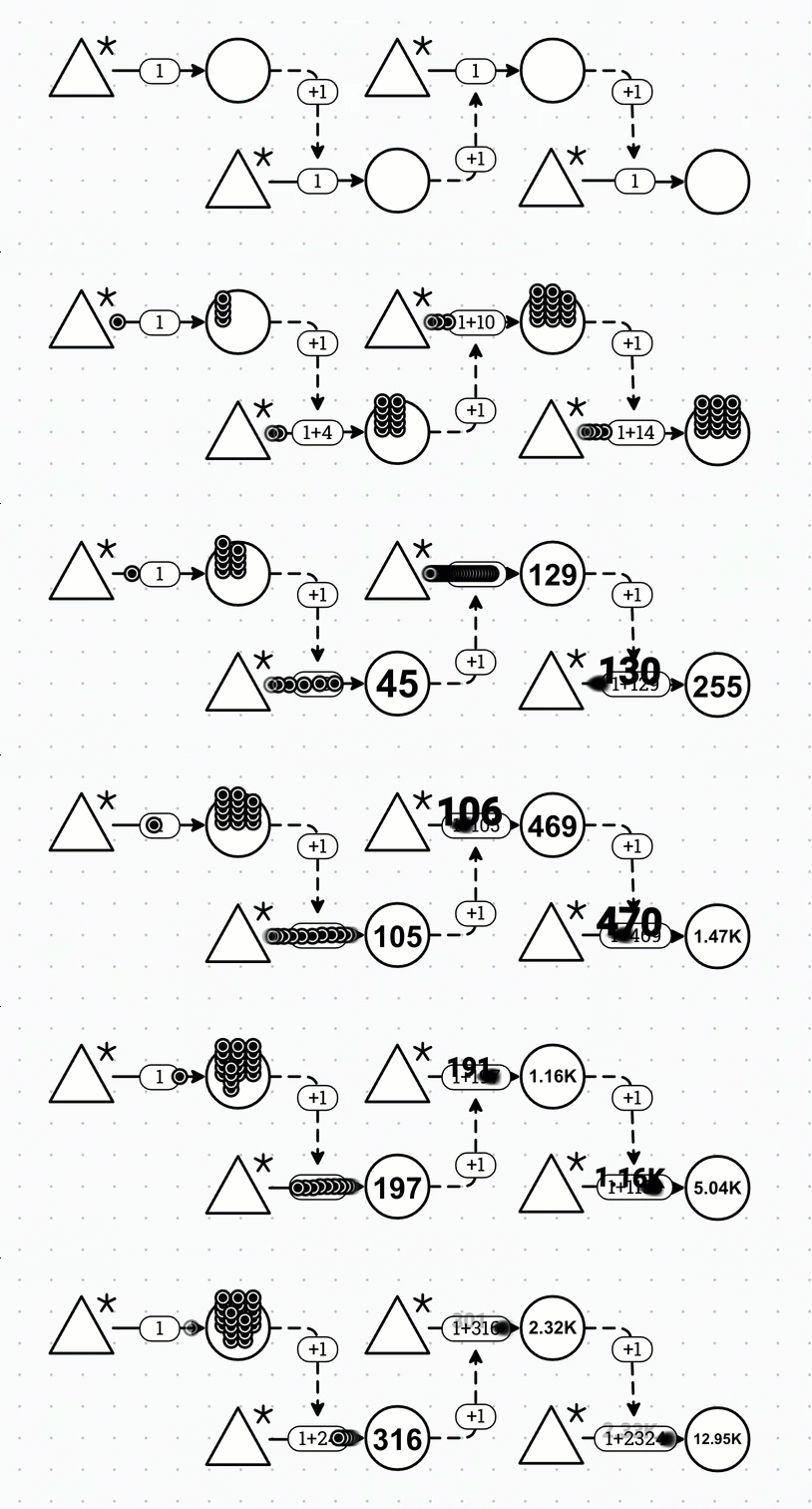
The Math of Idle Games, Part I
Originally published October 4, 2016 I’ve given a few talks in the past about the appeal and general mechanics of idle games, but what if you actually wanted to make one? Theory and patterns are nice, but there’s some complicated math running behind it. And how on earth
math.r — Brain Building Game
Mathr is a brain building game to improve your math calculation skills. Practice arithmetic and level up!
The Science of Winning Poker
Bluffing still matters, but the best players now depend on math theory

Deedy on Twitter / X
The International Math Olympiad (IMO) 2026, the hardest math contest for high schoolers, just ended.I ran Fable (high), Sol (xhigh), K3 (max) and Axiom against it and all got a perfect score of 42/42 (repo below if you want to check their solutions):— Claude Fable 5 was the… pic.twitter.com/6oH7FiAjEP— Deedy (@deedydas) July 21, 2026

The Math of Idle Games, Part II
Originally published October 28, 2016 In Part I [https://www.sirpinski.com/the-math-of-idle-games-part-i/] of this three-part series, we looked at some of the standard math behind rapid-growth idle games, primarily at the relationships between exponential and polynomial growth and some methods of
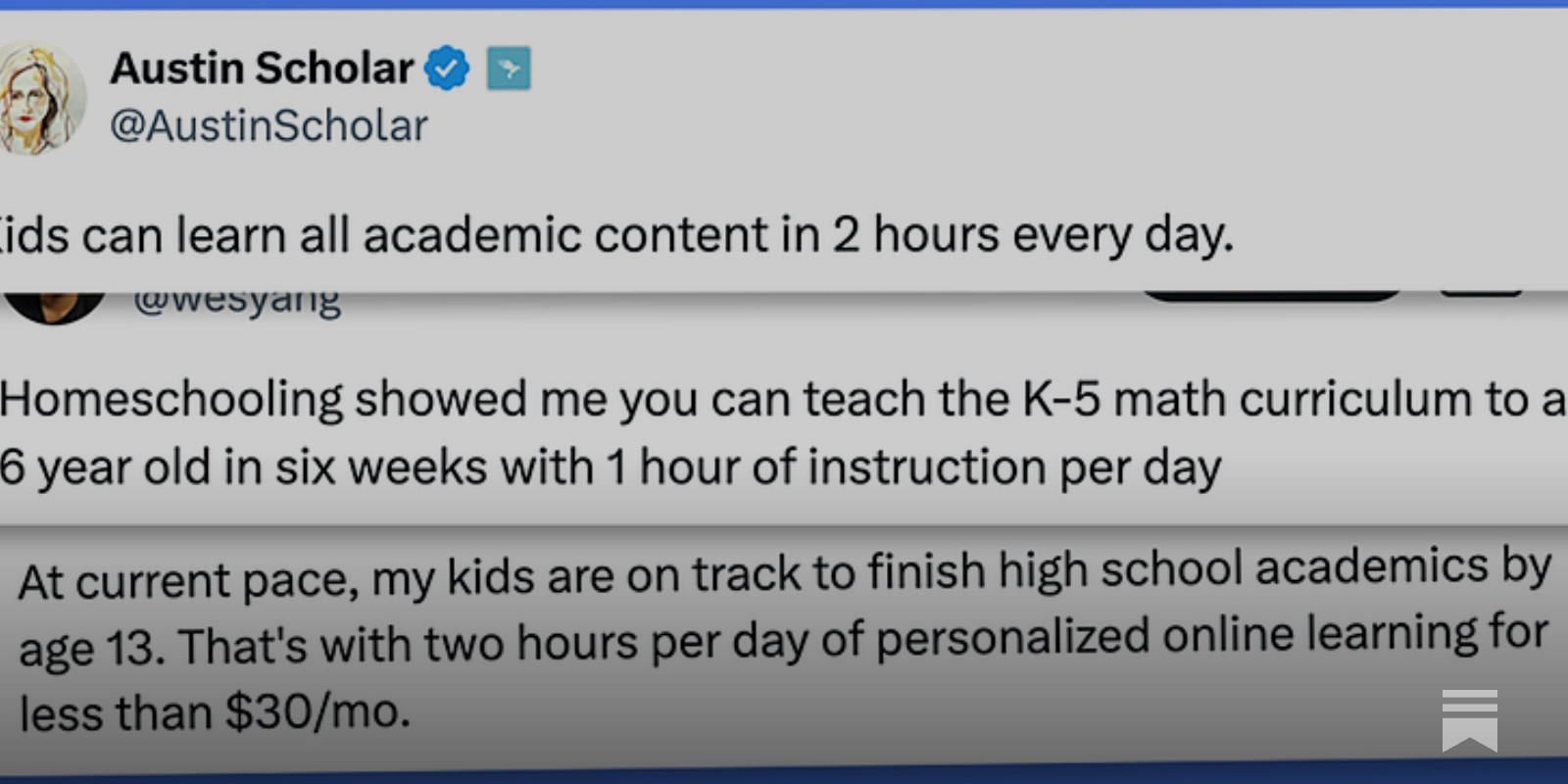
It Is Fun to Pretend That Hard Things Are Easy!
A new online math platform promises to teach math 4x faster. Here is how!
OpenAI's Unreleased Model Astra Solves Ten Major Open Mathematics Problems
Math is hard.
Mathematics in the Library of Babel · Daniel Litt
Mathematics isn't only about saying true things. It's about asking the right questions, being confused, stumbling about, getting distracted, being wrong…
What sort of maths are LLMs good at?
For the sake of anyone who might read this blog post in the distant future (a month from now, say), let me mention that I am writing it a few days after OpenAI announced that it had solved ten majo…

Exploring the interplay between AI and human logic in mathematical problem-solving
This paper investigates the dynamic interplay between Artificial Intelligence (AI) and human logic in the domain of mathematical problem-solving. By critically examining a series of case studies, we compare the efficacy of AI-generated solutions, particularly those offered by ChatGPT, against traditional human problem-solving methods. The study employs various mathematical challenges, ranging from abstract logical puzzles to applied numerical problems, to evaluate AI's problem-solving approach and alignment with human cognitive processes. Our analysis highlights instances where AI's computational strategies complement or diverge from human reasoning, shedding light on AI's potential and limitations in deciphering mathematical problems. Furthermore, we explore the implications of integrating AI tools in educational contexts, specifically their role in enhancing students' mathematical problem-solving skills. The paper aims to contribute to the ongoing discourse on the optimal utilization of AI in education, proposing a balanced approach that leverages AI's computational power while fostering the depth and creativity of human logic. Through this comparative study, we advocate for a collaborative model where AI and human reasoning merge to enrich the educational landscape, particularly in the teaching and learning of mathematics.

Mathematics in the Library of Babel — Daniel Litt
Mathematics isn't only about saying true things. It's about asking the right questions, being confused, stumbling about, getting distracted, being wrong, recognizing when you're wrong, being stuck. Mostly being stuck. It's about clinging to a giant edifice and feeling it out until you understand som

Mathematics in the age of AI
An essay, based on a public lecture delivered at the 2026 International Congress of Mathematicians, on how the mathematical community might respond to the arrival of artificial intelligence tools that are capable of performing research-level mathematical tasks. Rather than debating the capabilities of such tools, we condition on the hypothesis that these capabilities will arrive, and examine instead a question that is orthogonal to it: what the goals and values of mathematical research actually are. The problem-solving component of mathematics is used as a case study.

How to Study Mathematics
This essay describes a number of strategies for studying college level mathematics. It has sections entitled